


DS007605: eeg dataset, 97 subjects#
EPOC
Access recordings and metadata through EEGDash.
Citation: [“Christian Neumann”, “Johanna Geritz”, “Julian Keil”, “Walter Maetzler”, “Julius Welzel”] (1994). EPOC. 10.18112/openneuro.ds007605.v1.0.0
Modality: eeg Subjects: 97 Recordings: 97 License: CC0 Source: openneuro
Metadata: Complete (100%)
97-participant EEG dataset — EPOC.
Quickstart#
Install
pip install eegdash
Access the data
from eegdash.dataset import DS007605

dataset = DS007605(cache_dir="./data")
# Get the raw object of the first recording
raw = dataset.datasets[0].raw
print(raw.info)
Filter by subject
dataset = DS007605(cache_dir="./data", subject="01")
Advanced query
dataset = DS007605(
    cache_dir="./data",
    query={"subject": {"$in": ["01", "02"]}},
)
Iterate recordings
for rec in dataset:
    print(rec.subject, rec.raw.info['sfreq'])
If you use this dataset in your research, please cite the original authors.
BibTeX
@dataset{ds007605,
  title = {EPOC},
  author = {["Christian Neumann" and "Johanna Geritz" and "Julian Keil" and "Walter Maetzler" and "Julius Welzel"]},
  doi = {10.18112/openneuro.ds007605.v1.0.0},
  url = {https://doi.org/10.18112/openneuro.ds007605.v1.0.0},
}
About This Dataset#
July 2023 - July 2025
A project to investigate neurophysiological correlates of Post-COVID-19 by the means of EEG.
EPOC
Contact Person
M. Sc. Christian Neumann Neurology Department University Medical Center Schleswig-Holstein, Campus Kiel Arnold-Heller-Straße 3 24105 Kiel Germany
View full README
EPOC
Contact Person
M. Sc. Christian Neumann Neurology Department University Medical Center Schleswig-Holstein, Campus Kiel Arnold-Heller-Straße 3 24105 Kiel Germany E-Mail: neumann@psychologie.uni-kiel.de
Supervisors
* Prof. Dr. med. Walter Maetzler * Dr. Julius Welzel
##
Overview
Psychomotor vigilance Task (PVT)
* The PVT is a simple reaction-time task that is widely used in research on sleep and fatigue (Basner & Dinges, 2011; Jung et al., 2011; Lee et al., 2010). Each trial began with a white fixation cross displayed for 2 - 10 seconds, after which a red number appeared, counting the milliseconds elapsed since its onset (Figure 2). Participants were instructed to press the spacebar as quickly as possible once the number appeared. Upon response, the counter stopped and displayed the individual’s reaction as feedback (for 500 ms), after which the fixation cross reappeared, to initiate the next trial.
Independent variables
* Participants were divided into two groups based on whether self-reported cognitive symptoms were present or absent, with a group with self-reported cognitive symptoms and a group without self-reported cognitive symptoms.
Dependent variables
* Fatigue was assessed using the Functional Assessment of Chronic Fatigue Illness Therapy – Fatigue Subscale (FACIT-Fatigue subscale) questionnaire (Yellen et al., 1997), which was also applied in COVIDOM (Hartung et al., 2024). The items in the questionnaire refer to the past 7 days and therefore capture fatigue more as a trait than a state. A score ≤ 30 is conventionally considered indicative of clinically relevant fatigue (Piper & Cella, 2010). Anxiety and depression were assessed with the Hospital Anxiety and Depression Scale (HADS; Zigmond & Snaith, 1983), a self-report instrument developed for use in somatic settings that deliberately excluded symptoms that also occur in physical disorders (e.g., fatigue, headaches). It can be separated into an anxiety subscore (HADS-A) and a depression subscore (HADS-D). In the present study, the German translation by Herrmann & Buss (1994) was used. Sleep quality was assessed with the Pittsburgh Sleep Quality Index (PSQI; Buysse et al., 1989).
control variables
* Age, Gender, years of education, presence of pre-diagnosed neurological disorders.
Methods
Subjects
* Participants (N = 98) were recruited as a subcohort from the COVIDOM/NAPKON-POP study. COVIDOM is a longitudinal, multicenter study conducted within the National Pandemic Cohort Network (NAPKON), with study sites in Berlin, Kiel, and Wuerzburg (Horn et al., 2021). All participants in this study were at least 18 years old, residents of Schleswig-Holstein, and had a confirmed SARS-CoV-2 infection in the past, diagnosed by PCR test.
Study procedures
* Participants completed a single study visit that was conducted in the laboratory of the Department of Neurology at the University Hospital Schleswig-Holstein in Kiel. First, they completed the paper-and-pencil Trail Making Test (TMT; Reitan, 1958). Subsequently, EEG preparation and recording were conducted; electrode setup required approximately one hour. Once the EEG was prepared, participants went through a battery of four computerized cognitive tasks and a resting-state measurement. After the session, participants were asked to fill out three questionnaires assessing fatigue, depressive symptoms, anxiety symptoms, and sleep quality.
EEG recording
* EEG was recorded using a 128-channel cap with equidistant electrode layout (128Ch Standard Brain Cap for actiCHamp Plus, Easycap GmbH, Wörthsee, Germany) and an actiCHamp Plus Amplifier (Brain Products GmbH, Gilching, Germany). Sampling rate was 1000 Hz with an amplitude resolution of 0.1 μV. Electrode impedances were kept below 20 kΩ. The reference electrode was placed on the nose, and two electrooculogram (EOG) electrodes were positioned diagonally beneath each eye.
Missing data
* Data were missing (with overlap) for n-back (n = 4), PVT (n = 1), MoCA (n = 1), FACIT-Fatigue subscale (n = 2), HADS-D total score (n = 3), HADS-A total score (n = 1), PSQI total score (n = 6) and EEG recordings (n = 3), which occurred when participants were unable to complete a test due to time and health constraints, when no button responses were recorded, when essential questionnaire items were not answered clearly, or when files were corrupted. All behavioral outcomes were within expected range, and no outliers were removed.
Cohort#
Dataset Statistics#
Age distribution by gender (n=97, range 22–78 yr, mean 49.2 yr)
Sex composition
Channel counts: 128 ch (n=97 recordings)
Sampling frequencies: 1000.0 Hz (n=97 recordings)
Total recording duration: 12 h 36 min
Signal · Electrodes & live trace#
Live trace viewer — sub-YI30CH · task-pvt
Showing one representative recording out of
97 subjects and 97 recordings in this dataset.
Browse the full set on OpenNeuro;
drop any other _eeg.{set,edf,bdf,vhdr} file onto the
viewer (or pass ?eeg=<url>) to inspect it.
No scalp electrode layout is currently indexed for this dataset. Once the eegdash montage registry ingests it, the interactive viewer will appear here automatically.
NEMAR Processing Statistics#
The plots below are generated by NEMAR’s automated EEG pipeline. The histogram shows pipeline success for data cleaning and ICA decomposition, the percentage of data frames and EEG channels retained after artefact removal, line noise per channel (RMS, dB), and the age/gender distribution of participants.

HED event descriptors word cloud

Manifest#
File Explorer#
Browse the BIDS file structure of this dataset. Records are fetched on demand from the EEGDash catalog the first time you open the explorer.
Full dataset metadata table
Dataset ID |
|
Title |
EPOC |
Author (year) |
— |
Canonical |
— |
Importable as |
|
Year |
1994 |
Authors |
[“Christian Neumann”, “Johanna Geritz”, “Julian Keil”, “Walter Maetzler”, “Julius Welzel”] |
License |
CC0 |
Citation / DOI |
|
Source links |
Copy-paste BibTeX
@dataset{ds007605,
  title = {EPOC},
  author = {["Christian Neumann" and "Johanna Geritz" and "Julian Keil" and "Walter Maetzler" and "Julius Welzel"]},
  doi = {10.18112/openneuro.ds007605.v1.0.0},
  url = {https://doi.org/10.18112/openneuro.ds007605.v1.0.0},
}
API Reference#
eegdash.datasetEEGDashDataset- class eegdash.dataset.DS007605(cache_dir: str, query: dict | None = None, s3_bucket: str | None = None, **kwargs)[source]#
EPOC
- Study:
ds007605(OpenNeuro)- Author (year):
—
- Canonical:
—
Also importable as:
DS007605.Modality:
eeg; Experiment type:Attention; Subject type:Other. Subjects: 97; recordings: 97; tasks: 1.- Parameters:
cache_dir (str | Path) – Directory where data are cached locally.
query (dict | None) – Additional MongoDB-style filters to AND with the dataset selection. Must not contain the key
dataset.s3_bucket (str | None) – Base S3 bucket used to locate the data.
**kwargs (dict) – Additional keyword arguments forwarded to
EEGDashDataset.
- data_dir#
Local dataset cache directory (
cache_dir / dataset_id).- Type:
Path
Notes
Each item is a recording; recording-level metadata are available via
dataset.description.querysupports MongoDB-style filters on fields inALLOWED_QUERY_FIELDSand is combined with the dataset filter. Dataset-specific caveats are not provided in the summary metadata.References
OpenNeuro dataset: https://openneuro.org/datasets/ds007605 NeMAR dataset: https://nemar.org/dataexplorer/detail?dataset_id=ds007605 DOI: https://doi.org/10.18112/openneuro.ds007605.v1.0.0
Examples
>>> from eegdash.dataset import DS007605
>>> dataset = DS007605(cache_dir="./data")
>>> recording = dataset[0]
>>> raw = recording.load()
- __init__(cache_dir: str, query: dict | None = None, s3_bucket: str | None = None, **kwargs)[source]#
- save(path: str, overwrite: bool = False, offset: int = 0)[source]#
Save datasets to files by creating one subdirectory for each dataset:
path/
    0/
        0-raw.fif | 0-epo.fif
        description.json
        raw_preproc_kwargs.json (if raws were preprocessed)
        window_kwargs.json (if this is a windowed dataset)
        window_preproc_kwargs.json  (if windows were preprocessed)
        target_name.json (if target_name is not None and dataset is raw)
    1/
        1-raw.fif | 1-epo.fif
        description.json
        raw_preproc_kwargs.json (if raws were preprocessed)
        window_kwargs.json (if this is a windowed dataset)
        window_preproc_kwargs.json  (if windows were preprocessed)
        target_name.json (if target_name is not None and dataset is raw)
- Parameters:
path (str) –
- Directory in which subdirectories are created to store
-raw.fif | -epo.fif and .json files to.
overwrite (bool) – Whether to delete old subdirectories that will be saved to in this call.
offset (int) – If provided, the integer is added to the id of the dataset in the concat. This is useful in the setting of very large datasets, where one dataset has to be processed and saved at a time to account for its original position.
BaseDataset from braindecode — windowed via create_windows_from_events.braindecodeDataLoader; supports parallel workers and on-the-fly augmentations.pytorch Find datasets with the EEGDash APIQuery the catalogue, filter by task or modality, list candidates.
 Load one EEG recordingResolve a single record to an MNE Raw with channels and events.
 EEG recording to PyTorch DataLoaderWrap braindecode windows in a DataLoader for model training.
 Preprocess EEG and create windowsFilter, resample, epoch — and persist the windowed dataset.
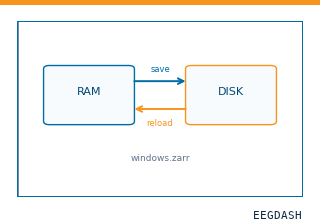 Save and reload prepared dataCache a windowed dataset to disk and reattach it without recompute.
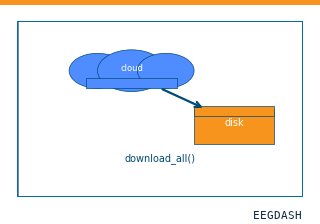 Download a dataset locallyPrefetch BIDS files to a local cache and validate the layout.
Swap any load_dataset(...) call for ds007605 to reproduce the tutorial on this dataset.
Citation
["Christian Neumann", "Johanna Geritz", "Julian Keil", "Walter Maetzler", "Julius Welzel"] (1994). EPOC. 10.18112/openneuro.ds007605.v1.0.0
Provenance
¹Contributed to openneuro in BIDS format.
²Curated & ingested by the EEGDash catalog; see CITATION.cff for canonical reference.
³Persistent identifier: 10.18112/openneuro.ds007605.v1.0.0.
See Also#
eegdash.dataset.EEGDashDataseteegdash.dataset