


DS005873: eeg, emg dataset, 125 subjects#
SeizeIT2
Access recordings and metadata through EEGDash.
Citation: Miguel Bhagubai, Christos Chatzichristos, Lauren Swinnen, Jaiver Macea, Jingwei Zhang, Lieven Lagae, Katrien Jansen, Andreas Schulze-Bonhage, Francisco Sales, Benno Mahler, Yvonne Weber, Wim Van Paesschen, Maarten De Vos (20). SeizeIT2. 10.18112/openneuro.ds005873.v1.1.0
Modality: eeg, emg Subjects: 125 Recordings: 5654 License: CC0 Source: openneuro
Metadata: Complete (100%)
125-participant EEG, EMG dataset — SeizeIT2.
Quickstart#
Install
pip install eegdash
Access the data
from eegdash.dataset import DS005873

dataset = DS005873(cache_dir="./data")
# Get the raw object of the first recording
raw = dataset.datasets[0].raw
print(raw.info)
Filter by subject
dataset = DS005873(cache_dir="./data", subject="01")
Advanced query
dataset = DS005873(
    cache_dir="./data",
    query={"subject": {"$in": ["01", "02"]}},
)
Iterate recordings
for rec in dataset:
    print(rec.subject, rec.raw.info['sfreq'])
If you use this dataset in your research, please cite the original authors.
BibTeX
@dataset{ds005873,
  title = {SeizeIT2},
  author = {Miguel Bhagubai and Christos Chatzichristos and Lauren Swinnen and Jaiver Macea and Jingwei Zhang and Lieven Lagae and Katrien Jansen and Andreas Schulze-Bonhage and Francisco Sales and Benno Mahler and Yvonne Weber and Wim Van Paesschen and Maarten De Vos},
  doi = {10.18112/openneuro.ds005873.v1.1.0},
  url = {https://doi.org/10.18112/openneuro.ds005873.v1.1.0},
}
About This Dataset#
This dataset is a BIDS compatible version of the SeizeIT2 dataset. It reorganizes the file structure to comply with the BIDS specification. To this effect:
Metadata was organized according to BIDS.
Data in the edf files contains wearable EEG, ECG, EMG and movement data recorded with the Sensor Dot device.
Annotations were formatted as BIDS-score compatible
tsvfiles.The dataset was published by Miguel Bhagubai and Christos Chatzichristos.
README
Overview
Project name
SeizeIT2 Dataset
Year that the project ran
2024
Description of the dataset
The SeizeIT2 project (clinicaltrials.gov: NCT04284072), a multicenter, prospective study, was carried out to validate the Sensor Dot device in adult and pediatric patients with epilepsy. Participants were included if they had a history of refractory epilepsy and were admitted to the Epilepsy Monitoring Unit (EMU) for long-term vEEG monitoring as a presurgical evaluation procedure. The exclusion criteria included patients with skin conditions or allergies that prevented the placement of the electrodes and adhesives or had implanted devices, such as neurostimulators or pacemakers. All participants provided written informed consent. The data collection started on January 10, 2020, and ended on June 30, 2022. The study was approved by the UZ Leuven ethics committee (approval ID: S63631, ClinicalTrials.gov, NCT04284072), anonymization and sharing of the data was also approved by the same committee (S67350 - amendment 1).
The dataset comprises 125 patients (51 female, 41%) from 5 different European EMUs: University Hospital Leuven (Belgium), Freiburg University Medical Center (Germany), RWTH University of Aachen (Germany), Karolinska University Hospital (Sweden) and Coimbra University Hospital (Portugal). The University Hospital Leuven was the only center that enrolled pediatric patients. The dataset includes only data from patients with focal epilepsy who experienced one or more seizure episodes during the monitoring period.
Methods
The participants were recorded with the specific center’s vEEG monitoring equipment, where the EEG electrodes were placed according to the 10-20 system or the 25-electrode array of the International Federation of Clinical Neurophysiology. The SD device was used to record wearable data simultaneously with the vEEG. The device has a size of 24.5 x 33.5 x 7.73 mm and weighs approximately 6.3 grams. The wearable device measures data at a sampling frequency of 250 Hz and has a battery life of approximately 24 hours. Two recording devices were used: one placed in the patient’s upper back using a patch and connected to electrodes attached behind the ear, on the mastoid bone (EEG SD); another placed on the left side of the chest, with two electrodes extended to the lower left rib cage and the fourth intercostal space in the left parasternal position to measure ECG, and two electrodes extended to the left deltoid muscle to measure EMG data (ECG/EMG SD). The module itself contains accelerometers (ACC) and gyroscopes (GYR), which measured movement data at a sampling rate of 25 Hz.
The EEG SD electrode placement depended on the patient’s medical history and is based on the seizure type and onset. When the seizures were suspected to originate from the left hemisphere, two electrodes were placed on the left side and one on the right side, forming one left same-side channel and one cross-head channel. Analogously, if seizures were suspected to originate from the right hemisphere, the same-side channel was derived from two electrodes placed behind the right ear. The dataset includes patients who were suspected to have generalized seizures (but had focal seizures) as well, and in this case, the cross-head channel was non-existent and replaced by an additional lateral channel by using two electrodes on each ear.
Dataset contents
The complete dataset contains around 11 640 hours of wearable data. Four different modalities were recorded for most participants: bte-EEG, ECG, EMG and movement data. All participants’ data within the dataset contain wearable bte-EEG. In 3% of the dataset, ECG, EMG and movement data were not included due to technical failures or errors in the setup. In total, 886 focal seizures were recorded with the wearable device. The mean duration of the recorded seizures was 58 seconds, ranging between 3 seconds and 16 minutes. The majority of the seizures were focal aware (FA) and focal impaired awareness (FIA), with 317 and 393 occurrences, respectively. From the remaining seizures, 55 were focal-to-bilateral tonic clinic (FBTC), 12 were focal with unclear awareness status, 2 were subclinical focal seizures and 93 had unknown or unreported onset. There was a predominance of seizures with onset on the left hemisphere (44%). In 12% of the seizures, the onset was located in the right hemisphere, 1% had a bilateral onset and in 43% of the seizures the onset was unclear. Regarding localization, the seizure onsets were distributed over the central, frontal, temporal, occipital, parietal and insula lobes, with a predominance of temporal lobe seizures (30%). Several seizures recorded could not be paired with a clear onset lobe (26%).
Cohort#
Dataset Statistics#
Sex composition
Channel counts (ch)
Sampling frequencies: 256.0 Hz (n=5654 recordings)
Total recording duration: 22897 h
Signal · Electrodes & live trace#
Live trace viewer — sub-021 · ses-01 · task-szMonitoring · run-09
Showing one representative recording out of
125 subjects and 5654 recordings in this dataset.
Browse the full set on OpenNeuro;
drop any other _eeg.{set,edf,bdf,vhdr} file onto the
viewer (or pass ?eeg=<url>) to inspect it.
No scalp electrode layout is currently indexed for this dataset. Once the eegdash montage registry ingests it, the interactive viewer will appear here automatically.
NEMAR Processing Statistics#
The plots below are generated by NEMAR’s automated EEG pipeline. The histogram shows pipeline success for data cleaning and ICA decomposition, the percentage of data frames and EEG channels retained after artefact removal, line noise per channel (RMS, dB), and the age/gender distribution of participants.

HED event descriptors word cloud

Manifest#
File Explorer#
Browse the BIDS file structure of this dataset. Records are fetched on demand from the EEGDash catalog the first time you open the explorer.
Full dataset metadata table
Dataset ID |
|
Title |
SeizeIT2 |
Author (year) |
|
Canonical |
— |
Importable as |
|
Year |
20 |
Authors |
Miguel Bhagubai, Christos Chatzichristos, Lauren Swinnen, Jaiver Macea, Jingwei Zhang, Lieven Lagae, Katrien Jansen, Andreas Schulze-Bonhage, Francisco Sales, Benno Mahler, Yvonne Weber, Wim Van Paesschen, Maarten De Vos |
License |
CC0 |
Citation / DOI |
|
Source links |
Copy-paste BibTeX
@dataset{ds005873,
  title = {SeizeIT2},
  author = {Miguel Bhagubai and Christos Chatzichristos and Lauren Swinnen and Jaiver Macea and Jingwei Zhang and Lieven Lagae and Katrien Jansen and Andreas Schulze-Bonhage and Francisco Sales and Benno Mahler and Yvonne Weber and Wim Van Paesschen and Maarten De Vos},
  doi = {10.18112/openneuro.ds005873.v1.1.0},
  url = {https://doi.org/10.18112/openneuro.ds005873.v1.1.0},
}
API Reference#
eegdash.datasetEEGDashDatasetDS005873 · Bhagubai2025eegdash/dataset/registry.py · [source ↗]- class eegdash.dataset.DS005873(cache_dir: str, query: dict | None = None, s3_bucket: str | None = None, **kwargs)[source]#
SeizeIT2
- Study:
ds005873(OpenNeuro)- Author (year):
Bhagubai2025- Canonical:
—
Also importable as:
DS005873,Bhagubai2025.Modality:
eeg, emg; Experiment type:Clinical/Intervention; Subject type:Epilepsy. Subjects: 125; recordings: 5654; tasks: 1.- Parameters:
cache_dir (str | Path) – Directory where data are cached locally.
query (dict | None) – Additional MongoDB-style filters to AND with the dataset selection. Must not contain the key
dataset.s3_bucket (str | None) – Base S3 bucket used to locate the data.
**kwargs (dict) – Additional keyword arguments forwarded to
EEGDashDataset.
- data_dir#
Local dataset cache directory (
cache_dir / dataset_id).- Type:
Path
Notes
Each item is a recording; recording-level metadata are available via
dataset.description.querysupports MongoDB-style filters on fields inALLOWED_QUERY_FIELDSand is combined with the dataset filter. Dataset-specific caveats are not provided in the summary metadata.References
OpenNeuro dataset: https://openneuro.org/datasets/ds005873 NeMAR dataset: https://nemar.org/dataexplorer/detail?dataset_id=ds005873 DOI: https://doi.org/10.18112/openneuro.ds005873.v1.1.0
Examples
>>> from eegdash.dataset import DS005873
>>> dataset = DS005873(cache_dir="./data")
>>> recording = dataset[0]
>>> raw = recording.load()
- __init__(cache_dir: str, query: dict | None = None, s3_bucket: str | None = None, **kwargs)[source]#
- save(path: str, overwrite: bool = False, offset: int = 0)[source]#
Save datasets to files by creating one subdirectory for each dataset:
path/
    0/
        0-raw.fif | 0-epo.fif
        description.json
        raw_preproc_kwargs.json (if raws were preprocessed)
        window_kwargs.json (if this is a windowed dataset)
        window_preproc_kwargs.json  (if windows were preprocessed)
        target_name.json (if target_name is not None and dataset is raw)
    1/
        1-raw.fif | 1-epo.fif
        description.json
        raw_preproc_kwargs.json (if raws were preprocessed)
        window_kwargs.json (if this is a windowed dataset)
        window_preproc_kwargs.json  (if windows were preprocessed)
        target_name.json (if target_name is not None and dataset is raw)
- Parameters:
path (str) –
- Directory in which subdirectories are created to store
-raw.fif | -epo.fif and .json files to.
overwrite (bool) – Whether to delete old subdirectories that will be saved to in this call.
offset (int) – If provided, the integer is added to the id of the dataset in the concat. This is useful in the setting of very large datasets, where one dataset has to be processed and saved at a time to account for its original position.
BaseDataset from braindecode — windowed via create_windows_from_events.braindecodeDataLoader; supports parallel workers and on-the-fly augmentations.pytorchdatasets.load_dataset("EEGDash/ds005873").huggingface Find datasets with the EEGDash APIQuery the catalogue, filter by task or modality, list candidates.
 Load one EEG recordingResolve a single record to an MNE Raw with channels and events.
 EEG recording to PyTorch DataLoaderWrap braindecode windows in a DataLoader for model training.
 Preprocess EEG and create windowsFilter, resample, epoch — and persist the windowed dataset.
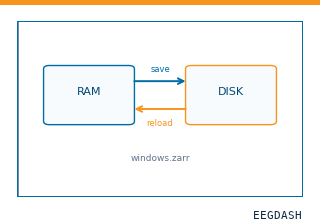 Save and reload prepared dataCache a windowed dataset to disk and reattach it without recompute.
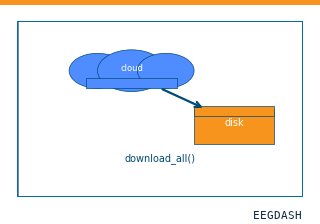 Download a dataset locallyPrefetch BIDS files to a local cache and validate the layout.
Swap any load_dataset(...) call for ds005873 to reproduce the tutorial on this dataset.
Citation
Miguel Bhagubai, Christos Chatzichristos, Lauren Swinnen, Jaiver Macea, Jingwei Zhang, … (20). SeizeIT2. 10.18112/openneuro.ds005873.v1.1.0
Provenance
¹Contributed to openneuro in BIDS format.
²Curated & ingested by the EEGDash catalog; see CITATION.cff for canonical reference.
³Persistent identifier: 10.18112/openneuro.ds005873.v1.1.0.
See Also#
eegdash.dataset.EEGDashDataseteegdash.dataset