


DS002158: eeg dataset, 20 subjects#
Disentangling the origins of confidence in speeded perceptual judgments through multimodal imaging
Access recordings and metadata through EEGDash.
Citation: Michael Pereira, Nathan Faivre, Inaki Iturrate, Marco Wirthlin, Luana Serafini, Stephanie Martin, Arnaud Desvachez, Olaf Blanke, Dimitri Van de Ville, Jose del R. Millan (2020). Disentangling the origins of confidence in speeded perceptual judgments through multimodal imaging. 10.18112/openneuro.ds002158.v1.0.2
Modality: eeg Subjects: 20 Recordings: 117 License: CC0 Source: openneuro Citations: 1.0
Metadata: Complete (100%)
20-participant EEG dataset — Disentangling the origins of confidence in speeded perceptual judgments through multimodal imaging.
Quickstart#
Install
pip install eegdash
Access the data
from eegdash.dataset import DS002158

dataset = DS002158(cache_dir="./data")
# Get the raw object of the first recording
raw = dataset.datasets[0].raw
print(raw.info)
Filter by subject
dataset = DS002158(cache_dir="./data", subject="01")
Advanced query
dataset = DS002158(
    cache_dir="./data",
    query={"subject": {"$in": ["01", "02"]}},
)
Iterate recordings
for rec in dataset:
    print(rec.subject, rec.raw.info['sfreq'])
If you use this dataset in your research, please cite the original authors.
BibTeX
@dataset{ds002158,
  title = {Disentangling the origins of confidence in speeded perceptual judgments through multimodal imaging},
  author = {Michael Pereira and Nathan Faivre and Inaki Iturrate and Marco Wirthlin and Luana Serafini and Stephanie Martin and Arnaud Desvachez and Olaf Blanke and Dimitri Van de Ville and Jose del R. Millan},
  doi = {10.18112/openneuro.ds002158.v1.0.2},
  url = {https://doi.org/10.18112/openneuro.ds002158.v1.0.2},
}
About This Dataset#
This dataset contains the data in
Pereira, M., Faivre, N., Iturrate, I., Wirthlin, M., Serafini, L., Martin, S., Desvachez, A., Blanke, O., Van De Ville, D., Millan, JdR. (2020). Disentangling the origins of confidence in speeded perceptual judgments through multimodal imaging. Proceedings of the National Academy of Science, 117 (15) pp. 8382-8390 https://doi.org/10.1073/pnas.1918335117 Preprint: https://www.biorxiv.org/content/10.1101/496877v1 ABSTRACT The human capacity to compute the likelihood that a decision is correct—known as metacognition—has proven difficult to study in isolation as it usually cooccurs with decision making. Here, we isolated postdecisional from decisional contributions to metacognition by analyzing neural correlates of confidence with multimodal imaging. Healthy volunteers reported their confidence in the accuracy of decisions they made or decisions they observed. We found better metacognitive performance for committed vs. observed decisions, indicating that committing to a decision may improve confidence. Relying on concurrent electroencephalography and hemodynamic recordings, we found a common correlate of confidence following committed and observed decisions in the inferior frontal gyrus and a dissociation in the anterior prefrontal cortex and anterior insula. We discuss these results in light of decisional and postdecisional accounts of confidence and propose a computational model of confidence in which metacognitive performance naturally improves when evidence accumulation is constrained upon committing a decision. preregistration: https://osf.io/a5qmv/ The dataset contains raw fMRI scans, raw EEG in BrainVision format as well as anatomical scans (T1) and field mapping. We also included preprocessed EEG and fMRI data in derivatives/eegprep and derivatives/fmriprep. EEG PREPROCESSING MR-gradient artifacts were removed using sliding window average template subtraction. TP10 electrode on the right mastoid was used to detect heartbeats for ballistocardiogram artifact (BCG) removal using a semi-automatic procedure in BrainVision Analyzer 2. Data were then filtered using a Butterworth, 4th order zero-phase (two-pass) bandpass filter between 1 and 10 Hz, epoched [-0.2, 0.6 s] around the response onset (i.e. the button press in the active condition or the appearance of the virtual hand for in observation condition), re-referenced to a common average, and input to independent component analysis (ICA) to remove residual BCG and ocular artifacts. In order to ensure numerical stability when estimating the independent components, we retained 99% of the variance from the electrode space, leading to an average of 19 (SD = 6) components estimated for each participant and condition. Independent components (ICs) were then fitted with a dipolar source localization method (66). ICs whose dipole lied outside the brain, or resembled muscular or ocular artifacts were eliminated. A total of 8 (SD = 3) components were finally kept. All preprocessing steps were performed using EEGLAB and in-house scripts under Matlab (The MathWorks, Inc., Natick, Massachusetts, United States). FMRI PREPROCESSING We modeled the BOLD signal using a general linear model (GLM) with two separate regressors (stick functions at stimulus onset) for the active and observation condition as well as their spatial and temporal derivatives. We then parametrically modulated the regressors with three behavioral variables: the confidence ratings, the response times, and the numerosity difference between the two arrays of dots (i.e., perceptual evidence). Empirical cross-correlation between regressors confirmed limited collinearity for the active (resp. observation) condition (max(abs(R)) = 0.26 ± 0.02 resp., max(abs(R)) = 0.25 ± 0.02). Bad trials as defined in the behavioral analysis section were modeled by two separate regressors (one for active and one for observation) and their spatial and temporal derivatives. We added six realignments parameters as regressors of no interest. All second-level (group-level) results are reported at a significance-level of p < 0.05 using cluster-extent family-wise error (FWE) correction with a voxel-height threshold of p < 0.001. We used the anatomical automatic labelling (AAL) atlas for brain parcellation (Tzourio-Mazoyer et al., 2002).
Cohort#
Dataset Statistics#
Age distribution by gender (n=20, range 20–32 yr, mean 24.9 yr)
Sex composition
Channel counts: 64 ch (n=117 recordings)
Sampling frequencies: 5000.0 Hz (n=117 recordings)
Signal · Electrodes & live trace#
Live trace viewer — sub-13 · ses-001 · task-main · run-006
Showing one representative recording out of
20 subjects and 117 recordings in this dataset.
Browse the full set on OpenNeuro;
drop any other _eeg.{set,edf,bdf,vhdr} file onto the
viewer (or pass ?eeg=<url>) to inspect it.
No scalp electrode layout is currently indexed for this dataset. Once the eegdash montage registry ingests it, the interactive viewer will appear here automatically.
NEMAR Processing Statistics#
The plots below are generated by NEMAR’s automated EEG pipeline. The histogram shows pipeline success for data cleaning and ICA decomposition, the percentage of data frames and EEG channels retained after artefact removal, line noise per channel (RMS, dB), and the age/gender distribution of participants.

HED event descriptors word cloud

Manifest#
File Explorer#
Browse the BIDS file structure of this dataset. Records are fetched on demand from the EEGDash catalog the first time you open the explorer.
Full dataset metadata table
Dataset ID |
|
Title |
Disentangling the origins of confidence in speeded perceptual judgments through multimodal imaging |
Author (year) |
|
Canonical |
— |
Importable as |
|
Year |
2020 |
Authors |
Michael Pereira, Nathan Faivre, Inaki Iturrate, Marco Wirthlin, Luana Serafini, Stephanie Martin, Arnaud Desvachez, Olaf Blanke, Dimitri Van de Ville, Jose del R. Millan |
License |
CC0 |
Citation / DOI |
|
Source links |
Copy-paste BibTeX
@dataset{ds002158,
  title = {Disentangling the origins of confidence in speeded perceptual judgments through multimodal imaging},
  author = {Michael Pereira and Nathan Faivre and Inaki Iturrate and Marco Wirthlin and Luana Serafini and Stephanie Martin and Arnaud Desvachez and Olaf Blanke and Dimitri Van de Ville and Jose del R. Millan},
  doi = {10.18112/openneuro.ds002158.v1.0.2},
  url = {https://doi.org/10.18112/openneuro.ds002158.v1.0.2},
}
API Reference#
eegdash.datasetEEGDashDatasetDS002158 · Pereira2019_Disentanglingeegdash/dataset/registry.py · [source ↗]- class eegdash.dataset.DS002158(cache_dir: str, query: dict | None = None, s3_bucket: str | None = None, **kwargs)[source]#
Disentangling the origins of confidence in speeded perceptual judgments through multimodal imaging
- Study:
ds002158(OpenNeuro)- Author (year):
Pereira2019_Disentangling- Canonical:
—
Also importable as:
DS002158,Pereira2019_Disentangling.Modality:
eeg; Experiment type:Affect; Subject type:Healthy. Subjects: 20; recordings: 117; tasks: 1.- Parameters:
cache_dir (str | Path) – Directory where data are cached locally.
query (dict | None) – Additional MongoDB-style filters to AND with the dataset selection. Must not contain the key
dataset.s3_bucket (str | None) – Base S3 bucket used to locate the data.
**kwargs (dict) – Additional keyword arguments forwarded to
EEGDashDataset.
- data_dir#
Local dataset cache directory (
cache_dir / dataset_id).- Type:
Path
Notes
Each item is a recording; recording-level metadata are available via
dataset.description.querysupports MongoDB-style filters on fields inALLOWED_QUERY_FIELDSand is combined with the dataset filter. Dataset-specific caveats are not provided in the summary metadata.References
OpenNeuro dataset: https://openneuro.org/datasets/ds002158 NeMAR dataset: https://nemar.org/dataexplorer/detail?dataset_id=ds002158 DOI: https://doi.org/10.18112/openneuro.ds002158.v1.0.2 NEMAR citation count: 1
Examples
>>> from eegdash.dataset import DS002158
>>> dataset = DS002158(cache_dir="./data")
>>> recording = dataset[0]
>>> raw = recording.load()
- __init__(cache_dir: str, query: dict | None = None, s3_bucket: str | None = None, **kwargs)[source]#
- save(path: str, overwrite: bool = False, offset: int = 0)[source]#
Save datasets to files by creating one subdirectory for each dataset:
path/
    0/
        0-raw.fif | 0-epo.fif
        description.json
        raw_preproc_kwargs.json (if raws were preprocessed)
        window_kwargs.json (if this is a windowed dataset)
        window_preproc_kwargs.json  (if windows were preprocessed)
        target_name.json (if target_name is not None and dataset is raw)
    1/
        1-raw.fif | 1-epo.fif
        description.json
        raw_preproc_kwargs.json (if raws were preprocessed)
        window_kwargs.json (if this is a windowed dataset)
        window_preproc_kwargs.json  (if windows were preprocessed)
        target_name.json (if target_name is not None and dataset is raw)
- Parameters:
path (str) –
- Directory in which subdirectories are created to store
-raw.fif | -epo.fif and .json files to.
overwrite (bool) – Whether to delete old subdirectories that will be saved to in this call.
offset (int) – If provided, the integer is added to the id of the dataset in the concat. This is useful in the setting of very large datasets, where one dataset has to be processed and saved at a time to account for its original position.
BaseDataset from braindecode — windowed via create_windows_from_events.braindecodeDataLoader; supports parallel workers and on-the-fly augmentations.pytorchdatasets.load_dataset("EEGDash/ds002158").huggingface Find datasets with the EEGDash APIQuery the catalogue, filter by task or modality, list candidates.
 Load one EEG recordingResolve a single record to an MNE Raw with channels and events.
 EEG recording to PyTorch DataLoaderWrap braindecode windows in a DataLoader for model training.
 Preprocess EEG and create windowsFilter, resample, epoch — and persist the windowed dataset.
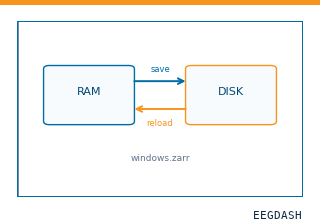 Save and reload prepared dataCache a windowed dataset to disk and reattach it without recompute.
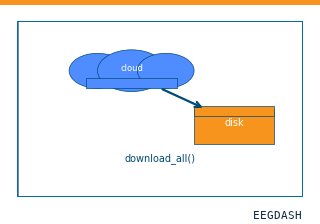 Download a dataset locallyPrefetch BIDS files to a local cache and validate the layout.
Swap any load_dataset(...) call for ds002158 to reproduce the tutorial on this dataset.
Citation
Michael Pereira, Nathan Faivre, Inaki Iturrate, Marco Wirthlin, Luana Serafini, … (2020). Disentangling the origins of confidence in speeded perceptual judgments through multimodal imaging. 10.18112/openneuro.ds002158.v1.0.2
Provenance
¹Contributed to openneuro in BIDS format.
²Curated & ingested by the EEGDash catalog; see CITATION.cff for canonical reference.
³Persistent identifier: 10.18112/openneuro.ds002158.v1.0.2.
See Also#
eegdash.dataset.EEGDashDataseteegdash.dataset