


NM000228: eeg dataset, 356 subjects#
Nieuwland et al. 2018: Multi-site N400 Replication Study
Access recordings and metadata through EEGDash.
Citation: Mante S. Nieuwland, Stephen Politzer-Ahles, Evelien Heyselaar, Katrien Segaert, Emily Darley, Nina Kazanina, Sarah Von Grebmer Zu Wolfsthurn, Federica Bartolozzi, Vita Kogan, Aine Ito, Diane Mézière, Dale J. Barr, Guillaume A. Rousselet, Heather J. Ferguson, Simon Busch-Moreno, Xiao Fu, Jyrki Tuomainen, Eugenia Kulakova, E. Matthew Husband, David I. Donaldson, Zdenko Kohút, Shirley-Ann Rueschemeyer, Falk Huettig (2005). Nieuwland et al. 2018: Multi-site N400 Replication Study. 10.7554/eLife.33468
Modality: eeg Subjects: 356 Recordings: 397 License: CC-BY 4.0 Source: nemar
Metadata: Complete (100%)
356-participant EEG dataset — Nieuwland et al. 2018: Multi-site N400 Replication Study.
Quickstart#
Install
pip install eegdash
Access the data
from eegdash.dataset import NM000228

dataset = NM000228(cache_dir="./data")
# Get the raw object of the first recording
raw = dataset.datasets[0].raw
print(raw.info)
Filter by subject
dataset = NM000228(cache_dir="./data", subject="01")
Advanced query
dataset = NM000228(
    cache_dir="./data",
    query={"subject": {"$in": ["01", "02"]}},
)
Iterate recordings
for rec in dataset:
    print(rec.subject, rec.raw.info['sfreq'])
If you use this dataset in your research, please cite the original authors.
BibTeX
@dataset{nm000228,
  title = {Nieuwland et al. 2018: Multi-site N400 Replication Study},
  author = {Mante S. Nieuwland and Stephen Politzer-Ahles and Evelien Heyselaar and Katrien Segaert and Emily Darley and Nina Kazanina and Sarah Von Grebmer Zu Wolfsthurn and Federica Bartolozzi and Vita Kogan and Aine Ito and Diane Mézière and Dale J. Barr and Guillaume A. Rousselet and Heather J. Ferguson and Simon Busch-Moreno and Xiao Fu and Jyrki Tuomainen and Eugenia Kulakova and E. Matthew Husband and David I. Donaldson and Zdenko Kohút and Shirley-Ann Rueschemeyer and Falk Huettig},
  doi = {10.7554/eLife.33468},
  url = {https://doi.org/10.7554/eLife.33468},
}
About This Dataset#
This is a large-scale (N=356) multi-laboratory replication of DeLong, Urbach &
Kutas (2005), testing whether readers pre-activate the phonological form of upcoming nouns during sentence comprehension. Participants read sentences word-by-word (RSVP, 2 words per second) that contained indefinite articles (a/an) preceding either highly expected or unexpected nouns (based on cloze probability), while EEG was recorded.
Nine laboratories in the UK collected data following a pre-registered
replication protocol (https://osf.io/eyzaq). The original study by DeLong et al. reported N400-like effects on the indefinite articles (larger negativity for unexpected articles). Nieuwland et al. found reliable N400 effects on the target nouns but no statistically significant effect on the preceding articles, challenging strong prediction accounts.
Nieuwland et al. 2018: Multi-site N400 Replication Study
Overview
Participants
356 total participants (222 women / 134 men)
All right-handed, native English speakers
Age 18–35 years (mean 19.8)
View full README
Nieuwland et al. 2018: Multi-site N400 Replication Study
Overview
Participants
356 total participants (222 women / 134 men)
All right-handed, native English speakers
Age 18–35 years (mean 19.8)
Normal or corrected-to-normal vision
Free from known language or learning disorders
89 reported a left-handed parent or sibling
After applying the paper’s quality threshold (<60/80 article or noun trials),
334 subjects were retained in the statistical analyses. In this BIDS release
we include ALL subjects for which raw data is available, with an
included_in_paper flag in participants.tsv so users can filter themselves.
Laboratories
| Lab (paper #) | Institution                | Format       | Sfreq    | Channels          |
|---------------|----------------------------|--------------|----------|-------------------|
| BIRM (1)      | University of Birmingham   | BrainVision  | 500 Hz   | 64 EEG            |
| BRIS (2)      | University of Bristol      | BrainVision  | 1000 Hz  | 32 EEG            |
| EDIN (3)      | University of Edinburgh    | BioSemi BDF  | 512 Hz   | 64 EEG + 8 EXG    |
| GLAS (4)      | University of Glasgow      | BioSemi BDF  | 512 Hz   | 128 EEG + 8 EXG   |
| KENT (5)      | University of Kent         | BrainVision  | 500 Hz   | 64 EEG + HEOG/VEOG|
| LOND (6)      | University College London  | BioSemi BDF  | 512 Hz   | 32 EEG + 8 EXG    |
| OXFO (7)      | University of Oxford       | BioSemi BDF  | 2048 Hz  | 64 EEG + 8 EXG    |
| STIR (8)      | University of Stirling     | Neuroscan CNT| 250 Hz   | 64 EEG + EOG      |
| YORK (9)      | University of York         | BrainVision  | 500 Hz   | 64 EEG + HEOG/VEOG|
Paradigm
Word-by-word RSVP: 200 ms word duration + 300 ms blank (2 words/sec)
80 Delong replication sentences + 80 control sentences
Comprehension questions on a subset of trials (yes/no button response)
Two counter-balanced stimulus lists (list 1 / list 2)
Tasks
task-delong: Main experiment (all subjects, all labs)task-control: Control grammaticality experiment (BRIS subjects, LOND 1-2)
Events (trial_type values)
- Delong experiment:
a_expected — article “a”, expected (high cloze) context an_expected — article “an”, expected (high cloze) context a_unexpected — article “a”, unexpected (low cloze) context an_unexpected — article “an”, unexpected (low cloze) context noun_expected — target noun, expected condition noun_unexpected — target noun, unexpected condition final_expected — sentence-final word, expected condition final_unexpected — sentence-final word, unexpected condition
- Control experiment:
control_correct — grammatically correct article control_incorrect — grammatically incorrect article
- General:
cloze_marker — cloze probability marker (trigger 1-100 or 200) item_marker — stimulus item marker (trigger 101-180) question — comprehension question onset filler_word — any other (non-critical) word in sentence unknown_trigger — trigger code not matched to any known category
Event enrichment
- Each event in
events.tsvis enriched (when applicable) with: sequence_id, item_number, list, task_type, condition
expected_article / unexpected_article (a or an)
expected_noun / unexpected_noun (strings)
expected_cloze / unexpected_cloze (0-100)
plausibility_expected / plausibility_unexpected (1-7 Likert)
sentence_context / sentence_ending (strings)
has_question, question_text, question_answer
These come from the authors’ REPLICATION_ITEMS.xlsx file on OSF.
participants.tsv columns
participant_id — sub-<lab><num> lab — birm/bris/edin/glas/kent/lond/oxfo/stir/york lab_number — 1-9 (paper’s numbering) institution — full institution name list — stimulus list (1 or 2) accuracy — % correct on comprehension questions (from OSF) n_article_trials — article trials kept (out of 80) n_noun_trials — noun trials kept (out of 80) included_in_paper — True if >=60/80 trials (paper’s threshold) exclusion_note — e.g. “random_answers”, “non_native”, “low_trials” hand — R (all right-handed) age_range — 18-35 (all participants) native_language — English (all participants) recording_system — manufacturer + model
Notes
Original raw data is kept — no filtering, no resampling, no artifact rejection
Channel types: EEG, EOG, and misc (peripheral) channels are labeled
For BDF labs, channels EXG1-8, GSR1/2, Erg1/2, Resp, Plet, Temp are marked misc
GLAS has a 128-channel BioSemi montage (biosemi128)
STIR data is read with a custom Neuroscan CNT parser (MNE’s built-in reader has a bug with the corrupted total_samples header field)
OXFO has 3 subjects recorded with BrainVision instead of BDF
Reference
Nieuwland, M.S., Politzer-Ahles, S., Heyselaar, E., Segaert, K., Darley, E., Kazanina, N., …, Huettig, F. (2018). Large-scale replication study reveals a limit on probabilistic prediction in language comprehension. eLife, 7, e33468. https://doi.org/10.7554/eLife.33468
References
Appelhoff, S., Sanderson, M., Brooks, T., Vliet, M., Quentin, R., Holdgraf, C., Chaumon, M., Mikulan, E., Tavabi, K., Höchenberger, R., Welke, D., Brunner, C., Rockhill, A., Larson, E., Gramfort, A. and Jas, M. (2019). MNE-BIDS: Organizing electrophysiological data into the BIDS format and facilitating their analysis. Journal of Open Source Software 4: (1896).https://doi.org/10.21105/joss.01896 Pernet, C. R., Appelhoff, S., Gorgolewski, K. J., Flandin, G., Phillips, C., Delorme, A., Oostenveld, R. (2019). EEG-BIDS, an extension to the brain imaging data structure for electroencephalography. Scientific Data, 6, 103.https://doi.org/10.1038/s41597-019-0104-8
NEMAR Metadata#
Nieuwland et al. 2018: Multi-site N400 Replication Study#
Overview#
This is a large-scale (N=356) multi-laboratory replication of DeLong, Urbach &
Kutas (2005), testing whether readers pre-activate the phonological form of
upcoming nouns during sentence comprehension. Participants read sentences
word-by-word (RSVP, 2 words per second) that contained indefinite articles
(a/an) preceding either highly expected or unexpected nouns (based on cloze
probability), while EEG was recorded.
Nine laboratories in the UK collected data following a pre-registered
replication protocol (https://osf.io/eyzaq). The original study by DeLong et
al. reported N400-like effects on the indefinite articles (larger negativity
for unexpected articles). Nieuwland et al. found reliable N400 effects on the
target nouns but no statistically significant effect on the preceding
articles, challenging strong prediction accounts.
Participants
————
- 356 total participants (222 women / 134 men)
- All right-handed, native English speakers
- Age 18–35 years (mean 19.8)
- Normal or corrected-to-normal vision
- Free from known language or learning disorders
- 89 reported a left-handed parent or sibling
After applying the paper’s quality threshold (<60/80 article or noun trials),
334 subjects were retained in the statistical analyses. In this BIDS release
we include ALL subjects for which raw data is available, with an
included_in_paper flag in participants.tsv so users can filter themselves.
Laboratories
————
| Lab (paper #) | Institution | Format | Sfreq | Channels |
|---------------|—————————-|--------------|———-|-------------------|
| BIRM (1) | University of Birmingham | BrainVision | 500 Hz | 64 EEG |
| BRIS (2) | University of Bristol | BrainVision | 1000 Hz | 32 EEG |
| EDIN (3) | University of Edinburgh | BioSemi BDF | 512 Hz | 64 EEG + 8 EXG |
| GLAS (4) | University of Glasgow | BioSemi BDF | 512 Hz | 128 EEG + 8 EXG |
| KENT (5) | University of Kent | BrainVision | 500 Hz | 64 EEG + HEOG/VEOG|
| LOND (6) | University College London | BioSemi BDF | 512 Hz | 32 EEG + 8 EXG |
| OXFO (7) | University of Oxford | BioSemi BDF | 2048 Hz | 64 EEG + 8 EXG |
| STIR (8) | University of Stirling | Neuroscan CNT| 250 Hz | 64 EEG + EOG |
| YORK (9) | University of York | BrainVision | 500 Hz | 64 EEG + HEOG/VEOG|
Paradigm
——–
- Word-by-word RSVP: 200 ms word duration + 300 ms blank (2 words/sec)
- 80 Delong replication sentences + 80 control sentences
- Comprehension questions on a subset of trials (yes/no button response)
- Two counter-balanced stimulus lists (list 1 / list 2)
Tasks
—–
- task-delong: Main experiment (all subjects, all labs)
- task-control: Control grammaticality experiment (BRIS subjects, LOND 1-2)
Events (trial_type values)
————————–
Delong experiment:
a_expected — article “a”, expected (high cloze) context an_expected — article “an”, expected (high cloze) context a_unexpected — article “a”, unexpected (low cloze) context an_unexpected — article “an”, unexpected (low cloze) context noun_expected — target noun, expected condition noun_unexpected — target noun, unexpected condition final_expected — sentence-final word, expected condition final_unexpected — sentence-final word, unexpected condition
- Control experiment:
control_correct — grammatically correct article control_incorrect — grammatically incorrect article
- General:
cloze_marker — cloze probability marker (trigger 1-100 or 200) item_marker — stimulus item marker (trigger 101-180) question — comprehension question onset filler_word — any other (non-critical) word in sentence unknown_trigger — trigger code not matched to any known category
Event enrichment#
- Each event in
events.tsvis enriched (when applicable) with: sequence_id, item_number, list, task_type, condition
expected_article / unexpected_article (a or an)
expected_noun / unexpected_noun (strings)
expected_cloze / unexpected_cloze (0-100)
plausibility_expected / plausibility_unexpected (1-7 Likert)
sentence_context / sentence_ending (strings)
has_question, question_text, question_answer
These come from the authors’ REPLICATION_ITEMS.xlsx file on OSF. participants.tsv columns ————————
participant_id — sub-<lab><num> lab — birm/bris/edin/glas/kent/lond/oxfo/stir/york lab_number — 1-9 (paper’s numbering) institution — full institution name list — stimulus list (1 or 2) accuracy — % correct on comprehension questions (from OSF) n_article_trials — article trials kept (out of 80) n_noun_trials — noun trials kept (out of 80) included_in_paper — True if >=60/80 trials (paper’s threshold) exclusion_note — e.g. “random_answers”, “non_native”, “low_trials” hand — R (all right-handed) age_range — 18-35 (all participants) native_language — English (all participants) recording_system — manufacturer + model
Notes#
Original raw data is kept — no filtering, no resampling, no artifact rejection
Channel types: EEG, EOG, and misc (peripheral) channels are labeled
For BDF labs, channels EXG1-8, GSR1/2, Erg1/2, Resp, Plet, Temp are marked misc
GLAS has a 128-channel BioSemi montage (biosemi128)
STIR data is read with a custom Neuroscan CNT parser (MNE’s built-in reader has a bug with the corrupted total_samples header field)
OXFO has 3 subjects recorded with BrainVision instead of BDF
Reference#
Nieuwland, M.S., Politzer-Ahles, S., Heyselaar, E., Segaert, K., Darley, E., Kazanina, N., …, Huettig, F. (2018). Large-scale replication study reveals a limit on probabilistic prediction in language comprehension. eLife, 7, e33468. https://doi.org/10.7554/eLife.33468 References ———- Appelhoff, S., Sanderson, M., Brooks, T., Vliet, M., Quentin, R., Holdgraf, C., Chaumon, M., Mikulan, E., Tavabi, K., Höchenberger, R., Welke, D., Brunner, C., Rockhill, A., Larson, E., Gramfort, A. and Jas, M. (2019). MNE-BIDS: Organizing electrophysiological data into the BIDS format and facilitating their analysis. Journal of Open Source Software 4: (1896).https://doi.org/10.21105/joss.01896 Pernet, C. R., Appelhoff, S., Gorgolewski, K. J., Flandin, G., Phillips, C., Delorme, A., Oostenveld, R. (2019). EEG-BIDS, an extension to the brain imaging data structure for electroencephalography. Scientific Data, 6, 103.https://doi.org/10.1038/s41597-019-0104-8
License: CC-BY 4.0
Authors:
Mante S. Nieuwland
Stephen Politzer-Ahles
Evelien Heyselaar
Katrien Segaert
Emily Darley
… and 18 more
Versions:
Version |
DOI |
Released |
|---|---|---|
|
Cohort#
Dataset Statistics#
Channel counts (ch)
Sampling frequencies (Hz)
Total recording duration: 232 h
Signal · Electrodes & live trace#
Live trace viewer — sub-kent0034 · task-delong
Showing one representative recording out of
356 subjects and 397 recordings in this dataset.
Browse the full set on OpenNeuro;
drop any other _eeg.{set,edf,bdf,vhdr} file onto the
viewer (or pass ?eeg=<url>) to inspect it.
Electrode layout — EEG · 32 sensors — 32 channels
NEMAR Processing Statistics#
The plots below are generated by NEMAR’s automated EEG pipeline. The histogram shows pipeline success for data cleaning and ICA decomposition, the percentage of data frames and EEG channels retained after artefact removal, line noise per channel (RMS, dB), and the age/gender distribution of participants.

HED event descriptors word cloud

Manifest#
File Explorer#
Browse the BIDS file structure of this dataset. Records are fetched on demand from the EEGDash catalog the first time you open the explorer.
Full dataset metadata table
Dataset ID |
|
Title |
Nieuwland et al. 2018: Multi-site N400 Replication Study |
Author (year) |
|
Canonical |
— |
Importable as |
|
Year |
2005 |
Authors |
Mante S. Nieuwland, Stephen Politzer-Ahles, Evelien Heyselaar, Katrien Segaert, Emily Darley, Nina Kazanina, Sarah Von Grebmer Zu Wolfsthurn, Federica Bartolozzi, Vita Kogan, Aine Ito, Diane Mézière, Dale J. Barr, Guillaume A. Rousselet, Heather J. Ferguson, Simon Busch-Moreno, Xiao Fu, Jyrki Tuomainen, Eugenia Kulakova, E. Matthew Husband, David I. Donaldson, Zdenko Kohút, Shirley-Ann Rueschemeyer, Falk Huettig |
License |
CC-BY 4.0 |
Citation / DOI |
|
Source links |
Copy-paste BibTeX
@dataset{nm000228,
  title = {Nieuwland et al. 2018: Multi-site N400 Replication Study},
  author = {Mante S. Nieuwland and Stephen Politzer-Ahles and Evelien Heyselaar and Katrien Segaert and Emily Darley and Nina Kazanina and Sarah Von Grebmer Zu Wolfsthurn and Federica Bartolozzi and Vita Kogan and Aine Ito and Diane Mézière and Dale J. Barr and Guillaume A. Rousselet and Heather J. Ferguson and Simon Busch-Moreno and Xiao Fu and Jyrki Tuomainen and Eugenia Kulakova and E. Matthew Husband and David I. Donaldson and Zdenko Kohút and Shirley-Ann Rueschemeyer and Falk Huettig},
  doi = {10.7554/eLife.33468},
  url = {https://doi.org/10.7554/eLife.33468},
}
API Reference#
eegdash.datasetEEGDashDatasetNM000228 · Nieuwland2018eegdash/dataset/registry.py · [source ↗]- class eegdash.dataset.NM000228(cache_dir: str, query: dict | None = None, s3_bucket: str | None = None, **kwargs)[source]#
Nieuwland et al. 2018: Multi-site N400 Replication Study
- Study:
nm000228(NeMAR)- Author (year):
Nieuwland2018- Canonical:
—
Also importable as:
NM000228,Nieuwland2018.Modality:
eeg; Experiment type:Language; Subject type:Healthy. Subjects: 356; recordings: 0; tasks: 2.- Parameters:
cache_dir (str | Path) – Directory where data are cached locally.
query (dict | None) – Additional MongoDB-style filters to AND with the dataset selection. Must not contain the key
dataset.s3_bucket (str | None) – Base S3 bucket used to locate the data.
**kwargs (dict) – Additional keyword arguments forwarded to
EEGDashDataset.
- data_dir#
Local dataset cache directory (
cache_dir / dataset_id).- Type:
Path
Notes
Each item is a recording; recording-level metadata are available via
dataset.description.querysupports MongoDB-style filters on fields inALLOWED_QUERY_FIELDSand is combined with the dataset filter. Dataset-specific caveats are not provided in the summary metadata.References
OpenNeuro dataset: https://openneuro.org/datasets/nm000228 NeMAR dataset: https://nemar.org/dataexplorer/detail?dataset_id=nm000228 DOI: https://doi.org/10.7554/eLife.33468
Examples
>>> from eegdash.dataset import NM000228
>>> dataset = NM000228(cache_dir="./data")
>>> recording = dataset[0]
>>> raw = recording.load()
- __init__(cache_dir: str, query: dict | None = None, s3_bucket: str | None = None, **kwargs)[source]#
- save(path: str, overwrite: bool = False, offset: int = 0)[source]#
Save datasets to files by creating one subdirectory for each dataset:
path/
    0/
        0-raw.fif | 0-epo.fif
        description.json
        raw_preproc_kwargs.json (if raws were preprocessed)
        window_kwargs.json (if this is a windowed dataset)
        window_preproc_kwargs.json  (if windows were preprocessed)
        target_name.json (if target_name is not None and dataset is raw)
    1/
        1-raw.fif | 1-epo.fif
        description.json
        raw_preproc_kwargs.json (if raws were preprocessed)
        window_kwargs.json (if this is a windowed dataset)
        window_preproc_kwargs.json  (if windows were preprocessed)
        target_name.json (if target_name is not None and dataset is raw)
- Parameters:
path (str) –
- Directory in which subdirectories are created to store
-raw.fif | -epo.fif and .json files to.
overwrite (bool) – Whether to delete old subdirectories that will be saved to in this call.
offset (int) – If provided, the integer is added to the id of the dataset in the concat. This is useful in the setting of very large datasets, where one dataset has to be processed and saved at a time to account for its original position.
BaseDataset from braindecode — windowed via create_windows_from_events.braindecodeDataLoader; supports parallel workers and on-the-fly augmentations.pytorchdatasets.load_dataset("EEGDash/nm000228").huggingface Find datasets with the EEGDash APIQuery the catalogue, filter by task or modality, list candidates.
 Load one EEG recordingResolve a single record to an MNE Raw with channels and events.
 EEG recording to PyTorch DataLoaderWrap braindecode windows in a DataLoader for model training.
 Preprocess EEG and create windowsFilter, resample, epoch — and persist the windowed dataset.
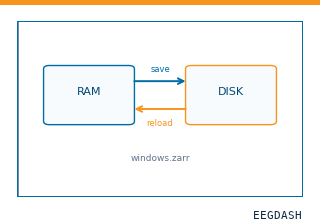 Save and reload prepared dataCache a windowed dataset to disk and reattach it without recompute.
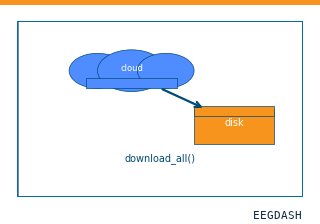 Download a dataset locallyPrefetch BIDS files to a local cache and validate the layout.
Swap any load_dataset(...) call for nm000228 to reproduce the tutorial on this dataset.
Citation
Mante S. Nieuwland, Stephen Politzer-Ahles, Evelien Heyselaar, Katrien Segaert, Emily Darley, … (2005). Nieuwland et al. 2018: Multi-site N400 Replication Study. 10.7554/eLife.33468
Provenance
¹Contributed to nemar in BIDS format.
²Curated & ingested by the EEGDash catalog; see CITATION.cff for canonical reference.
³Persistent identifier: 10.7554/eLife.33468.
See Also#
eegdash.dataset.EEGDashDataseteegdash.dataset