


DS006803: eeg dataset, 63 subjects#
NeuroTechs Dataset for Stem Skills
Access recordings and metadata through EEGDash.
Citation: Tania Yareni Pech-Canul, Roberto Guajardo, Luis Fernando Acosta-Soto, Mónica Sofía Margoya-Constantino, Juan Pablo Rosado-Aíza, Luz María Alonso-Valerdi (20). NeuroTechs Dataset for Stem Skills. 10.18112/openneuro.ds006803.v1.1.1
Modality: eeg Subjects: 63 Recordings: 126 License: CC0 Source: openneuro
Metadata: Complete (100%)
63-participant EEG dataset — NeuroTechs Dataset for Stem Skills.
Quickstart#
Install
pip install eegdash
Access the data
from eegdash.dataset import DS006803

dataset = DS006803(cache_dir="./data")
# Get the raw object of the first recording
raw = dataset.datasets[0].raw
print(raw.info)
Filter by subject
dataset = DS006803(cache_dir="./data", subject="01")
Advanced query
dataset = DS006803(
    cache_dir="./data",
    query={"subject": {"$in": ["01", "02"]}},
)
Iterate recordings
for rec in dataset:
    print(rec.subject, rec.raw.info['sfreq'])
If you use this dataset in your research, please cite the original authors.
BibTeX
@dataset{ds006803,
  title = {NeuroTechs Dataset for Stem Skills},
  author = {Tania Yareni Pech-Canul and Roberto Guajardo and Luis Fernando Acosta-Soto and Mónica Sofía Margoya-Constantino and Juan Pablo Rosado-Aíza and Luz María Alonso-Valerdi},
  doi = {10.18112/openneuro.ds006803.v1.1.1},
  url = {https://doi.org/10.18112/openneuro.ds006803.v1.1.1},
}
About This Dataset#
Juan Pablo Rosado Aíza jprosadoa@gmail.com
ORCID 0009-0004-5690-1753 - Practical information to access the data
The data units are in microvolts, transformed from raw Unicorn API for Python values.
README
Details related to access to the data]
Contact person
Overview
Evaluating STEM skills in students
View full README
README
Details related to access to the data]
Contact person
Overview
Evaluating STEM skills in students - Year(s) that the project ran
2025 May - July - Brief overview of the tasks in the experiment
Participants answered a computer test through psychopy. The paradigm includes a 2 minute basal state (minute 1 with eyes closed, minute 2 with eyes open) and sections for each skill evaluated. 4 math sections, 1 per basic operation (sum, subtraction, multiplication and division), 1 programming section and 1 spatial ability section. The sections ran until either time or questions ran out. There was a 30 second break between sections.
The event markers with each question, answer and time can be found within each subject folder. The point of the paradigm is to compare different class groups and their global performance. The point of the EEG data is to image the brain for potential analysis of band activity to help explain differences in the groups. the experimental group took classes using interactive tools like Google Colab during class. - Description of the contents of the dataset
8 Channel EEG data for 63 subjects, 23 experimental “intervention” subjects and 40 control subjects. You can find both raw (Session 1) and preprocessed (Session 2) data. All EEG data starts at second 3, since seconds (0-3) were cut in preprocessing. The timestamps in all event markers are in this time signature (Timestamp in second 3 corresponds to sample 1, second 4 is sample 251). - Independent variables
Groups for the subjects. - Dependent variables
Performance, EEG data. - Control variables
Time of participation (End of semester), place for data acquisition, status as student.
Methods
Subjects
All subjects are either experimental or control, whose ID is in the format XXc for control and XXe for experimental. [ ] Subject inclusion/exclusion criteria (if relevant) Only students enrolled in the course at hand.
Participants 1e, 3e, 4e, 6e, 9e, 10e, 12e, 14e, 15e, 24e, 25e, 33e, 34e, 36e, 37e, 39e, 40e, 41e, 14c and 16c were outliers on RMS voltage.
Apparatus
the room was performed in a closed room with a single researcher there to give instructions and answer any questions. There was a laptop and the EEG device was mounted using conductive gel.
Initial setup
Signing consent on paper was the first thing that was done, afterwards impedance measurements using UHB recorder software were made until all signals were “good” on the sofware.
The subjects then answered the test.
Task organization
The test’s sections are not randomized nor counterbalanced, the order is as described above. The questions within each section were randomized.
Task details
Each question answered has a code, an answer and a timestamp, which can be found in the corresponding main section file for each subject. The questions themselves with codes and correct answers can be found in the stimuli folder.
Additional data acquired
Average cycle data for female subjects was calculated for each group, anonymously. Refer to extra_metadata.xlsx.
Experimental location
All data collection was collected in a controlled environment.
Missing data
Subject 17c, 30e, 32e and 35e where lost in the process of acquisition. All records start at second 3, instead of second 0, to eliminate connectivity noise and drift at the beginning. The basal state lasted 123 seconds to account for this, so the first 120 seconds correspond to the basal states.
All responses to “OR4” in the spatial ability sections are invalid, given that the correct answer is not among the options. It was excluded from all calculations shown in extra_metadata.xlsx.
Cohort#
Dataset Statistics#
Age distribution (n=63, range 18–24 yr, mean 19.5 yr · sex per subject not reported)
Sex composition
Channel counts: 8 ch (n=126 recordings)
Sampling frequencies: 250.0 Hz (n=126 recordings)
Total recording duration: 45 h
Signal · Electrodes & live trace#
Live trace viewer — sub-28e · ses-2 · task-STEMSKILLS
Showing one representative recording out of
63 subjects and 126 recordings in this dataset.
Browse the full set on OpenNeuro;
drop any other _eeg.{set,edf,bdf,vhdr} file onto the
viewer (or pass ?eeg=<url>) to inspect it.
Electrode layout — EEG · 8 sensors — 8 channels
NEMAR Processing Statistics#
The plots below are generated by NEMAR’s automated EEG pipeline. The histogram shows pipeline success for data cleaning and ICA decomposition, the percentage of data frames and EEG channels retained after artefact removal, line noise per channel (RMS, dB), and the age/gender distribution of participants.

HED event descriptors word cloud

Manifest#
File Explorer#
Browse the BIDS file structure of this dataset. Records are fetched on demand from the EEGDash catalog the first time you open the explorer.
Full dataset metadata table
Dataset ID |
|
Title |
NeuroTechs Dataset for Stem Skills |
Author (year) |
|
Canonical |
— |
Importable as |
|
Year |
20 |
Authors |
Tania Yareni Pech-Canul, Roberto Guajardo, Luis Fernando Acosta-Soto, Mónica Sofía Margoya-Constantino, Juan Pablo Rosado-Aíza, Luz María Alonso-Valerdi |
License |
CC0 |
Citation / DOI |
|
Source links |
OpenNeuro | NeMAR | Source URL |
Copy-paste BibTeX
@dataset{ds006803,
  title = {NeuroTechs Dataset for Stem Skills},
  author = {Tania Yareni Pech-Canul and Roberto Guajardo and Luis Fernando Acosta-Soto and Mónica Sofía Margoya-Constantino and Juan Pablo Rosado-Aíza and Luz María Alonso-Valerdi},
  doi = {10.18112/openneuro.ds006803.v1.1.1},
  url = {https://doi.org/10.18112/openneuro.ds006803.v1.1.1},
}
API Reference#
eegdash.datasetEEGDashDatasetDS006803 · PechCanul2025eegdash/dataset/registry.py · [source ↗]- class eegdash.dataset.DS006803(cache_dir: str, query: dict | None = None, s3_bucket: str | None = None, **kwargs)[source]#
NeuroTechs Dataset for Stem Skills
- Study:
ds006803(OpenNeuro)- Author (year):
PechCanul2025- Canonical:
—
Also importable as:
DS006803,PechCanul2025.Modality:
eeg; Experiment type:Learning; Subject type:Healthy. Subjects: 63; recordings: 126; tasks: 1.- Parameters:
cache_dir (str | Path) – Directory where data are cached locally.
query (dict | None) – Additional MongoDB-style filters to AND with the dataset selection. Must not contain the key
dataset.s3_bucket (str | None) – Base S3 bucket used to locate the data.
**kwargs (dict) – Additional keyword arguments forwarded to
EEGDashDataset.
- data_dir#
Local dataset cache directory (
cache_dir / dataset_id).- Type:
Path
Notes
Each item is a recording; recording-level metadata are available via
dataset.description.querysupports MongoDB-style filters on fields inALLOWED_QUERY_FIELDSand is combined with the dataset filter. Dataset-specific caveats are not provided in the summary metadata.References
OpenNeuro dataset: https://openneuro.org/datasets/ds006803 NeMAR dataset: https://nemar.org/dataexplorer/detail?dataset_id=ds006803 DOI: https://doi.org/10.18112/openneuro.ds006803.v1.1.1
Examples
>>> from eegdash.dataset import DS006803
>>> dataset = DS006803(cache_dir="./data")
>>> recording = dataset[0]
>>> raw = recording.load()
- __init__(cache_dir: str, query: dict | None = None, s3_bucket: str | None = None, **kwargs)[source]#
- save(path: str, overwrite: bool = False, offset: int = 0)[source]#
Save datasets to files by creating one subdirectory for each dataset:
path/
    0/
        0-raw.fif | 0-epo.fif
        description.json
        raw_preproc_kwargs.json (if raws were preprocessed)
        window_kwargs.json (if this is a windowed dataset)
        window_preproc_kwargs.json  (if windows were preprocessed)
        target_name.json (if target_name is not None and dataset is raw)
    1/
        1-raw.fif | 1-epo.fif
        description.json
        raw_preproc_kwargs.json (if raws were preprocessed)
        window_kwargs.json (if this is a windowed dataset)
        window_preproc_kwargs.json  (if windows were preprocessed)
        target_name.json (if target_name is not None and dataset is raw)
- Parameters:
path (str) –
- Directory in which subdirectories are created to store
-raw.fif | -epo.fif and .json files to.
overwrite (bool) – Whether to delete old subdirectories that will be saved to in this call.
offset (int) – If provided, the integer is added to the id of the dataset in the concat. This is useful in the setting of very large datasets, where one dataset has to be processed and saved at a time to account for its original position.
BaseDataset from braindecode — windowed via create_windows_from_events.braindecodeDataLoader; supports parallel workers and on-the-fly augmentations.pytorchdatasets.load_dataset("EEGDash/ds006803").huggingface Find datasets with the EEGDash APIQuery the catalogue, filter by task or modality, list candidates.
 Load one EEG recordingResolve a single record to an MNE Raw with channels and events.
 EEG recording to PyTorch DataLoaderWrap braindecode windows in a DataLoader for model training.
 Preprocess EEG and create windowsFilter, resample, epoch — and persist the windowed dataset.
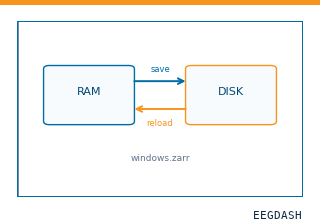 Save and reload prepared dataCache a windowed dataset to disk and reattach it without recompute.
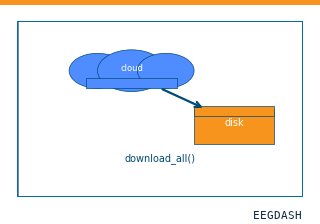 Download a dataset locallyPrefetch BIDS files to a local cache and validate the layout.
Swap any load_dataset(...) call for ds006803 to reproduce the tutorial on this dataset.
Citation
Tania Yareni Pech-Canul, Roberto Guajardo, Luis Fernando Acosta-Soto, Mónica Sofía Margoya-Constantino, Juan Pablo Rosado-Aíza, … (20). NeuroTechs Dataset for Stem Skills. 10.18112/openneuro.ds006803.v1.1.1
Provenance
¹Contributed to openneuro in BIDS format.
²Curated & ingested by the EEGDash catalog; see CITATION.cff for canonical reference.
³Persistent identifier: 10.18112/openneuro.ds006803.v1.1.1.
See Also#
eegdash.dataset.EEGDashDataseteegdash.dataset