


DS006593: eeg dataset, 21 subjects#
cBCI Matrix Multimodal Dataset
Access recordings and metadata through EEGDash.
Citation: Basak Celik, Tab Memmott, Matthew Lawhead, Srikar Ananthoju, Deniz Erdogmus (20). cBCI Matrix Multimodal Dataset. 10.18112/openneuro.ds006593.v1.0.0
Modality: eeg Subjects: 21 Recordings: 21 License: CC0 Source: openneuro
Metadata: Complete (100%)
21-participant EEG dataset — cBCI Matrix Multimodal Dataset.
Quickstart#
Install
pip install eegdash
Access the data
from eegdash.dataset import DS006593

dataset = DS006593(cache_dir="./data")
# Get the raw object of the first recording
raw = dataset.datasets[0].raw
print(raw.info)
Filter by subject
dataset = DS006593(cache_dir="./data", subject="01")
Advanced query
dataset = DS006593(
    cache_dir="./data",
    query={"subject": {"$in": ["01", "02"]}},
)
Iterate recordings
for rec in dataset:
    print(rec.subject, rec.raw.info['sfreq'])
If you use this dataset in your research, please cite the original authors.
BibTeX
@dataset{ds006593,
  title = {cBCI Matrix Multimodal Dataset},
  author = {Basak Celik and Tab Memmott and Matthew Lawhead and Srikar Ananthoju and Deniz Erdogmus},
  doi = {10.18112/openneuro.ds006593.v1.0.0},
  url = {https://doi.org/10.18112/openneuro.ds006593.v1.0.0},
}
About This Dataset#
This dataset contains recordings of EEG and EyeTracking for a BCI spelling task. The data were collected in 2023 at Northeastern University.
N=21
Calibration task were proctored using BciPy [1]
The dataset is organized in accordance with the Brain Imaging Data Structure (BIDS) specification (version 1.7.0).
Calibration data were collected from control participants (n=21, mean age 23.6 ± 3.1 years) in a quiet lab room at Northeastern University. EEG data were collected using the DSI-24, dry electrode cap (Wearable Sensing, San Diego CA) at a sampling rate of 300 Hz. The device employs a hardware filter permitting a collection bandwidth of 0.003–150 Hz. Data were recorded from Fp1/2, Fz, F3/4, F7/8, Cz, C3/4, T7/T8, T3/T4, Pz, P3/P4, P7/P8, T5/T6, O1/2 with linked-ear reference (A1 and A2) and ground at A1. All data were collected using a Lenovo Legion 5 Pro Laptop with Windows 11, an Intel Core i7-11800H @ 2.30 GHz, 16 GB DDR4 RAM, and a NVIDIA GeForce RTX 3050. Trigger fidelity on the experiment laptop was verified using the Matrix Time Test Task in BciPy and a photodiode. The results of this timing test were used to determine static offsets between hardware and prevent experimentation with any timing violations greater than +/− 10 ms. The Eyetracker data were collected using a portable eye tracker (Tobii Pro Nano) at a sampling rate of 60 Hz. The matrix paradigm and the data acquisition modules are developed in BciPy [1], which is a standalone application for experimental data collection. This work focuses on a specific BCI paradigm called single-character-presentation (SCP) based visual presentation, which consists of symbols presented in matrix form and individually highlighted in randomized order. Calibration task presented letter characters at a rate of 4 Hz, with 100 inquiries consisting of 10 letters each (1 target, 9 non-target). In 10% of the inquiries, only non-target characters were shown. The stimuli included all 26 letters of the English alphabet, as well as the characters “_” for space and “<“ for backspace. The order of target stimuli was randomly distributed among the inquiries. Between inquiries, there was a two-second blank screen. Each inquiry consisted of a one-second prompt showing the target letter, followed by a 0.5s fixation, and then the presentation of 10 letters. The letters were displayed in the center of the screen, in white on a black background. Target prompts and stimuli were presented in white, while fixation crosses were rendered in red.
Multimodal Sensor Fusion for EEG-Based BCI Typing Systems
Dataset Overview
The experimental protocol was approved by the Northeastern University Institutional Review Board (IRB). All participants provided written informed consent prior to participation.
Directory Structure
The datasets follows the BIDS convention with the following structure: /sub-[subject]/ses-[session]/[eeg or et]. To load the BIDS formatted data into BciPy Simulator, please see the following directory: /sourcedata/bcipy_metadata. This directory contains the raw BciPy parameter files. It also contains the output of the matrix display (matrix.png) for eyetracking visualization.
Contact Information
For questions or issues regarding this dataset, please contact the corresponding author Basak Celik via email. [1] Memmott T, Koçanaoğulları A, Lawhead M, Klee D, Dudy S, Fried-Oken M, Oken B. BciPy: brain-computer interface software in Python. Brain-Computer Interfaces, 8(4), 137-53, 2021.
Cohort#
Dataset Statistics#
Channel counts: 19 ch (n=21 recordings)
Sampling frequencies: 300.0 Hz (n=21 recordings)
Total recording duration: 5 h 36 min
Signal · Electrodes & live trace#
Live trace viewer — sub-S016 · ses-01 · task-MatrixCalibration · run-01
Showing one representative recording out of
21 subjects and 21 recordings in this dataset.
Browse the full set on OpenNeuro;
drop any other _eeg.{set,edf,bdf,vhdr} file onto the
viewer (or pass ?eeg=<url>) to inspect it.
Electrode layout — EEG · 19 sensors — 19 channels
NEMAR Processing Statistics#
The plots below are generated by NEMAR’s automated EEG pipeline. The histogram shows pipeline success for data cleaning and ICA decomposition, the percentage of data frames and EEG channels retained after artefact removal, line noise per channel (RMS, dB), and the age/gender distribution of participants.

HED event descriptors word cloud

Manifest#
File Explorer#
Browse the BIDS file structure of this dataset. Records are fetched on demand from the EEGDash catalog the first time you open the explorer.
Full dataset metadata table
Dataset ID |
|
Title |
cBCI Matrix Multimodal Dataset |
Author (year) |
|
Canonical |
— |
Importable as |
|
Year |
20 |
Authors |
Basak Celik, Tab Memmott, Matthew Lawhead, Srikar Ananthoju, Deniz Erdogmus |
License |
CC0 |
Citation / DOI |
|
Source links |
OpenNeuro | NeMAR | Source URL |
Copy-paste BibTeX
@dataset{ds006593,
  title = {cBCI Matrix Multimodal Dataset},
  author = {Basak Celik and Tab Memmott and Matthew Lawhead and Srikar Ananthoju and Deniz Erdogmus},
  doi = {10.18112/openneuro.ds006593.v1.0.0},
  url = {https://doi.org/10.18112/openneuro.ds006593.v1.0.0},
}
API Reference#
eegdash.datasetEEGDashDatasetDS006593 · Celik2025eegdash/dataset/registry.py · [source ↗]- class eegdash.dataset.DS006593(cache_dir: str, query: dict | None = None, s3_bucket: str | None = None, **kwargs)[source]#
cBCI Matrix Multimodal Dataset
- Study:
ds006593(OpenNeuro)- Author (year):
Celik2025- Canonical:
—
Also importable as:
DS006593,Celik2025.Modality:
eeg; Experiment type:Attention; Subject type:Healthy. Subjects: 21; recordings: 0; tasks: 1.- Parameters:
cache_dir (str | Path) – Directory where data are cached locally.
query (dict | None) – Additional MongoDB-style filters to AND with the dataset selection. Must not contain the key
dataset.s3_bucket (str | None) – Base S3 bucket used to locate the data.
**kwargs (dict) – Additional keyword arguments forwarded to
EEGDashDataset.
- data_dir#
Local dataset cache directory (
cache_dir / dataset_id).- Type:
Path
Notes
Each item is a recording; recording-level metadata are available via
dataset.description.querysupports MongoDB-style filters on fields inALLOWED_QUERY_FIELDSand is combined with the dataset filter. Dataset-specific caveats are not provided in the summary metadata.References
OpenNeuro dataset: https://openneuro.org/datasets/ds006593 NeMAR dataset: https://nemar.org/dataexplorer/detail?dataset_id=ds006593 DOI: https://doi.org/10.18112/openneuro.ds006593.v1.0.0
Examples
>>> from eegdash.dataset import DS006593
>>> dataset = DS006593(cache_dir="./data")
>>> recording = dataset[0]
>>> raw = recording.load()
- __init__(cache_dir: str, query: dict | None = None, s3_bucket: str | None = None, **kwargs)[source]#
- save(path: str, overwrite: bool = False, offset: int = 0)[source]#
Save datasets to files by creating one subdirectory for each dataset:
path/
    0/
        0-raw.fif | 0-epo.fif
        description.json
        raw_preproc_kwargs.json (if raws were preprocessed)
        window_kwargs.json (if this is a windowed dataset)
        window_preproc_kwargs.json  (if windows were preprocessed)
        target_name.json (if target_name is not None and dataset is raw)
    1/
        1-raw.fif | 1-epo.fif
        description.json
        raw_preproc_kwargs.json (if raws were preprocessed)
        window_kwargs.json (if this is a windowed dataset)
        window_preproc_kwargs.json  (if windows were preprocessed)
        target_name.json (if target_name is not None and dataset is raw)
- Parameters:
path (str) –
- Directory in which subdirectories are created to store
-raw.fif | -epo.fif and .json files to.
overwrite (bool) – Whether to delete old subdirectories that will be saved to in this call.
offset (int) – If provided, the integer is added to the id of the dataset in the concat. This is useful in the setting of very large datasets, where one dataset has to be processed and saved at a time to account for its original position.
BaseDataset from braindecode — windowed via create_windows_from_events.braindecodeDataLoader; supports parallel workers and on-the-fly augmentations.pytorchdatasets.load_dataset("EEGDash/ds006593").huggingface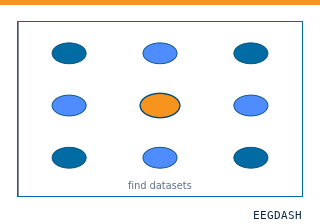 Find datasets with the EEGDash APIQuery the catalogue, filter by task or modality, list candidates.
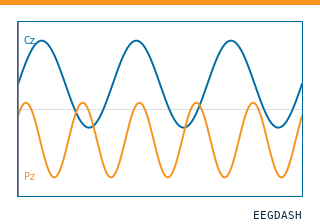 Load one EEG recordingResolve a single record to an MNE Raw with channels and events.
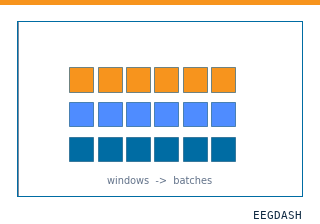 EEG recording to PyTorch DataLoaderWrap braindecode windows in a DataLoader for model training.
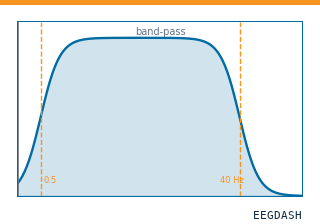 Preprocess EEG and create windowsFilter, resample, epoch — and persist the windowed dataset.
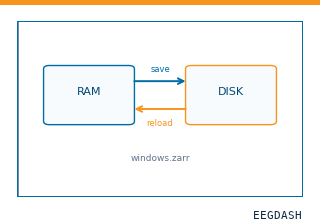 Save and reload prepared dataCache a windowed dataset to disk and reattach it without recompute.
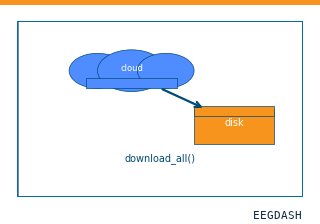 Download a dataset locallyPrefetch BIDS files to a local cache and validate the layout.
Swap any load_dataset(...) call for ds006593 to reproduce the tutorial on this dataset.
Citation
Basak Celik, Tab Memmott, Matthew Lawhead, Srikar Ananthoju, Deniz Erdogmus (20). cBCI Matrix Multimodal Dataset. 10.18112/openneuro.ds006593.v1.0.0
Provenance
¹Contributed to openneuro in BIDS format.
²Curated & ingested by the EEGDash catalog; see CITATION.cff for canonical reference.
³Persistent identifier: 10.18112/openneuro.ds006593.v1.0.0.
See Also#
eegdash.dataset.EEGDashDataseteegdash.dataset