


DS006850: eeg dataset, 63 subjects#
Urban Appraisal: Physiological Recording during Rating of Different Urban Environments
Access recordings and metadata through EEGDash.
Citation: Carolina Zaehme, Isabelle Sander, Klaus Gramann (20). Urban Appraisal: Physiological Recording during Rating of Different Urban Environments. 10.18112/openneuro.ds006850.v1.0.0
Modality: eeg Subjects: 63 Recordings: 126 License: CC0 Source: openneuro
Metadata: Complete (100%)
63-participant EEG dataset — Urban Appraisal: Physiological Recording during Rating of Different Urban Environments.
Quickstart#
Install
pip install eegdash
Access the data
from eegdash.dataset import DS006850

dataset = DS006850(cache_dir="./data")
# Get the raw object of the first recording
raw = dataset.datasets[0].raw
print(raw.info)
Filter by subject
dataset = DS006850(cache_dir="./data", subject="01")
Advanced query
dataset = DS006850(
    cache_dir="./data",
    query={"subject": {"$in": ["01", "02"]}},
)
Iterate recordings
for rec in dataset:
    print(rec.subject, rec.raw.info['sfreq'])
If you use this dataset in your research, please cite the original authors.
BibTeX
@dataset{ds006850,
  title = {Urban Appraisal: Physiological Recording during Rating of Different Urban Environments},
  author = {Carolina Zaehme and Isabelle Sander and Klaus Gramann},
  doi = {10.18112/openneuro.ds006850.v1.0.0},
  url = {https://doi.org/10.18112/openneuro.ds006850.v1.0.0},
}
About This Dataset#
The EEG dataset is licensed under the Creative Commons Attribution 4.0 International (CC BY 4.0) license. You are free to use, share, and adapt the data, provided appropriate credit is given.
Please ensure compliance with any applicable ethical and institutional guidelines.
Ethical approval for the data collection was obtained from the Ethics Board of the Institute of Psychology and Ergonomics at Technische Universität Berlin (ethics protocol BPN_GRA_230,415). - Contact person
README
Details related to access to the data
Data user agreement
Isabelle Sander isabelle.sander@tu-berlin.de ORCID: 0009-0006-0304-7690
View full README
README
Details related to access to the data
Data user agreement
Isabelle Sander isabelle.sander@tu-berlin.de ORCID: 0009-0006-0304-7690 - Practical information to access the data
NA
Overview
Project name (if relevant)
Urban Appraisal - Year(s) that the project ran
Data was collected between April and July 2024. - Brief overview of the tasks in the experiment
The data was recorded to investigate the influence of different urban environments and their elements on urban appraisals and neural responses.
Participants were presented with and rated Streetview images of different urban environments on a desktop PC. - Description of the contents of the dataset
Continuous EEG, ECG and EDA (GSR) Data from 63 participants. The data is separated into two block, during which participants took a break. ECG and EDA data was recorded using ExG amplifier by BrainProducts and is thus included in the eeg datasets as additional channels.
Note: While EDA data is labeled as being recorded in microVolts, the actual unit is microSiemens! - Independent variables
56 different Streetview images (available via github.com/BeMoBIL/urban_appraisal_experiment) being presented in combination with 9 different prompts & scales. Semantic segmentation was used to extract area of images covered by buildings, greenery, cars, sky and people to use as predictors for subjective and neural responses. - Dependent variables
Stimulus-Onset ERPs (P1, N1 at occipital electrode cluster POz, Oz, O1, and O2 and P3, LPP at parietal cluster CPz, Pz, P3, and P4) as well as subjective ratings on 9 scales. - Control variables
Experiment was performed in the same room with the same set up and under the same lighting conditions. - Quality assessment of the data
Data is of generally good quality. For used preprocessing steps see publication.
Methods
Subjects
Subjects were recruited from the participant pool of TU Berlin and consisted of students who participated for course credit as well as citizens of Berlin who participated for monetary renumeration. 63 subjects included (age M = 29.16 years, SD = 7.53, range = 19–61 years; 29 male, 33 female, 1 non-binary)
Remember that Control or Patient status should be defined in the participants.tsv
using a group column.
Apparatus
Participants were seated. The experiment was presented on a 27” (diagonal) monitor with a 60hz refresh rate at a resolution of 2560x1440p using Psychtoolbox (Brainard, 1997; Kleiner et al., 2007) for MATLAB (The Mathworks Inc., Version 2023b). 64-channel EEG data with actively amplified wet electrodes in 10-20 System using FCz as reference. ECG data was collected using one electrode at the right clavicle, one the left shinbone. EDA data was recorded from middle and ring fingers of the non-dominant hand.
The data was sampled at 500 Hz with a 16-bit resolution using BrainAmp DC amplifiers from BrainProducts (BrainProducts GmbH, Gilching, Germany) with a 0.016 Hz high-pass filter during data acquisition
Initial setup
Participants signed consent and were then prepped for EEG. Electrodes were gelled and impedances kept under 10 kOhm. Pre-gelled ECG electrodes were applied after skin was shaved and cleaned using alcohol. EDA velcro electrodes were applied and gelled with isotonic gel.
Task organization
Two sessions (pre and post break): Stimuli were separated into 28 pre and 28 post break. Within blocks, stimulus x scale presentations were randomized.
Task details
During the experiment, participants were presented with different urban stimuli and had to subsequently rate them on the nine subjective rating scales (arousal, valence, dominance, stress, openness, safety, beauty, hominess, and fascination). Each of the 56 stimuli were rated on each of the nine scales resulting in 504 trials. The stimulus-scale combinations were randomized individually for each participant and presented across two blocks of 28 stimuli each, separated by a break. Each experimental trial consisted of participants being presented with a word pair for 1000ms priming them to the scale they would be presented with (arousal: excited – calm; valence: happy – unhappy; dominance: controlled – in control; stress: relaxed – stressful; openness: narrow – open; safety: unsafe – safe; beauty: ugly – beautiful; hominess: alienated – at home; fascination: boring – fascinating). Subsequently, a fixation cross appeared for 500ms, followed by a stimulus for 3000ms. After the stimulus disappeared, the rating scale was presented until participants logged a rating using the computer mouse. At the beginning and end of the experiment there was a 3 min baseline recording in which participants kept their eyes open and looking at the screen.
Additional data acquired
Subjective rating data on the 9 scales per stimulus as well as sociodemographic data of participants (extraversion, emotional stability, size of the city they spent the first 15 years of their life in) was also collected. This data is also available under TBA.
Stimuli used are available under TBA.
Experimental location
Small Lab in BeMoBIL at TU Berlin
Missing data
NA
Notes
Data was recorded by Carolina Zähme, Kim Aljoscha Bressem and Isabelle Sander.
Cohort#
Dataset Statistics#
Age distribution by gender (n=63, range 19–61 yr, mean 29.4 yr)
Sex composition
Channel counts: 66 ch (n=126 recordings)
Sampling frequencies: 500.0 Hz (n=126 recordings)
Total recording duration: 78 h
Signal · Electrodes & live trace#
Live trace viewer — sub-13 · ses-b · task-UrbanAppraisal
Showing one representative recording out of
63 subjects and 126 recordings in this dataset.
Browse the full set on OpenNeuro;
drop any other _eeg.{set,edf,bdf,vhdr} file onto the
viewer (or pass ?eeg=<url>) to inspect it.
No scalp electrode layout is currently indexed for this dataset. Once the eegdash montage registry ingests it, the interactive viewer will appear here automatically.
NEMAR Processing Statistics#
The plots below are generated by NEMAR’s automated EEG pipeline. The histogram shows pipeline success for data cleaning and ICA decomposition, the percentage of data frames and EEG channels retained after artefact removal, line noise per channel (RMS, dB), and the age/gender distribution of participants.

HED event descriptors word cloud

Manifest#
File Explorer#
Browse the BIDS file structure of this dataset. Records are fetched on demand from the EEGDash catalog the first time you open the explorer.
Full dataset metadata table
Dataset ID |
|
Title |
Urban Appraisal: Physiological Recording during Rating of Different Urban Environments |
Author (year) |
|
Canonical |
— |
Importable as |
|
Year |
20 |
Authors |
Carolina Zaehme, Isabelle Sander, Klaus Gramann |
License |
CC0 |
Citation / DOI |
|
Source links |
Copy-paste BibTeX
@dataset{ds006850,
  title = {Urban Appraisal: Physiological Recording during Rating of Different Urban Environments},
  author = {Carolina Zaehme and Isabelle Sander and Klaus Gramann},
  doi = {10.18112/openneuro.ds006850.v1.0.0},
  url = {https://doi.org/10.18112/openneuro.ds006850.v1.0.0},
}
API Reference#
eegdash.datasetEEGDashDatasetDS006850 · Zaehme2025eegdash/dataset/registry.py · [source ↗]- class eegdash.dataset.DS006850(cache_dir: str, query: dict | None = None, s3_bucket: str | None = None, **kwargs)[source]#
Urban Appraisal: Physiological Recording during Rating of Different Urban Environments
- Study:
ds006850(OpenNeuro)- Author (year):
Zaehme2025- Canonical:
—
Also importable as:
DS006850,Zaehme2025.Modality:
eeg; Experiment type:Affect; Subject type:Healthy. Subjects: 63; recordings: 126; tasks: 1.- Parameters:
cache_dir (str | Path) – Directory where data are cached locally.
query (dict | None) – Additional MongoDB-style filters to AND with the dataset selection. Must not contain the key
dataset.s3_bucket (str | None) – Base S3 bucket used to locate the data.
**kwargs (dict) – Additional keyword arguments forwarded to
EEGDashDataset.
- data_dir#
Local dataset cache directory (
cache_dir / dataset_id).- Type:
Path
Notes
Each item is a recording; recording-level metadata are available via
dataset.description.querysupports MongoDB-style filters on fields inALLOWED_QUERY_FIELDSand is combined with the dataset filter. Dataset-specific caveats are not provided in the summary metadata.References
OpenNeuro dataset: https://openneuro.org/datasets/ds006850 NeMAR dataset: https://nemar.org/dataexplorer/detail?dataset_id=ds006850 DOI: https://doi.org/10.18112/openneuro.ds006850.v1.0.0
Examples
>>> from eegdash.dataset import DS006850
>>> dataset = DS006850(cache_dir="./data")
>>> recording = dataset[0]
>>> raw = recording.load()
- __init__(cache_dir: str, query: dict | None = None, s3_bucket: str | None = None, **kwargs)[source]#
- save(path: str, overwrite: bool = False, offset: int = 0)[source]#
Save datasets to files by creating one subdirectory for each dataset:
path/
    0/
        0-raw.fif | 0-epo.fif
        description.json
        raw_preproc_kwargs.json (if raws were preprocessed)
        window_kwargs.json (if this is a windowed dataset)
        window_preproc_kwargs.json  (if windows were preprocessed)
        target_name.json (if target_name is not None and dataset is raw)
    1/
        1-raw.fif | 1-epo.fif
        description.json
        raw_preproc_kwargs.json (if raws were preprocessed)
        window_kwargs.json (if this is a windowed dataset)
        window_preproc_kwargs.json  (if windows were preprocessed)
        target_name.json (if target_name is not None and dataset is raw)
- Parameters:
path (str) –
- Directory in which subdirectories are created to store
-raw.fif | -epo.fif and .json files to.
overwrite (bool) – Whether to delete old subdirectories that will be saved to in this call.
offset (int) – If provided, the integer is added to the id of the dataset in the concat. This is useful in the setting of very large datasets, where one dataset has to be processed and saved at a time to account for its original position.
BaseDataset from braindecode — windowed via create_windows_from_events.braindecodeDataLoader; supports parallel workers and on-the-fly augmentations.pytorchdatasets.load_dataset("EEGDash/ds006850").huggingface Find datasets with the EEGDash APIQuery the catalogue, filter by task or modality, list candidates.
 Load one EEG recordingResolve a single record to an MNE Raw with channels and events.
 EEG recording to PyTorch DataLoaderWrap braindecode windows in a DataLoader for model training.
 Preprocess EEG and create windowsFilter, resample, epoch — and persist the windowed dataset.
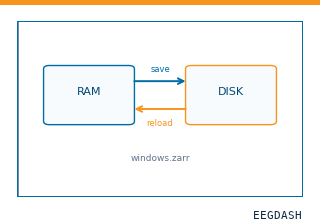 Save and reload prepared dataCache a windowed dataset to disk and reattach it without recompute.
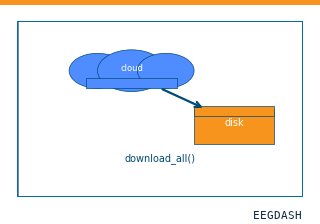 Download a dataset locallyPrefetch BIDS files to a local cache and validate the layout.
Swap any load_dataset(...) call for ds006850 to reproduce the tutorial on this dataset.
Citation
Carolina Zaehme, Isabelle Sander, Klaus Gramann (20). Urban Appraisal: Physiological Recording during Rating of Different Urban Environments. 10.18112/openneuro.ds006850.v1.0.0
Provenance
¹Contributed to openneuro in BIDS format.
²Curated & ingested by the EEGDash catalog; see CITATION.cff for canonical reference.
³Persistent identifier: 10.18112/openneuro.ds006850.v1.0.0.
See Also#
eegdash.dataset.EEGDashDataseteegdash.dataset