


DS005021: eeg dataset, 36 subjects#
Tilt Illusion by Phase
Access recordings and metadata through EEGDash.
Citation: Jessica G. Williams, William J. Harrison, Henry A. Beale, Jason B. Mattingley, Anthony M. Harris (2024). Tilt Illusion by Phase. 10.18112/openneuro.ds005021.v1.2.1
Modality: eeg Subjects: 36 Recordings: 36 License: CC0 Source: openneuro Citations: 0.0
Metadata: Complete (100%)
36-participant EEG dataset — Tilt Illusion by Phase.
Quickstart#
Install
pip install eegdash
Access the data
from eegdash.dataset import DS005021

dataset = DS005021(cache_dir="./data")
# Get the raw object of the first recording
raw = dataset.datasets[0].raw
print(raw.info)
Filter by subject
dataset = DS005021(cache_dir="./data", subject="01")
Advanced query
dataset = DS005021(
    cache_dir="./data",
    query={"subject": {"$in": ["01", "02"]}},
)
Iterate recordings
for rec in dataset:
    print(rec.subject, rec.raw.info['sfreq'])
If you use this dataset in your research, please cite the original authors.
BibTeX
@dataset{ds005021,
  title = {Tilt Illusion by Phase},
  author = {Jessica G. Williams and William J. Harrison and Henry A. Beale and Jason B. Mattingley and Anthony M. Harris},
  doi = {10.18112/openneuro.ds005021.v1.2.1},
  url = {https://doi.org/10.18112/openneuro.ds005021.v1.2.1},
}
About This Dataset#
This is the “Tilt Illusion” dataset.
In brief, it contains EEG data for 36 subjects responding to the percieved orientation
of a central target grating, that is titrated to appear vertical on average, and is surrounded by an anular grating of +-30 degrees. We then looked at the prestimulus EEG correlates of an increased or decreased tilt illusion.
Overview
Citing this dataset
Please cite as follows:
Williams, J.G., Harrison, W.J., Beale, H.A., Mattingley, J.B., & Harris, A.M. (2024). Effects of alpha oscillation power and phase on discrimination performance in a visual tilt illusion. Current Biology.
For more information, see the dataset_description.json file.
View full README
Overview
Citing this dataset
Please cite as follows:
Williams, J.G., Harrison, W.J., Beale, H.A., Mattingley, J.B., & Harris, A.M. (2024). Effects of alpha oscillation power and phase on discrimination performance in a visual tilt illusion. Current Biology.
For more information, see the dataset_description.json file.
License
The tilt illusion dataset is made available under the CC BY 4.0 license.
Copyright (c) 2024, Jessica Williams, William Harrison, Henry Beale, Jason Mattingley, & Anthony Harris A human readable information can be found at: https://creativecommons.org/licenses/by/4.0/deed.en
Format
The dataset is formatted according to the Brain Imaging Data Structure (BIDS).
See the dataset_description.json file for the specific version used.
Generally, you can find metadata in the .tsv files and documentation thereof in the accompanying .json files.
An important BIDS definition to consider is the “Inheritance Principle”, which
is described in the BIDS specification under the following link:
https://bids-specification.readthedocs.io/en/latest/common-principles.html#the-inheritance-principle
In brief, the Inheritance Pinciple states that any metadata file (such as .json, .tsv)
may be defined at any directory level, but no more than one applicable file may be defined at a given level […],
and the values from the top level are inherited by all lower levels –
unless they are overridden by a file at the lower level.
Details about the experiment
For a detailed description of the task, see Williams et al. (2024) What follows is a brief summary.
Participants were seated in front of a computer screen placed on a desk. On each trial they were presented with a central target grating, surrounded by an annular grating of +-30 degrees. This induced a ‘tilt illusion’ whereby the percieved angle of the central grating was biased away from the angle of the surround. We first titrated the angle of the central grating to each participant’s percieved vertical angle, separately for each surround. Percieved vertical was defined as the angle at which the participant reported the grating as tilted leftward and rightward equally often. Participants responded with their right hand by pressing the left and right arrow keys on a standard USB keyboard. Stimuli were presented very briefly (8.3ms) at 60% contrast, and were clearly visible.
Between trials, a mask made from the combination of several gratings was presented to prevent the buildup of tilt aftereffects across trials.
Throughout the experiment, EEG data was recorded using a Biosemi Active 2 system with 64 scalp electrods and 6 EOG electrodes (left and right HEOG, VEOG on left eye, and left and right mastoids - in positions EXG 3-8).
For more information, you can also consult the events.tsv and events.json files.
The original data was recorded in .bdf format using Actiview. It is stored in
the /sourcedata directory. To comply with the BIDS format, the .bdf format was
converted to EEGLab format, constituting a ‘.set’ file and a ‘fdt’ file for each
dataset.
Participant 1’s data was corrupted by large artefacts that could not be corrected. Participants 8, 16, and 28 had no EEG data recorded, as their pre-task titration failed to converge. As such, the data for these 4 participants are not included in this dataset.
Cohort#
Dataset Statistics#
Channel counts: 72 ch (n=36 recordings)
Sampling frequencies: 1024.0 Hz (n=36 recordings)
Total recording duration: 47 h
Signal · Electrodes & live trace#
Live trace viewer — sub-13 · task-tiltillusion
Showing one representative recording out of
36 subjects and 36 recordings in this dataset.
Browse the full set on OpenNeuro;
drop any other _eeg.{set,edf,bdf,vhdr} file onto the
viewer (or pass ?eeg=<url>) to inspect it.
No scalp electrode layout is currently indexed for this dataset. Once the eegdash montage registry ingests it, the interactive viewer will appear here automatically.
NEMAR Processing Statistics#
The plots below are generated by NEMAR’s automated EEG pipeline. The histogram shows pipeline success for data cleaning and ICA decomposition, the percentage of data frames and EEG channels retained after artefact removal, line noise per channel (RMS, dB), and the age/gender distribution of participants.

HED event descriptors word cloud

Manifest#
File Explorer#
Browse the BIDS file structure of this dataset. Records are fetched on demand from the EEGDash catalog the first time you open the explorer.
Full dataset metadata table
Dataset ID |
|
Title |
Tilt Illusion by Phase |
Author (year) |
|
Canonical |
— |
Importable as |
|
Year |
2024 |
Authors |
Jessica G. Williams, William J. Harrison, Henry A. Beale, Jason B. Mattingley, Anthony M. Harris |
License |
CC0 |
Citation / DOI |
|
Source links |
OpenNeuro | NeMAR | Source URL |
Copy-paste BibTeX
@dataset{ds005021,
  title = {Tilt Illusion by Phase},
  author = {Jessica G. Williams and William J. Harrison and Henry A. Beale and Jason B. Mattingley and Anthony M. Harris},
  doi = {10.18112/openneuro.ds005021.v1.2.1},
  url = {https://doi.org/10.18112/openneuro.ds005021.v1.2.1},
}
API Reference#
eegdash.datasetEEGDashDatasetDS005021 · Williams2024eegdash/dataset/registry.py · [source ↗]- class eegdash.dataset.DS005021(cache_dir: str, query: dict | None = None, s3_bucket: str | None = None, **kwargs)[source]#
Tilt Illusion by Phase
- Study:
ds005021(OpenNeuro)- Author (year):
Williams2024- Canonical:
—
Also importable as:
DS005021,Williams2024.Modality:
eeg; Experiment type:Attention; Subject type:Healthy. Subjects: 36; recordings: 36; tasks: 1.- Parameters:
cache_dir (str | Path) – Directory where data are cached locally.
query (dict | None) – Additional MongoDB-style filters to AND with the dataset selection. Must not contain the key
dataset.s3_bucket (str | None) – Base S3 bucket used to locate the data.
**kwargs (dict) – Additional keyword arguments forwarded to
EEGDashDataset.
- data_dir#
Local dataset cache directory (
cache_dir / dataset_id).- Type:
Path
Notes
Each item is a recording; recording-level metadata are available via
dataset.description.querysupports MongoDB-style filters on fields inALLOWED_QUERY_FIELDSand is combined with the dataset filter. Dataset-specific caveats are not provided in the summary metadata.References
OpenNeuro dataset: https://openneuro.org/datasets/ds005021 NeMAR dataset: https://nemar.org/dataexplorer/detail?dataset_id=ds005021 DOI: https://doi.org/10.18112/openneuro.ds005021.v1.2.1 NEMAR citation count: 0
Examples
>>> from eegdash.dataset import DS005021
>>> dataset = DS005021(cache_dir="./data")
>>> recording = dataset[0]
>>> raw = recording.load()
- __init__(cache_dir: str, query: dict | None = None, s3_bucket: str | None = None, **kwargs)[source]#
- save(path: str, overwrite: bool = False, offset: int = 0)[source]#
Save datasets to files by creating one subdirectory for each dataset:
path/
    0/
        0-raw.fif | 0-epo.fif
        description.json
        raw_preproc_kwargs.json (if raws were preprocessed)
        window_kwargs.json (if this is a windowed dataset)
        window_preproc_kwargs.json  (if windows were preprocessed)
        target_name.json (if target_name is not None and dataset is raw)
    1/
        1-raw.fif | 1-epo.fif
        description.json
        raw_preproc_kwargs.json (if raws were preprocessed)
        window_kwargs.json (if this is a windowed dataset)
        window_preproc_kwargs.json  (if windows were preprocessed)
        target_name.json (if target_name is not None and dataset is raw)
- Parameters:
path (str) –
- Directory in which subdirectories are created to store
-raw.fif | -epo.fif and .json files to.
overwrite (bool) – Whether to delete old subdirectories that will be saved to in this call.
offset (int) – If provided, the integer is added to the id of the dataset in the concat. This is useful in the setting of very large datasets, where one dataset has to be processed and saved at a time to account for its original position.
BaseDataset from braindecode — windowed via create_windows_from_events.braindecodeDataLoader; supports parallel workers and on-the-fly augmentations.pytorchdatasets.load_dataset("EEGDash/ds005021").huggingface Find datasets with the EEGDash APIQuery the catalogue, filter by task or modality, list candidates.
 Load one EEG recordingResolve a single record to an MNE Raw with channels and events.
 EEG recording to PyTorch DataLoaderWrap braindecode windows in a DataLoader for model training.
 Preprocess EEG and create windowsFilter, resample, epoch — and persist the windowed dataset.
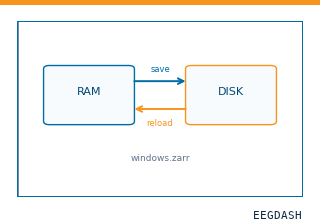 Save and reload prepared dataCache a windowed dataset to disk and reattach it without recompute.
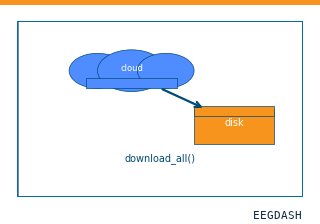 Download a dataset locallyPrefetch BIDS files to a local cache and validate the layout.
Swap any load_dataset(...) call for ds005021 to reproduce the tutorial on this dataset.
Citation
Jessica G. Williams, William J. Harrison, Henry A. Beale, Jason B. Mattingley, Anthony M. Harris (2024). Tilt Illusion by Phase. 10.18112/openneuro.ds005021.v1.2.1
Provenance
¹Contributed to openneuro in BIDS format.
²Curated & ingested by the EEGDash catalog; see CITATION.cff for canonical reference.
³Persistent identifier: 10.18112/openneuro.ds005021.v1.2.1.
See Also#
eegdash.dataset.EEGDashDataseteegdash.dataset