


DS006502: meg dataset, 31 subjects#
Skill learning and consolidation in healthy humans
Access recordings and metadata through EEGDash.
Citation: Bönstrup, M, Buch, ER, Cohen, LG (—). Skill learning and consolidation in healthy humans. 10.18112/openneuro.ds006502.v1.0.0
Modality: meg Subjects: 31 Recordings: 380 License: CC0 Source: openneuro
Metadata: Complete (100%)
31-participant MEG dataset — Skill learning and consolidation in healthy humans.
Quickstart#
Install
pip install eegdash
Access the data
from eegdash.dataset import DS006502

dataset = DS006502(cache_dir="./data")
# Get the raw object of the first recording
raw = dataset.datasets[0].raw
print(raw.info)
Filter by subject
dataset = DS006502(cache_dir="./data", subject="01")
Advanced query
dataset = DS006502(
    cache_dir="./data",
    query={"subject": {"$in": ["01", "02"]}},
)
Iterate recordings
for rec in dataset:
    print(rec.subject, rec.raw.info['sfreq'])
If you use this dataset in your research, please cite the original authors.
BibTeX
@dataset{ds006502,
  title = {Skill learning and consolidation in healthy humans},
  author = {Bönstrup, M and Buch, ER and Cohen, LG},
  doi = {10.18112/openneuro.ds006502.v1.0.0},
  url = {https://doi.org/10.18112/openneuro.ds006502.v1.0.0},
}
About This Dataset#
For additional information, please contact:
Ethan R. Buch (ethan.buch@nih.gov; ORCID: 0000-0002-5443-8222)
README
Contact
Overview
This study was carried out by the Human Cortical Physiology & Neurorehabilitation Section (HCPS) in the NINDS Intramural Research Program.
The primary aim of the study was to investigate changes in brain activity associated with early skill learning during an initial training session, overnight skill consolidation and longer-term skill retention. A longitudinal design was used. Skill learning was assessed using the sequential finger tapping task (SFTT). Participants completed an initial session in which anatomical MRI data was acquired, followed by up to three separate MEG session. During the first MEG training session, participants repeatedly typed a 5-item skill sequence (i.e. – 4-1-3-2-4) with their non-dominant left hand over 36 practice trials (lasting 10s each) inter-leaved with short 10s rest breaks. Their instructed goal was to type the sequence as fast and as accurately as possible. This first training session was typically followed by up to two separate MEG retest sessions occurring approximately 24 (mean+/-SD: 23.44+/- 1.32) hours and 30 (29.45 +/- 6.77) days later. During these later MEG sessions, participants were retested on the trained skill (over 9 trials) and 9 different untrained control skill sequences (one trial each). Resting state MEG data was acquired before and after practice blocks during all three MEG sessions. Skill performance, eye gaze and pupillometry, and left wrist flexor/extensor EMG data were also acquired and synchronized with MEG recordings.
View full README
README
Contact
Overview
This study was carried out by the Human Cortical Physiology & Neurorehabilitation Section (HCPS) in the NINDS Intramural Research Program.
The primary aim of the study was to investigate changes in brain activity associated with early skill learning during an initial training session, overnight skill consolidation and longer-term skill retention. A longitudinal design was used. Skill learning was assessed using the sequential finger tapping task (SFTT). Participants completed an initial session in which anatomical MRI data was acquired, followed by up to three separate MEG session. During the first MEG training session, participants repeatedly typed a 5-item skill sequence (i.e. – 4-1-3-2-4) with their non-dominant left hand over 36 practice trials (lasting 10s each) inter-leaved with short 10s rest breaks. Their instructed goal was to type the sequence as fast and as accurately as possible. This first training session was typically followed by up to two separate MEG retest sessions occurring approximately 24 (mean+/-SD: 23.44+/- 1.32) hours and 30 (29.45 +/- 6.77) days later. During these later MEG sessions, participants were retested on the trained skill (over 9 trials) and 9 different untrained control skill sequences (one trial each). Resting state MEG data was acquired before and after practice blocks during all three MEG sessions. Skill performance, eye gaze and pupillometry, and left wrist flexor/extensor EMG data were also acquired and synchronized with MEG recordings.
Methods
Ethics Review
All study procedures were approved by the Combined Neuroscience Institutional Review Board of the National Institutes of Health (NIH).
Subjects
Study data was acquired from a total of 31 right-handed, healthy adults (21 females; mean+/-SD age = 26.14 +/- 4.17). All participants provided written informed consent. Verification of clinical status was based upon a comprehensive health history assessment, physical and neurological examination, and unremarkable clinical Brain MRI scan prior to study data collection.
Inclusion criteria: Healthy right-handed adults. Exclusion criteria: Active musicians were excluded from the study.
Apparatus
T1-weighted high-resolution (1mm3 isotropic MPRAGE sequence) anatomical brain MRI volumes were acquired for each participant on 3T MRI scanners (GE Excite HDxt and Siemens Skyra) with a standard 32-channel head coil.
Continuous MEG and EMG data were acquired on a CTF-275 system (CTF Systems, Inc.) at a sampling frequency of 600Hz (60Hz power line frequency). All recordings were performed in a seated position inside a magnetically shielded room. Head position was determined before and after each scan run using three head localization coils attached to the right and left preauricular and nasion landmarks with adhesive tape. The locations for the coils was digitized and mapped the individual participant’s anatomical MRI volume using BrainSight (Rogue Research Inc.). Behavioral stimuli were presented and response data acquired using E-Prime 2 (Psychology Software Tools, Inc.) and the Cedrus LS-Line (Cedrus Corp) four-key response pad, respectively.
Eye gaze and pupillometry data was acquired using the EyeLink 1000 Plus (SR Research Ltd.) eye-tracker device and recorded using ADC channel inputs to the CTF-275 system.
Task details
Participants typed a 5-item numerical sequence displayed on a computer screen (41324) as quickly and as accurately as possible, with their non-dominant left hand. No explicit feedback related to performance accuracy or speed was provided. Small asterisks appeared above each sequence item as keypresses were recorded to provide location information to participants during practice. Individual practice trials lasted 10s each. All practice trials were interleaved with short 10s rest breaks. The displayed numerical target sequence was replaced with “XXXXX” during the rest breaks.
MEG session design
MEG1: 1) 6-minute rest scan 2) 12-minute “training” scan (4-1-3-2-4) 3) 6-minute rest scan
MEG2 (approximately 24 hours after MEG1 session on average; precise inter-session intervals can be found in participants.tsv file): 1) 6-minute rest scan 2) 3-minute trained sequence “retest” scan (4-1-3-2-4; 36 practice trials lasting 10s each with 10s interleaved rest breaks) 3) 6-minute rest scan 4) 3-minute “control” sequence scan (one 10s trial each of 9 different untrained sequences [2-1-3-4-2, 4-2-4-3-1, 3-4-2-3-1, 1-4-3-4-2, 3-2-4-3-1, 1-4-2-3-1, 3-2-4-2-1, 2-3-1-4-2, 4-2-3-1-4] with 10s interleaved rest breaks) 5) 6-minute rest scan
MEG3 (approximately 30 days after MEG1 session on average; precise inter-session intervals can be found in participants.tsv file): 1) 6-minute rest scan 2) 3-minute trained sequence “retest” scan (4-1-3-2-4; 9 practice trials lasting 10s each with 10s interleaved rest breaks) 3) 6-minute rest scan 4) 3-minute “control” sequence scan (one 10s trial each of 9 different untrained sequences [2-1-3-4-2, 3-1-2-1-4, 1-2-4-3-4, 4-1-3-2-1, 2-3-2-4-1, 3-1-4-3-2, 2-3-1-3-4, 1-2-1-3-4, 4-3-2-4-1] with 10s interleaved rest breaks) 5) 6-minute rest scan
Experimental location
All study data was acquired in the Nuclear Magnetic Resonance Facility (NMRF) at the NIH Clinical Center in Bethesda, MD.
Missing data
Three of the gradiometers were malfunctioning and were not used, resulting in 272 total channels of MEG data.
Some participants did not complete the 2nd and 3rd MEG sessions. No keypress responses were recorded for participant “sub-01” on trial 1 of MEG1 training.
The MEG recording for participant “sub-10” MEG1 training terminated during the rest break after practice trial 34. No MEG data was recorded for practice trials 35 and 36. No keypress responses were recorded for participant “sub-23” on trial 1 of MEG1 training and trials 1 and 2 of MEG2 retest.
Cohort#
Dataset Statistics#
Age distribution by gender (n=31, range 21–39 yr, mean 25.7 yr)
Sex composition
Channel counts (ch)
Sampling frequencies: 600.0 Hz (n=380 recordings)
Total recording duration: 37 h
Signal · Electrodes & live trace#
No scalp electrode layout is currently indexed for this dataset. Once the eegdash montage registry ingests it, the interactive viewer will appear here automatically.
NEMAR Processing Statistics#
The plots below are generated by NEMAR’s automated EEG pipeline. The histogram shows pipeline success for data cleaning and ICA decomposition, the percentage of data frames and EEG channels retained after artefact removal, line noise per channel (RMS, dB), and the age/gender distribution of participants.

HED event descriptors word cloud

Manifest#
File Explorer#
Browse the BIDS file structure of this dataset. Records are fetched on demand from the EEGDash catalog the first time you open the explorer.
Full dataset metadata table
Dataset ID |
|
Title |
Skill learning and consolidation in healthy humans |
Author (year) |
|
Canonical |
— |
Importable as |
|
Year |
— |
Authors |
Bönstrup, M, Buch, ER, Cohen, LG |
License |
CC0 |
Citation / DOI |
|
Source links |
Copy-paste BibTeX
@dataset{ds006502,
  title = {Skill learning and consolidation in healthy humans},
  author = {Bönstrup, M and Buch, ER and Cohen, LG},
  doi = {10.18112/openneuro.ds006502.v1.0.0},
  url = {https://doi.org/10.18112/openneuro.ds006502.v1.0.0},
}
API Reference#
eegdash.datasetEEGDashDatasetDS006502 · Bonstrup2025eegdash/dataset/registry.py · [source ↗]- class eegdash.dataset.DS006502(cache_dir: str, query: dict | None = None, s3_bucket: str | None = None, **kwargs)[source]#
Skill learning and consolidation in healthy humans
- Study:
ds006502(OpenNeuro)- Author (year):
Bonstrup2025- Canonical:
—
Also importable as:
DS006502,Bonstrup2025.Modality:
meg; Experiment type:Learning; Subject type:Healthy. Subjects: 31; recordings: 380; tasks: 4.- Parameters:
cache_dir (str | Path) – Directory where data are cached locally.
query (dict | None) – Additional MongoDB-style filters to AND with the dataset selection. Must not contain the key
dataset.s3_bucket (str | None) – Base S3 bucket used to locate the data.
**kwargs (dict) – Additional keyword arguments forwarded to
EEGDashDataset.
- data_dir#
Local dataset cache directory (
cache_dir / dataset_id).- Type:
Path
Notes
Each item is a recording; recording-level metadata are available via
dataset.description.querysupports MongoDB-style filters on fields inALLOWED_QUERY_FIELDSand is combined with the dataset filter. Dataset-specific caveats are not provided in the summary metadata.References
OpenNeuro dataset: https://openneuro.org/datasets/ds006502 NeMAR dataset: https://nemar.org/dataexplorer/detail?dataset_id=ds006502 DOI: https://doi.org/10.18112/openneuro.ds006502.v1.0.0
Examples
>>> from eegdash.dataset import DS006502
>>> dataset = DS006502(cache_dir="./data")
>>> recording = dataset[0]
>>> raw = recording.load()
- __init__(cache_dir: str, query: dict | None = None, s3_bucket: str | None = None, **kwargs)[source]#
- save(path: str, overwrite: bool = False, offset: int = 0)[source]#
Save datasets to files by creating one subdirectory for each dataset:
path/
    0/
        0-raw.fif | 0-epo.fif
        description.json
        raw_preproc_kwargs.json (if raws were preprocessed)
        window_kwargs.json (if this is a windowed dataset)
        window_preproc_kwargs.json  (if windows were preprocessed)
        target_name.json (if target_name is not None and dataset is raw)
    1/
        1-raw.fif | 1-epo.fif
        description.json
        raw_preproc_kwargs.json (if raws were preprocessed)
        window_kwargs.json (if this is a windowed dataset)
        window_preproc_kwargs.json  (if windows were preprocessed)
        target_name.json (if target_name is not None and dataset is raw)
- Parameters:
path (str) –
- Directory in which subdirectories are created to store
-raw.fif | -epo.fif and .json files to.
overwrite (bool) – Whether to delete old subdirectories that will be saved to in this call.
offset (int) – If provided, the integer is added to the id of the dataset in the concat. This is useful in the setting of very large datasets, where one dataset has to be processed and saved at a time to account for its original position.
BaseDataset from braindecode — windowed via create_windows_from_events.braindecodeDataLoader; supports parallel workers and on-the-fly augmentations.pytorchdatasets.load_dataset("EEGDash/ds006502").huggingface Find datasets with the EEGDash APIQuery the catalogue, filter by task or modality, list candidates.
 Load one EEG recordingResolve a single record to an MNE Raw with channels and events.
 EEG recording to PyTorch DataLoaderWrap braindecode windows in a DataLoader for model training.
 Preprocess EEG and create windowsFilter, resample, epoch — and persist the windowed dataset.
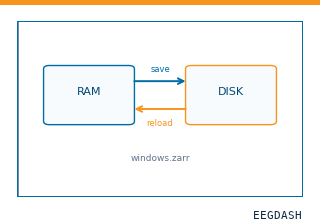 Save and reload prepared dataCache a windowed dataset to disk and reattach it without recompute.
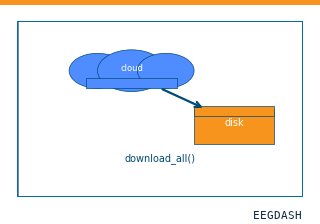 Download a dataset locallyPrefetch BIDS files to a local cache and validate the layout.
Swap any load_dataset(...) call for ds006502 to reproduce the tutorial on this dataset.
Citation
Bönstrup, M, Buch, ER, Cohen, LG (n.d.). Skill learning and consolidation in healthy humans. 10.18112/openneuro.ds006502.v1.0.0
Provenance
¹Contributed to openneuro in BIDS format.
²Curated & ingested by the EEGDash catalog; see CITATION.cff for canonical reference.
³Persistent identifier: 10.18112/openneuro.ds006502.v1.0.0.
See Also#
eegdash.dataset.EEGDashDataseteegdash.dataset