


DS006554: eeg dataset, 47 subjects#
Social Observation EEG raw data
Access recordings and metadata through EEGDash.
Citation: Yaner Su (—). Social Observation EEG raw data. 10.18112/openneuro.ds006554.v1.0.0
Modality: eeg Subjects: 47 Recordings: 47 License: CC0 Source: openneuro
Metadata: Complete (100%)
47-participant EEG dataset — Social Observation EEG raw data.
Quickstart#
Install
pip install eegdash
Access the data
from eegdash.dataset import DS006554

dataset = DS006554(cache_dir="./data")
# Get the raw object of the first recording
raw = dataset.datasets[0].raw
print(raw.info)
Filter by subject
dataset = DS006554(cache_dir="./data", subject="01")
Advanced query
dataset = DS006554(
    cache_dir="./data",
    query={"subject": {"$in": ["01", "02"]}},
)
Iterate recordings
for rec in dataset:
    print(rec.subject, rec.raw.info['sfreq'])
If you use this dataset in your research, please cite the original authors.
BibTeX
@dataset{ds006554,
  title = {Social Observation EEG raw data},
  author = {Yaner Su},
  doi = {10.18112/openneuro.ds006554.v1.0.0},
  url = {https://doi.org/10.18112/openneuro.ds006554.v1.0.0},
}
About This Dataset#
Below is a template to write a README file for this BIDS dataset. If this message is still present, it means that the person exporting the file has decided not to update the template.If you are the researcher editing this README file, please remove this warning section.
The README is usually the starting point for researchers using your dataand serves as a guidepost for users of your data. A clear and informativeREADME makes your data much more usable.
In general you can include information in the README that is not captured by some otherfiles in the BIDS dataset (dataset_description.json, events.tsv, …).
README
WARNING
It can also be useful to also include information that might already bepresent in another file of the dataset but might be important for users to be aware ofbefore preprocessing or analysing the data.
If the README gets too long you have the possibility to create a /doc folderand add it to the .bidsignore file to make sure it is ignored by the BIDS validator.
More info here: https://neurostars.org/t/where-in-a-bids-dataset-should-i-put-notes-about-individual-mri-acqusitions/17315/3
View full README
README
WARNING
It can also be useful to also include information that might already bepresent in another file of the dataset but might be important for users to be aware ofbefore preprocessing or analysing the data.
If the README gets too long you have the possibility to create a /doc folderand add it to the .bidsignore file to make sure it is ignored by the BIDS validator.
More info here: https://neurostars.org/t/where-in-a-bids-dataset-should-i-put-notes-about-individual-mri-acqusitions/17315/3
Details related to access to the data
Data user agreement
If the dataset requires a data user agreement, link to the relevant information. - Contact person
Indicate the name and contact details (email and ORCID) of the person responsible for additional information. - Practical information to access the data
If there is any special information related to access rights orhow to download the data make sure to include it.For example, if the dataset was curated using datalad,make sure to include the relevant section from the datalad handbook:http://handbook.datalad.org/en/latest/basics/101-180-FAQ.html#how-can-i-help-others-get-started-with-a-shared-dataset
Overview
Project name (if relevant)
Year(s) that the project ran
If no scans.tsv is included, this could at least cover when the data acquisitionstarter and ended. Local time of day is particularly relevant to subject state.
- Brief overview of the tasks in the experiment
A paragraph giving an overview of the experiment. This should include thegoals or purpose and a discussion about how the experiment tries to achievethese goals. - Description of the contents of the dataset
An easy thing to add is the output of the bids-validator that describes what type ofdata and the number of subject one can expect to find in the dataset. - Independent variables
A brief discussion of condition variables (sometimes called contrastsor independent variables) that were varied across the experiment. - Dependent variables
A brief discussion of the response variables (sometimes called thedependent variables) that were measured and or calculated to assessthe effects of varying the condition variables. This might also includequestionnaires administered to assess behavioral aspects of the experiment. - Control variables
A brief discussion of the control variables — that is what aspectswere explicitly controlled in this experiment. The control variables mightinclude subject pool, environmental conditions, set up, or other thingsthat were explicitly controlled. - Quality assessment of the data
Provide a short summary of the quality of the data ideally with descriptive statistics if relevantand with a link to more comprehensive description (like with MRIQC) if possible.
Methods
Subjects
A brief sentence about the subject pool in this experiment.
Remember that Control or Patient status should be defined in the ``participants.tsv``using a group column.
- Information about the recruitment procedure- [ ] Subject inclusion criteria (if relevant)- [ ] Subject exclusion criteria (if relevant)
Apparatus
A summary of the equipment and environment setup for theexperiment. For example, was the experiment performed in a shielded roomwith the subject seated in a fixed position.
Initial setup
A summary of what setup was performed when a subject arrived.
Task organization
How the tasks were organized for a session.This is particularly important because BIDS datasets usually have task dataseparated into different files.) - Was task order counter-balanced?- [ ] What other activities were interspersed between tasks? - In what order were the tasks and other activities performed?
Task details
As much detail as possible about the task and the events that were recorded.
Additional data acquired
A brief indication of data other than theimaging data that was acquired as part of this experiment. In additionto data from other modalities and behavioral data, this might includequestionnaires and surveys, swabs, and clinical information. Indicatethe availability of this data.
This is especially relevant if the data are not included in a phenotype folder.https://bids-specification.readthedocs.io/en/stable/03-modality-agnostic-files.html#phenotypic-and-assessment-data
Experimental location
This should include any additional information regarding thethe geographical location and facility that cannot be includedin the relevant json files.
Missing data
Mention something if some participants are missing some aspects of the data.This can take the form of a processing log and/or abnormalities about the dataset.
Some examples: - A brain lesion or defect only present in one participant- Some experimental conditions missing on a given run for a participant because of some technical issue.- Any noticeable feature of the data for certain participants- Differences (even slight) in protocol for certain participants.
Notes
Any additional information or pointers to information thatmight be helpful to users of the dataset. Include qualitative informationrelated to how the data acquisition went.
Cohort#
Dataset Statistics#
Channel counts: 64 ch (n=47 recordings)
Sampling frequencies: 500.0 Hz (n=47 recordings)
Total recording duration: 28 h
Signal · Electrodes & live trace#
Live trace viewer — sub-13 · task-SocialObservation
Showing one representative recording out of
47 subjects and 47 recordings in this dataset.
Browse the full set on OpenNeuro;
drop any other _eeg.{set,edf,bdf,vhdr} file onto the
viewer (or pass ?eeg=<url>) to inspect it.
No scalp electrode layout is currently indexed for this dataset. Once the eegdash montage registry ingests it, the interactive viewer will appear here automatically.
NEMAR Processing Statistics#
The plots below are generated by NEMAR’s automated EEG pipeline. The histogram shows pipeline success for data cleaning and ICA decomposition, the percentage of data frames and EEG channels retained after artefact removal, line noise per channel (RMS, dB), and the age/gender distribution of participants.

HED event descriptors word cloud

Manifest#
File Explorer#
Browse the BIDS file structure of this dataset. Records are fetched on demand from the EEGDash catalog the first time you open the explorer.
Full dataset metadata table
Dataset ID |
|
Title |
Social Observation EEG raw data |
Author (year) |
|
Canonical |
— |
Importable as |
|
Year |
— |
Authors |
Yaner Su |
License |
CC0 |
Citation / DOI |
|
Source links |
OpenNeuro | NeMAR | Source URL |
Copy-paste BibTeX
@dataset{ds006554,
  title = {Social Observation EEG raw data},
  author = {Yaner Su},
  doi = {10.18112/openneuro.ds006554.v1.0.0},
  url = {https://doi.org/10.18112/openneuro.ds006554.v1.0.0},
}
API Reference#
eegdash.datasetEEGDashDatasetDS006554 · Su2025eegdash/dataset/registry.py · [source ↗]- class eegdash.dataset.DS006554(cache_dir: str, query: dict | None = None, s3_bucket: str | None = None, **kwargs)[source]#
Social Observation EEG raw data
- Study:
ds006554(OpenNeuro)- Author (year):
Su2025- Canonical:
—
Also importable as:
DS006554,Su2025.Modality:
eeg; Experiment type:Perception; Subject type:Healthy. Subjects: 47; recordings: 0; tasks: 1.- Parameters:
cache_dir (str | Path) – Directory where data are cached locally.
query (dict | None) – Additional MongoDB-style filters to AND with the dataset selection. Must not contain the key
dataset.s3_bucket (str | None) – Base S3 bucket used to locate the data.
**kwargs (dict) – Additional keyword arguments forwarded to
EEGDashDataset.
- data_dir#
Local dataset cache directory (
cache_dir / dataset_id).- Type:
Path
Notes
Each item is a recording; recording-level metadata are available via
dataset.description.querysupports MongoDB-style filters on fields inALLOWED_QUERY_FIELDSand is combined with the dataset filter. Dataset-specific caveats are not provided in the summary metadata.References
OpenNeuro dataset: https://openneuro.org/datasets/ds006554 NeMAR dataset: https://nemar.org/dataexplorer/detail?dataset_id=ds006554 DOI: https://doi.org/10.18112/openneuro.ds006554.v1.0.0
Examples
>>> from eegdash.dataset import DS006554
>>> dataset = DS006554(cache_dir="./data")
>>> recording = dataset[0]
>>> raw = recording.load()
- __init__(cache_dir: str, query: dict | None = None, s3_bucket: str | None = None, **kwargs)[source]#
- save(path: str, overwrite: bool = False, offset: int = 0)[source]#
Save datasets to files by creating one subdirectory for each dataset:
path/
    0/
        0-raw.fif | 0-epo.fif
        description.json
        raw_preproc_kwargs.json (if raws were preprocessed)
        window_kwargs.json (if this is a windowed dataset)
        window_preproc_kwargs.json  (if windows were preprocessed)
        target_name.json (if target_name is not None and dataset is raw)
    1/
        1-raw.fif | 1-epo.fif
        description.json
        raw_preproc_kwargs.json (if raws were preprocessed)
        window_kwargs.json (if this is a windowed dataset)
        window_preproc_kwargs.json  (if windows were preprocessed)
        target_name.json (if target_name is not None and dataset is raw)
- Parameters:
path (str) –
- Directory in which subdirectories are created to store
-raw.fif | -epo.fif and .json files to.
overwrite (bool) – Whether to delete old subdirectories that will be saved to in this call.
offset (int) – If provided, the integer is added to the id of the dataset in the concat. This is useful in the setting of very large datasets, where one dataset has to be processed and saved at a time to account for its original position.
BaseDataset from braindecode — windowed via create_windows_from_events.braindecodeDataLoader; supports parallel workers and on-the-fly augmentations.pytorchdatasets.load_dataset("EEGDash/ds006554").huggingface Find datasets with the EEGDash APIQuery the catalogue, filter by task or modality, list candidates.
 Load one EEG recordingResolve a single record to an MNE Raw with channels and events.
 EEG recording to PyTorch DataLoaderWrap braindecode windows in a DataLoader for model training.
 Preprocess EEG and create windowsFilter, resample, epoch — and persist the windowed dataset.
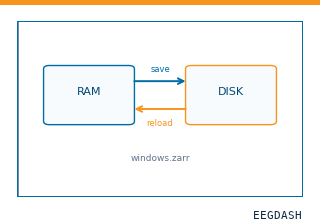 Save and reload prepared dataCache a windowed dataset to disk and reattach it without recompute.
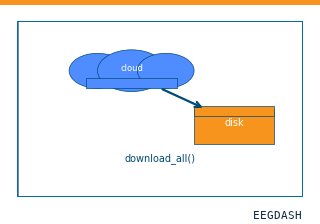 Download a dataset locallyPrefetch BIDS files to a local cache and validate the layout.
Swap any load_dataset(...) call for ds006554 to reproduce the tutorial on this dataset.
Citation
Yaner Su (n.d.). Social Observation EEG raw data. 10.18112/openneuro.ds006554.v1.0.0
Provenance
¹Contributed to openneuro in BIDS format.
²Curated & ingested by the EEGDash catalog; see CITATION.cff for canonical reference.
³Persistent identifier: 10.18112/openneuro.ds006554.v1.0.0.
See Also#
eegdash.dataset.EEGDashDataseteegdash.dataset