


NM000250: eeg dataset, 96 subjects#
Dreyer et al. 2023 — A large EEG database with users’ profile information for motor imagery brain-computer interface research
Access recordings and metadata through EEGDash.
Citation: Pauline Dreyer, Aline Roc, Léa Pillette, Sébastien Rimbert, Fabien Lotte (2021). Dreyer et al. 2023 — A large EEG database with users’ profile information for motor imagery brain-computer interface research. 10.82901/nemar.nm000250
Modality: eeg Subjects: 96 Recordings: 1040 License: CC-BY-4.0 Source: nemar
Metadata: Complete (100%)
96-participant EEG dataset — Dreyer et al. 2023 — A large EEG database with users' profile information for motor imagery brain-computer interface research.
Quickstart#
Install
pip install eegdash
Access the data
from eegdash.dataset import NM000250

dataset = NM000250(cache_dir="./data")
# Get the raw object of the first recording
raw = dataset.datasets[0].raw
print(raw.info)
Filter by subject
dataset = NM000250(cache_dir="./data", subject="01")
Advanced query
dataset = NM000250(
    cache_dir="./data",
    query={"subject": {"$in": ["01", "02"]}},
)
Iterate recordings
for rec in dataset:
    print(rec.subject, rec.raw.info['sfreq'])
If you use this dataset in your research, please cite the original authors.
BibTeX
@dataset{nm000250,
  title = {Dreyer et al. 2023 — A large EEG database with users' profile information for motor imagery brain-computer interface research},
  author = {Pauline Dreyer and Aline Roc and Léa Pillette and Sébastien Rimbert and Fabien Lotte},
  doi = {10.82901/nemar.nm000250},
  url = {https://doi.org/10.82901/nemar.nm000250},
}
About This Dataset#
Class for Dreyer2023 dataset management. MI dataset.
Schema: HED 8.4.0 | Browse: https://www.hedtags.org/hed-schema-browser
Class for Dreyer2023 dataset management. MI dataset
left_hand
View full README
Class for Dreyer2023 dataset management. MI dataset
left_hand
     ├─ Sensory-event, Experimental-stimulus, Visual-presentation
     └─ Agent-action
        └─ Imagine
           ├─ Move
           └─ Left, Hand

right_hand
├─ Sensory-event, Experimental-stimulus, Visual-presentation
└─ Agent-action
   └─ Imagine
      ├─ Move
      └─ Right, Hand
Paradigm-Specific Parameters
Detected paradigm: motor_imagery
Imagery tasks: right_hand, left_hand
Cue duration: 1.25 s
Imagery duration: 3.75 s
Data Structure
Trials: 240
Trials per class: right_hand=120, left_hand=120
Blocks per session: 6
Block duration: 420.0 s
Trials context: per subject (120 per class)
Preprocessing
Data state: raw
Preprocessing applied: False
Bandpass filter: [5.0, 35.0]
Filter type: Butterworth
Filter order: 5
Artifact methods: visual inspection
Re-reference: Laplacian (C3, C4 for feature extraction)
Notes: The raw signals were recorded without any hardware filters. For online processing, a fifth-order Butterworth filter was applied in a participant-specific discriminant frequency band in the range of 5 Hz to 35 Hz with 0.5 Hz large bins. Impedance could not be measured with active electrodes; EEG signals were visually checked and regularly re-checked to ensure good signal quality.
Signal Processing
Classifiers: LDA
Feature extraction: CSP, Bandpower
Frequency bands: analyzed=[5.0, 35.0] Hz; alpha=[8.0, 13.0] Hz; mu=[8.0, 13.0] Hz; beta=[13.0, 30.0] Hz
Spatial filters: CSP, Laplacian
Cross-Validation
Method: calibration-feedback
Evaluation type: within_session
Performance (Original Study)
Accuracy: 63.35%
Mean Accuracy Std: 17.36
Mean Accuracy R3: 63.14
Mean Accuracy R4: 64.82
Chance Level Individual: 58.7
Chance Level Database: 51.0
BCI Application
Applications: rehabilitation, assistive_technology, neurofeedback, user_training
Environment: laboratory
Online feedback: True
Tags
Pathology: Healthy
Modality: Motor
Type: Motor Imagery
Documentation
Description: A large EEG database with users’ profile information for motor imagery brain-computer interface research. Contains electroencephalographic signals from 87 human participants, collected during a single day of brain-computer interface (BCI) experiments, organized into 3 datasets (A, B, and C) that were all recorded using the same protocol: right and left hand motor imagery (MI).
DOI: 10.1038/s41597-023-02445-z
Associated paper DOI: 10.1038/s41597-023-02445-z
License: CC-BY-4.0
Investigators: Pauline Dreyer, Aline Roc, Léa Pillette, Sébastien Rimbert, Fabien Lotte
Senior author: Fabien Lotte
Contact: fabien.lotte@inria.fr
Institution: Centre Inria de l’université de Bordeaux
Department: LaBRI (Univ. Bordeaux/CNRS/Bordeaux INP)
Address: Talence, 33405, France
Country: FR
Repository: Zenodo
Data URL: https://doi.org/10.5281/zenodo.8089820
Publication year: 2023
Funding: European Research Council (ERC Starting Grant project BrainConquest, grant ERC-2016-STG-714567)
Ethics approval: Inria’s ethics committee, the COERLE (Approval number: 2018-13)
Keywords: motor imagery, brain-computer interface, EEG, BCI illiteracy, user training, personality profile, cognitive traits, user profile
Abstract
We present and share a large database containing electroencephalographic signals from 87 human participants, collected during a single day of brain-computer interface (BCI) experiments, organized into 3 datasets (A, B, and C) that were all recorded using the same protocol: right and left hand motor imagery (MI). Each session contains 240 trials (120 per class), which represents more than 20,800 trials, or approximately 70 hours of recording time. It includes the performance of the associated BCI users, detailed information about the demographics, personality profile as well as some cognitive traits and the experimental instructions and codes (executed in the open-source platform OpenViBE). Such database could prove useful for various studies, including but not limited to: (1) studying the relationships between BCI users’ profiles and their BCI performances, (2) studying how EEG signals properties varies for different users’ profiles and MI tasks, (3) using the large number of participants to design cross-user BCI machine learning algorithms or (4) incorporating users’ profile information into the design of EEG signal classification algorithms.
Methodology
Participants performed a Graz protocol MI-BCI task with 6 runs (2 calibration runs with sham feedback, 4 online training runs with real feedback). Each run consisted of 40 trials (20 per MI-task) with 8s trial duration. Trial structure: green cross (t=0s), acoustic signal (t=2s), red arrow cue (t=3s, 1.25s duration), continuous visual feedback (t=4.25s, 3.75s duration), inter-trial interval (1.5-3.5s). Signal processing used participant-specific Most Discriminant Frequency Band (MDFB) selection (5-35 Hz range), fifth-order Butterworth filtering, Common Spatial Pattern (CSP) with 3 pairs of spatial filters, and Linear Discriminant Analysis (LDA) classifier trained on calibration data. Participants completed 6 questionnaires assessing demographics, personality (16PF5), cognitive traits, spatial abilities (Mental Rotation test), learning style (ILS), and pre/post-experiment states (NeXT questionnaire).
References
Pillette, L., Roc, A., N’kaoua, B., & Lotte, F. (2021). Experimenters’ influence on mental-imagery based brain-computer interface user training. International Journal of Human-Computer Studies, 149, 102603.
Benaroch, C., Yamamoto, M. S., Roc, A., Dreyer, P., Jeunet, C., & Lotte, F. (2022). When should MI-BCI feature optimization include prior knowledge, and which one?. Brain-Computer Interfaces, 9(2), 115-128. Appelhoff, S., Sanderson, M., Brooks, T., Vliet, M., Quentin, R., Holdgraf, C., Chaumon, M., Mikulan, E., Tavabi, K., Hochenberger, R., Welke, D., Brunner, C., Rockhill, A., Larson, E., Gramfort, A. and Jas, M. (2019). MNE-BIDS: Organizing electrophysiological data into the BIDS format and facilitating their analysis. Journal of Open Source Software 4: (1896). https://doi.org/10.21105/joss.01896 Pernet, C. R., Appelhoff, S., Gorgolewski, K. J., Flandin, G., Phillips, C., Delorme, A., Oostenveld, R. (2019). EEG-BIDS, an extension to the brain imaging data structure for electroencephalography. Scientific Data, 6, 103. https://doi.org/10.1038/s41597-019-0104-8 Generated by MOABB 1.5.0 (Mother of All BCI Benchmarks) NeuroTechX/moabb
NEMAR Metadata#
[](https://doi.org/10.82901/nemar.nm000250) # Class for Dreyer2023 dataset management. MI dataset Class for Dreyer2023 dataset management. MI dataset. ## Dataset Overview - Code: Dreyer2023 - Paradigm: imagery - DOI: 10.1038/s41597-023-02445-z - Subjects: 87 - Sessions per subject: 1 - Events: left_hand=1, right_hand=2 - Trial interval: [0, 5] s - Runs per session: 6 - Session IDs: calibration, online_training - File format: GDF - Contributing labs: Inria Bordeaux ## Acquisition - Sampling rate: 512.0 Hz - Number of channels: 27 - Channel types: eeg=27, emg=2, eog=3 - Channel names: C1, C2, C3, C4, C5, C6, CP1, CP2, CP3, CP4, CP5, CP6, CPz, Cz, EMGd, EMGg, EOG1, EOG2, EOG3, F3, F4, FC1, FC2, FC3, FC4, FC5, FC6, FCz, Fz, P3, P4, Pz - Montage: 10-20 - Hardware: g.USBAmp (g.tec, Austria) - Software: OpenViBE 2.1.0 (Dataset A) / OpenViBE 2.2.0 (Dataset B and C) - Reference: left earlobe - Ground: FPz - Sensor type: active electrodes - Line frequency: 50.0 Hz - Online filters: none (raw signals recorded without hardware filters) - Cap manufacturer: g.tec - Auxiliary channels: EOG (3 ch, horizontal, vertical), EMG (2 ch), gsr ## Participants - Number of subjects: 87 - Health status: healthy - Age: mean=29.0, min=19, max=59 - Gender distribution: female=41, male=46 - Handedness: right - BCI experience: naive - Species: human ## Experimental Protocol - Paradigm: imagery - Number of classes: 2 - Class labels: left_hand, right_hand - Trial duration: 8.0 s - Tasks: right_hand_MI, left_hand_MI, resting_state - Study design: Graz protocol - Feedback type: continuous visual - Stimulus type: blue bar varying in length - Stimulus modalities: visual, auditory - Primary modality: visual - Synchronicity: cue-based - Mode: online - Training/test split: True - Instructions: Participants were encouraged to perform kinesthetic imagination and leave them free to choose their mental imagery strategy. Participants were instructed to try to find the best strategy so that the system would show the longest possible feedback bar. Only positive feedback was provided. ## HED Event Annotations Schema: HED 8.4.0 | Browse: https://www.hedtags.org/hed-schema-browser ```
- left_hand
├─ Sensory-event, Experimental-stimulus, Visual-presentation └─ Agent-action
- └─ Imagine
├─ Move └─ Left, Hand
- right_hand
├─ Sensory-event, Experimental-stimulus, Visual-presentation └─ Agent-action
- └─ Imagine
├─ Move └─ Right, Hand
``` ## Paradigm-Specific Parameters - Detected paradigm: motor_imagery - Imagery tasks: right_hand, left_hand - Cue duration: 1.25 s - Imagery duration: 3.75 s ## Data Structure - Trials: 240 - Trials per class: right_hand=120, left_hand=120 - Blocks per session: 6 - Block duration: 420.0 s - Trials context: per subject (120 per class) ## Preprocessing - Data state: raw - Preprocessing applied: False - Bandpass filter: [5.0, 35.0] - Filter type: Butterworth - Filter order: 5 - Artifact methods: visual inspection - Re-reference: Laplacian (C3, C4 for feature extraction) - Notes: The raw signals were recorded without any hardware filters. For online processing, a fifth-order Butterworth filter was applied in a participant-specific discriminant frequency band in the range of 5 Hz to 35 Hz with 0.5 Hz large bins. Impedance could not be measured with active electrodes; EEG signals were visually checked and regularly re-checked to ensure good signal quality. ## Signal Processing - Classifiers: LDA - Feature extraction: CSP, Bandpower - Frequency bands: analyzed=[5.0, 35.0] Hz; alpha=[8.0, 13.0] Hz; mu=[8.0, 13.0] Hz; beta=[13.0, 30.0] Hz - Spatial filters: CSP, Laplacian ## Cross-Validation - Method: calibration-feedback - Evaluation type: within_session ## Performance (Original Study) - Accuracy: 63.35% - Mean Accuracy Std: 17.36 - Mean Accuracy R3: 63.14 - Mean Accuracy R4: 64.82 - Chance Level Individual: 58.7 - Chance Level Database: 51.0 ## BCI Application - Applications: rehabilitation, assistive_technology, neurofeedback, user_training - Environment: laboratory - Online feedback: True ## Tags - Pathology: Healthy - Modality: Motor - Type: Motor Imagery ## Documentation - Description: A large EEG database with users’ profile information for motor imagery brain-computer interface research. Contains electroencephalographic signals from 87 human participants, collected during a single day of brain-computer interface (BCI) experiments, organized into 3 datasets (A, B, and C) that were all recorded using the same protocol: right and left hand motor imagery (MI). - DOI: 10.1038/s41597-023-02445-z - Associated paper DOI: 10.1038/s41597-023-02445-z - License: CC-BY-4.0 - Investigators: Pauline Dreyer, Aline Roc, Léa Pillette, Sébastien Rimbert, Fabien Lotte - Senior author: Fabien Lotte - Contact: fabien.lotte@inria.fr - Institution: Centre Inria de l’université de Bordeaux - Department: LaBRI (Univ. Bordeaux/CNRS/Bordeaux INP) - Address: Talence, 33405, France - Country: FR - Repository: Zenodo - Data URL: https://doi.org/10.5281/zenodo.8089820 - Publication year: 2023 - Funding: European Research Council (ERC Starting Grant project BrainConquest, grant ERC-2016-STG-714567) - Ethics approval: Inria’s ethics committee, the COERLE (Approval number: 2018-13) - Keywords: motor imagery, brain-computer interface, EEG, BCI illiteracy, user training, personality profile, cognitive traits, user profile ## Abstract We present and share a large database containing electroencephalographic signals from 87 human participants, collected during a single day of brain-computer interface (BCI) experiments, organized into 3 datasets (A, B, and C) that were all recorded using the same protocol: right and left hand motor imagery (MI). Each session contains 240 trials (120 per class), which represents more than 20,800 trials, or approximately 70 hours of recording time. It includes the performance of the associated BCI users, detailed information about the demographics, personality profile as well as some cognitive traits and the experimental instructions and codes (executed in the open-source platform OpenViBE). Such database could prove useful for various studies, including but not limited to: (1) studying the relationships between BCI users’ profiles and their BCI performances, (2) studying how EEG signals properties varies for different users’ profiles and MI tasks, (3) using the large number of participants to design cross-user BCI machine learning algorithms or (4) incorporating users’ profile information into the design of EEG signal classification algorithms. ## Methodology Participants performed a Graz protocol MI-BCI task with 6 runs (2 calibration runs with sham feedback, 4 online training runs with real feedback). Each run consisted of 40 trials (20 per MI-task) with 8s trial duration. Trial structure: green cross (t=0s), acoustic signal (t=2s), red arrow cue (t=3s, 1.25s duration), continuous visual feedback (t=4.25s, 3.75s duration), inter-trial interval (1.5-3.5s). Signal processing used participant-specific Most Discriminant Frequency Band (MDFB) selection (5-35 Hz range), fifth-order Butterworth filtering, Common Spatial Pattern (CSP) with 3 pairs of spatial filters, and Linear Discriminant Analysis (LDA) classifier trained on calibration data. Participants completed 6 questionnaires assessing demographics, personality (16PF5), cognitive traits, spatial abilities (Mental Rotation test), learning style (ILS), and pre/post-experiment states (NeXT questionnaire). ## References Pillette, L., Roc, A., N’kaoua, B., & Lotte, F. (2021). Experimenters’ influence on mental-imagery based brain-computer interface user training. International Journal of Human-Computer Studies, 149, 102603. Benaroch, C., Yamamoto, M. S., Roc, A., Dreyer, P., Jeunet, C., & Lotte, F. (2022). When should MI-BCI feature optimization include prior knowledge, and which one?. Brain-Computer Interfaces, 9(2), 115-128. Appelhoff, S., Sanderson, M., Brooks, T., Vliet, M., Quentin, R., Holdgraf, C., Chaumon, M., Mikulan, E., Tavabi, K., Hochenberger, R., Welke, D., Brunner, C., Rockhill, A., Larson, E., Gramfort, A. and Jas, M. (2019). MNE-BIDS: Organizing electrophysiological data into the BIDS format and facilitating their analysis. Journal of Open Source Software 4: (1896). https://doi.org/10.21105/joss.01896 Pernet, C. R., Appelhoff, S., Gorgolewski, K. J., Flandin, G., Phillips, C., Delorme, A., Oostenveld, R. (2019). EEG-BIDS, an extension to the brain imaging data structure for electroencephalography. Scientific Data, 6, 103. https://doi.org/10.1038/s41597-019-0104-8 — Generated by MOABB 1.5.0 (Mother of All BCI Benchmarks) NeuroTechX/moabb
License: CC-BY-4.0
Authors:
Pauline Dreyer
Aline Roc
Léa Pillette
Sébastien Rimbert
Fabien Lotte
Versions:
Version |
DOI |
Released |
|---|---|---|
|
Cohort#
Dataset Statistics#
Age distribution by gender (n=96, range 29–29 yr, mean 29.0 yr)
Sex composition
Channel counts: 27 ch (n=1040 recordings)
Sampling frequencies: 512.0 Hz (n=1040 recordings)
Total recording duration: 126 h
Signal · Electrodes & live trace#
Live trace viewer — sub-13 · ses-0 · task-imagery · run-3
Showing one representative recording out of
96 subjects and 1040 recordings in this dataset.
Browse the full set on OpenNeuro;
drop any other _eeg.{set,edf,bdf,vhdr} file onto the
viewer (or pass ?eeg=<url>) to inspect it.
Electrode layout — EEG · 27 sensors — 27 channels
NEMAR Processing Statistics#
The plots below are generated by NEMAR’s automated EEG pipeline. The histogram shows pipeline success for data cleaning and ICA decomposition, the percentage of data frames and EEG channels retained after artefact removal, line noise per channel (RMS, dB), and the age/gender distribution of participants.

HED event descriptors word cloud

Manifest#
File Explorer#
Browse the BIDS file structure of this dataset. Records are fetched on demand from the EEGDash catalog the first time you open the explorer.
Full dataset metadata table
Dataset ID |
|
Title |
Dreyer et al. 2023 — A large EEG database with users’ profile information for motor imagery brain-computer interface research |
Author (year) |
|
Canonical |
— |
Importable as |
|
Year |
2021 |
Authors |
Pauline Dreyer, Aline Roc, Léa Pillette, Sébastien Rimbert, Fabien Lotte |
License |
CC-BY-4.0 |
Citation / DOI |
|
Source links |
OpenNeuro | NeMAR | Source URL |
Copy-paste BibTeX
@dataset{nm000250,
  title = {Dreyer et al. 2023 — A large EEG database with users' profile information for motor imagery brain-computer interface research},
  author = {Pauline Dreyer and Aline Roc and Léa Pillette and Sébastien Rimbert and Fabien Lotte},
  doi = {10.82901/nemar.nm000250},
  url = {https://doi.org/10.82901/nemar.nm000250},
}
API Reference#
eegdash.datasetEEGDashDatasetNM000250 · Dreyer2023eegdash/dataset/registry.py · [source ↗]- class eegdash.dataset.NM000250(cache_dir: str, query: dict | None = None, s3_bucket: str | None = None, **kwargs)[source]#
Dreyer et al. 2023 — A large EEG database with users’ profile information for motor imagery brain-computer interface research
- Study:
nm000250(NeMAR)- Author (year):
Dreyer2023- Canonical:
—
Also importable as:
NM000250,Dreyer2023.Modality:
eeg; Experiment type:Motor; Subject type:Healthy. Subjects: 96; recordings: 0; tasks: 7.- Parameters:
cache_dir (str | Path) – Directory where data are cached locally.
query (dict | None) – Additional MongoDB-style filters to AND with the dataset selection. Must not contain the key
dataset.s3_bucket (str | None) – Base S3 bucket used to locate the data.
**kwargs (dict) – Additional keyword arguments forwarded to
EEGDashDataset.
- data_dir#
Local dataset cache directory (
cache_dir / dataset_id).- Type:
Path
Notes
Each item is a recording; recording-level metadata are available via
dataset.description.querysupports MongoDB-style filters on fields inALLOWED_QUERY_FIELDSand is combined with the dataset filter. Dataset-specific caveats are not provided in the summary metadata.References
OpenNeuro dataset: https://openneuro.org/datasets/nm000250 NeMAR dataset: https://nemar.org/dataexplorer/detail?dataset_id=nm000250 DOI: https://doi.org/10.82901/nemar.nm000250
Examples
>>> from eegdash.dataset import NM000250
>>> dataset = NM000250(cache_dir="./data")
>>> recording = dataset[0]
>>> raw = recording.load()
- __init__(cache_dir: str, query: dict | None = None, s3_bucket: str | None = None, **kwargs)[source]#
- save(path: str, overwrite: bool = False, offset: int = 0)[source]#
Save datasets to files by creating one subdirectory for each dataset:
path/
    0/
        0-raw.fif | 0-epo.fif
        description.json
        raw_preproc_kwargs.json (if raws were preprocessed)
        window_kwargs.json (if this is a windowed dataset)
        window_preproc_kwargs.json  (if windows were preprocessed)
        target_name.json (if target_name is not None and dataset is raw)
    1/
        1-raw.fif | 1-epo.fif
        description.json
        raw_preproc_kwargs.json (if raws were preprocessed)
        window_kwargs.json (if this is a windowed dataset)
        window_preproc_kwargs.json  (if windows were preprocessed)
        target_name.json (if target_name is not None and dataset is raw)
- Parameters:
path (str) –
- Directory in which subdirectories are created to store
-raw.fif | -epo.fif and .json files to.
overwrite (bool) – Whether to delete old subdirectories that will be saved to in this call.
offset (int) – If provided, the integer is added to the id of the dataset in the concat. This is useful in the setting of very large datasets, where one dataset has to be processed and saved at a time to account for its original position.
BaseDataset from braindecode — windowed via create_windows_from_events.braindecodeDataLoader; supports parallel workers and on-the-fly augmentations.pytorchdatasets.load_dataset("EEGDash/nm000250").huggingface Find datasets with the EEGDash APIQuery the catalogue, filter by task or modality, list candidates.
 Load one EEG recordingResolve a single record to an MNE Raw with channels and events.
 EEG recording to PyTorch DataLoaderWrap braindecode windows in a DataLoader for model training.
 Preprocess EEG and create windowsFilter, resample, epoch — and persist the windowed dataset.
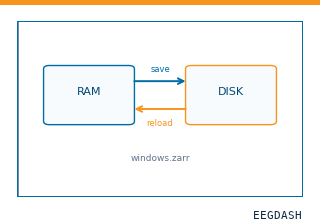 Save and reload prepared dataCache a windowed dataset to disk and reattach it without recompute.
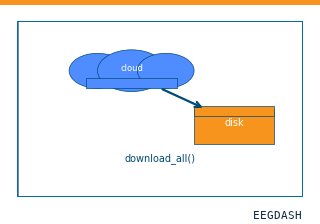 Download a dataset locallyPrefetch BIDS files to a local cache and validate the layout.
Swap any load_dataset(...) call for nm000250 to reproduce the tutorial on this dataset.
Citation
Pauline Dreyer, Aline Roc, Léa Pillette, Sébastien Rimbert, Fabien Lotte (2021). Dreyer et al. 2023 — A large EEG database with users' profile information for motor imagery brain-computer interface research. 10.82901/nemar.nm000250
Provenance
¹Contributed to nemar in BIDS format.
²Curated & ingested by the EEGDash catalog; see CITATION.cff for canonical reference.
³Persistent identifier: 10.82901/nemar.nm000250.
See Also#
eegdash.dataset.EEGDashDataseteegdash.dataset