


DS002778: eeg dataset, 31 subjects#
UC San Diego Resting State EEG Data from Patients with Parkinson’s Disease
Access recordings and metadata through EEGDash.
Citation: Alexander P. Rockhill, Nicko Jackson, Jobi George, Adam Aron, Nicole C. Swann (2019). UC San Diego Resting State EEG Data from Patients with Parkinson’s Disease. 10.18112/openneuro.ds002778.v1.0.5
Modality: eeg Subjects: 31 Recordings: 46 License: CC0 Source: openneuro Citations: 42.0
Metadata: Complete (100%)
31-participant EEG dataset — UC San Diego Resting State EEG Data from Patients with Parkinson's Disease.
Quickstart#
Install
pip install eegdash
Access the data
from eegdash.dataset import DS002778

dataset = DS002778(cache_dir="./data")
# Get the raw object of the first recording
raw = dataset.datasets[0].raw
print(raw.info)
Filter by subject
dataset = DS002778(cache_dir="./data", subject="01")
Advanced query
dataset = DS002778(
    cache_dir="./data",
    query={"subject": {"$in": ["01", "02"]}},
)
Iterate recordings
for rec in dataset:
    print(rec.subject, rec.raw.info['sfreq'])
If you use this dataset in your research, please cite the original authors.
BibTeX
@dataset{ds002778,
  title = {UC San Diego Resting State EEG Data from Patients with Parkinson's Disease},
  author = {Alexander P. Rockhill and Nicko Jackson and Jobi George and Adam Aron and Nicole C. Swann},
  doi = {10.18112/openneuro.ds002778.v1.0.5},
  url = {https://doi.org/10.18112/openneuro.ds002778.v1.0.5},
}
About This Dataset#
Welcome to the resting state EEG dataset collected at the University of San Diego and curated by Alex Rockhill at the University of Oregon.
Please email arockhil@uoregon.edu before submitting a manuscript to be published in a peer-reviewed journal using this data, we wish to ensure that the data to be analyzed and interpreted with scientific integrity so as not to mislead the public about findings that may have clinical relevance. The purpose of this is to be responsible stewards of the data without an “available upon reasonable request” clause that we feel doesn’t fully represent the open-source, reproducible ethos. The data is freely available to download so we cannot stop your publication if we don’t support your methods and interpretation of findings, however, in being good data stewards, we would like to offer suggestions in the pre-publication stage so as to reduce conflict in published scientific literature. As far as credit, there is precedent for receiving a mention in the acknowledgements section for reading and providing feedback on the paper or, for more involved consulting, being included as an author may be warranted. The purpose of asking for this is not to inflate our number of authorships; we take ethical considerations of the best way to handle intellectual property in the form of manuscripts very seriously, and, again, sharing is at the discretion of the author although we strongly recommend it. Please be ethical and considerate in your use of this data and all open-source data and be sure to credit authors by citing them.
An example of an analysis that we could consider problematic and would strongly advice to be corrected before submission to a publication would be using machine learning to classify Parkinson’s patients from healthy controls using this dataset. This is because there are far too few patients for proper statistics. Parkinson’s disease presents heterogeneously across patients, and, with a proper test-training split, there would be fewer than 8 patients in the testing set. Statistics on 8 or fewer patients for such a complicated diease would be inaccurate due to having too small of a sample size. Furthermore, if multiple machine learning algorithms were desired to be tested, a third split would be required to choose the best method, further lowering the number of patients in the testing set. We strongly advise against using any such approach because it would mislead patients and people who are interested in knowing if they have Parkinson’s disease.
Note that UPDRS rating scales were collected by laboratory personnel who had completed online training and not a board-certified neurologist. Results should be interpreted accordingly, especially that analyses based largely on these ratings should be taken with the appropriate amount of uncertainty. In addition to contacting the aforementioned email, please cite the following papers:
Nicko Jackson, Scott R. Cole, Bradley Voytek, Nicole C. Swann. Characteristics of Waveform Shape in Parkinson’s Disease Detected with Scalp Electroencephalography. eNeuro 20 May 2019, 6 (3) ENEURO.0151-19.2019; DOI: 10.1523/ENEURO.0151-19.2019.
Swann NC, de Hemptinne C, Aron AR, Ostrem JL, Knight RT, Starr PA. Elevated synchrony in Parkinson disease detected with electroencephalography. Ann Neurol. 2015 Nov;78(5):742-50. doi: 10.1002/ana.24507. Epub 2015 Sep 2. PMID: 26290353; PMCID: PMC4623949. George JS, Strunk J, Mak-McCully R, Houser M, Poizner H, Aron AR. Dopaminergic therapy in Parkinson’s disease decreases cortical beta band coherence in the resting state and increases cortical beta band power during executive control. Neuroimage Clin. 2013 Aug 8;3:261-70. doi: 10.1016/j.nicl.2013.07.013. PMID: 24273711; PMCID: PMC3814961.
Appelhoff, S., Sanderson, M., Brooks, T., Vliet, M., Quentin, R., Holdgraf, C., Chaumon, M., Mikulan, E., Tavabi, K., Höchenberger, R., Welke, D., Brunner, C., Rockhill, A., Larson, E., Gramfort, A. and Jas, M. (2019). MNE-BIDS: Organizing electrophysiological data into the BIDS format and facilitating their analysis. Journal of Open Source Software 4: (1896). Pernet, C. R., Appelhoff, S., Gorgolewski, K. J., Flandin, G., Phillips, C., Delorme, A., Oostenveld, R. (2019). EEG-BIDS, an extension to the brain imaging data structure for electroencephalography. Scientific Data, 6, 103. https://doi.org/10.1038/s41597-019-0104-8.
Note: see this discussion on the structure of the json files that is sufficient but not optimal and will hopefully be changed in future versions of BIDS: https://neurostars.org/t/behavior-metadata-without-tsv-event-data-related-to-a-neuroimaging-data/6768/25.
Cohort#
Dataset Statistics#
Age distribution by gender (n=31, range 47–82 yr, mean 63.4 yr)
Sex composition
Channel counts: 41 ch (n=46 recordings)
Sampling frequencies: 512.0 Hz (n=46 recordings)
Total recording duration: 2 h 31 min
Signal · Electrodes & live trace#
Live trace viewer — sub-hc4 · ses-hc · task-rest
Showing one representative recording out of
31 subjects and 46 recordings in this dataset.
Browse the full set on OpenNeuro;
drop any other _eeg.{set,edf,bdf,vhdr} file onto the
viewer (or pass ?eeg=<url>) to inspect it.
Electrode layout — EEG · 32 sensors — 32 channels
NEMAR Processing Statistics#
The plots below are generated by NEMAR’s automated EEG pipeline. The histogram shows pipeline success for data cleaning and ICA decomposition, the percentage of data frames and EEG channels retained after artefact removal, line noise per channel (RMS, dB), and the age/gender distribution of participants.

HED event descriptors word cloud

Manifest#
File Explorer#
Browse the BIDS file structure of this dataset. Records are fetched on demand from the EEGDash catalog the first time you open the explorer.
Full dataset metadata table
Dataset ID |
|
Title |
UC San Diego Resting State EEG Data from Patients with Parkinson’s Disease |
Author (year) |
|
Canonical |
— |
Importable as |
|
Year |
2019 |
Authors |
Alexander P. Rockhill, Nicko Jackson, Jobi George, Adam Aron, Nicole C. Swann |
License |
CC0 |
Citation / DOI |
|
Source links |
Copy-paste BibTeX
@dataset{ds002778,
  title = {UC San Diego Resting State EEG Data from Patients with Parkinson's Disease},
  author = {Alexander P. Rockhill and Nicko Jackson and Jobi George and Adam Aron and Nicole C. Swann},
  doi = {10.18112/openneuro.ds002778.v1.0.5},
  url = {https://doi.org/10.18112/openneuro.ds002778.v1.0.5},
}
API Reference#
eegdash.datasetEEGDashDatasetDS002778 · Rockhill2020eegdash/dataset/registry.py · [source ↗]- class eegdash.dataset.DS002778(cache_dir: str, query: dict | None = None, s3_bucket: str | None = None, **kwargs)[source]#
UC San Diego Resting State EEG Data from Patients with Parkinson’s Disease
- Study:
ds002778(OpenNeuro)- Author (year):
Rockhill2020- Canonical:
—
Also importable as:
DS002778,Rockhill2020.Modality:
eeg; Experiment type:Resting state; Subject type:Parkinson's. Subjects: 31; recordings: 46; tasks: 1.- Parameters:
cache_dir (str | Path) – Directory where data are cached locally.
query (dict | None) – Additional MongoDB-style filters to AND with the dataset selection. Must not contain the key
dataset.s3_bucket (str | None) – Base S3 bucket used to locate the data.
**kwargs (dict) – Additional keyword arguments forwarded to
EEGDashDataset.
- data_dir#
Local dataset cache directory (
cache_dir / dataset_id).- Type:
Path
Notes
Each item is a recording; recording-level metadata are available via
dataset.description.querysupports MongoDB-style filters on fields inALLOWED_QUERY_FIELDSand is combined with the dataset filter. Dataset-specific caveats are not provided in the summary metadata.References
OpenNeuro dataset: https://openneuro.org/datasets/ds002778 NeMAR dataset: https://nemar.org/dataexplorer/detail?dataset_id=ds002778 DOI: https://doi.org/10.18112/openneuro.ds002778.v1.0.5 NEMAR citation count: 42
Examples
>>> from eegdash.dataset import DS002778
>>> dataset = DS002778(cache_dir="./data")
>>> recording = dataset[0]
>>> raw = recording.load()
- __init__(cache_dir: str, query: dict | None = None, s3_bucket: str | None = None, **kwargs)[source]#
- save(path: str, overwrite: bool = False, offset: int = 0)[source]#
Save datasets to files by creating one subdirectory for each dataset:
path/
    0/
        0-raw.fif | 0-epo.fif
        description.json
        raw_preproc_kwargs.json (if raws were preprocessed)
        window_kwargs.json (if this is a windowed dataset)
        window_preproc_kwargs.json  (if windows were preprocessed)
        target_name.json (if target_name is not None and dataset is raw)
    1/
        1-raw.fif | 1-epo.fif
        description.json
        raw_preproc_kwargs.json (if raws were preprocessed)
        window_kwargs.json (if this is a windowed dataset)
        window_preproc_kwargs.json  (if windows were preprocessed)
        target_name.json (if target_name is not None and dataset is raw)
- Parameters:
path (str) –
- Directory in which subdirectories are created to store
-raw.fif | -epo.fif and .json files to.
overwrite (bool) – Whether to delete old subdirectories that will be saved to in this call.
offset (int) – If provided, the integer is added to the id of the dataset in the concat. This is useful in the setting of very large datasets, where one dataset has to be processed and saved at a time to account for its original position.
BaseDataset from braindecode — windowed via create_windows_from_events.braindecodeDataLoader; supports parallel workers and on-the-fly augmentations.pytorchdatasets.load_dataset("EEGDash/ds002778").huggingface Find datasets with the EEGDash APIQuery the catalogue, filter by task or modality, list candidates.
 Load one EEG recordingResolve a single record to an MNE Raw with channels and events.
 EEG recording to PyTorch DataLoaderWrap braindecode windows in a DataLoader for model training.
 Preprocess EEG and create windowsFilter, resample, epoch — and persist the windowed dataset.
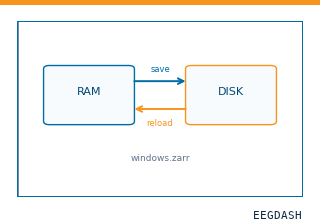 Save and reload prepared dataCache a windowed dataset to disk and reattach it without recompute.
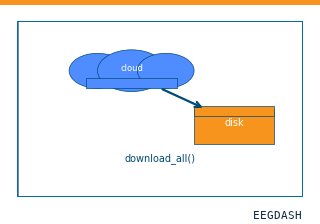 Download a dataset locallyPrefetch BIDS files to a local cache and validate the layout.
Swap any load_dataset(...) call for ds002778 to reproduce the tutorial on this dataset.
Citation
Alexander P. Rockhill, Nicko Jackson, Jobi George, Adam Aron, Nicole C. Swann (2019). UC San Diego Resting State EEG Data from Patients with Parkinson's Disease. 10.18112/openneuro.ds002778.v1.0.5
Provenance
¹Contributed to openneuro in BIDS format.
²Curated & ingested by the EEGDash catalog; see CITATION.cff for canonical reference.
³Persistent identifier: 10.18112/openneuro.ds002778.v1.0.5.
See Also#
eegdash.dataset.EEGDashDataseteegdash.dataset