


DS002893: eeg dataset, 49 subjects#
Auditory-Visual Shift Study
Access recordings and metadata through EEGDash.
Citation: Marissa Westerfield (data, curation), Scott Makeig (data, curation), Dung Truong (curation), Kay Robbins (curation), Arno Delorme (curation) (20). Auditory-Visual Shift Study. 10.18112/openneuro.ds002893.v2.0.0
Modality: eeg Subjects: 49 Recordings: 52 License: CC0 Source: openneuro Citations: 1.0
Metadata: Complete (100%)
49-participant EEG dataset — Auditory-Visual Shift Study.
Quickstart#
Install
pip install eegdash
Access the data
from eegdash.dataset import DS002893

dataset = DS002893(cache_dir="./data")
# Get the raw object of the first recording
raw = dataset.datasets[0].raw
print(raw.info)
Filter by subject
dataset = DS002893(cache_dir="./data", subject="01")
Advanced query
dataset = DS002893(
    cache_dir="./data",
    query={"subject": {"$in": ["01", "02"]}},
)
Iterate recordings
for rec in dataset:
    print(rec.subject, rec.raw.info['sfreq'])
If you use this dataset in your research, please cite the original authors.
BibTeX
@dataset{ds002893,
  title = {Auditory-Visual Shift Study},
  author = {Marissa Westerfield (data, curation) and Scott Makeig (data, curation) and Dung Truong (curation) and Kay Robbins (curation) and Arno Delorme (curation)},
  doi = {10.18112/openneuro.ds002893.v2.0.0},
  url = {https://doi.org/10.18112/openneuro.ds002893.v2.0.0},
}
About This Dataset#
Project name: [Sensory processing in aging]
Years the project ran: 2007-2008 Brief overview of experiment task: The purpose of this Auditory-Visual Attention Shift study was to explore the effects of aging on selective attending and responding to auditory and visual stimulus differences using an interleaved dual-oddball audio-visual task design. EEG and EOG channels were acquired. Data collection. Scalp EEG data were collected from 33 scalp electrode channels, each referred to a right mastoid electrode, within an analogue passband of 0.1 to 60 Hz. Contact person: Scott Makeig <smakeig@ucsd.edu>, ORCID: 0000-0002-9048-8438. Access information: Contributed to OpenNeuro.org and NEMAR.org in BIDS format following annotation using HED 8.0.0 in April, 2022. Independent variables: Stimulus stream (visual, auditory, cue); stimulus stream identity (target, standard); task condition (FA, FV, SH) Dependent variables: Participant response (correct/incorrect). Button press response attributes (task time window and post-target latency). Participant pool: The dataset includes data collected from 19 younger adult subjects (8 male, 11 female, ages 20?40 years) and 30 older adult subjects (11 male, 19 female, ages 49-73 years).
The subjects were cognitively intact and had normal or adjusted to normal hearing and vision.
Initial setup: EEG data were collected from 33 EEG channels using the 10-20 placement and referenced to the right mastoid.
Audio-Visual Attention Shift Experiment
The left mastoid and two EOG channels were also included in the collection. The data was acquired at a sampling rate of 250 Hz with an analog pass band of 0.01 to 60 Hz (SA Instrumentation, San Diego). Input impedances were brought under 5 kilo-ohms by careful scalp preparation. Task conditions: - Focus Visual (FV): participants pressed the response button only in response to target visual stimuli. - Focus Auditory (FA): participants pressed the same button only in response to target auditory stimuli. - Shift Focus (SF): participants shifted between performing the FV and FA tasks as cued by the preceding
View full README
Audio-Visual Attention Shift Experiment
The left mastoid and two EOG channels were also included in the collection. The data was acquired at a sampling rate of 250 Hz with an analog pass band of 0.01 to 60 Hz (SA Instrumentation, San Diego). Input impedances were brought under 5 kilo-ohms by careful scalp preparation. Task conditions: - Focus Visual (FV): participants pressed the response button only in response to target visual stimuli. - Focus Auditory (FA): participants pressed the same button only in response to target auditory stimuli. - Shift Focus (SF): participants shifted between performing the FV and FA tasks as cued by the preceding
(Look/Hear) cue stimulus. Task organization: The stimuli were presented in blocks of 264 for a duration of 2.64.
In each block there were 12 “Hear” and 12 “Look” cues. A total of 20 blocks were presented for each session. Each experiment began with two non-shift blocks (one each of auditory focus FA and visual focus FV counter-balanced across sessions).
These were followed by 12 SF shift blocks. Finally an auditory focus FA group (3 blocks) and a visual focus FV group (3 blocks) were presented. The order of these groups was counter-balanced across experiments. Brief rest periods occur between task blocks. The task condition in the next block was given verbally to the participant during the pre-block rest period. Task details: Participants respond by finger button press selectively to auditory (brief tones) and visual (colored squares) stimuli constituting distinct, interleaved auditory and visual oddball stimulus streams whose stimuli are presented in randomly interleaved order with stimulus-onset asynchronies (SOAs) varying randomly between 200 and 800 ms. - Visual stimuli: were (infrequent, 10%) dark blue target or (frequent, 90%) light blue standard 8.4-cm2 squares presented for 100 ms. - Auditory stimuli: were (infrequent, 10%) 550-Hz target or (frequent, 90%) 500-Hz tones with 100 msec duration and 63 dB SPL intensity. - Task cue stimuli:*interspersed in the stimulus sequence at mean 5-sec intervals and consisting of the simultaneous spoken and printed display of one of the words*Look*or*Hear each presented for 200 msec.
Additional data acquired: Participants had no history of major neurological, psychiatric, or medical disorders. All had normal or adjusted to normal vision and hearing (none wore hearing aids). Verbal and performance IQ were assessed using the WASI-III (Wechsler, 1997). There were no significant differences between the groups in IQ measures or years of education. Participants in the Older group received a battery of neuropsychological tests to assure normal cognitive functioning, including the Mini Mental State Exam (MMSE) (Folstein et al., 1975), Dementia Rating Scale (DRS) (Mattis, 1988), Wechsler Memory Scale. Experiment location: Department of Psychiatry laboratory of Jeanne Townsend, University of California San Diego, La Jolla CA (USA). Note 1: ERP measure results for the FA and FV conditions only were presented in Ceponiene, R., Westerfield, M., Torki, M. and Townsend, J., 2008. Modality-specificity of sensory aging in vision and audition: evidence from event-related potentials.?Brain research,?1215, pp.53-68. Some unpublished results by Christian Kothe and Scott Makeig on the SH condition may be available from the authors <christiankothe@gmail.com> <smakeig@ucsd.edu>. Note 2: The code subdirectory has several auxilliary files that were produced during the curation process. The curation was done using a series of Jupyter notebooks that are available as run in the code/curation_notebooks subdirectory.
During the running of these curation notebooks information about the status was logged using the HEDLogger. The output of the logging process is in code/curation_logs.
Updated versions of the curation notebooks can be found at: hed-standard/hed-examples.
Cohort#
Dataset Statistics#
Age distribution by gender (n=45, range 20–78 yr, mean 49.9 yr)
Sex composition
Channel counts: 36 ch (n=52 recordings)
Sampling frequencies (Hz)
Total recording duration: 37 h
Signal · Electrodes & live trace#
Live trace viewer — sub-021 · task-AuditoryVisualShift · run-02
Showing one representative recording out of
49 subjects and 52 recordings in this dataset.
Browse the full set on OpenNeuro;
drop any other _eeg.{set,edf,bdf,vhdr} file onto the
viewer (or pass ?eeg=<url>) to inspect it.
Electrode layout — EEG · 36 sensors — 36 channels
NEMAR Processing Statistics#
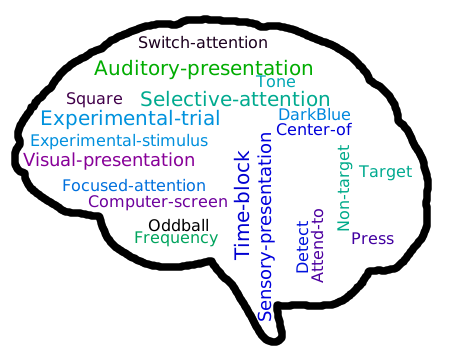
The plots below are generated by NEMAR’s automated EEG pipeline. The histogram shows pipeline success for data cleaning and ICA decomposition, the percentage of data frames and EEG channels retained after artefact removal, line noise per channel (RMS, dB), and the age/gender distribution of participants.

HED event descriptors word cloud
Manifest#
File Explorer#
Browse the BIDS file structure of this dataset. Records are fetched on demand from the EEGDash catalog the first time you open the explorer.
Full dataset metadata table
Dataset ID |
|
Title |
Auditory-Visual Shift Study |
Author (year) |
|
Canonical |
— |
Importable as |
|
Year |
20 |
Authors |
Marissa Westerfield (data, curation), Scott Makeig (data, curation), Dung Truong (curation), Kay Robbins (curation), Arno Delorme (curation) |
License |
CC0 |
Citation / DOI |
|
Source links |
OpenNeuro | NeMAR | Source URL |
Copy-paste BibTeX
@dataset{ds002893,
  title = {Auditory-Visual Shift Study},
  author = {Marissa Westerfield (data, curation) and Scott Makeig (data, curation) and Dung Truong (curation) and Kay Robbins (curation) and Arno Delorme (curation)},
  doi = {10.18112/openneuro.ds002893.v2.0.0},
  url = {https://doi.org/10.18112/openneuro.ds002893.v2.0.0},
}
API Reference#
eegdash.datasetEEGDashDatasetDS002893 · Westerfield2022eegdash/dataset/registry.py · [source ↗]- class eegdash.dataset.DS002893(cache_dir: str, query: dict | None = None, s3_bucket: str | None = None, **kwargs)[source]#
Auditory-Visual Shift Study
- Study:
ds002893(OpenNeuro)- Author (year):
Westerfield2022- Canonical:
—
Also importable as:
DS002893,Westerfield2022.Modality:
eeg; Experiment type:Attention; Subject type:Healthy. Subjects: 49; recordings: 52; tasks: 1.- Parameters:
cache_dir (str | Path) – Directory where data are cached locally.
query (dict | None) – Additional MongoDB-style filters to AND with the dataset selection. Must not contain the key
dataset.s3_bucket (str | None) – Base S3 bucket used to locate the data.
**kwargs (dict) – Additional keyword arguments forwarded to
EEGDashDataset.
- data_dir#
Local dataset cache directory (
cache_dir / dataset_id).- Type:
Path
Notes
Each item is a recording; recording-level metadata are available via
dataset.description.querysupports MongoDB-style filters on fields inALLOWED_QUERY_FIELDSand is combined with the dataset filter. Dataset-specific caveats are not provided in the summary metadata.References
OpenNeuro dataset: https://openneuro.org/datasets/ds002893 NeMAR dataset: https://nemar.org/dataexplorer/detail?dataset_id=ds002893 DOI: https://doi.org/10.18112/openneuro.ds002893.v2.0.0 NEMAR citation count: 1
Examples
>>> from eegdash.dataset import DS002893
>>> dataset = DS002893(cache_dir="./data")
>>> recording = dataset[0]
>>> raw = recording.load()
- __init__(cache_dir: str, query: dict | None = None, s3_bucket: str | None = None, **kwargs)[source]#
- save(path: str, overwrite: bool = False, offset: int = 0)[source]#
Save datasets to files by creating one subdirectory for each dataset:
path/
    0/
        0-raw.fif | 0-epo.fif
        description.json
        raw_preproc_kwargs.json (if raws were preprocessed)
        window_kwargs.json (if this is a windowed dataset)
        window_preproc_kwargs.json  (if windows were preprocessed)
        target_name.json (if target_name is not None and dataset is raw)
    1/
        1-raw.fif | 1-epo.fif
        description.json
        raw_preproc_kwargs.json (if raws were preprocessed)
        window_kwargs.json (if this is a windowed dataset)
        window_preproc_kwargs.json  (if windows were preprocessed)
        target_name.json (if target_name is not None and dataset is raw)
- Parameters:
path (str) –
- Directory in which subdirectories are created to store
-raw.fif | -epo.fif and .json files to.
overwrite (bool) – Whether to delete old subdirectories that will be saved to in this call.
offset (int) – If provided, the integer is added to the id of the dataset in the concat. This is useful in the setting of very large datasets, where one dataset has to be processed and saved at a time to account for its original position.
BaseDataset from braindecode — windowed via create_windows_from_events.braindecodeDataLoader; supports parallel workers and on-the-fly augmentations.pytorchdatasets.load_dataset("EEGDash/ds002893").huggingface Find datasets with the EEGDash APIQuery the catalogue, filter by task or modality, list candidates.
 Load one EEG recordingResolve a single record to an MNE Raw with channels and events.
 EEG recording to PyTorch DataLoaderWrap braindecode windows in a DataLoader for model training.
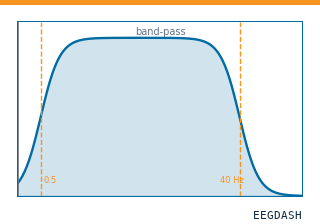 Preprocess EEG and create windowsFilter, resample, epoch — and persist the windowed dataset.
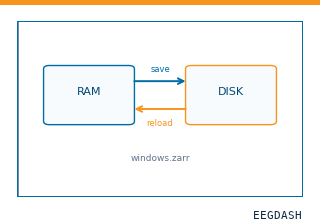 Save and reload prepared dataCache a windowed dataset to disk and reattach it without recompute.
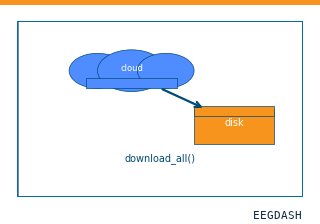 Download a dataset locallyPrefetch BIDS files to a local cache and validate the layout.
Swap any load_dataset(...) call for ds002893 to reproduce the tutorial on this dataset.
Citation
Marissa Westerfield (data, curation), Scott Makeig (data, curation), Dung Truong (curation), Kay Robbins (curation), Arno Delorme (curation) (20). Auditory-Visual Shift Study. 10.18112/openneuro.ds002893.v2.0.0
Provenance
¹Contributed to openneuro in BIDS format.
²Curated & ingested by the EEGDash catalog; see CITATION.cff for canonical reference.
³Persistent identifier: 10.18112/openneuro.ds002893.v2.0.0.
See Also#
eegdash.dataset.EEGDashDataseteegdash.dataset