


DS006648: eeg dataset, 47 subjects#
Poetry Assessment EEG Dataset 1
Access recordings and metadata through EEGDash.
Citation: Soma Chaudhuri, Joydeep Bhattacharya (—). Poetry Assessment EEG Dataset 1. 10.18112/openneuro.ds006648.v1.0.0
Modality: eeg Subjects: 47 Recordings: 47 License: CC0 Source: openneuro
Metadata: Complete (100%)
47-participant EEG dataset — Poetry Assessment EEG Dataset 1.
Quickstart#
Install
pip install eegdash
Access the data
from eegdash.dataset import DS006648

dataset = DS006648(cache_dir="./data")
# Get the raw object of the first recording
raw = dataset.datasets[0].raw
print(raw.info)
Filter by subject
dataset = DS006648(cache_dir="./data", subject="01")
Advanced query
dataset = DS006648(
    cache_dir="./data",
    query={"subject": {"$in": ["01", "02"]}},
)
Iterate recordings
for rec in dataset:
    print(rec.subject, rec.raw.info['sfreq'])
If you use this dataset in your research, please cite the original authors.
BibTeX
@dataset{ds006648,
  title = {Poetry Assessment EEG Dataset 1},
  author = {Soma Chaudhuri and Joydeep Bhattacharya},
  doi = {10.18112/openneuro.ds006648.v1.0.0},
  url = {https://doi.org/10.18112/openneuro.ds006648.v1.0.0},
}
About This Dataset#
Understanding how the brain engages with poetic language is key to advancing empirical research on aesthetic and creative cognition. This experiment involved 64-channel EEG recordings and behavioural ratings from 51 participants who read and evaluated 210 short English-language texts — 70 Haiku (nature-themed), 70 Senryu (emotion-themed), and 70 non-poetic Control texts. Each poem/text was rated on five subjective dimensions: Aesthetic Appeal, Vivid Imagery, Being Moved, Originality, and Creativity — using a 7-point scale.
The full study involved 51 participants, and the data were divided into two BIDS-compliant datasets to ensure technical validation and facilitate upload to OpenNeuro.
Poetry Assessment EEG Dataset 1 (this dataset) contains data from 47 participants whose continuous EEG recordings passed technical validation and were used in the primary analyses. In this dataset, the participants.tsv file maps anonymized BIDS IDs (sub-001 to sub-047) to the original participant codes used during data collection (P101–P151) Poetry Assessment EEG Dataset 2 includes the remaining 4 participants (P105, P141, P142, P146), whose EEG recordings were acquired in segments due to session interruptions and later concatenated during preprocessing. These participants were excluded from the PSD analysis to avoid potential artifacts but are included here for completeness and transparency.
Dataset Structure and Navigation:
Each subject folder contains four core EEG files: channels.tsv – EEG channel metadata eeg.json – EEG recording metadata eeg.set – Raw EEG data (EEGLAB format) events.tsv – Event markers aligned with poem presentation The /code/ directory includes:
Preprocessing.m – MATLAB preprocessing script BioSemi64.loc – 64-channel coordinate file The /derivatives/ directory contains:
Behavioural_Ratings/ – One .csv file per participant (e.g., P101.csv), including trial-by-trial ratings across five dimensions: Aesthetic Appeal, Vivid Imagery, Emotional Impact (labeled as ‘being moved’), Originality, and Creativity.
Psychometric_Responses/ – A single .csv file with demographic and trait-level questionnaire responses per participant, including: PANAS (mood), Openness, Curiosity, VVIQ (visual imagery), AVIQ (auditory imagery), MAAS (mindfulness), and AReA (aesthetic responsiveness). Also includes questionnaires.pdf with full questionnaire texts and scoring keys The /stimuli/ directory includes:
All 210 texts used in the experiment: 70 Haiku (nature-themed poetry), 70 Senryu (emotion-themed poetry), 70 Control (non-poetic matched prose).
Block-wise trial assignments for all seven blocks Resting-state EEG was recorded at the beginning and end of each session. These segments are embedded within the raw EEG files and can be identified using the following trigger codes in events.tsv: 65285, 65286 → Resting state (before experiment); 65287, 65288 → Resting state (after experiment) Interested users may also consult Poetry Assessment EEG Dataset 2 to access recordings from the remaining 4 participants excluded from the main analyses. All preprocessing steps, event markers, and metadata structures were applied identically across both datasets (Poetry Assessment EEG Dataset 1 and Poetry Assessment EEG Dataset 2), ensuring consistency. This enables users to apply their own quality control pipelines and include these data if desired.
Of note, the anonymized participant IDs (e.g., PXXX) are used consistently across all data modalities, enabling reliable cross-referencing between EEG data, behavioural ratings, and psychometric responses. Data collection took place at the Department of Psychology at Goldsmiths, University of London, UK. The project was approved by the Local Ethics Committee at the Department of Psychology, Goldsmiths University of London. The experiment was conducted in accordance with the Declaration of Helsinki. All EEG, behavioural, and psychometric data were anonymized. Participant identifiers were coded (P101–P151), and no names, dates of birth, or other direct identifiers are included.
Cohort#
Dataset Statistics#
Channel counts: 70 ch (n=47 recordings)
Sampling frequencies: 512.0 Hz (n=47 recordings)
Total recording duration: 91 h
Signal · Electrodes & live trace#
Live trace viewer — sub-021 · task-readpoetry
Showing one representative recording out of
47 subjects and 47 recordings in this dataset.
Browse the full set on OpenNeuro;
drop any other _eeg.{set,edf,bdf,vhdr} file onto the
viewer (or pass ?eeg=<url>) to inspect it.
Electrode layout — EEG · 64 sensors — 64 channels
NEMAR Processing Statistics#
The plots below are generated by NEMAR’s automated EEG pipeline. The histogram shows pipeline success for data cleaning and ICA decomposition, the percentage of data frames and EEG channels retained after artefact removal, line noise per channel (RMS, dB), and the age/gender distribution of participants.

HED event descriptors word cloud

Manifest#
File Explorer#
Browse the BIDS file structure of this dataset. Records are fetched on demand from the EEGDash catalog the first time you open the explorer.
Full dataset metadata table
Dataset ID |
|
Title |
Poetry Assessment EEG Dataset 1 |
Author (year) |
|
Canonical |
— |
Importable as |
|
Year |
— |
Authors |
Soma Chaudhuri, Joydeep Bhattacharya |
License |
CC0 |
Citation / DOI |
|
Source links |
Copy-paste BibTeX
@dataset{ds006648,
  title = {Poetry Assessment EEG Dataset 1},
  author = {Soma Chaudhuri and Joydeep Bhattacharya},
  doi = {10.18112/openneuro.ds006648.v1.0.0},
  url = {https://doi.org/10.18112/openneuro.ds006648.v1.0.0},
}
API Reference#
eegdash.datasetEEGDashDatasetDS006648 · Chaudhuri2025_D1eegdash/dataset/registry.py · [source ↗]- class eegdash.dataset.DS006648(cache_dir: str, query: dict | None = None, s3_bucket: str | None = None, **kwargs)[source]#
Poetry Assessment EEG Dataset 1
- Study:
ds006648(OpenNeuro)- Author (year):
Chaudhuri2025_D1- Canonical:
—
Also importable as:
DS006648,Chaudhuri2025_D1.Modality:
eeg; Experiment type:Language; Subject type:Healthy. Subjects: 47; recordings: 0; tasks: 1.- Parameters:
cache_dir (str | Path) – Directory where data are cached locally.
query (dict | None) – Additional MongoDB-style filters to AND with the dataset selection. Must not contain the key
dataset.s3_bucket (str | None) – Base S3 bucket used to locate the data.
**kwargs (dict) – Additional keyword arguments forwarded to
EEGDashDataset.
- data_dir#
Local dataset cache directory (
cache_dir / dataset_id).- Type:
Path
Notes
Each item is a recording; recording-level metadata are available via
dataset.description.querysupports MongoDB-style filters on fields inALLOWED_QUERY_FIELDSand is combined with the dataset filter. Dataset-specific caveats are not provided in the summary metadata.References
OpenNeuro dataset: https://openneuro.org/datasets/ds006648 NeMAR dataset: https://nemar.org/dataexplorer/detail?dataset_id=ds006648 DOI: https://doi.org/10.18112/openneuro.ds006648.v1.0.0
Examples
>>> from eegdash.dataset import DS006648
>>> dataset = DS006648(cache_dir="./data")
>>> recording = dataset[0]
>>> raw = recording.load()
- __init__(cache_dir: str, query: dict | None = None, s3_bucket: str | None = None, **kwargs)[source]#
- save(path: str, overwrite: bool = False, offset: int = 0)[source]#
Save datasets to files by creating one subdirectory for each dataset:
path/
    0/
        0-raw.fif | 0-epo.fif
        description.json
        raw_preproc_kwargs.json (if raws were preprocessed)
        window_kwargs.json (if this is a windowed dataset)
        window_preproc_kwargs.json  (if windows were preprocessed)
        target_name.json (if target_name is not None and dataset is raw)
    1/
        1-raw.fif | 1-epo.fif
        description.json
        raw_preproc_kwargs.json (if raws were preprocessed)
        window_kwargs.json (if this is a windowed dataset)
        window_preproc_kwargs.json  (if windows were preprocessed)
        target_name.json (if target_name is not None and dataset is raw)
- Parameters:
path (str) –
- Directory in which subdirectories are created to store
-raw.fif | -epo.fif and .json files to.
overwrite (bool) – Whether to delete old subdirectories that will be saved to in this call.
offset (int) – If provided, the integer is added to the id of the dataset in the concat. This is useful in the setting of very large datasets, where one dataset has to be processed and saved at a time to account for its original position.
BaseDataset from braindecode — windowed via create_windows_from_events.braindecodeDataLoader; supports parallel workers and on-the-fly augmentations.pytorchdatasets.load_dataset("EEGDash/ds006648").huggingface Find datasets with the EEGDash APIQuery the catalogue, filter by task or modality, list candidates.
 Load one EEG recordingResolve a single record to an MNE Raw with channels and events.
 EEG recording to PyTorch DataLoaderWrap braindecode windows in a DataLoader for model training.
 Preprocess EEG and create windowsFilter, resample, epoch — and persist the windowed dataset.
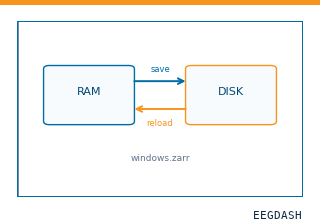 Save and reload prepared dataCache a windowed dataset to disk and reattach it without recompute.
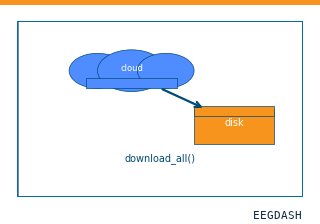 Download a dataset locallyPrefetch BIDS files to a local cache and validate the layout.
Swap any load_dataset(...) call for ds006648 to reproduce the tutorial on this dataset.
Citation
Soma Chaudhuri, Joydeep Bhattacharya (n.d.). Poetry Assessment EEG Dataset 1. 10.18112/openneuro.ds006648.v1.0.0
Provenance
¹Contributed to openneuro in BIDS format.
²Curated & ingested by the EEGDash catalog; see CITATION.cff for canonical reference.
³Persistent identifier: 10.18112/openneuro.ds006648.v1.0.0.
See Also#
eegdash.dataset.EEGDashDataseteegdash.dataset