


NM000166: eeg dataset, 95 subjects#
M3CV: Multi-subject, Multi-session, Multi-task EEG Database
Access recordings and metadata through EEGDash.
Citation: Gan Huang, Zhenxing Hu, Weize Chen, Shaorong Zhang, Zhen Liang, Linling Li, Li Zhang, Zhiguo Zhang (2022). M3CV: Multi-subject, Multi-session, Multi-task EEG Database. 10.1016/j.neuroimage.2022.119666
Modality: eeg Subjects: 95 Recordings: 2469 License: CC BY 4.0 Source: nemar
Metadata: Complete (100%)
95-participant EEG dataset — M3CV: Multi-subject, Multi-session, Multi-task EEG Database.
Quickstart#
Install
pip install eegdash
Access the data
from eegdash.dataset import NM000166

dataset = NM000166(cache_dir="./data")
# Get the raw object of the first recording
raw = dataset.datasets[0].raw
print(raw.info)
Filter by subject
dataset = NM000166(cache_dir="./data", subject="01")
Advanced query
dataset = NM000166(
    cache_dir="./data",
    query={"subject": {"$in": ["01", "02"]}},
)
Iterate recordings
for rec in dataset:
    print(rec.subject, rec.raw.info['sfreq'])
If you use this dataset in your research, please cite the original authors.
BibTeX
@dataset{nm000166,
  title = {M3CV: Multi-subject, Multi-session, Multi-task EEG Database},
  author = {Gan Huang and Zhenxing Hu and Weize Chen and Shaorong Zhang and Zhen Liang and Linling Li and Li Zhang and Zhiguo Zhang},
  doi = {10.1016/j.neuroimage.2022.119666},
  url = {https://doi.org/10.1016/j.neuroimage.2022.119666},
}
About This Dataset#
This dataset contains 64-channel EEG from 95 healthy young adults (Age:
21.3 +/- 2.2 years; 73 males, 22 females) from Shenzhen University, recorded across 2 sessions on different days using a BrainAmp amplifier with 64-channel Easycap (standard 10-20 positions). Each subject performed 6 paradigms with 14 types of EEG signals across 15 runs per session (~50 min recording, ~2 h total including setup and rest). The original paper describes 14 signal types; the distributed data contains 13 task codes because nontarget P300 epochs were not included.
The original data was recorded at 1000 Hz and preprocessed using Matlab 2018b
with Letswave7 (letswave.cn), then distributed as individual 4-second epoched .mat files at 250 Hz.
M3CV: Multi-subject, Multi-session, and Multi-task EEG Database
Overview
This BIDS version reconstructs pseudo-continuous EEG by concatenating the distributed epochs per subject/session/task. Event markers indicate epoch boundaries and stimulus onsets derived from the original marker channel.
Ethics: Medical Ethics Committee, Health Science Center, Shenzhen University
View full README
M3CV: Multi-subject, Multi-session, and Multi-task EEG Database
Overview
This BIDS version reconstructs pseudo-continuous EEG by concatenating the distributed epochs per subject/session/task. Event markers indicate epoch boundaries and stimulus onsets derived from the original marker channel.
Ethics: Medical Ethics Committee, Health Science Center, Shenzhen University (No. 2019053). All subjects gave informed consent.
Recording Setup
Amplifier: BrainAmp (Brain Products GmbH, Germany)
Cap: 64-channel Easycap, standard 10-20 positions
Online reference: FCz; Ground: AFz
Sampling rate: 1000 Hz (distributed at 250 Hz after preprocessing)
Impedance: < 20 kOhm
Subject distance: ~1 meter from screen
Screen: 24.5-inch Alienware AW2518H (1920x1080, 240 Hz refresh rate)
Visual stimuli: Psychtoolbox-3 in Matlab
Sensory stimuli: Arduino Uno platform via serial port to Matlab
LED: 3 W, 2 cm diameter circular shield, 45 cm from eyes, 1074 Lux (measured by TES-1332A light meter)
Headphones: Nokia WH-102, 75 dB SPL average
Vibration motor: 1027 disk, 3 W rated, 80% efficiency, 10 mm x 2.7 mm, placed on subject’s left hand
Power line frequency: 50 Hz
Preprocessing (applied before distribution, Table 3 of paper)
Software: Matlab 2018b & Letswave7 (letswave.cn) 1. Bad channels identified manually, interpolated with mean of 3 surrounding
channels (22 of 95 subjects had bad channels)
Channel FCz (online reference) added back
Channel IO (EOG) removed
Bandpass filter: 0.01-200 Hz, 4th-order Butterworth, 24 dB/octave, zero-phase
Notch filter: 49-51 Hz bandstop, 4th-order Butterworth, 24 dB/octave, zero-phase
Re-referenced to mean of TP9 and TP10 (linked mastoids)
ICA artifact removal: eye blink and eye movement components identified by visual inspection of scalp topographies, time courses, and spectra (Huang et al., 2020)
Downsampled to 250 Hz
No bad epoch rejection (intentional for ML robustness/repeatability)
Note: One subject was removed due to strong 10 Hz artifacts. The remaining 95 subjects are included in the distributed data.
Paradigms (14 signal types, 13 in distributed data, 15 runs/session)
Run 01: Eyes Closed resting (restEC) — 1 min; fixate on LED (off) Run 02: Eyes Open resting (restEO) — 1 min; fixate ahead, minimal blink Run 03: Motor execution (motorFoot/motorRHand/motorLHand) — 20 trials each Run 04: Transient sensory (vep/aep/sep) — 30 trials each, random order, ~4.5 min Run 05: SSVEP (ssvep) — 10 Hz LED, 1 min Run 06: Motor execution — 20 trials each Run 07: P300 oddball (p300) — 600 stimuli (5% target=30, nontarget=570), 80 ms,
ISI 200 ms, 2 min; red/white 300x300 px squares; subjects count red
Run 08: SSVEP-SA (ssvepSA) — 6 freq (7/8/9/11/13/15 Hz), 12 segments x 10 s Run 09: SSAEP (ssaep) — 45.38 Hz, 2 min Run 10: Motor execution — 20 trials each Run 11: Transient sensory — 30 trials each, random order Run 12: SSSEP (sssep) — 22.04 Hz vibration, 2 min Run 13: Motor execution — 20 trials each Run 14: Eyes Closed resting (restEC) — 1 min Run 15: Eyes Open resting (restEO) — 1 min Motor execution details: subjects gripped (LH/RH) or lifted ankle (FT) at ~2x/sec, ~80% maximum voluntary contraction, 3 s duration until cue offset.
No feedback, metronome, or hint was provided. Experimenters monitored movement quality during recording.
Notes on distributed data
14 signal types in the paper, 13 task codes in distributed data: nontarget P300 (paper task 10, trigger S10) was not distributed
P300: Only 30 target trials stored per subject; 570 nontarget discarded
SSVEP-SA: 6 frequency classes not distinguishable in marker; all marker=13
Trigger codes in original recording (S1-S25) differ from CSV Task column (1-13). CSV Task 10=FT, 11=RH, 12=LH (paper tasks 11-13, triggers S6-S8)
Epoch ordering within task may not reflect original temporal sequence
11 “intruder” subjects in Testing set have hidden SubjectIDs (excluded here)
Subjects and Sessions
106 total subjects; 95 completed both sessions
Age: 21.3 +/- 2.2 years (95 subjects); 73 males, 22 females
Normal hearing, normal/corrected vision, no neurological history (self-report)
Between-session interval: 6 to 139 days (mean ~20 days)
ses-01 = session 1 (Enrollment set)
ses-02 = session 2 (Calibration + Testing sets)
11 “intruder” subjects (session 2 only, hidden IDs) are excluded from BIDS
Competition context
Originally distributed for the M3CV EEG-based Biometric Competition on Kaggle (identification and verification tasks). Competition closed Apr 30, 2023; late submissions remain allowed.
Reference
Huang, G., Hu, Z., Chen, W., Zhang, S., Liang, Z., Li, L., Zhang, L., & Zhang, Z. (2022). M3CV: A multi-subject, multi-session, and multi-task database for EEG-based biometrics challenge. NeuroImage, 264, 119666. https://doi.org/10.1016/j.neuroimage.2022.119666
References
Appelhoff, S., Sanderson, M., Brooks, T., Vliet, M., Quentin, R., Holdgraf, C., Chaumon, M., Mikulan, E., Tavabi, K., Höchenberger, R., Welke, D., Brunner, C., Rockhill, A., Larson, E., Gramfort, A. and Jas, M. (2019). MNE-BIDS: Organizing electrophysiological data into the BIDS format and facilitating their analysis. Journal of Open Source Software 4: (1896).https://doi.org/10.21105/joss.01896 Pernet, C. R., Appelhoff, S., Gorgolewski, K. J., Flandin, G., Phillips, C., Delorme, A., Oostenveld, R. (2019). EEG-BIDS, an extension to the brain imaging data structure for electroencephalography. Scientific Data, 6, 103.https://doi.org/10.1038/s41597-019-0104-8
NEMAR Metadata#
M3CV: Multi-subject, Multi-session, and Multi-task EEG Database#
Overview#
This dataset contains 64-channel EEG from 95 healthy young adults (Age: 21.3 +/- 2.2 years; 73 males, 22 females) from Shenzhen University, recorded across 2 sessions on different days using a BrainAmp amplifier with 64-channel Easycap (standard 10-20 positions). Each subject performed 6 paradigms with 14 types of EEG signals across 15 runs per session (~50 min recording, ~2 h total including setup and rest). The original paper describes 14 signal types; the distributed data contains 13 task codes because nontarget P300 epochs were not included. The original data was recorded at 1000 Hz and preprocessed using Matlab 2018b with Letswave7 (letswave.cn), then distributed as individual 4-second epoched .mat files at 250 Hz. This BIDS version reconstructs pseudo-continuous EEG by concatenating the distributed epochs per subject/session/task. Event markers indicate epoch boundaries and stimulus onsets derived from the original marker channel. Ethics: Medical Ethics Committee, Health Science Center, Shenzhen University (No. 2019053). All subjects gave informed consent. Recording Setup ————— - Amplifier: BrainAmp (Brain Products GmbH, Germany) - Cap: 64-channel Easycap, standard 10-20 positions - Online reference: FCz; Ground: AFz - Sampling rate: 1000 Hz (distributed at 250 Hz after preprocessing) - Impedance: < 20 kOhm - Subject distance: ~1 meter from screen - Screen: 24.5-inch Alienware AW2518H (1920x1080, 240 Hz refresh rate) - Visual stimuli: Psychtoolbox-3 in Matlab - Sensory stimuli: Arduino Uno platform via serial port to Matlab - LED: 3 W, 2 cm diameter circular shield, 45 cm from eyes, 1074 Lux
(measured by TES-1332A light meter)
Headphones: Nokia WH-102, 75 dB SPL average
Vibration motor: 1027 disk, 3 W rated, 80% efficiency, 10 mm x 2.7 mm, placed on subject’s left hand
Power line frequency: 50 Hz
Preprocessing (applied before distribution, Table 3 of paper)#
Software: Matlab 2018b & Letswave7 (letswave.cn) 1. Bad channels identified manually, interpolated with mean of 3 surrounding
channels (22 of 95 subjects had bad channels)
Channel FCz (online reference) added back
Channel IO (EOG) removed
Bandpass filter: 0.01-200 Hz, 4th-order Butterworth, 24 dB/octave, zero-phase
Notch filter: 49-51 Hz bandstop, 4th-order Butterworth, 24 dB/octave, zero-phase
Re-referenced to mean of TP9 and TP10 (linked mastoids)
ICA artifact removal: eye blink and eye movement components identified by visual inspection of scalp topographies, time courses, and spectra (Huang et al., 2020)
Downsampled to 250 Hz
9. No bad epoch rejection (intentional for ML robustness/repeatability) Note: One subject was removed due to strong 10 Hz artifacts. The remaining 95 subjects are included in the distributed data. Paradigms (14 signal types, 13 in distributed data, 15 runs/session) ——————————————————————— Run 01: Eyes Closed resting (restEC) — 1 min; fixate on LED (off) Run 02: Eyes Open resting (restEO) — 1 min; fixate ahead, minimal blink Run 03: Motor execution (motorFoot/motorRHand/motorLHand) — 20 trials each Run 04: Transient sensory (vep/aep/sep) — 30 trials each, random order, ~4.5 min Run 05: SSVEP (ssvep) — 10 Hz LED, 1 min Run 06: Motor execution — 20 trials each Run 07: P300 oddball (p300) — 600 stimuli (5% target=30, nontarget=570), 80 ms,
ISI 200 ms, 2 min; red/white 300x300 px squares; subjects count red
Run 08: SSVEP-SA (ssvepSA) — 6 freq (7/8/9/11/13/15 Hz), 12 segments x 10 s Run 09: SSAEP (ssaep) — 45.38 Hz, 2 min Run 10: Motor execution — 20 trials each Run 11: Transient sensory — 30 trials each, random order Run 12: SSSEP (sssep) — 22.04 Hz vibration, 2 min Run 13: Motor execution — 20 trials each Run 14: Eyes Closed resting (restEC) — 1 min Run 15: Eyes Open resting (restEO) — 1 min Motor execution details: subjects gripped (LH/RH) or lifted ankle (FT) at ~2x/sec, ~80% maximum voluntary contraction, 3 s duration until cue offset. No feedback, metronome, or hint was provided. Experimenters monitored movement quality during recording. Notes on distributed data ————————– - 14 signal types in the paper, 13 task codes in distributed data:
nontarget P300 (paper task 10, trigger S10) was not distributed
P300: Only 30 target trials stored per subject; 570 nontarget discarded
SSVEP-SA: 6 frequency classes not distinguishable in marker; all marker=13
Trigger codes in original recording (S1-S25) differ from CSV Task column (1-13). CSV Task 10=FT, 11=RH, 12=LH (paper tasks 11-13, triggers S6-S8)
Epoch ordering within task may not reflect original temporal sequence
11 “intruder” subjects in Testing set have hidden SubjectIDs (excluded here)
Subjects and Sessions#
106 total subjects; 95 completed both sessions
Age: 21.3 +/- 2.2 years (95 subjects); 73 males, 22 females
Normal hearing, normal/corrected vision, no neurological history (self-report)
Between-session interval: 6 to 139 days (mean ~20 days)
ses-01 = session 1 (Enrollment set)
ses-02 = session 2 (Calibration + Testing sets)
11 “intruder” subjects (session 2 only, hidden IDs) are excluded from BIDS
Competition context#
Originally distributed for the M3CV EEG-based Biometric Competition on Kaggle (identification and verification tasks). Competition closed Apr 30, 2023; late submissions remain allowed. Reference ——— Huang, G., Hu, Z., Chen, W., Zhang, S., Liang, Z., Li, L., Zhang, L., & Zhang, Z. (2022). M3CV: A multi-subject, multi-session, and multi-task database for EEG-based biometrics challenge. NeuroImage, 264, 119666. https://doi.org/10.1016/j.neuroimage.2022.119666 References ———- Appelhoff, S., Sanderson, M., Brooks, T., Vliet, M., Quentin, R., Holdgraf, C., Chaumon, M., Mikulan, E., Tavabi, K., Höchenberger, R., Welke, D., Brunner, C., Rockhill, A., Larson, E., Gramfort, A. and Jas, M. (2019). MNE-BIDS: Organizing electrophysiological data into the BIDS format and facilitating their analysis. Journal of Open Source Software 4: (1896).https://doi.org/10.21105/joss.01896 Pernet, C. R., Appelhoff, S., Gorgolewski, K. J., Flandin, G., Phillips, C., Delorme, A., Oostenveld, R. (2019). EEG-BIDS, an extension to the brain imaging data structure for electroencephalography. Scientific Data, 6, 103.https://doi.org/10.1038/s41597-019-0104-8
License: CC BY 4.0
Authors:
Gan Huang
Zhenxing Hu
Weize Chen
Shaorong Zhang
Zhen Liang
… and 3 more
Versions:
Version |
DOI |
Released |
|---|---|---|
|
Cohort#
Dataset Statistics#
Channel counts: 64 ch (n=2469 recordings)
Sampling frequencies: 250.0 Hz (n=2469 recordings)
Total recording duration: 100 h
Signal · Electrodes & live trace#
Live trace viewer — sub-021 · ses-02 · task-ssvepSA
Showing one representative recording out of
95 subjects and 2469 recordings in this dataset.
Browse the full set on OpenNeuro;
drop any other _eeg.{set,edf,bdf,vhdr} file onto the
viewer (or pass ?eeg=<url>) to inspect it.
Electrode layout — EEG · 64 sensors — 64 channels
NEMAR Processing Statistics#
The plots below are generated by NEMAR’s automated EEG pipeline. The histogram shows pipeline success for data cleaning and ICA decomposition, the percentage of data frames and EEG channels retained after artefact removal, line noise per channel (RMS, dB), and the age/gender distribution of participants.

HED event descriptors word cloud

Manifest#
File Explorer#
Browse the BIDS file structure of this dataset. Records are fetched on demand from the EEGDash catalog the first time you open the explorer.
Full dataset metadata table
Dataset ID |
|
Title |
M3CV: Multi-subject, Multi-session, Multi-task EEG Database |
Author (year) |
|
Canonical |
— |
Importable as |
|
Year |
2022 |
Authors |
Gan Huang, Zhenxing Hu, Weize Chen, Shaorong Zhang, Zhen Liang, Linling Li, Li Zhang, Zhiguo Zhang |
License |
CC BY 4.0 |
Citation / DOI |
|
Source links |
Copy-paste BibTeX
@dataset{nm000166,
  title = {M3CV: Multi-subject, Multi-session, Multi-task EEG Database},
  author = {Gan Huang and Zhenxing Hu and Weize Chen and Shaorong Zhang and Zhen Liang and Linling Li and Li Zhang and Zhiguo Zhang},
  doi = {10.1016/j.neuroimage.2022.119666},
  url = {https://doi.org/10.1016/j.neuroimage.2022.119666},
}
API Reference#
eegdash.datasetEEGDashDatasetNM000166 · Huang2018eegdash/dataset/registry.py · [source ↗]- class eegdash.dataset.NM000166(cache_dir: str, query: dict | None = None, s3_bucket: str | None = None, **kwargs)[source]#
M3CV: Multi-subject, Multi-session, Multi-task EEG Database
- Study:
nm000166(NeMAR)- Author (year):
Huang2018- Canonical:
—
Also importable as:
NM000166,Huang2018.Modality:
eeg; Experiment type:Other; Subject type:Healthy. Subjects: 95; recordings: 0; tasks: 13.- Parameters:
cache_dir (str | Path) – Directory where data are cached locally.
query (dict | None) – Additional MongoDB-style filters to AND with the dataset selection. Must not contain the key
dataset.s3_bucket (str | None) – Base S3 bucket used to locate the data.
**kwargs (dict) – Additional keyword arguments forwarded to
EEGDashDataset.
- data_dir#
Local dataset cache directory (
cache_dir / dataset_id).- Type:
Path
Notes
Each item is a recording; recording-level metadata are available via
dataset.description.querysupports MongoDB-style filters on fields inALLOWED_QUERY_FIELDSand is combined with the dataset filter. Dataset-specific caveats are not provided in the summary metadata.References
OpenNeuro dataset: https://openneuro.org/datasets/nm000166 NeMAR dataset: https://nemar.org/dataexplorer/detail?dataset_id=nm000166 DOI: https://doi.org/10.1016/j.neuroimage.2022.119666
Examples
>>> from eegdash.dataset import NM000166
>>> dataset = NM000166(cache_dir="./data")
>>> recording = dataset[0]
>>> raw = recording.load()
- __init__(cache_dir: str, query: dict | None = None, s3_bucket: str | None = None, **kwargs)[source]#
- save(path: str, overwrite: bool = False, offset: int = 0)[source]#
Save datasets to files by creating one subdirectory for each dataset:
path/
    0/
        0-raw.fif | 0-epo.fif
        description.json
        raw_preproc_kwargs.json (if raws were preprocessed)
        window_kwargs.json (if this is a windowed dataset)
        window_preproc_kwargs.json  (if windows were preprocessed)
        target_name.json (if target_name is not None and dataset is raw)
    1/
        1-raw.fif | 1-epo.fif
        description.json
        raw_preproc_kwargs.json (if raws were preprocessed)
        window_kwargs.json (if this is a windowed dataset)
        window_preproc_kwargs.json  (if windows were preprocessed)
        target_name.json (if target_name is not None and dataset is raw)
- Parameters:
path (str) –
- Directory in which subdirectories are created to store
-raw.fif | -epo.fif and .json files to.
overwrite (bool) – Whether to delete old subdirectories that will be saved to in this call.
offset (int) – If provided, the integer is added to the id of the dataset in the concat. This is useful in the setting of very large datasets, where one dataset has to be processed and saved at a time to account for its original position.
BaseDataset from braindecode — windowed via create_windows_from_events.braindecodeDataLoader; supports parallel workers and on-the-fly augmentations.pytorchdatasets.load_dataset("EEGDash/nm000166").huggingface Find datasets with the EEGDash APIQuery the catalogue, filter by task or modality, list candidates.
 Load one EEG recordingResolve a single record to an MNE Raw with channels and events.
 EEG recording to PyTorch DataLoaderWrap braindecode windows in a DataLoader for model training.
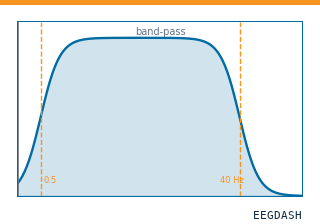 Preprocess EEG and create windowsFilter, resample, epoch — and persist the windowed dataset.
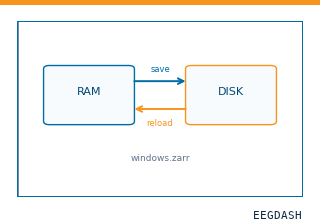 Save and reload prepared dataCache a windowed dataset to disk and reattach it without recompute.
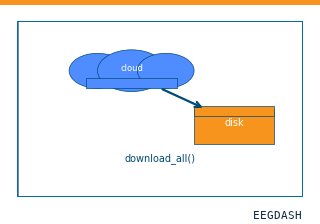 Download a dataset locallyPrefetch BIDS files to a local cache and validate the layout.
Swap any load_dataset(...) call for nm000166 to reproduce the tutorial on this dataset.
Citation
Gan Huang, Zhenxing Hu, Weize Chen, Shaorong Zhang, Zhen Liang, … (2022). M3CV: Multi-subject, Multi-session, Multi-task EEG Database. 10.1016/j.neuroimage.2022.119666
Provenance
¹Contributed to nemar in BIDS format.
²Curated & ingested by the EEGDash catalog; see CITATION.cff for canonical reference.
³Persistent identifier: 10.1016/j.neuroimage.2022.119666.
See Also#
eegdash.dataset.EEGDashDataseteegdash.dataset