


DS007524: meg dataset, 50 subjects#
LittlePrince_MEG_French_Read_Pallier2025
Access recordings and metadata through EEGDash.
Citation: Corentin Bel, Julie Bonnaire, Jean-Rémi King, Christophe Pallier (2025). LittlePrince_MEG_French_Read_Pallier2025. 10.18112/openneuro.ds007524.v1.1.0
Modality: meg Subjects: 50 Recordings: 500 License: CC0 Source: openneuro
Metadata: Complete (100%)
50-participant MEG dataset — LittlePrince_MEG_French_Read_Pallier2025.
Quickstart#
Install
pip install eegdash
Access the data
from eegdash.dataset import DS007524

dataset = DS007524(cache_dir="./data")
# Get the raw object of the first recording
raw = dataset.datasets[0].raw
print(raw.info)
Filter by subject
dataset = DS007524(cache_dir="./data", subject="01")
Advanced query
dataset = DS007524(
    cache_dir="./data",
    query={"subject": {"$in": ["01", "02"]}},
)
Iterate recordings
for rec in dataset:
    print(rec.subject, rec.raw.info['sfreq'])
If you use this dataset in your research, please cite the original authors.
BibTeX
@dataset{ds007524,
  title = {LittlePrince_MEG_French_Read_Pallier2025},
  author = {Corentin Bel and Julie Bonnaire and Jean-Rémi King and Christophe Pallier},
  doi = {10.18112/openneuro.ds007524.v1.1.0},
  url = {https://doi.org/10.18112/openneuro.ds007524.v1.1.0},
}
About This Dataset#
This dataset contains magnetoencephalography (MEG) recordings collected while participants read the French text of Le Petit Prince presented using a rapid serial visual presentation (RSVP) paradigm.
A separate dataset containing MEG recordings from the auditory listening paradigm is available on OpenNeuro (accession number: ds007523).
This data is analyzed in:
d’Ascoli, S., Bel, C., Rapin, J. et al. Towards decoding individual words from non-invasive brain recordings. Nature Communications 16, 10521 (2025). https://doi.org/10.1038/s41467-025-65499-0
Summary
Participants
Fifty healthy adults participated in the reading experiment (10 females; mean age = 28.4 years, SD = 5.7 years).
All participants were native French speakers, right-handed, and reported no history of neurological disorders. Written informed consent was obtained prior to participation. The study was approved by the relevant local ethics committee.
Stimuli
View full README
Summary
Participants
Fifty healthy adults participated in the reading experiment (10 females; mean age = 28.4 years, SD = 5.7 years).
All participants were native French speakers, right-handed, and reported no history of neurological disorders. Written informed consent was obtained prior to participation. The study was approved by the relevant local ethics committee.
Stimuli
The stimulus consisted of the French text of *Le Petit Prince*.
The text was presented using a rapid serial visual presentation (RSVP) paradigm: - Words were displayed individually in white font on a black background - Word duration: 225 ms - Inter-word interval: 50 ms (black screen) - Sentence-final pause: 500 ms
Timing parameters were selected based on pilot testing to maintain attention and reading fluency.
The text was segmented into 9 parts corresponding to the 9 experimental runs. - Mean run duration: 8min10s - SD: 40s
- Range: 7min10s to 9min
Experimental Procedure
After informed consent and familiarization with the MEG environment, participants were seated in the MEG chair inside a magnetically shielded room facing a projection screen.
Viewing distance was fixed at 100 cm. Words appeared sequentially at the center of the screen. Participants were instructed to maintain fixation and read attentively while minimizing movement. The experiment consisted of 9 runs. Short breaks were provided between runs. After each run, participants completed 4 multiple-choice comprehension questions to assess engagement (behavioral responses are not included in this release).
Acquisition
MEG
MEG data for all three tasks were recorded inside the same magnetically shielded room using a whole-head Elekta Neuromag TRIUX MEG system (Elekta Oy, Helsinki, Finland), equipped with 102 magnetometers and 204 planar gradiometers. Data were recorded continuously with a sampling rate of 1000 Hz and an online low-pass filter at 330 Hz and high-pass filter at 0.1 Hz.
Vertical and horizontal electrooculograms (EOG) and an electrocardiogram (ECG) were recorded simultaneously using bipolar electrodes to monitor eye movements and heartbeats.
Anatomical MRI
For each participant, a high-resolution T1-weighted anatomical MRI scan was acquired using a 3T Siemens Magnetom Prisma MRI scanner (Siemens Healthcare, Erlangen, Germany). A standard MPRAGE sequence was used. MRI scans were typically acquired right after the MEG recording. Scans were used for coregistration and cortical surface reconstruction for source analysis.
Data Organization
Raw Data
The root directory includes:
- dataset_description.json
- participants.tsv and participants.json
- task-read_events.json
- sub-01 to sub-50
- sourcedata/
- derivatives/
Each subject directory (sub-XX) contains one session (ses-01) with:
- anat/: T1-weighted MRI (sub-XX_ses-01_T1w.nii.gz) and corresponding JSON sidecar
- meg/: 9 MEG runs (task-read_run-01 to run-09), each including:
continuous MEG data (
*_meg.fif)sidecar JSON files
events.tsvandchannels.tsvfilescoordinate system file (
*_coordsystem.json)calibration and crosstalk files
sub-XX_ses-01_scans.tsv: scan-level metadata
Each run corresponds to one text segment.
Acquisition parameters are provided in the corresponding sidecar JSON files.
Derivatives
The derivatives/ directory contains:
- freesurfer/: subject-specific FreeSurfer reconstructions and morph maps
- preprocessed_data/: preprocessed MEG data (including SSS-processed files), forward and inverse solutions, noise covariance matrices, source spaces, transformation files, evoked data, and source time courses.
Reference
Niso, G., Gorgolewski, K. J., Bock, E., Brooks, T. L., Flandin, G., Gramfort, A., Henson, R. N., Jas, M., Litvak, V., Moreau, J., Oostenveld, R., Schoffelen, J., Tadel, F., Wexler, J., & Baillet, S. (2018). MEG-BIDS, the brain imaging data structure extended to magnetoencephalography. Scientific Data, 5, 180110. https://doi.org/10.1038/sdata.2018.110
Cohort#
Dataset Statistics#
Age distribution by gender (n=50, range 20–45 yr, mean 28.7 yr)
Sex composition
Channel counts (ch)
Sampling frequencies: 1000.0 Hz (n=450 recordings)
Total recording duration: 63 h
Signal · Electrodes & live trace#
Live trace viewer — sub-13 · ses-01 · task-read · run-02
Showing one representative recording out of
50 subjects and 500 recordings in this dataset.
Browse the full set on OpenNeuro;
drop any other _meg.{set,edf,bdf,vhdr} file onto the
viewer (or pass ?meg=<url>) to inspect it.
Electrode layout — MEG · 306 sensors — 306 channels
NEMAR Processing Statistics#
The plots below are generated by NEMAR’s automated EEG pipeline. The histogram shows pipeline success for data cleaning and ICA decomposition, the percentage of data frames and EEG channels retained after artefact removal, line noise per channel (RMS, dB), and the age/gender distribution of participants.

HED event descriptors word cloud

Manifest#
File Explorer#
Browse the BIDS file structure of this dataset. Records are fetched on demand from the EEGDash catalog the first time you open the explorer.
Full dataset metadata table
Dataset ID |
|
Title |
LittlePrince_MEG_French_Read_Pallier2025 |
Author (year) |
|
Canonical |
— |
Importable as |
|
Year |
2025 |
Authors |
Corentin Bel, Julie Bonnaire, Jean-Rémi King, Christophe Pallier |
License |
CC0 |
Citation / DOI |
|
Source links |
Copy-paste BibTeX
@dataset{ds007524,
  title = {LittlePrince_MEG_French_Read_Pallier2025},
  author = {Corentin Bel and Julie Bonnaire and Jean-Rémi King and Christophe Pallier},
  doi = {10.18112/openneuro.ds007524.v1.1.0},
  url = {https://doi.org/10.18112/openneuro.ds007524.v1.1.0},
}
API Reference#
eegdash.datasetEEGDashDatasetDS007524 · Pallier2025eegdash/dataset/registry.py · [source ↗]- class eegdash.dataset.DS007524(cache_dir: str, query: dict | None = None, s3_bucket: str | None = None, **kwargs)[source]#
LittlePrince_MEG_French_Read_Pallier2025
- Study:
ds007524(OpenNeuro)- Author (year):
Pallier2025- Canonical:
—
Also importable as:
DS007524,Pallier2025.Modality:
meg; Experiment type:Other; Subject type:Healthy. Subjects: 50; recordings: 500; tasks: 1.- Parameters:
cache_dir (str | Path) – Directory where data are cached locally.
query (dict | None) – Additional MongoDB-style filters to AND with the dataset selection. Must not contain the key
dataset.s3_bucket (str | None) – Base S3 bucket used to locate the data.
**kwargs (dict) – Additional keyword arguments forwarded to
EEGDashDataset.
- data_dir#
Local dataset cache directory (
cache_dir / dataset_id).- Type:
Path
Notes
Each item is a recording; recording-level metadata are available via
dataset.description.querysupports MongoDB-style filters on fields inALLOWED_QUERY_FIELDSand is combined with the dataset filter. Dataset-specific caveats are not provided in the summary metadata.References
OpenNeuro dataset: https://openneuro.org/datasets/ds007524 NeMAR dataset: https://nemar.org/dataexplorer/detail?dataset_id=ds007524 DOI: https://doi.org/10.18112/openneuro.ds007524.v1.1.0
Examples
>>> from eegdash.dataset import DS007524
>>> dataset = DS007524(cache_dir="./data")
>>> recording = dataset[0]
>>> raw = recording.load()
- __init__(cache_dir: str, query: dict | None = None, s3_bucket: str | None = None, **kwargs)[source]#
- save(path: str, overwrite: bool = False, offset: int = 0)[source]#
Save datasets to files by creating one subdirectory for each dataset:
path/
    0/
        0-raw.fif | 0-epo.fif
        description.json
        raw_preproc_kwargs.json (if raws were preprocessed)
        window_kwargs.json (if this is a windowed dataset)
        window_preproc_kwargs.json  (if windows were preprocessed)
        target_name.json (if target_name is not None and dataset is raw)
    1/
        1-raw.fif | 1-epo.fif
        description.json
        raw_preproc_kwargs.json (if raws were preprocessed)
        window_kwargs.json (if this is a windowed dataset)
        window_preproc_kwargs.json  (if windows were preprocessed)
        target_name.json (if target_name is not None and dataset is raw)
- Parameters:
path (str) –
- Directory in which subdirectories are created to store
-raw.fif | -epo.fif and .json files to.
overwrite (bool) – Whether to delete old subdirectories that will be saved to in this call.
offset (int) – If provided, the integer is added to the id of the dataset in the concat. This is useful in the setting of very large datasets, where one dataset has to be processed and saved at a time to account for its original position.
BaseDataset from braindecode — windowed via create_windows_from_events.braindecodeDataLoader; supports parallel workers and on-the-fly augmentations.pytorchdatasets.load_dataset("EEGDash/ds007524").huggingface Find datasets with the EEGDash APIQuery the catalogue, filter by task or modality, list candidates.
 Load one EEG recordingResolve a single record to an MNE Raw with channels and events.
 EEG recording to PyTorch DataLoaderWrap braindecode windows in a DataLoader for model training.
 Preprocess EEG and create windowsFilter, resample, epoch — and persist the windowed dataset.
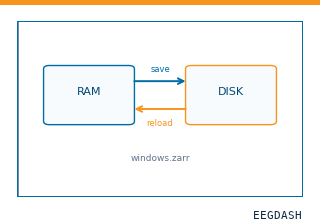 Save and reload prepared dataCache a windowed dataset to disk and reattach it without recompute.
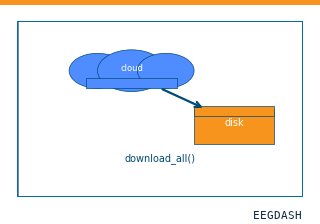 Download a dataset locallyPrefetch BIDS files to a local cache and validate the layout.
Swap any load_dataset(...) call for ds007524 to reproduce the tutorial on this dataset.
Citation
Corentin Bel, Julie Bonnaire, Jean-Rémi King, Christophe Pallier (2025). LittlePrince_MEG_French_Read_Pallier2025. 10.18112/openneuro.ds007524.v1.1.0
Provenance
¹Contributed to openneuro in BIDS format.
²Curated & ingested by the EEGDash catalog; see CITATION.cff for canonical reference.
³Persistent identifier: 10.18112/openneuro.ds007524.v1.1.0.
See Also#
eegdash.dataset.EEGDashDataseteegdash.dataset