


DS005752: meg dataset, 123 subjects#
The NIMH Healthy Research Volunteer Dataset
Access recordings and metadata through EEGDash.
Citation: Allison C. Nugent, Adam G Thomas, Margaret Mahoney, Alison Gibbons, Jarrod Smith, Antoinette Charles, Jacob S Shaw, Jeffrey D Stout, Anna M Namyst, Arshitha Basavaraj, Eric Earl, Dustin Moraczewski, Emily Guinee, Michael Liu, Travis Riddle, Joseph Snow, Shruti Japee, Morgan Andrews, Adriana Pavletic, Stephen Sinclair, Vinai Roopchansingh, Peter A Bandettini, Joyce Chung (20). The NIMH Healthy Research Volunteer Dataset. 10.18112/openneuro.ds005752.v2.1.0
Modality: meg Subjects: 123 Recordings: 1055 License: CC0 Source: openneuro
Metadata: Complete (100%)
123-participant MEG dataset — The NIMH Healthy Research Volunteer Dataset.
Quickstart#
Install
pip install eegdash
Access the data
from eegdash.dataset import DS005752

dataset = DS005752(cache_dir="./data")
# Get the raw object of the first recording
raw = dataset.datasets[0].raw
print(raw.info)
Filter by subject
dataset = DS005752(cache_dir="./data", subject="01")
Advanced query
dataset = DS005752(
    cache_dir="./data",
    query={"subject": {"$in": ["01", "02"]}},
)
Iterate recordings
for rec in dataset:
    print(rec.subject, rec.raw.info['sfreq'])
If you use this dataset in your research, please cite the original authors.
BibTeX
@dataset{ds005752,
  title = {The NIMH Healthy Research Volunteer Dataset},
  author = {Allison C. Nugent and Adam G Thomas and Margaret Mahoney and Alison Gibbons and Jarrod Smith and Antoinette Charles and Jacob S Shaw and Jeffrey D Stout and Anna M Namyst and Arshitha Basavaraj and Eric Earl and Dustin Moraczewski and Emily Guinee and Michael Liu and Travis Riddle and Joseph Snow and Shruti Japee and Morgan Andrews and Adriana Pavletic and Stephen Sinclair and Vinai Roopchansingh and Peter A Bandettini and Joyce Chung},
  doi = {10.18112/openneuro.ds005752.v2.1.0},
  url = {https://doi.org/10.18112/openneuro.ds005752.v2.1.0},
}
About This Dataset#
A comprehensive dataset characterizing healthy research volunteers in terms of clinical assessments, mood-related psychometrics, cognitive function neuropsychological tests, structural and functional magnetic resonance imaging (MRI), along with diffusion tensor imaging (DTI), and a comprehensive magnetoencephalography battery (MEG).
In addition, blood samples are currently banked for future genetic analysis. All data collected in this protocol are broadly shared in the OpenNeuro repository, in the Brain Imaging Data Structure (BIDS) format. In addition, task paradigms and basic pre-processing scripts are shared on GitHub. This dataset is unprecedented in its depth of characterization of a healthy population and will allow a wide array of investigations into normal cognition and mood regulation.
This dataset is licensed under the Creative Commons Zero (CC0) v1.0 License.
The National Institute of Mental Health (NIMH) Research Volunteer (RV) Data Set
Release Notes
Release v2.0.0
- This release includes data collected between 2020-06-03 (cut-off date for v1.0.0) and 2024-04-01. Notable changes in this release:
769 new participants have been added along with re-evaluation data for 15 participants. Total unique participants count is now 1859.
visitandage_at_visitcolumns added to phenotype files to distinguish between visits and intervals between them.
View full README
The National Institute of Mental Health (NIMH) Research Volunteer (RV) Data Set
Release Notes
Release v2.0.0
- This release includes data collected between 2020-06-03 (cut-off date for v1.0.0) and 2024-04-01. Notable changes in this release:
769 new participants have been added along with re-evaluation data for 15 participants. Total unique participants count is now 1859.
visitandage_at_visitcolumns added to phenotype files to distinguish between visits and intervals between them.Follow-up online survey data included.
Replaced Beck Anxiety Inventory (BAI) and Beck Depression Inventory-II (BDI-II) with General Anxiety Disorder-7 (GAD7) and Patient Health Questionnaire 9 (PHQ9) surveys, respectively.
Discontinued the Perceived Health rating survey.
Added Brief Trauma Questionnaire (BTQ) and Big Five personality survey to online screening questionnaires.
MRI:
Replaced ADNI-3 resting state sequence with a multi-echo sequence with higher spatial resolution.
Replaced field map scans with a shorter reversed-blipped EPI scan.
MEG:
Some participants have 6-minute empty room data instead of the shorter duration empty room acquisition.
See the CHANGES file for complete version-wise changelog.
Participant Eligibility
To be eligible for the study, participants need to be medically healthy adults over 18 years of age with the ability to read, speak and understand English. All participants provided electronic informed consent for online pre-screening, and written informed consent for all other procedures. Participants with a history of mental illness or suicidal or self-injury thoughts or behavior are excluded. Additional exclusion criteria include current illicit drug use, abnormal medical exam, and less than an 8th grade education or IQ below 70. Current NIMH employees, or first degree relatives of NIMH employees are prohibited from participating. Study participants are recruited through direct mailings, bulletin boards and listservs, outreach exhibits, print advertisements, and electronic media.
Clinical Measures
All potential volunteers visit the study website, check a box indicating consent, and fill out preliminary screening questionnaires. The questionnaires include basic demographics, the World Health Organization Disability Assessment Schedule 2.0 (WHODAS 2.0), the DSM-5 Self-Rated Level 1 Cross-Cutting Symptom Measure, the DSM-5 Level 2 Cross-Cutting Symptom Measure - Substance Use, the Alcohol Use Disorders Identification Test (AUDIT), the Edinburgh Handedness Inventory, and a brief clinical history checklist. The WHODAS 2.0 is a 15 item questionnaire that assesses overall general health and disability, with 14 items distributed over 6 domains: cognition, mobility, self-care, “getting along”, life activities, and participation. The DSM-5 Level 1 cross-cutting measure uses 23 items to assess symptoms across diagnoses, although an item regarding self-injurious behavior was removed from the online self-report version. The DSM-5 Level 2 cross-cutting measure is adapted from the NIDA ASSIST measure, and contains 15 items to assess use of both illicit drugs and prescription drugs without a doctor’s prescription. The AUDIT is a 10 item screening assessment used to detect harmful levels of alcohol consumption, and the Edinburgh Handedness Inventory is a systematic assessment of handedness. These online results do not contain any personally identifiable information (PII). At the conclusion of the questionnaires, participants are prompted to send an email to the study team. These results are reviewed by the study team, who determines if the participant is appropriate for an in-person interview.
Participants who meet all inclusion criteria are scheduled for an in-person screening visit to determine if there are any further exclusions to participation. At this visit, participants receive a History and Physical exam, Structured Clinical Interview for DSM-5 Disorders (SCID-5), the Beck Depression Inventory-II (BDI-II), Beck Anxiety Inventory (BAI), and the Kaufman Brief Intelligence Test, Second Edition (KBIT-2). The purpose of these cognitive and psychometric tests is two-fold. First, these measures are designed to provide a sensitive test of psychopathology. Second, they provide a comprehensive picture of cognitive functioning, including mood regulation. The SCID-5 is a structured interview, administered by a clinician, that establishes the absence of any DSM-5 axis I disorder. The KBIT-2 is a brief (20 minute) assessment of intellectual functioning administered by a trained examiner. There are three subtests, including verbal knowledge, riddles, and matrices.
Biological and physiological measures
Biological and physiological measures are acquired, including blood pressure, pulse, weight, height, and BMI. Blood and urine samples are taken and a complete blood count, acute care panel, hepatic panel, thyroid stimulating hormone, viral markers (HCV, HBV, HIV), c-reactive protein, creatine kinase, urine drug screen and urine pregnancy tests are performed. In addition, three additional tubes of blood samples are collected and banked for future analysis, including genetic testing.
Imaging Studies
Participants were given the option to enroll in optional magnetic resonance imaging (MRI) and magnetoencephalography (MEG) studies.
MRI
On the same visit as the MRI scan, participants are administered a subset of tasks from the NIH Toolbox Cognition Battery. The four tasks asses attention and executive functioning (Flanker Inhibitory Control and Attention Task), executive functioning (Dimensional Change Card Sort Task), episodic memory (Picture Sequence Memory Task), and working memory (List Sorting Working Memory Task). The MRI protocol used was initially based on the ADNI-3 basic protocol, but was later modified to include portions of the ABCD protocol in the following manner: 1. The T1 scan from ADNI3 was replaced by the T1 scan from the ABCD protocol. 2. The Axial T2 2D FLAIR acquisition from ADNI2 was added, and fat saturation turned on. 3. Fat saturation was turned on for the pCASL acquisition. 4. The high-resolution in-plane hippocampal 2D T2 scan was removed, and replaced with the whole brain 3D T2 scan from the ABCD protocol (which is resolution and bandwidth matched to the T1 scan). 5. The slice-select gradient reversal method was turned on for DTI acquisition, and reconstruction interpolation turned off. 6. Scans for distortion correction were added (reversed-blip scans for DTI and resting state scans). 7. The 3D FLAIR sequence was made optional, and replaced by one where the prescription and other acquisition parameters provide resolution and geometric correspondence between the T1 and T2 scans.
MEG
The optional MEG studies were added to the protocol approximately one year after the study was initiated, thus there are relatively fewer MEG recordings in comparison to the MRI dataset. MEG studies are performed on a 275 channel CTF MEG system. The position of the head was localized at the beginning and end of the recording using three fiducial coils. These coils were placed 1.5 cm above the nasion, and at each ear, 1.5 cm from the tragus on a line between the tragus and the outer canthus of the eye. For some participants, photographs were taken of the three coils and used to mark the points on the T1 weighted structural MRI scan for co-registration. For the remainder of the participants, a BrainSight neuro-navigation unit was used to coregister the MRI, anatomical fiducials, and localizer coils directly prior to MEG data acquisition.
Specific Survey and Test Data within Data Set
NOTE: In the release 2.0 of the dataset, two measures Brief Trauma Questionnaire (BTQ) and Big Five personality survey were added to the online screening questionnaires. Also, for the in-person screening visit, the Beck Anxiety Inventory (BAI) and Beck Depression Inventory-II (BDI-II) were replaced with the General Anxiety Disorder-7 (GAD7) and Patient Health Questionnaire 9 (PHQ9) surveys, respectively. The Perceived Health rating survey was discontinued.
1. Preliminary Online Screening Questionnaires
|  Survey or Test                                                             |  BIDS TSV Name                 |
| --------------------------------------------------------------------------- | ------------------------------ |
|  Alcohol Use Disorders Identification Test (AUDIT)                          |  audit.tsv                     |
|  Brief Trauma Questionnaire (BTQ)                                           |  btq.tsv                       |
|  Big-Five Personality                                                       |  big_five_personality.tsv      |
|  Demographics                                                               |  demographics.tsv              |
|  Drug Use Questionnaire                                                     |  drug_use.tsv                  |
|  Edinburgh Handedness Inventory (EHI)                                       |  ehi.tsv                       |
|  Health History Questions                                                   |  health_history_questions.tsv  |
|  Health Rating                                                              |  health_rating.tsv             |
|  Mental Health Questions                                                    |  mental_health_questions.tsv   |
|  World Health Organization Disability Assessment Schedule 2.0 (WHODAS 2.0)  |  whodas.tsv                    |
2. On-Campus In-Person Screening Visit
|  Survey                                                                                      |  BIDS TSV Name                |
| -------------------------------------------------------------------------------------------- | ----------------------------- |
|  Adverse Childhood Experiences (ACEs)                                                        |  ace.tsv                      |
|  Beck Anxiety Inventory (BAI)                                                                |  bai.tsv                      |
|  Beck Depression Inventory-II (BDI-II)                                                       |  bdi.tsv                      |
|  Clinical Variable Form                                                                      |  clinical_variable_form.tsv   |
|  Family Interview for Genetic Studies (FIGS)                                                 |  figs.tsv                     |
|  General Anxiety Disorder-7 (GAD7)                                                           |  gad7.tsv                     |
|  Kaufman Brief Intelligence Test 2nd Edition (KBIT-2) and Vocabulary Assessment Scale (VAS)  |  kbit2_vas.tsv                |
|  Patient Health Questionnaire 9                                                              |  phq9.tsv                     |
|  Perceived Health Rating                                                                     |  perceived_health_rating.tsv  |
|  Satisfaction Survey                                                                         |  satisfaction.tsv             |
|  Structured Clinical Interview for DSM-5 Disorders (SCID-5)                                  |  scid5.tsv                    |
|  Test                                    |  BIDS TSV Name              |
| ---------------------------------------- | --------------------------- |
|  Acute Care Panel                        |  acute_care.tsv             |
|  Blood Chemistry                         |  blood_chemistry.tsv        |
|  Complete Blood Count with Differential  |  cbc_with_differential.tsv  |
|  Hematology Panel                        |  hematology.tsv             |
|  Hepatic Function Panel                  |  hepatic.tsv                |
|  Infectious Disease Panel                |  infectious_disease.tsv     |
|  Lipid Panel                             |  lipid.tsv                  |
|  Other Panel                             |  other.tsv                  |
|  Urinalysis                              |  urinalysis.tsv             |
|  Urine Chemistry                         |  urine_chemistry.tsv        |
|  Vitamin Levels                          |  vitamin_levels.tsv         |
3. Optional On-Campus In-Person MRI Visit
|  Survey                        |  BIDS TSV Name      |
| ------------------------------ | ------------------- |
|  MRI Variables                 |  mri_variables.tsv  |
|  NIH Toolbox Cognition Battery |  nih_toolbox.tsv    |
Preparation Notes
In many of the Clinical Measures data files, there exist -999 values. -999 means there was no response though a response was possible. The question may have been skipped over by the participant or the question flow. -777 appears in the Edinburgh Handedness Inventory (EHI) as well. -777 means there is no data available for a response. The question was not presented or asked to the participant.
The data were prepared using the following tools and filename mappings.
Clinical Measures Data
The ctdb_clean_up.ipynb Jupyter Notebook contains the python functions used to clean and convert the spreadsheet downloaded from CTDB to BIDS-standard TSV files as well as their respective data dictionaries converted to BIDS-standard JSON files.
Biological and Physiological Measures Data
The cris_clean_up.ipynb Jupyter Notebook contains the Python functions used to clean and convert the spreadsheet with clinical measures to BIDS-standard TSV files and their data dictionaries to BIDS-standard JSON files.
BIDS-standard MEG Files
Data collected by the NIMH MEG Core was converted to BIDS-standard files using the MNE BIDS package. Associated notebooks: 1_mne_bids_extractor.ipynb & 2_bids_editor.ipynb.
BIDS-standard MRI
We used the heudiconv tool to convert MRI DICOM files to BIDS-standard files with the associated script: heuristic_rvol.py. A modified workflow of pydeface was used to deface structural scans with the associated notebook: modified-workflow-pydeface.ipynb
Each participant received either the ADNI3 or the ABCD protocol, not both, during their MRI/MEG visit. T1w scans with acquisition label fspgr are ADNI3 protocol sequence and scans with mprage acquisition labels are ABCD protocol sequence.
OpenNeuro BIDS File/Folder Tree
Below is a BIDS-compliant file/folder tree as it appears for subjects on OpenNeuro.
sub-ON<subject>
└── ses-01
    ├── anat
    │   └── sub-ON<subject>_ses-01_acq-<desc>_run-<index>_<suffix>.<json|nii.gz>
    ├── asl
    │   └── sub-ON<subject>_ses-01_run-<index>_asl.<json|nii.gz>
    ├── dwi
    │   └── sub-ON<subject>_ses-01_run-<index>_dwi.<bvec|bval|json|nii.gz>
    ├── fmap
    │   └── sub-ON<subject>_ses-01_acq-<desc>_dir-<direction>_run-<index>_epi.<bvec|bval|json|nii.gz>
    ├── func
    │   └── sub-ON<subject>_ses-01_task-<taskname>_run-<index>_<suffix>.<json|nii.gz>
    ├── meg
    │   ├── sub-ON<subject>_ses-01_task-<taskname>_run-01_<meg|coordsystem>.json
    │   ├── sub-ON<subject>_ses-01_task-<taskname>_run-01_<channels|events>.tsv
    │   └── sub-ON<subject>_ses-01_task-<taskname>_run-01_meg.ds
    │       ├── BadChannels
    │       ├── bad.segments
    │       ├── ClassFile.cls
    │       ├── MarkerFile.mrk
    │       ├── params.dsc
    │       ├── processing.cfg
    │       ├── sub-ON<subject>_ses-01_task-<taskname>_run-01_meg.<extension>
    │       └── sub-ON<subject>_ses-01_task-<taskname>_run-01.xml
    └── sub-ON<subject>_ses-01_scans.<json|tsv>
Definitions:
- <subject> = subject number
- <taskname> = task name: airpuff, artifact, gonogo, haririhammer, movie, oddball, sternberg
- <desc> = placeholder for acquisition label for a given suffix
- <direction> = flipped, unflipped
- <index> = run number/index
- <suffix> = placeholder to indicate the scan type
T1w:<desc>=fspgr,mprage,fse,highreshippo
T2w:<desc>=abcdcube,cube,frfse
FLAIR:<desc>=adni2d,2d,3d,t2
epi:<desc>=dwib1000,dwi,resting
T2star
bold
meg
asl
<extension>: indicates meg data files’ type =acq,bak,hc,hist,infods,meg4,newds,res4,xml
Cohort#
Dataset Statistics#
Age distribution by gender (n=122, range 20–64 yr, mean 42.6 yr)
Sex composition
Channel counts (ch)
Sampling frequencies (Hz)
Total recording duration: 102 h
Signal · Electrodes & live trace#
No scalp electrode layout is currently indexed for this dataset. Once the eegdash montage registry ingests it, the interactive viewer will appear here automatically.
NEMAR Processing Statistics#
The plots below are generated by NEMAR’s automated EEG pipeline. The histogram shows pipeline success for data cleaning and ICA decomposition, the percentage of data frames and EEG channels retained after artefact removal, line noise per channel (RMS, dB), and the age/gender distribution of participants.

HED event descriptors word cloud

Manifest#
File Explorer#
Browse the BIDS file structure of this dataset. Records are fetched on demand from the EEGDash catalog the first time you open the explorer.
Full dataset metadata table
Dataset ID |
|
Title |
The NIMH Healthy Research Volunteer Dataset |
Author (year) |
|
Canonical |
— |
Importable as |
|
Year |
20 |
Authors |
Allison C. Nugent, Adam G Thomas, Margaret Mahoney, Alison Gibbons, Jarrod Smith, Antoinette Charles, Jacob S Shaw, Jeffrey D Stout, Anna M Namyst, Arshitha Basavaraj, Eric Earl, Dustin Moraczewski, Emily Guinee, Michael Liu, Travis Riddle, Joseph Snow, Shruti Japee, Morgan Andrews, Adriana Pavletic, Stephen Sinclair, Vinai Roopchansingh, Peter A Bandettini, Joyce Chung |
License |
CC0 |
Citation / DOI |
|
Source links |
Copy-paste BibTeX
@dataset{ds005752,
  title = {The NIMH Healthy Research Volunteer Dataset},
  author = {Allison C. Nugent and Adam G Thomas and Margaret Mahoney and Alison Gibbons and Jarrod Smith and Antoinette Charles and Jacob S Shaw and Jeffrey D Stout and Anna M Namyst and Arshitha Basavaraj and Eric Earl and Dustin Moraczewski and Emily Guinee and Michael Liu and Travis Riddle and Joseph Snow and Shruti Japee and Morgan Andrews and Adriana Pavletic and Stephen Sinclair and Vinai Roopchansingh and Peter A Bandettini and Joyce Chung},
  doi = {10.18112/openneuro.ds005752.v2.1.0},
  url = {https://doi.org/10.18112/openneuro.ds005752.v2.1.0},
}
API Reference#
eegdash.datasetEEGDashDatasetDS005752 · Nugent2024eegdash/dataset/registry.py · [source ↗]- class eegdash.dataset.DS005752(cache_dir: str, query: dict | None = None, s3_bucket: str | None = None, **kwargs)[source]#
The NIMH Healthy Research Volunteer Dataset
- Study:
ds005752(OpenNeuro)- Author (year):
Nugent2024- Canonical:
—
Also importable as:
DS005752,Nugent2024.Modality:
meg; Experiment type:Other; Subject type:Healthy. Subjects: 123; recordings: 1055; tasks: 10.- Parameters:
cache_dir (str | Path) – Directory where data are cached locally.
query (dict | None) – Additional MongoDB-style filters to AND with the dataset selection. Must not contain the key
dataset.s3_bucket (str | None) – Base S3 bucket used to locate the data.
**kwargs (dict) – Additional keyword arguments forwarded to
EEGDashDataset.
- data_dir#
Local dataset cache directory (
cache_dir / dataset_id).- Type:
Path
Notes
Each item is a recording; recording-level metadata are available via
dataset.description.querysupports MongoDB-style filters on fields inALLOWED_QUERY_FIELDSand is combined with the dataset filter. Dataset-specific caveats are not provided in the summary metadata.References
OpenNeuro dataset: https://openneuro.org/datasets/ds005752 NeMAR dataset: https://nemar.org/dataexplorer/detail?dataset_id=ds005752 DOI: https://doi.org/10.18112/openneuro.ds005752.v2.1.0
Examples
>>> from eegdash.dataset import DS005752
>>> dataset = DS005752(cache_dir="./data")
>>> recording = dataset[0]
>>> raw = recording.load()
- __init__(cache_dir: str, query: dict | None = None, s3_bucket: str | None = None, **kwargs)[source]#
- save(path: str, overwrite: bool = False, offset: int = 0)[source]#
Save datasets to files by creating one subdirectory for each dataset:
path/
    0/
        0-raw.fif | 0-epo.fif
        description.json
        raw_preproc_kwargs.json (if raws were preprocessed)
        window_kwargs.json (if this is a windowed dataset)
        window_preproc_kwargs.json  (if windows were preprocessed)
        target_name.json (if target_name is not None and dataset is raw)
    1/
        1-raw.fif | 1-epo.fif
        description.json
        raw_preproc_kwargs.json (if raws were preprocessed)
        window_kwargs.json (if this is a windowed dataset)
        window_preproc_kwargs.json  (if windows were preprocessed)
        target_name.json (if target_name is not None and dataset is raw)
- Parameters:
path (str) –
- Directory in which subdirectories are created to store
-raw.fif | -epo.fif and .json files to.
overwrite (bool) – Whether to delete old subdirectories that will be saved to in this call.
offset (int) – If provided, the integer is added to the id of the dataset in the concat. This is useful in the setting of very large datasets, where one dataset has to be processed and saved at a time to account for its original position.
BaseDataset from braindecode — windowed via create_windows_from_events.braindecodeDataLoader; supports parallel workers and on-the-fly augmentations.pytorchdatasets.load_dataset("EEGDash/ds005752").huggingface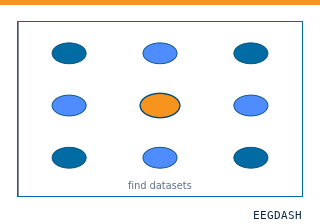 Find datasets with the EEGDash APIQuery the catalogue, filter by task or modality, list candidates.
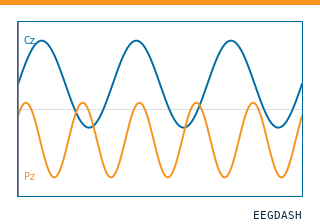 Load one EEG recordingResolve a single record to an MNE Raw with channels and events.
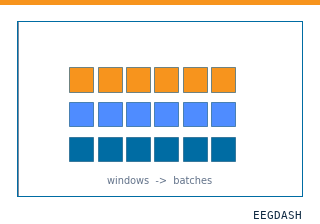 EEG recording to PyTorch DataLoaderWrap braindecode windows in a DataLoader for model training.
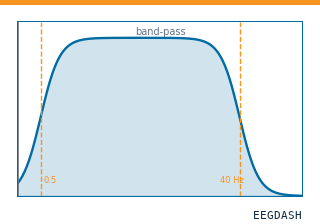 Preprocess EEG and create windowsFilter, resample, epoch — and persist the windowed dataset.
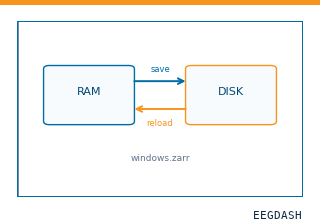 Save and reload prepared dataCache a windowed dataset to disk and reattach it without recompute.
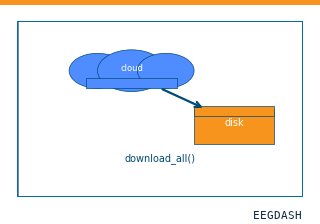 Download a dataset locallyPrefetch BIDS files to a local cache and validate the layout.
Swap any load_dataset(...) call for ds005752 to reproduce the tutorial on this dataset.
Citation
Allison C. Nugent, Adam G Thomas, Margaret Mahoney, Alison Gibbons, Jarrod Smith, … (20). The NIMH Healthy Research Volunteer Dataset. 10.18112/openneuro.ds005752.v2.1.0
Provenance
¹Contributed to openneuro in BIDS format.
²Curated & ingested by the EEGDash catalog; see CITATION.cff for canonical reference.
³Persistent identifier: 10.18112/openneuro.ds005752.v2.1.0.
See Also#
eegdash.dataset.EEGDashDataseteegdash.dataset