


DS006260: eeg dataset, 76 subjects#
Dataset of psychophysiological data from children with learning difficulties who strengthen reading and math skills through assistive technology
Access recordings and metadata through EEGDash.
Citation: César E. Corona-González, Claudia Rebeca De Stefano-Ramos, Juan Pablo Rosado-Aíza, David I. Ibarra-Zarate, Fabiola R. Gómez-Velázquez, Luz María Alonso-Valerdi (20). Dataset of psychophysiological data from children with learning difficulties who strengthen reading and math skills through assistive technology. 10.18112/openneuro.ds006260.v1.0.1
Modality: eeg Subjects: 76 Recordings: 366 License: CC0 Source: openneuro
Metadata: Complete (100%)
76-participant EEG dataset — Dataset of psychophysiological data from children with learning difficulties who strengthen reading and math skills through assistive technology.
Quickstart#
Install
pip install eegdash
Access the data
from eegdash.dataset import DS006260

dataset = DS006260(cache_dir="./data")
# Get the raw object of the first recording
raw = dataset.datasets[0].raw
print(raw.info)
Filter by subject
dataset = DS006260(cache_dir="./data", subject="01")
Advanced query
dataset = DS006260(
    cache_dir="./data",
    query={"subject": {"$in": ["01", "02"]}},
)
Iterate recordings
for rec in dataset:
    print(rec.subject, rec.raw.info['sfreq'])
If you use this dataset in your research, please cite the original authors.
BibTeX
@dataset{ds006260,
  title = {Dataset of psychophysiological data from children with learning difficulties who strengthen reading and math skills through assistive technology},
  author = {César E. Corona-González and Claudia Rebeca De Stefano-Ramos and Juan Pablo Rosado-Aíza and David I. Ibarra-Zarate and Fabiola R. Gómez-Velázquez and Luz María Alonso-Valerdi},
  doi = {10.18112/openneuro.ds006260.v1.0.1},
  url = {https://doi.org/10.18112/openneuro.ds006260.v1.0.1},
}
About This Dataset#
César E. Corona-González, Claudia Rebeca De Stefano-Ramos, Juan Pablo Rosado-Aíza, Fabiola R Gómez-Velázquez, David I. Ibarra-Zarate, Luz María Alonso-Valerdi
César E. Corona-González
README
Authors
Project name
Psychophysiological data from Mexican children with learning difficulties who strengthen reading and math skills by assistive technology
View full README
README
Authors
Project name
Psychophysiological data from Mexican children with learning difficulties who strengthen reading and math skills by assistive technology
Year that the project ran
2023
Brief overview of the tasks in the experiment
The current dataset consists of psychometric and electrophysiological data from children with reading or math learning difficulties. These data were collected to evaluate improvements in reading or math skills resulting from using an online learning method called Smartick.
The psychometric evaluations from children with reading difficulties encompassed: spelling tests, where 1) orthographic and 2) phonological errors were considered, 3) reading speed, expressed in words read per minute, and 4) reading comprehension, where multiple-choice questions were given to the children. The last 2 parameters were determined according to the standards from the Ministry of Public Education (Secretaría de Educación Pública in Spanish) in Mexico. On the other hand, group 2 assessments embraced: 1) an assessment of general mathematical knowledge, as well as 2) the hits percentage, and 3) reaction time from an arithmetical task. Additionally, selective attention and intelligence quotient (IQ) were also evaluated. Then, individuals underwent an EEG experimental paradigm where two conditions were recorded: 1) a 3-minute eyes-open resting state and 2) performing either reading or mathematical activities. EEG recordings from the reading experiment consisted of reading a text aloud and then answering questions about the text. Alternatively, EEG recordings from the math experiment involved the solution of two blocks with 20 arithmetic operations (addition and subtraction). Subsequently, each child was randomly subcategorized as 1) the experimental group, who were asked to engage with Smartick for three months, and 2) the control group, who were not involved with the intervention. Once the 3-month period was over, every child was reassessed as described before.
Description of the contents of the dataset
The dataset contains a total of 76 \*subjects* **(sub-)**, where two study groups were assessed: 1) \*reading difficulties* **(R)**and 2) \*math difficulties* **(M)*\*. Then, each individual was subcategorized as \*experimental subgroup* **(e)**, where children were compromised to engage with Smartick, or \*control subgroup* **(c)**, where they did not get involved with any intervention.
Every subject was followed up on for three months. During this period, each subject underwent two EEG sessions, representing the \*PRE-intervention* **(ses-1)**and the \*POST-intervention* **(ses-2)**. The EEG recordings from the reading difficulties group consisted of a *resting state condition* **(run-1)**and while performing*active reading and reading comprehension activities* **(run-2)*\*. On the other hand, EEG data from the math difficulties group was collected from a*resting state condition* **(run-1)**and when*solving two blocks of 20 arithmetic operations* **(run-2 and run-3)**. All EEG files were stored in .set format. The nomenclature and description from filenames are shown below:
| Nomenclature             |   Description              |
|--------------------------------  |---------------------------         |
|              sub-                    |            Subject                   |
|                M                      |       Math group               |
|                R                       |    Reading group             |
|              c                          |    Control subgroup        |
|              e                          |  Experimental subgroup|
|              ses-1                   |    PRE-intervention  |
|              ses-2                   | POST-Intervention  |
|              run-1                  |  EEG for baseline     |
|              run-2                  |  EEG for reading activity, or the first block of math|
|              run-3                  |  EEG for the second block of math|
Example: the file sub-Rc11_ses-1_task-SmartickDataset_run-2_eeg.set is related to: - The 11th subject from the reading difficulties group, control subgroup (sub-Rc11). - EEG recording from the PRE-intervention (ses-1) while performing the reading activity (run-2)
Independent variables
- Study groups:
Reading difficulties * Control: children did not follow any intervention * Experimental: Children used the reading program of Smartick for 3 months
- Math difficulties
Control: children did not follow any intervention
Experimental: Children used the math program of Smartick for 3 months
- Condition:
PRE-intervention: first psychological and electroencephalographic evaluation
POST-intervention: second psychological and electroencephalographic evaluation
Dependent variables
- Psychometric data from the reading difficulties group:
Orthographic_ERR: number of orthographic errors.
Phonological_ERR: number of phonological errors.
Selective_Attention: score from the selective attention test.
Reading_Speed: reading speed in words per minute.
Comprehension: score on a reading comprehension task.
GROUP: C for the control group, E for the experimental group.
GENDER: M for male, F for Female.
AGE: age at the beginning of the study.
IQ: intelligence quotient.
- Psychometric data from the math difficulties group:
WRAT4: score from the WRAT-4 test.
hits: hits during the EEG acquisition [%].
RT: reaction time during the EEG acquisition [s].
Selective_Attention: score from the selective attention test.
GROUP: C for the control Group, E for the experimental group.
GENDER: M for male, F for female.
AGE: age at the beginning of the study.
IQ: intelligence quotient.
Psychometric data can be found in the*01_Psychometric_Data.xlsx* file - Engagement percentage within Smartick (only for experimental group)
These values represent the engagement percentage through Smartick.
Students were asked to get involved with the online method for learning for 3 months, 5 days a week.
Greater values than 100% denote participants who regularly logged in more than 5 days weekly.
Engagement percentage be found in the*05_SessionEngagement.xlsx* file
Methods
Subjects
Seventy-six Mexican children between 7 and 13 years old were enrolled in this study.
Information about the recruitment procedure
The sample was recruited through non-profit foundations that support learning and foster care programs.
Apparatus
g.USBamp RESEARCH amplifier
Initial setup
Explain the task to the participant.
Sign informed consent.
Set up electrodes.
Task details
The stimuli nested folder contains all stimuli employed in the EEG experiments. Level 1 - Math: Images used in the math experiment. - Reading: Images used in the reading experiment.
Level 2 - Math
POST_Operations: arithmetic operations from the POST-intervention.
PRE_Operations: arithmetic operations from the PRE-intervention.
- Reading
POST_Reading1: text 1 and text-related comprehension questions from the POST-intervention.
POST_Reading2: text 2 and text-related comprehension questions from the POST-intervention.
POST_Reading3: text 3 and text-related comprehension questions from the POST-intervention.
PRE_Reading1: text 1 and text-related comprehension questions from the PRE-intervention.
PRE_Reading2: text 2 and text-related comprehension questions from the PRE-intervention.
PRE_Reading3: text 3 and text-related comprehension questions from the PRE-intervention.
Level 3 - Math
*\*Operation01.jpg*to \*Operation20.jpg*: arithmetical operations solved during the first block of the math EEG experiment. *\*Operation21.jpg*to \*Operation40.jpg*: arithmetical operations solved during the second block of the math EEG experiment. *\*Experiment_Start.jpeg*: start of the experiment. *\*Experiment_End.jpeg*: end of the experiment. *\*End_Block_1.jpeg*: break between blocks.
- Reading
Q1.png: first question.
Q2.png: second question.
Q3.png: third question.
Reading1, Reading2, or Reading3: texts from the reading EEG experiment.
The files*3. Reading_Tags.xlsx*and*4. Math_Tags.xlsx* provide the following information: - Order: number for better event accommodation. - Event: tag in EEG file. - Subject: Subject identifier - Intervention: PRE (ses-1) or POST (ses-2). - Reading/Block: task identifier tag.
“R1”, “R2”, and “R3” indicates which reading was assigned to each participant.
“1” and “2” for the blocks of the math experiment.
Group: control or experimental.
Description: event tag meaning.
Question shown (PRE): There are no event tags for questions in the PRE-EEG. intervention. Question sequences were registered manually.
Experimental location
Tecnologico de Monterrey. Av. Eugenio Garza Sada 2501 Sur, Tecnologico, 64849 Monterrey, N.L., Mexico.
Missing data
The file 2. EEG Data Descriptor.xlsx* describes the data availability for EEG recordings. Some cells are highlighted to indicate some situations: - Yellow cells mean that the quality of the EEG signals is inconsistent. However, EEG files were included for EEG preprocessing purposes. Additionally, EEG events for these files were not exported. - Red cells imply that data is unavailable due to technical problems during the experiment’s run and saving.
Notes
EEG signals were filtered online with a 0.1-100 Hz bandpass filter.
The electrode O2 showed technical issues during the EEG experiment. The authors suggest the interpolation of this electrode
Cohort#
Dataset Statistics#
Age distribution (n=76, range 7–13 yr, mean 9.9 yr · sex per subject not reported)
Sex composition
Channel counts: 32 ch (n=366 recordings)
Sampling frequencies: 256.0 Hz (n=366 recordings)
Total recording duration: 23 h 7 min
Signal · Electrodes & live trace#
Live trace viewer — sub-Me18 · ses-2 · task-SmartickDataset · run-1
Showing one representative recording out of
76 subjects and 366 recordings in this dataset.
Browse the full set on OpenNeuro;
drop any other _eeg.{set,edf,bdf,vhdr} file onto the
viewer (or pass ?eeg=<url>) to inspect it.
No scalp electrode layout is currently indexed for this dataset. Once the eegdash montage registry ingests it, the interactive viewer will appear here automatically.
NEMAR Processing Statistics#
The plots below are generated by NEMAR’s automated EEG pipeline. The histogram shows pipeline success for data cleaning and ICA decomposition, the percentage of data frames and EEG channels retained after artefact removal, line noise per channel (RMS, dB), and the age/gender distribution of participants.

HED event descriptors word cloud

Manifest#
File Explorer#
Browse the BIDS file structure of this dataset. Records are fetched on demand from the EEGDash catalog the first time you open the explorer.
Full dataset metadata table
Dataset ID |
|
Title |
Dataset of psychophysiological data from children with learning difficulties who strengthen reading and math skills through assistive technology |
Author (year) |
|
Canonical |
— |
Importable as |
|
Year |
20 |
Authors |
César E. Corona-González, Claudia Rebeca De Stefano-Ramos, Juan Pablo Rosado-Aíza, David I. Ibarra-Zarate, Fabiola R. Gómez-Velázquez, Luz María Alonso-Valerdi |
License |
CC0 |
Citation / DOI |
|
Source links |
Copy-paste BibTeX
@dataset{ds006260,
  title = {Dataset of psychophysiological data from children with learning difficulties who strengthen reading and math skills through assistive technology},
  author = {César E. Corona-González and Claudia Rebeca De Stefano-Ramos and Juan Pablo Rosado-Aíza and David I. Ibarra-Zarate and Fabiola R. Gómez-Velázquez and Luz María Alonso-Valerdi},
  doi = {10.18112/openneuro.ds006260.v1.0.1},
  url = {https://doi.org/10.18112/openneuro.ds006260.v1.0.1},
}
API Reference#
eegdash.datasetEEGDashDatasetDS006260 · CoronaGonzalez2025eegdash/dataset/registry.py · [source ↗]- class eegdash.dataset.DS006260(cache_dir: str, query: dict | None = None, s3_bucket: str | None = None, **kwargs)[source]#
Dataset of psychophysiological data from children with learning difficulties who strengthen reading and math skills through assistive technology
- Study:
ds006260(OpenNeuro)- Author (year):
CoronaGonzalez2025- Canonical:
—
Also importable as:
DS006260,CoronaGonzalez2025.Modality:
eeg; Experiment type:Clinical/Intervention; Subject type:Development. Subjects: 76; recordings: 366; tasks: 1.- Parameters:
cache_dir (str | Path) – Directory where data are cached locally.
query (dict | None) – Additional MongoDB-style filters to AND with the dataset selection. Must not contain the key
dataset.s3_bucket (str | None) – Base S3 bucket used to locate the data.
**kwargs (dict) – Additional keyword arguments forwarded to
EEGDashDataset.
- data_dir#
Local dataset cache directory (
cache_dir / dataset_id).- Type:
Path
Notes
Each item is a recording; recording-level metadata are available via
dataset.description.querysupports MongoDB-style filters on fields inALLOWED_QUERY_FIELDSand is combined with the dataset filter. Dataset-specific caveats are not provided in the summary metadata.References
OpenNeuro dataset: https://openneuro.org/datasets/ds006260 NeMAR dataset: https://nemar.org/dataexplorer/detail?dataset_id=ds006260 DOI: https://doi.org/10.18112/openneuro.ds006260.v1.0.1
Examples
>>> from eegdash.dataset import DS006260
>>> dataset = DS006260(cache_dir="./data")
>>> recording = dataset[0]
>>> raw = recording.load()
- __init__(cache_dir: str, query: dict | None = None, s3_bucket: str | None = None, **kwargs)[source]#
- save(path: str, overwrite: bool = False, offset: int = 0)[source]#
Save datasets to files by creating one subdirectory for each dataset:
path/
    0/
        0-raw.fif | 0-epo.fif
        description.json
        raw_preproc_kwargs.json (if raws were preprocessed)
        window_kwargs.json (if this is a windowed dataset)
        window_preproc_kwargs.json  (if windows were preprocessed)
        target_name.json (if target_name is not None and dataset is raw)
    1/
        1-raw.fif | 1-epo.fif
        description.json
        raw_preproc_kwargs.json (if raws were preprocessed)
        window_kwargs.json (if this is a windowed dataset)
        window_preproc_kwargs.json  (if windows were preprocessed)
        target_name.json (if target_name is not None and dataset is raw)
- Parameters:
path (str) –
- Directory in which subdirectories are created to store
-raw.fif | -epo.fif and .json files to.
overwrite (bool) – Whether to delete old subdirectories that will be saved to in this call.
offset (int) – If provided, the integer is added to the id of the dataset in the concat. This is useful in the setting of very large datasets, where one dataset has to be processed and saved at a time to account for its original position.
BaseDataset from braindecode — windowed via create_windows_from_events.braindecodeDataLoader; supports parallel workers and on-the-fly augmentations.pytorchdatasets.load_dataset("EEGDash/ds006260").huggingface Find datasets with the EEGDash APIQuery the catalogue, filter by task or modality, list candidates.
 Load one EEG recordingResolve a single record to an MNE Raw with channels and events.
 EEG recording to PyTorch DataLoaderWrap braindecode windows in a DataLoader for model training.
 Preprocess EEG and create windowsFilter, resample, epoch — and persist the windowed dataset.
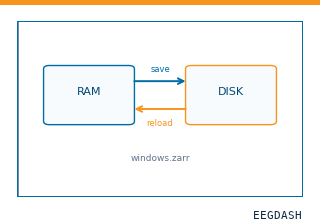 Save and reload prepared dataCache a windowed dataset to disk and reattach it without recompute.
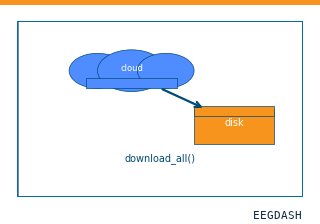 Download a dataset locallyPrefetch BIDS files to a local cache and validate the layout.
Swap any load_dataset(...) call for ds006260 to reproduce the tutorial on this dataset.
Citation
César E. Corona-González, Claudia Rebeca De Stefano-Ramos, Juan Pablo Rosado-Aíza, David I. Ibarra-Zarate, Fabiola R. Gómez-Velázquez, … (20). Dataset of psychophysiological data from children with learning difficulties who strengthen reading and math skills through assistive technology. 10.18112/openneuro.ds006260.v1.0.1
Provenance
¹Contributed to openneuro in BIDS format.
²Curated & ingested by the EEGDash catalog; see CITATION.cff for canonical reference.
³Persistent identifier: 10.18112/openneuro.ds006260.v1.0.1.
See Also#
eegdash.dataset.EEGDashDataseteegdash.dataset