


DS006018: eeg dataset, 127 subjects#
Cognitive Electrophysiology in Socioeconomic Context in Adulthood: An EEG dataset
Access recordings and metadata through EEGDash.
Citation: Elif Isbell, Amanda N. Peters, Dylan M. Richardson, Nancy E. R. De León (2025). Cognitive Electrophysiology in Socioeconomic Context in Adulthood: An EEG dataset. 10.18112/openneuro.ds006018.v1.2.2
Modality: eeg Subjects: 127 Recordings: 357 License: CC0 Source: openneuro
Metadata: Complete (100%)
127-participant EEG dataset — Cognitive Electrophysiology in Socioeconomic Context in Adulthood: An EEG dataset.
Quickstart#
Install
pip install eegdash
Access the data
from eegdash.dataset import DS006018

dataset = DS006018(cache_dir="./data")
# Get the raw object of the first recording
raw = dataset.datasets[0].raw
print(raw.info)
Filter by subject
dataset = DS006018(cache_dir="./data", subject="01")
Advanced query
dataset = DS006018(
    cache_dir="./data",
    query={"subject": {"$in": ["01", "02"]}},
)
Iterate recordings
for rec in dataset:
    print(rec.subject, rec.raw.info['sfreq'])
If you use this dataset in your research, please cite the original authors.
BibTeX
@dataset{ds006018,
  title = {Cognitive Electrophysiology in Socioeconomic Context in Adulthood: An EEG dataset},
  author = {Elif Isbell and Amanda N. Peters and Dylan M. Richardson and Nancy E. R. De León},
  doi = {10.18112/openneuro.ds006018.v1.2.2},
  url = {https://doi.org/10.18112/openneuro.ds006018.v1.2.2},
}
About This Dataset#
This dataset comprises electroencephalogram (EEG) data collected from 127 young adults (18-30 years), along with retrospective objective and subjective indicators of childhood family socioeconomic status (SES), as well as SES indicators in adulthood, such as educational attainment, individual and household income, food security, and home and neighborhood characteristics. The EEG data were recorded with tasks directly acquired from the Event-Related Potentials Compendium of Open Resources and Experiments ERP CORE (Kappenman et al., 2021), or adapted from these tasks (Isbell et al., 2024). These tasks were optimized to capture neural activity manifest in perception, cognition, and action, in neurotypical young adults. Furthermore, the dataset includes a symptoms checklist, consisting of questions that were found to be predictive of symptoms consistent with attention-deficit/hyperactivity disorder (ADHD) in adulthood, which can be used to investigate the links between ADHD symptoms and neural activity in a socioeconomically diverse young adult sample. The detailed description of the dataset is accepted for publication in Scientific Data, with the title: “Cognitive Electrophysiology in Socioeconomic Context in Adulthood.”
EEG data were recorded using the Brain Products actiCHamp Plus system, in combination with BrainVision Recorder (Version 1.25.0101). We used a 32-channel actiCAP slim active electrode system, with electrodes mounted on elastic snap caps (Brain Products GmbH, Gilching, Germany). The ground electrode was placed at FPz. From the electrode bundle, we repurposed 2 electrodes by placing them on the mastoid bones behind the left and right ears to be used for re-referencing after data collection. We also repurposed 3 additional electrodes to record electrooculogram (EOG). To capture eye artifacts, we placed the horizontal EOG (HEOG) electrodes ateral to the external canthus of each eye. We also placed one vertical EOG (VEOG) electrode below the right eye. The remaining 27 electrodes were used as scalp electrodes, which were mounted per the international 10/20 system. EEG data were recorded at a sampling rate of 500 Hz and referenced to the Cz electrode. StimTrak was used to assess stimulus presentation delays for both the monitor and headphones. The results indicated that both the visual and auditory stimuli had a delay of approximately 20 ms. Therefore, users should shift the event-codes by 20 ms when conducting stimulus-locked analyses.
The Cognitive Electrophysiology in Socioeconomic Context in Adulthood Dataset
Data Description
Notes
Before the data were publicly shared, all identifiable information was removed, including date of birth, date of session, race/ethnicity, zip code, occupation (self and parent), and names of the languages the participants reported speaking and understanding fluently. Date of birth and date of session were used to compute age in years, which is included in the dataset. Furthermore, several variables were recoded based on re-identification risk assessments. Users who would like to establish secure access to components of the dataset we could not publicly share due to re-identification risks, should contact the corresponding researcher as described below. The dataset consists of participants recruited for studies on adult cognition in context. To provide the largest sample size, we included all participants who completed at least one of the EEG tasks of interest. Each participant completed each EEG task only once. The original participant IDs with which the EEG data were saved were recoded and the raw EEG files were renamed to make the dataset BIDS compatible.
The ERP CORE experimental tasks can be found on OSF, under Experiment Control Files: https://osf.io/thsqg/
View full README
The Cognitive Electrophysiology in Socioeconomic Context in Adulthood Dataset
Data Description
Notes
Before the data were publicly shared, all identifiable information was removed, including date of birth, date of session, race/ethnicity, zip code, occupation (self and parent), and names of the languages the participants reported speaking and understanding fluently. Date of birth and date of session were used to compute age in years, which is included in the dataset. Furthermore, several variables were recoded based on re-identification risk assessments. Users who would like to establish secure access to components of the dataset we could not publicly share due to re-identification risks, should contact the corresponding researcher as described below. The dataset consists of participants recruited for studies on adult cognition in context. To provide the largest sample size, we included all participants who completed at least one of the EEG tasks of interest. Each participant completed each EEG task only once. The original participant IDs with which the EEG data were saved were recoded and the raw EEG files were renamed to make the dataset BIDS compatible.
The ERP CORE experimental tasks can be found on OSF, under Experiment Control Files: https://osf.io/thsqg/ Examples of EEGLAB/ERPLAB data processing scripts that can be used with the EEG data shared here can be found on OSF: osf.io/thsqg osf.io/43H75 Contact
If you have any questions, comments, or requests, please contact:
Elif Isbell: eisbell@ucmerced.edu
Copyright and License
This dataset is licensed under CC0.
References
Isbell, E., Peters, A. N., Richardson, D. M., & Rodas De León, N. E. (2025). Cognitive electrophysiology in socioeconomic context in adulthood. Scientific Data, 12(1), 1–9. https://doi.org/10.1038/s41597-025-05209-z Isbell, E., De León, N. E. R., & Richardson, D. M. (2024). Childhood family socioeconomic status is linked to adult brain electrophysiology. PloS One, 19(8), e0307406.
Isbell, E., De León, N. E. R. & Richardson, D. M. Childhood family socioeconomic status is linked to adult brain electrophysiology - accompanying analytic data and code. OSF https://doi.org/10.17605/osf.io/43H75 (2024). Kappenman, E. S., Farrens, J. L., Zhang, W., Stewart, A. X., & Luck, S. J. (2021). ERP CORE: An open resource for human event-related potential research. NeuroImage, 225, 117465.
Kappenman, E. S., Farrens, J., Zhang, W., Stewart, A. X. & Luck, S. J. ERP CORE. https://osf.io/thsqg (2020). Kappenman, E., Farrens, J., Zhang, W., Stewart, A. & Luck, S. Experiment control files. https://osf.io/47uf2 (2020).
Cohort#
Dataset Statistics#
Sex composition
Channel counts: 30 ch (n=357 recordings)
Sampling frequencies: 500.0 Hz (n=357 recordings)
Total recording duration: 50 h
Signal · Electrodes & live trace#
Live trace viewer — sub-021 · task-visualoddball
Showing one representative recording out of
127 subjects and 357 recordings in this dataset.
Browse the full set on OpenNeuro;
drop any other _eeg.{set,edf,bdf,vhdr} file onto the
viewer (or pass ?eeg=<url>) to inspect it.
No scalp electrode layout is currently indexed for this dataset. Once the eegdash montage registry ingests it, the interactive viewer will appear here automatically.
NEMAR Processing Statistics#
The plots below are generated by NEMAR’s automated EEG pipeline. The histogram shows pipeline success for data cleaning and ICA decomposition, the percentage of data frames and EEG channels retained after artefact removal, line noise per channel (RMS, dB), and the age/gender distribution of participants.

HED event descriptors word cloud

Manifest#
File Explorer#
Browse the BIDS file structure of this dataset. Records are fetched on demand from the EEGDash catalog the first time you open the explorer.
Full dataset metadata table
Dataset ID |
|
Title |
Cognitive Electrophysiology in Socioeconomic Context in Adulthood: An EEG dataset |
Author (year) |
|
Canonical |
— |
Importable as |
|
Year |
2025 |
Authors |
Elif Isbell, Amanda N. Peters, Dylan M. Richardson, Nancy E. R. De León |
License |
CC0 |
Citation / DOI |
|
Source links |
Copy-paste BibTeX
@dataset{ds006018,
  title = {Cognitive Electrophysiology in Socioeconomic Context in Adulthood: An EEG dataset},
  author = {Elif Isbell and Amanda N. Peters and Dylan M. Richardson and Nancy E. R. De León},
  doi = {10.18112/openneuro.ds006018.v1.2.2},
  url = {https://doi.org/10.18112/openneuro.ds006018.v1.2.2},
}
API Reference#
eegdash.datasetEEGDashDatasetDS006018 · Isbell2025_Adulthoodeegdash/dataset/registry.py · [source ↗]- class eegdash.dataset.DS006018(cache_dir: str, query: dict | None = None, s3_bucket: str | None = None, **kwargs)[source]#
Cognitive Electrophysiology in Socioeconomic Context in Adulthood: An EEG dataset
- Study:
ds006018(OpenNeuro)- Author (year):
Isbell2025_Adulthood- Canonical:
—
Also importable as:
DS006018,Isbell2025_Adulthood.Modality:
eeg; Experiment type:Other; Subject type:Healthy. Subjects: 127; recordings: 357; tasks: 4.- Parameters:
cache_dir (str | Path) – Directory where data are cached locally.
query (dict | None) – Additional MongoDB-style filters to AND with the dataset selection. Must not contain the key
dataset.s3_bucket (str | None) – Base S3 bucket used to locate the data.
**kwargs (dict) – Additional keyword arguments forwarded to
EEGDashDataset.
- data_dir#
Local dataset cache directory (
cache_dir / dataset_id).- Type:
Path
Notes
Each item is a recording; recording-level metadata are available via
dataset.description.querysupports MongoDB-style filters on fields inALLOWED_QUERY_FIELDSand is combined with the dataset filter. Dataset-specific caveats are not provided in the summary metadata.References
OpenNeuro dataset: https://openneuro.org/datasets/ds006018 NeMAR dataset: https://nemar.org/dataexplorer/detail?dataset_id=ds006018 DOI: https://doi.org/10.18112/openneuro.ds006018.v1.2.2
Examples
>>> from eegdash.dataset import DS006018
>>> dataset = DS006018(cache_dir="./data")
>>> recording = dataset[0]
>>> raw = recording.load()
- __init__(cache_dir: str, query: dict | None = None, s3_bucket: str | None = None, **kwargs)[source]#
- save(path: str, overwrite: bool = False, offset: int = 0)[source]#
Save datasets to files by creating one subdirectory for each dataset:
path/
    0/
        0-raw.fif | 0-epo.fif
        description.json
        raw_preproc_kwargs.json (if raws were preprocessed)
        window_kwargs.json (if this is a windowed dataset)
        window_preproc_kwargs.json  (if windows were preprocessed)
        target_name.json (if target_name is not None and dataset is raw)
    1/
        1-raw.fif | 1-epo.fif
        description.json
        raw_preproc_kwargs.json (if raws were preprocessed)
        window_kwargs.json (if this is a windowed dataset)
        window_preproc_kwargs.json  (if windows were preprocessed)
        target_name.json (if target_name is not None and dataset is raw)
- Parameters:
path (str) –
- Directory in which subdirectories are created to store
-raw.fif | -epo.fif and .json files to.
overwrite (bool) – Whether to delete old subdirectories that will be saved to in this call.
offset (int) – If provided, the integer is added to the id of the dataset in the concat. This is useful in the setting of very large datasets, where one dataset has to be processed and saved at a time to account for its original position.
BaseDataset from braindecode — windowed via create_windows_from_events.braindecodeDataLoader; supports parallel workers and on-the-fly augmentations.pytorchdatasets.load_dataset("EEGDash/ds006018").huggingface Find datasets with the EEGDash APIQuery the catalogue, filter by task or modality, list candidates.
 Load one EEG recordingResolve a single record to an MNE Raw with channels and events.
 EEG recording to PyTorch DataLoaderWrap braindecode windows in a DataLoader for model training.
 Preprocess EEG and create windowsFilter, resample, epoch — and persist the windowed dataset.
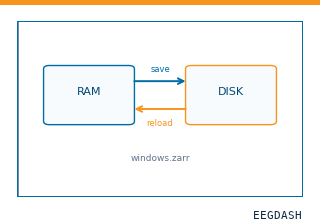 Save and reload prepared dataCache a windowed dataset to disk and reattach it without recompute.
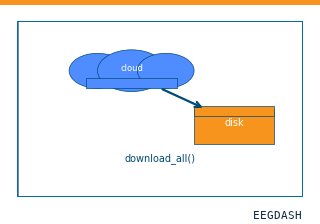 Download a dataset locallyPrefetch BIDS files to a local cache and validate the layout.
Swap any load_dataset(...) call for ds006018 to reproduce the tutorial on this dataset.
Citation
Elif Isbell, Amanda N. Peters, Dylan M. Richardson, Nancy E. R. De León (2025). Cognitive Electrophysiology in Socioeconomic Context in Adulthood: An EEG dataset. 10.18112/openneuro.ds006018.v1.2.2
Provenance
¹Contributed to openneuro in BIDS format.
²Curated & ingested by the EEGDash catalog; see CITATION.cff for canonical reference.
³Persistent identifier: 10.18112/openneuro.ds006018.v1.2.2.
See Also#
eegdash.dataset.EEGDashDataseteegdash.dataset