


DS004078: meg dataset, 12 subjects#
A synchronized multimodal neuroimaging dataset to study brain language processing
Access recordings and metadata through EEGDash.
Citation: Shaonan Wang, Xiaohan Zhang, Jiajun Zhang, Chengqing Zong (—). A synchronized multimodal neuroimaging dataset to study brain language processing. 10.18112/openneuro.ds004078.v1.0.4
Modality: meg Subjects: 12 Recordings: 720 License: CC0 Source: openneuro Citations: 4.0
Metadata: Complete (100%)
12-participant MEG dataset — A synchronized multimodal neuroimaging dataset to study brain language processing.
Quickstart#
Install
pip install eegdash
Access the data
from eegdash.dataset import DS004078

dataset = DS004078(cache_dir="./data")
# Get the raw object of the first recording
raw = dataset.datasets[0].raw
print(raw.info)
Filter by subject
dataset = DS004078(cache_dir="./data", subject="01")
Advanced query
dataset = DS004078(
    cache_dir="./data",
    query={"subject": {"$in": ["01", "02"]}},
)
Iterate recordings
for rec in dataset:
    print(rec.subject, rec.raw.info['sfreq'])
If you use this dataset in your research, please cite the original authors.
BibTeX
@dataset{ds004078,
  title = {A synchronized multimodal neuroimaging dataset to study brain language processing},
  author = {Shaonan Wang and Xiaohan Zhang and Jiajun Zhang and Chengqing Zong},
  doi = {10.18112/openneuro.ds004078.v1.0.4},
  url = {https://doi.org/10.18112/openneuro.ds004078.v1.0.4},
}
About This Dataset#
This synchronized multimodal neuroimaging dataset for studying brain language processing (SMN4Lang) contains:
fMRI and MEG data collected on the same 12 participant while they were listening to 6 hours of naturalistic stories;
high-resolution structural (T1, T2), diffusion MRI and resting-state fMRI data for each participant;
rich linguistic annotations for the stimuli, including word frequencies, part-of-speech tags, syntactic tree structures, time-aligned characters and words, various types of word and character embeddings.
More details about the dataset are described as follows.
Overview
Participants
All 12 participants were recruited from universities in Beijing, of which 4 were female, and 8 were male, with an age range 23-30 year. They completed both fMRI and MEG visits (first completed fMRI then MEG experiments which had a gap of 1 month at least), All participants were right-handed adults with Mandarin Chinese as native language who reported having normal hearing and no history of neurological disorders. They were paid and gave written informed consent. The study was conducted under the approval of the Institutional Review Board of Peking University.
Experimental Procedures
Before each scanning, participants first completed a simple information survey form and an informed consent. During both fMRI and MEG scanning, participants were instructed to listen and pay attention to the story stimulus, remain still, answer questions on the screen after each audio was finished. Stimulus presentation was implemented using Psychtoolbox-3. Specifically, at the beginning of each run, there was instruction of “Waiting for the scanning” on the screen followed with 8 seconds blank. Then, the instruction became “This audio is about to start, please listen carefully” which lasted for 2.65 seconds before playing the audio; during audio play, a centrally located fixation cross was presented; finally, two questions about the story were presented each with four answers to choose from during which time was controlled by participants. Auditory story stimuli were delivered via S14 insert earphones for fMRI studies (with headphones or foam padding were placed over the earphones to reduce scanner noise) and Elekta matching insert earphones for MEG studies.
View full README
Overview
Participants
All 12 participants were recruited from universities in Beijing, of which 4 were female, and 8 were male, with an age range 23-30 year. They completed both fMRI and MEG visits (first completed fMRI then MEG experiments which had a gap of 1 month at least), All participants were right-handed adults with Mandarin Chinese as native language who reported having normal hearing and no history of neurological disorders. They were paid and gave written informed consent. The study was conducted under the approval of the Institutional Review Board of Peking University.
Experimental Procedures
Before each scanning, participants first completed a simple information survey form and an informed consent. During both fMRI and MEG scanning, participants were instructed to listen and pay attention to the story stimulus, remain still, answer questions on the screen after each audio was finished. Stimulus presentation was implemented using Psychtoolbox-3. Specifically, at the beginning of each run, there was instruction of “Waiting for the scanning” on the screen followed with 8 seconds blank. Then, the instruction became “This audio is about to start, please listen carefully” which lasted for 2.65 seconds before playing the audio; during audio play, a centrally located fixation cross was presented; finally, two questions about the story were presented each with four answers to choose from during which time was controlled by participants. Auditory story stimuli were delivered via S14 insert earphones for fMRI studies (with headphones or foam padding were placed over the earphones to reduce scanner noise) and Elekta matching insert earphones for MEG studies.
The fMRI recording was split into 7 visits with each lasting 1.5 hours in which the T1, T2, resting MRI were collected on the first visit, fMRI with listening tasks was collected from 1 to 6 visits, and the diffusion MRI were collected on the last visit. During MRI scanning including T1, T2, diffusion and resting, participants were instructed to lie relaxed and still in the machine. The MEG recording was split into 6 visits with each lasting 1.5 hours.
Stimuli
Stimuli are 60 story audios with 4 to 7 minutes long, comprising various topics such as education and culture. All audios were downloaded from Renmin Daily Review website read by the same male broadcaster. The corresponding texts were also downloaded from the Renmin Daily Review website in which errors were manually corrected to make sure audio and texts are aligned.
Annotations
Rich annotations of audios and texts are provided in the derivatives/annotations folder, including: 1. Speech to text alignment: The onset and offset time of each character and words in the audio are provided in the “stimuli/time_align” folder. Note that the onset and offset time were added by 10.65 seconds to align with the time of fMRI images because the fMRI scan was started 10.65 seconds before playing the audio. 2. Frequency: Character and word frequencies in the “stimuli/frequency” folder were calculated from the Xinhua news corpus and then log-transformed. 3. Textual embeddings: Text embeddings computed by different pre-trained language models (including Word2Vec, BERT, and GPT2) are provided in the “stimuli/embeddings” folder. Both the character-level and word-level embeddings computed by Word2Vec and BERT model and the word-level embeddings computed by GPT2 model are provided. 4. Syntactic annotations: The POS tag of each word, the constituent tree structure, and the dependency tree structure are provided in the “stimuli/syntactic_annotations” folder. The POS tags were annotated by experts following criterion of Peking Chinese Treebank. The constituent tree structure was manually annotated by linguistic students following PKU Chinese Treebank criterion with the TreeEditor tools and all results were double checked by different experts. The dependency tree structure was transformed from the constituent tree using Stanford CoreNLP tools.
Preprocessing
The MRI data, including the structural, functional, resting and diffusion images, were preprocessed using the “minimal preprocessing pipelines (HCP)” .
The MEG data was first preprocessed using the temporal Signal Space Separation (tSSS) method and the bad channels were excluded. And then the independent component analysis (ICA) method was applied to remove the ocular artefacts using the MNE software.
Usage Notes
For the MEG data of sub-08_run-16 and sub-09_run-7, the stimuli-starting triggers were not recorded due to technical problems. The first trigger in these two runs were the stimuli-ending triggers and the starting time can be computed by subtracting the stimuli duration from the time point of the first trigger.
Cohort#
Dataset Statistics#
Age distribution by gender (n=12, range 23–30 yr, mean 25.5 yr)
Sex composition
Channel counts: 328 ch (n=720 recordings)
Sampling frequencies: 1000.0 Hz (n=720 recordings)
Total recording duration: 68 h
Signal · Electrodes & live trace#
Live trace viewer — sub-12 · task-RDR · run-54
Showing one representative recording out of
12 subjects and 720 recordings in this dataset.
Browse the full set on OpenNeuro;
drop any other _meg.{set,edf,bdf,vhdr} file onto the
viewer (or pass ?meg=<url>) to inspect it.
Electrode layout — MEG · 306 sensors — 306 channels
NEMAR Processing Statistics#
The plots below are generated by NEMAR’s automated EEG pipeline. The histogram shows pipeline success for data cleaning and ICA decomposition, the percentage of data frames and EEG channels retained after artefact removal, line noise per channel (RMS, dB), and the age/gender distribution of participants.

HED event descriptors word cloud

Manifest#
File Explorer#
Browse the BIDS file structure of this dataset. Records are fetched on demand from the EEGDash catalog the first time you open the explorer.
Full dataset metadata table
Dataset ID |
|
Title |
A synchronized multimodal neuroimaging dataset to study brain language processing |
Author (year) |
|
Canonical |
— |
Importable as |
|
Year |
— |
Authors |
Shaonan Wang, Xiaohan Zhang, Jiajun Zhang, Chengqing Zong |
License |
CC0 |
Citation / DOI |
|
Source links |
Copy-paste BibTeX
@dataset{ds004078,
  title = {A synchronized multimodal neuroimaging dataset to study brain language processing},
  author = {Shaonan Wang and Xiaohan Zhang and Jiajun Zhang and Chengqing Zong},
  doi = {10.18112/openneuro.ds004078.v1.0.4},
  url = {https://doi.org/10.18112/openneuro.ds004078.v1.0.4},
}
API Reference#
eegdash.datasetEEGDashDatasetDS004078 · Wang2022_StudyBRAINeegdash/dataset/registry.py · [source ↗]- class eegdash.dataset.DS004078(cache_dir: str, query: dict | None = None, s3_bucket: str | None = None, **kwargs)[source]#
A synchronized multimodal neuroimaging dataset to study brain language processing
- Study:
ds004078(OpenNeuro)- Author (year):
Wang2022_StudyBRAIN- Canonical:
—
Also importable as:
DS004078,Wang2022_StudyBRAIN.Modality:
meg; Experiment type:Other; Subject type:Healthy. Subjects: 12; recordings: 720; tasks: 1.- Parameters:
cache_dir (str | Path) – Directory where data are cached locally.
query (dict | None) – Additional MongoDB-style filters to AND with the dataset selection. Must not contain the key
dataset.s3_bucket (str | None) – Base S3 bucket used to locate the data.
**kwargs (dict) – Additional keyword arguments forwarded to
EEGDashDataset.
- data_dir#
Local dataset cache directory (
cache_dir / dataset_id).- Type:
Path
Notes
Each item is a recording; recording-level metadata are available via
dataset.description.querysupports MongoDB-style filters on fields inALLOWED_QUERY_FIELDSand is combined with the dataset filter. Dataset-specific caveats are not provided in the summary metadata.References
OpenNeuro dataset: https://openneuro.org/datasets/ds004078 NeMAR dataset: https://nemar.org/dataexplorer/detail?dataset_id=ds004078 DOI: https://doi.org/10.18112/openneuro.ds004078.v1.0.4 NEMAR citation count: 4
Examples
>>> from eegdash.dataset import DS004078
>>> dataset = DS004078(cache_dir="./data")
>>> recording = dataset[0]
>>> raw = recording.load()
- __init__(cache_dir: str, query: dict | None = None, s3_bucket: str | None = None, **kwargs)[source]#
- save(path: str, overwrite: bool = False, offset: int = 0)[source]#
Save datasets to files by creating one subdirectory for each dataset:
path/
    0/
        0-raw.fif | 0-epo.fif
        description.json
        raw_preproc_kwargs.json (if raws were preprocessed)
        window_kwargs.json (if this is a windowed dataset)
        window_preproc_kwargs.json  (if windows were preprocessed)
        target_name.json (if target_name is not None and dataset is raw)
    1/
        1-raw.fif | 1-epo.fif
        description.json
        raw_preproc_kwargs.json (if raws were preprocessed)
        window_kwargs.json (if this is a windowed dataset)
        window_preproc_kwargs.json  (if windows were preprocessed)
        target_name.json (if target_name is not None and dataset is raw)
- Parameters:
path (str) –
- Directory in which subdirectories are created to store
-raw.fif | -epo.fif and .json files to.
overwrite (bool) – Whether to delete old subdirectories that will be saved to in this call.
offset (int) – If provided, the integer is added to the id of the dataset in the concat. This is useful in the setting of very large datasets, where one dataset has to be processed and saved at a time to account for its original position.
BaseDataset from braindecode — windowed via create_windows_from_events.braindecodeDataLoader; supports parallel workers and on-the-fly augmentations.pytorchdatasets.load_dataset("EEGDash/ds004078").huggingface Find datasets with the EEGDash APIQuery the catalogue, filter by task or modality, list candidates.
 Load one EEG recordingResolve a single record to an MNE Raw with channels and events.
 EEG recording to PyTorch DataLoaderWrap braindecode windows in a DataLoader for model training.
 Preprocess EEG and create windowsFilter, resample, epoch — and persist the windowed dataset.
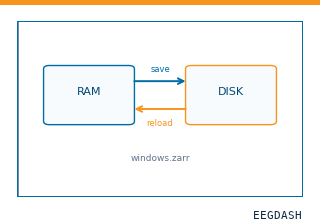 Save and reload prepared dataCache a windowed dataset to disk and reattach it without recompute.
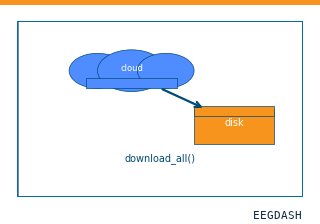 Download a dataset locallyPrefetch BIDS files to a local cache and validate the layout.
Swap any load_dataset(...) call for ds004078 to reproduce the tutorial on this dataset.
Citation
Shaonan Wang, Xiaohan Zhang, Jiajun Zhang, Chengqing Zong (n.d.). A synchronized multimodal neuroimaging dataset to study brain language processing. 10.18112/openneuro.ds004078.v1.0.4
Provenance
¹Contributed to openneuro in BIDS format.
²Curated & ingested by the EEGDash catalog; see CITATION.cff for canonical reference.
³Persistent identifier: 10.18112/openneuro.ds004078.v1.0.4.
See Also#
eegdash.dataset.EEGDashDataseteegdash.dataset