


NM000462: ieeg dataset, 3 subjects#
stim-seizures (Ojemann et al.; HUP + CHOP): seizure annotations, electrode localisations and preprocessed SEEG seizure traces (derivative)
Access recordings and metadata through EEGDash.
Citation: William K. Ojemann, Brian Litt, Erin Conrad (20). stim-seizures (Ojemann et al.; HUP + CHOP): seizure annotations, electrode localisations and preprocessed SEEG seizure traces (derivative). 10.82901/nemar.nm000462
Modality: ieeg Subjects: 3 Recordings: 4 License: CC-BY-NC-SA-4.0 Source: nemar
Metadata: Complete (100%)
3-participant iEEG dataset — stim-seizures (Ojemann et al.; HUP + CHOP): seizure annotations, electrode localisations and preprocessed SEEG seizure traces (derivative).
Quickstart#
Install
pip install eegdash
Access the data
from eegdash.dataset import NM000462

dataset = NM000462(cache_dir="./data")
# Get the raw object of the first recording
raw = dataset.datasets[0].raw
print(raw.info)
Filter by subject
dataset = NM000462(cache_dir="./data", subject="01")
Advanced query
dataset = NM000462(
    cache_dir="./data",
    query={"subject": {"$in": ["01", "02"]}},
)
Iterate recordings
for rec in dataset:
    print(rec.subject, rec.raw.info['sfreq'])
If you use this dataset in your research, please cite the original authors.
BibTeX
@dataset{nm000462,
  title = {stim-seizures (Ojemann et al.; HUP + CHOP): seizure annotations, electrode localisations and preprocessed SEEG seizure traces (derivative)},
  author = {William K. Ojemann and Brian Litt and Erin Conrad},
  doi = {10.82901/nemar.nm000462},
  url = {https://doi.org/10.82901/nemar.nm000462},
}
About This Dataset#
This is a derivative dataset. It repackages the processed data released by Ojemann, Litt and Conrad on Pennsieve Discover
(“stim-seizures”, dataset 455 version 1, doi:10.26275/toip-zio0, Penn CNT) for the study “Can electrical stimulation replace spontaneous seizures?” (preprint: Ojemann et al., medRxiv 2025, doi:10.1101/2025.08.29.25334082; later version titled “Automated annotation of low-frequency stimulation-induced seizures uncovers seizure generating networks”).
The release contains metadata and processed data checkpoints for the manuscript’s analyses and figures. It contains **no raw iEEG
recordings**. Code: penn-cnt/stim-seizures-manuscript
Patients were evaluated with intracranial EEG at the Hospital of the University of Pennsylvania (HUP) and the Children’s Hospital of
Philadelphia (CHOP) and received low-frequency (1 Hz) electrical stimulation. Related NEMAR dataset: nm000402 (Multi-Expert Seizure
Annotation, Penn CNT / CHOP, shared authors). Raw HUP recordings of this group are hosted on iEEG.org (recording names in the
recording column, e.g. HUP224_phaseII).
stim-seizures (Pennsieve 455): processed data, derivative BIDS-iEEG
Contents
participants.tsv: all 105 patients of the release (55 HUP, 50 CHOP). Columns come from the releasedMETADATA/stim_seizure_information - metadata-4.csv(HUP) andMETADATA/CHOP_metadata.csv(CHOP), copied as released (see participants.json). HUP sex codes 1/2 are mapped to M/F as in the authors’code/metadata_notebook.ipynb. Age at recording is released only for CHOP patients (rounded here to 0.1 y). 72 of the listed patients appear only
View full README
stim-seizures (Pennsieve 455): processed data, derivative BIDS-iEEG
Contents
participants.tsv: all 105 patients of the release (55 HUP, 50 CHOP). Columns come from the releasedMETADATA/stim_seizure_information - metadata-4.csv(HUP) andMETADATA/CHOP_metadata.csv(CHOP), copied as released (see participants.json). HUP sex codes 1/2 are mapped to M/F as in the authors’code/metadata_notebook.ipynb. Age at recording is released only for CHOP patients (rounded here to 0.1 y). 72 of the listed patients appear only in the metadata tables (no seizure rows and no processed files), so they have no subject folder.sub-<label>/ieeg/sub-<label>_seizures.tsv(33 patients; listed in.bidsignore, not a BIDS file type): one row per seizure from two released tables:stim_seizure_information_BIDS.csv(clinician-marked times: approximate_onset, offset (=end), EEC, UEO in seconds from the start of the iEEG.org recording; stim flag, stimulation channels, typical semiology, mtl) and the optimized LSTM model annotations (optimized_predicted_channels_LSTM_tuned_thresholds_v4_sz-mean_pt-mean_smooth-med.pkl: model, threshold, onset (ueo) and spread (sec) channel sets, strict/loose). Values are copied; lists are space-separated.sub-<label>/ieeg/sub-<label>_electrodes.tsv+_coordsystem.json(31 patients): contact coordinates and atlas labels fromPROCESSED_DATA/<patient>/electrode_localizations_dkt.pkl(HUP) orelectrode_localizations_CHOPR.pkl(CHOP). The release does not state the coordinate space or units, so the coordinate system isOtherand unitsn/a.sub-HUP224,sub-HUP235,sub-HUP238_task-ictal_acq-<spontaneous|stiminduced>_ieeg.vhdr: the four seizure traces the authors released for figure plotting (plot_sz_224/235/238.pkl,plot_st_sz_224.pkl): preprocessed bipolar SEEG, 128 Hz (the value used in the authors’ plotting notebook), HUP224 spontaneous 331.0 s x 153 channels; HUP224 stiminduced 275.0 s x 149 channels; HUP235 spontaneous 371.0 s x 70 channels; HUP238 spontaneous 492.0 s x 69 channels. Amplitude units are not stated in the release (units n/a). Stored as BrainVision IEEE float32; round trip checked (float32 values identical to the released float64 values cast to float32).sourcedata/pennsieve-455-v1/: every released file (pickled DataFrames, HDF5 spread matrices,stim_info*.mat, metadata CSVs, figure PDFs, Pennsieve manifest/readme).SOURCE_MANIFEST.jsonlists the original SHA-256 of each file. Files are byte-identical to the release except file-creation timestamps in MAT headers and PDF metadata, which were set to day 01 (time removed, same length).
Privacy
All files were scanned (text, CSV, MAT strings, HDF5, pickled DataFrames, PDF metadata) for names, initials, record numbers, full dates and ages above 89. Patient codes (HUP###, CHOP###) are the pseudonyms used in the public release. Seizure times are seconds from recording start. No ages above 89. Key status: destroyed (we hold no mapping to identities).
Licence
CC-BY-NC-SA-4.0, as on the source record (Pennsieve: “Creative Commons Attribution - NonCommercial-ShareAlike”; DataCite rightsList:
Creative Commons Attribution Non Commercial Share Alike 4.0 International, cc-by-nc-sa-4.0).
Ethics
Verbatim from the preprint (medRxiv doi:10.1101/2025.08.29.25334082, Author Declarations): “The Institutional Review Boards (IRBs) of the Hospital of the University of Pennsylvania (HUP) and the Children’s Hospital of Philadelphia (CHOP) approved retrospective analysis of EEG and clinical data for all patients. Stimulation was performed under IRB-approved research by the IRB at each institution (14 HUP patients; all CHOP patients) or clinical protocols (HUP, N = 41).”
NEMAR Metadata#
[](https://doi.org/10.82901/nemar.nm000462) # stim-seizures (Pennsieve 455): processed data, derivative BIDS-iEEG This is a derivative dataset. It repackages the processed data released by Ojemann, Litt and Conrad on Pennsieve Discover (“stim-seizures”, dataset 455 version 1, doi:10.26275/toip-zio0, Penn CNT) for the study “Can electrical stimulation replace spontaneous seizures?” (preprint: Ojemann et al., medRxiv 2025, doi:10.1101/2025.08.29.25334082; later version titled “Automated annotation of low-frequency stimulation-induced seizures uncovers seizure generating networks”). The release contains metadata and processed data checkpoints for the manuscript’s analyses and figures. It contains no raw iEEG recordings. Code: penn-cnt/stim-seizures-manuscript Patients were evaluated with intracranial EEG at the Hospital of the University of Pennsylvania (HUP) and the Children’s Hospital of Philadelphia (CHOP) and received low-frequency (1 Hz) electrical stimulation. Related NEMAR dataset: nm000402 (Multi-Expert Seizure Annotation, Penn CNT / CHOP, shared authors). Raw HUP recordings of this group are hosted on iEEG.org (recording names in the recording column, e.g. HUP224_phaseII). ## Contents - participants.tsv: all 105 patients of the release (55 HUP, 50 CHOP). Columns
come from the released METADATA/stim_seizure_information - metadata-4.csv (HUP) and METADATA/CHOP_metadata.csv (CHOP), copied as released (see participants.json). HUP sex codes 1/2 are mapped to M/F as in the authors’ code/metadata_notebook.ipynb. Age at recording is released only for CHOP patients (rounded here to 0.1 y). 72 of the listed patients appear only in the metadata tables (no seizure rows and no processed files), so they have no subject folder.
sub-<label>/ieeg/sub-<label>_seizures.tsv (33 patients; listed in .bidsignore, not a BIDS file type): one row per seizure from two released tables: stim_seizure_information_BIDS.csv (clinician-marked times: approximate_onset, offset (= end), EEC, UEO in seconds from the start of the iEEG.org recording; stim flag, stimulation channels, typical semiology, mtl) and the optimized LSTM model annotations (optimized_predicted_channels_LSTM_tuned_thresholds_v4_sz-mean_pt-mean_smooth-med.pkl: model, threshold, onset (ueo) and spread (sec) channel sets, strict/loose). Values are copied; lists are space-separated.
sub-<label>/ieeg/sub-<label>_electrodes.tsv + _coordsystem.json (31 patients): contact coordinates and atlas labels from PROCESSED_DATA/<patient>/electrode_localizations_dkt.pkl (HUP) or electrode_localizations_CHOPR.pkl (CHOP). The release does not state the coordinate space or units, so the coordinate system is Other and units n/a.
sub-HUP224, sub-HUP235, sub-HUP238 _task-ictal_acq-<spontaneous|stiminduced>_ieeg.vhdr: the four seizure traces the authors released for figure plotting (plot_sz_224/235/238.pkl, plot_st_sz_224.pkl): preprocessed bipolar SEEG, 128 Hz (the value used in the authors’ plotting notebook), HUP224 spontaneous 331.0 s x 153 channels; HUP224 stiminduced 275.0 s x 149 channels; HUP235 spontaneous 371.0 s x 70 channels; HUP238 spontaneous 492.0 s x 69 channels. Amplitude units are not stated in the release (units n/a). Stored as BrainVision IEEE float32; round trip checked (float32 values identical to the released float64 values cast to float32).
sourcedata/pennsieve-455-v1/: every released file (pickled DataFrames, HDF5 spread matrices, stim_info*.mat, metadata CSVs, figure PDFs, Pennsieve manifest/readme). SOURCE_MANIFEST.json lists the original SHA-256 of each file. Files are byte-identical to the release except file-creation timestamps in MAT headers and PDF metadata, which were set to day 01 (time removed, same length).
## Privacy All files were scanned (text, CSV, MAT strings, HDF5, pickled DataFrames, PDF metadata) for names, initials, record numbers, full dates and ages above 89. Patient codes (HUP###, CHOP###) are the pseudonyms used in the public release. Seizure times are seconds from recording start. No ages above 89. Key status: destroyed (we hold no mapping to identities). ## Licence CC-BY-NC-SA-4.0, as on the source record (Pennsieve: “Creative Commons Attribution - NonCommercial-ShareAlike”; DataCite rightsList: Creative Commons Attribution Non Commercial Share Alike 4.0 International, cc-by-nc-sa-4.0). ## Ethics Verbatim from the preprint (medRxiv doi:10.1101/2025.08.29.25334082, Author Declarations): “The Institutional Review Boards (IRBs) of the Hospital of the University of Pennsylvania (HUP) and the Children’s Hospital of Philadelphia (CHOP) approved retrospective analysis of EEG and clinical data for all patients. Stimulation was performed under IRB-approved research by the IRB at each institution (14 HUP patients; all CHOP patients) or clinical protocols (HUP, N = 41).”
License: CC-BY-NC-SA-4.0
Authors:
William K. Ojemann
Brian Litt
Erin Conrad
Versions:
Version |
DOI |
Released |
|---|---|---|
|
Cohort#
Dataset Statistics#
Age distribution (n=47, range 1–23 yr, mean 12.6 yr · sex per subject not reported)
Sex composition
Channel counts (ch)
Sampling frequencies: 128.0 Hz (n=4 recordings)
Total recording duration: 24 min
Signal · Electrodes & live trace#
Live trace viewer — sub-HUP235 · task-ictal
Showing one representative recording out of
3 subjects and 4 recordings in this dataset.
Browse the full set on OpenNeuro;
drop any other _ieeg.{set,edf,bdf,vhdr} file onto the
viewer (or pass ?ieeg=<url>) to inspect it.
Electrode layout — iEEG · 232 sensors — 232 channels
NEMAR Processing Statistics#
The plots below are generated by NEMAR’s automated EEG pipeline. The histogram shows pipeline success for data cleaning and ICA decomposition, the percentage of data frames and EEG channels retained after artefact removal, line noise per channel (RMS, dB), and the age/gender distribution of participants.

HED event descriptors word cloud

Manifest#
File Explorer#
Browse the BIDS file structure of this dataset. Records are fetched on demand from the EEGDash catalog the first time you open the explorer.
Full dataset metadata table
Dataset ID |
|
Title |
stim-seizures (Ojemann et al.; HUP + CHOP): seizure annotations, electrode localisations and preprocessed SEEG seizure traces (derivative) |
Author (year) |
— |
Canonical |
— |
Importable as |
|
Year |
20 |
Authors |
William K. Ojemann, Brian Litt, Erin Conrad |
License |
CC-BY-NC-SA-4.0 |
Citation / DOI |
|
Source links |
OpenNeuro | NeMAR | Source URL |
Copy-paste BibTeX
@dataset{nm000462,
  title = {stim-seizures (Ojemann et al.; HUP + CHOP): seizure annotations, electrode localisations and preprocessed SEEG seizure traces (derivative)},
  author = {William K. Ojemann and Brian Litt and Erin Conrad},
  doi = {10.82901/nemar.nm000462},
  url = {https://doi.org/10.82901/nemar.nm000462},
}
API Reference#
eegdash.datasetEEGDashDataset- class eegdash.dataset.NM000462(cache_dir: str, query: dict | None = None, s3_bucket: str | None = None, **kwargs)[source]#
stim-seizures (Ojemann et al.; HUP + CHOP): seizure annotations, electrode localisations and preprocessed SEEG seizure traces (derivative)
- Study:
nm000462(NeMAR)- Author (year):
—
- Canonical:
—
Also importable as:
NM000462.Modality:
ieeg; Subject type:Unknown. Subjects: 3; recordings: 4; tasks: 1.- Parameters:
cache_dir (str | Path) – Directory where data are cached locally.
query (dict | None) – Additional MongoDB-style filters to AND with the dataset selection. Must not contain the key
dataset.s3_bucket (str | None) – Base S3 bucket used to locate the data.
**kwargs (dict) – Additional keyword arguments forwarded to
EEGDashDataset.
- data_dir#
Local dataset cache directory (
cache_dir / dataset_id).- Type:
Path
Notes
Each item is a recording; recording-level metadata are available via
dataset.description.querysupports MongoDB-style filters on fields inALLOWED_QUERY_FIELDSand is combined with the dataset filter. Dataset-specific caveats are not provided in the summary metadata.References
OpenNeuro dataset: https://openneuro.org/datasets/nm000462 NeMAR dataset: https://nemar.org/dataexplorer/detail?dataset_id=nm000462 DOI: https://doi.org/10.82901/nemar.nm000462
Examples
>>> from eegdash.dataset import NM000462
>>> dataset = NM000462(cache_dir="./data")
>>> recording = dataset[0]
>>> raw = recording.load()
- __init__(cache_dir: str, query: dict | None = None, s3_bucket: str | None = None, **kwargs)[source]#
- save(path: str, overwrite: bool = False, offset: int = 0)[source]#
Save datasets to files by creating one subdirectory for each dataset:
path/
    0/
        0-raw.fif | 0-epo.fif
        description.json
        raw_preproc_kwargs.json (if raws were preprocessed)
        window_kwargs.json (if this is a windowed dataset)
        window_preproc_kwargs.json  (if windows were preprocessed)
        target_name.json (if target_name is not None and dataset is raw)
    1/
        1-raw.fif | 1-epo.fif
        description.json
        raw_preproc_kwargs.json (if raws were preprocessed)
        window_kwargs.json (if this is a windowed dataset)
        window_preproc_kwargs.json  (if windows were preprocessed)
        target_name.json (if target_name is not None and dataset is raw)
- Parameters:
path (str) –
- Directory in which subdirectories are created to store
-raw.fif | -epo.fif and .json files to.
overwrite (bool) – Whether to delete old subdirectories that will be saved to in this call.
offset (int) – If provided, the integer is added to the id of the dataset in the concat. This is useful in the setting of very large datasets, where one dataset has to be processed and saved at a time to account for its original position.
BaseDataset from braindecode — windowed via create_windows_from_events.braindecodeDataLoader; supports parallel workers and on-the-fly augmentations.pytorch Find datasets with the EEGDash APIQuery the catalogue, filter by task or modality, list candidates.
 Load one EEG recordingResolve a single record to an MNE Raw with channels and events.
 EEG recording to PyTorch DataLoaderWrap braindecode windows in a DataLoader for model training.
 Preprocess EEG and create windowsFilter, resample, epoch — and persist the windowed dataset.
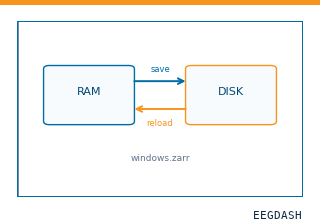 Save and reload prepared dataCache a windowed dataset to disk and reattach it without recompute.
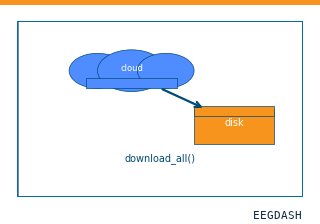 Download a dataset locallyPrefetch BIDS files to a local cache and validate the layout.
Swap any load_dataset(...) call for nm000462 to reproduce the tutorial on this dataset.
Citation
William K. Ojemann, Brian Litt, Erin Conrad (20). stim-seizures (Ojemann et al.; HUP + CHOP): seizure annotations, electrode localisations and preprocessed SEEG seizure traces (derivative). 10.82901/nemar.nm000462
Provenance
¹Contributed to nemar in BIDS format.
²Curated & ingested by the EEGDash catalog; see CITATION.cff for canonical reference.
³Persistent identifier: 10.82901/nemar.nm000462.
See Also#
eegdash.dataset.EEGDashDataseteegdash.dataset