


NM000367: ieeg dataset, 16 subjects#
Cognitive boundaries and theta phase precession: human microwire LFP during movie-clip encoding, scene recognition and time discrimination (Zheng et al. 2024, DANDI 000940)
Access recordings and metadata through EEGDash.
Citation: Jie Zheng, Mar Yebra, Andrea G. P. Schjetnan, Kramay Patel, Chaim N. Katz, Michael Kyzar, Clayton P. Mosher, Suneil K. Kalia, Jeffrey M. Chung, Chrystal M. Reed, Taufik A. Valiante, Adam N. Mamelak, Gabriel Kreiman, Ueli Rutishauser (2024). Cognitive boundaries and theta phase precession: human microwire LFP during movie-clip encoding, scene recognition and time discrimination (Zheng et al. 2024, DANDI 000940). 10.82901/nemar.nm000367
Modality: ieeg Subjects: 16 Recordings: 16 License: CC-BY-4.0 Source: nemar
Metadata: Complete (100%)
16-participant iEEG dataset — Cognitive boundaries and theta phase precession: human microwire LFP during movie-clip encoding, scene recognition and time discrimination (Zheng et al. 2024, DANDI 000940).
Quickstart#
Install
pip install eegdash
Access the data
from eegdash.dataset import NM000367

dataset = NM000367(cache_dir="./data")
# Get the raw object of the first recording
raw = dataset.datasets[0].raw
print(raw.info)
Filter by subject
dataset = NM000367(cache_dir="./data", subject="01")
Advanced query
dataset = NM000367(
    cache_dir="./data",
    query={"subject": {"$in": ["01", "02"]}},
)
Iterate recordings
for rec in dataset:
    print(rec.subject, rec.raw.info['sfreq'])
If you use this dataset in your research, please cite the original authors.
BibTeX
@dataset{nm000367,
  title = {Cognitive boundaries and theta phase precession: human microwire LFP during movie-clip encoding, scene recognition and time discrimination (Zheng et al. 2024, DANDI 000940)},
  author = {Jie Zheng and Mar Yebra and Andrea G. P. Schjetnan and Kramay Patel and Chaim N. Katz and Michael Kyzar and Clayton P. Mosher and Suneil K. Kalia and Jeffrey M. Chung and Chrystal M. Reed and Taufik A. Valiante and Adam N. Mamelak and Gabriel Kreiman and Ueli Rutishauser},
  doi = {10.82901/nemar.nm000367},
  url = {https://doi.org/10.82901/nemar.nm000367},
}
About This Dataset#
Cognitive boundaries and theta phase precession: human microwire LFP (Zheng et al. 2024, DANDI 000940)
Microwire local field potentials (LFP) recorded from Behnke-Fried hybrid depth electrodes in patients with
drug-resistant epilepsy undergoing invasive seizure monitoring at Toronto Western Hospital and Cedars-Sinai Medical Center, while they performed the cognitive-boundary memory paradigm: encoding of 90 silent movie clips with no boundary (NB), soft boundaries (SB, cuts within the same movie) or a hard boundary (HB, cut to a different movie), followed by a scene-recognition test (old/new with confidence) and a time-discrimination test (which of two frames came first, with confidence).
Recording sites: amygdala, hippocampus and parahippocampal gyrus, and in some participants dorsal anterior cingulate cortex, pre-supplementary motor area and ventromedial prefrontal cortex.
- This dataset is an iEEG-BIDS representation of the LFP released by the authors in NWB format on DANDI:
Zheng J, Yebra M, Schjetnan A, Patel K, Katz C, Kyzar M, Mosher C, Kalia S, Chung J, Reed C, Valiante T, Mamelak A, Rutishauser U (2024). Data for: Hippocampal Theta Phase Precession Supports Memory Formation and Retrieval of Naturalistic Experience in Humans. DANDI archive. https://dandiarchive.org/dandiset/000940 (license CC-BY-4.0). At conversion time (2026-10-06) the Dandiset had no published version; the 16 NWB
View full README
Recording sites: amygdala, hippocampus and parahippocampal gyrus, and in some participants dorsal anterior cingulate cortex, pre-supplementary motor area and ventromedial prefrontal cortex.
- This dataset is an iEEG-BIDS representation of the LFP released by the authors in NWB format on DANDI:
Zheng J, Yebra M, Schjetnan A, Patel K, Katz C, Kyzar M, Mosher C, Kalia S, Chung J, Reed C, Valiante T, Mamelak A, Rutishauser U (2024). Data for: Hippocampal Theta Phase Precession Supports Memory Formation and Retrieval of Naturalistic Experience in Humans. DANDI archive. https://dandiarchive.org/dandiset/000940 (license CC-BY-4.0). At conversion time (2026-10-06) the Dandiset had no published version; the 16 NWB assets were downloaded from the draft and verified against the DANDI SHA-256 digests listed in sourcedata/sourcedata_provenance.json. Article: Zheng J et al. Theta phase precession supports memory formation and retrieval of naturalistic experience in humans. Nature Human Behaviour 8, 2423-2436 (2024). https://doi.org/10.1038/s41562-024-01983-9
Please cite both. Task design: Zheng J et al. Neurons detect cognitive boundaries to structure episodic memories in humans. Nature Neuroscience 25, 358-368 (2022). https://doi.org/10.1038/s41593-022-01020-w Relation to other releases: the article states that 19 of its 22 participants come from the 2022 study, “for whom we previously published single-neuron but not field potential data”. Those single-neuron data are on DANDI as Dandiset 000207 (spike times only, no continuous signal). This release (16 participants) is the first public release of the field potentials.
Same participants in other releases: the NWB file identifiers carry the lab patient code (e.g. P62CS, TWH101; column lab_patient_code of participants.tsv). Where the same code appears in another public release with the same age and sex, participants.tsv names that subject (column same_participant_in): 9 of the 16 participants were also recorded in the Sternberg working-memory task of DANDI 000673 (Daume et al. 2024; NEMAR nm000368), and sub-8 (P62CS) also took part in the movie-watching study DANDI 000623 (NEMAR nm000357, sub-CS62). These are different tasks and recordings, not duplicates. One code (TWH116 here, P116TWH in DANDI 000673) has a different age and sex in the two releases and is not linked.
Ethics
From the article: “This study complies with all relevant ethical regulations. The study protocol was approved by the Research Ethics Board at Toronto Western Hospital (approval number: 15-5052; approval date: 14 May 2021) and the Institutional Review Board at Cedars-Sinai Medical Center (approval number: Study572; approval date: 9 June 2020).” Patients “volunteered for this study and provided their informed consent”.
This deposit redistributes the publicly released data under its CC-BY-4.0 license.
Contents
16 participants, 16 recordings (one per participant), 388 microwire LFP channels (11-41 per recording), 200 Hz, 2694-3134 s per recording, 12.99 h in total; 7,200 trial rows and 27,358 TTL markers.
sub-<label> DANDI subject label (sub-2 … sub-17; one recording per participant). ieeg/*_ieeg.vhdr/.vmrk/.eeg BrainVision, IEEE float32, microvolts, resolution 1.0. ieeg/*_channels.tsv one row per microwire, in the column order of the source series. ieeg/*_electrodes.tsv source coordinates of each microwire (one location per bundle). ieeg/*_events.tsv all trials of the three task parts and all TTL markers (see Events). sub-*/sub-*_scans.tsv recording year, source file, SHA-256 and float32 rounding error. sourcedata/dandi-000940/ byte-identical copies of the 16 DANDI NWB files (+ dandiset.yaml);
sourcedata/sourcedata_provenance.json lists size, SHA-256, DANDI asset id.
Signal: what was converted and how
Source: acquisition/LFPs (ElectricalSeries) of each NWB file: float64 values with unit “volts” and conversion 1e-06 (i.e. the stored numbers are microvolts), offset 0, regular 200 Hz clock starting at 0 s. The NWB description reads “These are LFP recordings that have been downsampled to 200 Hz”. The values were written to BrainVision as float32 microvolts; this is the only change (float32 rounding, at most 0.00049 µV per file, reported per file in scans.tsv). No filtering, resampling, re-referencing, cropping or channel removal was done by this conversion.
Processing already applied by the authors: broadband signals were recorded at 32 kHz (0.1-8000 Hz, Neuralynx ATLAS) and downsampled by the authors to the released 200 Hz series; the anti-aliasing filter of that step is not documented. The article describes, for its own analysis, removal of spike waveforms by linear interpolation over 3 ms around each detected spike and downsampling to 250 Hz; the released series is 200 Hz and the NWB does not say whether spike interpolation was applied. The source electrodes table column “filtering” (300-3000 Hz) describes the spike-detection band, not the LFP.
Channel type: BIDS has no microwire channel type; SEEG (depth electrode) is used and each channel is described as a microwire in channels.tsv. Only the microwires that are present in the source LFP series are included (11-41 per participant).
Events
- onset = NWB time - LFP starting_time (0 s in all files; the LFP covers the experiment from the start TTL).
- encoding one row per clip (intervals/encoding_table): Clip_name, stimCategory, boundary1/2/3_time,
fixcross_time, ExperimentID.
- scene_recognition one row per test frame (intervals/recognition_table): frameName, stimuli_type
(target = 1, foil = 0), old_new (response old = 2, new = 1), confidence, accuracy, RT, resp_value, source_response_time (NWB response_time), boundary_type, trial_num, fixcross_time.
- time_discrimination one row per test pair (intervals/timediscrimination_table): frameName, leftright,
resp_key, resp_value, accuracy, confidence, RT, source_response_time, boundary_type, trial_num.
- ttl every TTL marker (acquisition/events) with its experiment id (70 encoding,
71 recognition, 72 time discrimination).
All source columns are kept with their NWB names (names that BIDS reserves for events columns, here response_time, get the prefix source_) and the NWB column descriptions are copied into events.json. Times inside source columns (fixcross_time, boundary*_time, source_response_time) are absolute NWB times; they equal recording time because the LFP starts at 0 s.
Note on stimCategory: the NWB column description says “1=no boundary (NB), 2=soft boundary (SB), 3=hard boundary (HB)”, but the stored values are 0, 1 and 2; the authors’ analysis code (cogboundary-phasepre-release-NWB, B01_raster_psth_encoding_SAligned_BSep_NWB.m) maps 0 = NB, 1 = SB, 2 = HB. The boundary_type columns of the test tables use 1/2/3 as described.
The movie clips are not distributed (copyright); the authors’ README gives a download link (rutishauserlab/cogboundary-phasepre-release-NWB). The NWB OpticalSeries stimulus/presentation/ExternalVideos is a 200 x 50 x 50 x 3 placeholder (“Please contact authors for clips”).
Coordinates
electrodes.tsv gives the x, y, z of the NWB electrodes table in mm. The article states that electrode locations were obtained by co-registering post-operative CT with pre-operative MRI (Freesurfer) and that the MRI was aligned to the CIT168 template in MNI152 coordinates; the coordinate space label is therefore “Other” with that description (coordsystem.json). All microwires of one bundle share one coordinate.
Participants
Cohort (Zheng et al. 2024, Methods and Supplementary Table 1): 22 patients with refractory (drug-resistant) epilepsy (13 female; mean age 39 +/- 16 years) implanted with Behnke-Fried hybrid depth electrodes for seizure monitoring at Toronto Western Hospital and Cedars-Sinai Medical Center; 19 of them were already in Zheng et al. 2022. This release contains 16 of the 22 (one recording each, recorded in 2018 according to the NWB files; see
Known caveats). Not in DANDI 000940: paper participants 1 (P60CS), 18 (TWH129), 19 (TWH138), 20 (P70CS), 21 (P71CS) and 22 (P76CS); P60CS, TWH129 (P129TWH), P70CS, P71CS and P76CS have Sternberg-task LFP in DANDI 000673 (NEMAR nm000368, sub-4, sub-33, sub-12, sub-13, sub-16; same code, age and sex). participants.tsv columns:
age, sex, species, recording_institution, dandi_subject_id NWB general/subject and general/institution. lab_patient_code, same_participant_in NWB file identifier; links to other releases. paper_participant_id, paper_n_neurons_inside_mtl/_outside_mtl Zheng et al. 2024 Supplementary Table 1. Patient
ID, participant ID, age and gender in that table agree with lab_patient_code, dandi_subject_id, age and sex for all 16 participants (mapping proof).
diagnosis, implant_type cohort-level facts from the article Methods. seizure_onset_zone Daume et al. 2024 (Nature) Supplementary Table S5,
for the 9 participants linked to DANDI 000673; n/a for the other 7 (Zheng et al. 2022/2024 do not report it).
recording_year year of NWB session_start_time (as scans.tsv). n_lfp_channels, lfp_regions, lfp_hemispheres derived from channels.tsv of this release.
Handedness, epilepsy duration/onset age, etiology and medication are not reported by the sources (n/a).
Recording year (scans.tsv) is the year of the NWB session_start_time, which the authors set to 1 January of the recording year to avoid disclosure of protected health information.
Not converted (available unchanged in the NWB files under sourcedata/ and on DANDI) Spike-sorted single units (units table: spike times, electrodes, boundary_cell_flag, event_cell_flag, phase_precession_cell_flag) and the stimulus placeholder.
Conversion checks
Every BrainVision file was read back with MNE-Python and compared with the source NWB: channel names and order equal the NWB electrode region, sampling rate and sample count equal, every sample equals the float32 representation of the source value (largest absolute difference to the float64 source 0.00049 µV, largest relative difference 6e-8), no non-finite values.
Every interval row and TTL marker was recomputed from the NWB (onset = time - starting_time); all match events.tsv within 1 µs (rounding to 6 decimals); no event lies outside the recording.
The NWB copies in sourcedata/ match the DANDI SHA-256 digests.
bids-validator 3.0.2: 0 errors; warnings only for recommended fields the source does not document.
Conversion code: b2dandi_rutishauser_bids.py (iEEG-NEMAR campaign, batch 2), using h5py and pybv.
Known caveats
Recording year: all 16 NWB files state 2018-01-01, whereas DANDI 000673 dates the Sternberg sessions of 7 of the 9 shared patients to 2019 (P61CS, P62CS, P64CS, TWH109, TWH110, TWH113) or 2020 (P65CS). In participants.tsv recording_year is n/a for those 7; for the others the 2018 value is kept as released (unverified).
Numbering: Zheng et al. 2022 (Supplementary Table 2) numbers TWH113 as 8 and P62CS as 9; Zheng et al. 2024 and this release use 8 = P62CS and 9 = TWH113. Use lab_patient_code to match the 2022 single-neuron release (DANDI 000207).
stimCategory values 0/1/2 versus the NWB description 1/2/3 (see Events); the LFP anti-aliasing filter and whether spike interpolation was applied are not documented (see Signal); the movie clips are not distributed.
One code (TWH116 here, P116TWH in DANDI 000673) has a different age and sex in the two releases and is not linked.
How to load
from mne_bids import BIDSPath, read_raw_bids bp = BIDSPath(root=”nm000367”, subject=”2”, task=”cogboundary”, datatype=”ieeg”) raw = read_raw_bids(bp) # 200 Hz microwire LFP in microvolts (MNE stores volts) events = raw.annotations # trials and TTL markers from events.tsv
Citation
Zheng J, Yebra M, Schjetnan AGP, Patel K, Katz CN, Kyzar M, Mosher CP, Kalia SK, Chung JM, Reed CM, Valiante TA, Mamelak AN, Kreiman G, Rutishauser U. Theta phase precession supports memory formation and retrieval of naturalistic experience in humans. Nature Human Behaviour 8, 2423-2436 (2024). doi:10.1038/s41562-024-01983-9 and the data: DANDI:000940 (https://dandiarchive.org/dandiset/000940).
Provenance of the 2026-10-07 metadata enrichment
Zheng et al. 2024 Supplementary Information (Supplementary Table 1); Zheng et al. 2022 Nat Neurosci Supplementary Information (Supplementary Table 2); Daume et al. 2024 Nature Supplementary Information (Supplementary Table S5, doi:10.1038/s41586-024-07309-z); the release itself (channels.tsv, scans.tsv).
NEMAR Metadata#
[](https://doi.org/10.82901/nemar.nm000367) Cognitive boundaries and theta phase precession: human microwire LFP (Zheng et al. 2024, DANDI 000940) ====================================================================================================== Overview ——– Microwire local field potentials (LFP) recorded from Behnke-Fried hybrid depth electrodes in patients with drug-resistant epilepsy undergoing invasive seizure monitoring at Toronto Western Hospital and Cedars-Sinai Medical Center, while they performed the cognitive-boundary memory paradigm: encoding of 90 silent movie clips with no boundary (NB), soft boundaries (SB, cuts within the same movie) or a hard boundary (HB, cut to a different movie), followed by a scene-recognition test (old/new with confidence) and a time-discrimination test (which of two frames came first, with confidence). Recording sites: amygdala, hippocampus and parahippocampal gyrus, and in some participants dorsal anterior cingulate cortex, pre-supplementary motor area and ventromedial prefrontal cortex. This dataset is an iEEG-BIDS representation of the LFP released by the authors in NWB format on DANDI:
Zheng J, Yebra M, Schjetnan A, Patel K, Katz C, Kyzar M, Mosher C, Kalia S, Chung J, Reed C, Valiante T, Mamelak A, Rutishauser U (2024). Data for: Hippocampal Theta Phase Precession Supports Memory Formation and Retrieval of Naturalistic Experience in Humans. DANDI archive. https://dandiarchive.org/dandiset/000940 (license CC-BY-4.0). At conversion time (2026-10-06) the Dandiset had no published version; the 16 NWB assets were downloaded from the draft and verified against the DANDI SHA-256 digests listed in sourcedata/sourcedata_provenance.json. Article: Zheng J et al. Theta phase precession supports memory formation and retrieval of naturalistic experience in humans. Nature Human Behaviour 8, 2423-2436 (2024). https://doi.org/10.1038/s41562-024-01983-9
Please cite both. Task design: Zheng J et al. Neurons detect cognitive boundaries to structure episodic memories in humans. Nature Neuroscience 25, 358-368 (2022). https://doi.org/10.1038/s41593-022-01020-w Relation to other releases: the article states that 19 of its 22 participants come from the 2022 study, “for whom we previously published single-neuron but not field potential data”. Those single-neuron data are on DANDI as Dandiset 000207 (spike times only, no continuous signal). This release (16 participants) is the first public release of the field potentials. Same participants in other releases: the NWB file identifiers carry the lab patient code (e.g. P62CS, TWH101; column lab_patient_code of participants.tsv). Where the same code appears in another public release with the same age and sex, participants.tsv names that subject (column same_participant_in): 9 of the 16 participants were also recorded in the Sternberg working-memory task of DANDI 000673 (Daume et al. 2024; NEMAR nm000368), and sub-8 (P62CS) also took part in the movie-watching study DANDI 000623 (NEMAR nm000357, sub-CS62). These are different tasks and recordings, not duplicates. One code (TWH116 here, P116TWH in DANDI 000673) has a different age and sex in the two releases and is not linked. Ethics —— From the article: “This study complies with all relevant ethical regulations. The study protocol was approved by the Research Ethics Board at Toronto Western Hospital (approval number: 15-5052; approval date: 14 May 2021) and the Institutional Review Board at Cedars-Sinai Medical Center (approval number: Study572; approval date: 9 June 2020).” Patients “volunteered for this study and provided their informed consent”. This deposit redistributes the publicly released data under its CC-BY-4.0 license. Contents ——– 16 participants, 16 recordings (one per participant), 388 microwire LFP channels (11-41 per recording), 200 Hz, 2694-3134 s per recording, 12.99 h in total; 7,200 trial rows and 27,358 TTL markers.
sub-<label> DANDI subject label (sub-2 … sub-17; one recording per participant). ieeg/_ieeg.vhdr/.vmrk/.eeg BrainVision, IEEE float32, microvolts, resolution 1.0. ieeg/*_channels.tsv one row per microwire, in the column order of the source series. ieeg/*_electrodes.tsv source coordinates of each microwire (one location per bundle). ieeg/*_events.tsv all trials of the three task parts and all TTL markers (see Events). sub-/sub-*_scans.tsv recording year, source file, SHA-256 and float32 rounding error. sourcedata/dandi-000940/ byte-identical copies of the 16 DANDI NWB files (+ dandiset.yaml);
sourcedata/sourcedata_provenance.json lists size, SHA-256, DANDI asset id.
Signal: what was converted and how#
Source: acquisition/LFPs (ElectricalSeries) of each NWB file: float64 values with unit “volts” and conversion 1e-06 (i.e. the stored numbers are microvolts), offset 0, regular 200 Hz clock starting at 0 s. The NWB description reads “These are LFP recordings that have been downsampled to 200 Hz”. The values were written to BrainVision as float32 microvolts; this is the only change (float32 rounding, at most 0.00049 µV per file, reported per file in scans.tsv). No filtering, resampling, re-referencing, cropping or channel removal was done by this conversion. Processing already applied by the authors: broadband signals were recorded at 32 kHz (0.1-8000 Hz, Neuralynx ATLAS) and downsampled by the authors to the released 200 Hz series; the anti-aliasing filter of that step is not documented. The article describes, for its own analysis, removal of spike waveforms by linear interpolation over 3 ms around each detected spike and downsampling to 250 Hz; the released series is 200 Hz and the NWB does not say whether spike interpolation was applied. The source electrodes table column “filtering” (300-3000 Hz) describes the spike-detection band, not the LFP. Channel type: BIDS has no microwire channel type; SEEG (depth electrode) is used and each channel is described as a microwire in channels.tsv. Only the microwires that are present in the source LFP series are included (11-41 per participant). Events —— onset = NWB time - LFP starting_time (0 s in all files; the LFP covers the experiment from the start TTL).
- encoding one row per clip (intervals/encoding_table): Clip_name, stimCategory, boundary1/2/3_time,
fixcross_time, ExperimentID.
- scene_recognition one row per test frame (intervals/recognition_table): frameName, stimuli_type
(target = 1, foil = 0), old_new (response old = 2, new = 1), confidence, accuracy, RT, resp_value, source_response_time (NWB response_time), boundary_type, trial_num, fixcross_time.
- time_discrimination one row per test pair (intervals/timediscrimination_table): frameName, leftright,
resp_key, resp_value, accuracy, confidence, RT, source_response_time, boundary_type, trial_num.
- ttl every TTL marker (acquisition/events) with its experiment id (70 encoding,
71 recognition, 72 time discrimination).
All source columns are kept with their NWB names (names that BIDS reserves for events columns, here response_time, get the prefix source_) and the NWB column descriptions are copied into events.json. Times inside source columns (fixcross_time, boundary*_time, source_response_time) are absolute NWB times; they equal recording time because the LFP starts at 0 s. Note on stimCategory: the NWB column description says “1=no boundary (NB), 2=soft boundary (SB), 3=hard boundary (HB)”, but the stored values are 0, 1 and 2; the authors’ analysis code (cogboundary-phasepre-release-NWB, B01_raster_psth_encoding_SAligned_BSep_NWB.m) maps 0 = NB, 1 = SB, 2 = HB. The boundary_type columns of the test tables use 1/2/3 as described. The movie clips are not distributed (copyright); the authors’ README gives a download link (rutishauserlab/cogboundary-phasepre-release-NWB). The NWB OpticalSeries stimulus/presentation/ExternalVideos is a 200 x 50 x 50 x 3 placeholder (“Please contact authors for clips”). Coordinates ———– electrodes.tsv gives the x, y, z of the NWB electrodes table in mm. The article states that electrode locations were obtained by co-registering post-operative CT with pre-operative MRI (Freesurfer) and that the MRI was aligned to the CIT168 template in MNI152 coordinates; the coordinate space label is therefore “Other” with that description (coordsystem.json). All microwires of one bundle share one coordinate. Participants ———— Cohort (Zheng et al. 2024, Methods and Supplementary Table 1): 22 patients with refractory (drug-resistant) epilepsy (13 female; mean age 39 +/- 16 years) implanted with Behnke-Fried hybrid depth electrodes for seizure monitoring at Toronto Western Hospital and Cedars-Sinai Medical Center; 19 of them were already in Zheng et al. 2022. This release contains 16 of the 22 (one recording each, recorded in 2018 according to the NWB files; see Known caveats). Not in DANDI 000940: paper participants 1 (P60CS), 18 (TWH129), 19 (TWH138), 20 (P70CS), 21 (P71CS) and 22 (P76CS); P60CS, TWH129 (P129TWH), P70CS, P71CS and P76CS have Sternberg-task LFP in DANDI 000673 (NEMAR nm000368, sub-4, sub-33, sub-12, sub-13, sub-16; same code, age and sex). participants.tsv columns:
age, sex, species, recording_institution, dandi_subject_id NWB general/subject and general/institution. lab_patient_code, same_participant_in NWB file identifier; links to other releases. paper_participant_id, paper_n_neurons_inside_mtl/_outside_mtl Zheng et al. 2024 Supplementary Table 1. Patient
ID, participant ID, age and gender in that table agree with lab_patient_code, dandi_subject_id, age and sex for all 16 participants (mapping proof).
diagnosis, implant_type cohort-level facts from the article Methods. seizure_onset_zone Daume et al. 2024 (Nature) Supplementary Table S5,
for the 9 participants linked to DANDI 000673; n/a for the other 7 (Zheng et al. 2022/2024 do not report it).
recording_year year of NWB session_start_time (as scans.tsv). n_lfp_channels, lfp_regions, lfp_hemispheres derived from channels.tsv of this release.
Handedness, epilepsy duration/onset age, etiology and medication are not reported by the sources (n/a). Recording year (scans.tsv) is the year of the NWB session_start_time, which the authors set to 1 January of the recording year to avoid disclosure of protected health information. Not converted (available unchanged in the NWB files under sourcedata/ and on DANDI) ———————————————————————————— Spike-sorted single units (units table: spike times, electrodes, boundary_cell_flag, event_cell_flag, phase_precession_cell_flag) and the stimulus placeholder. Conversion checks —————– - Every BrainVision file was read back with MNE-Python and compared with the source NWB: channel names and
order equal the NWB electrode region, sampling rate and sample count equal, every sample equals the float32 representation of the source value (largest absolute difference to the float64 source 0.00049 µV, largest relative difference 6e-8), no non-finite values.
Every interval row and TTL marker was recomputed from the NWB (onset = time - starting_time); all match events.tsv within 1 µs (rounding to 6 decimals); no event lies outside the recording.
The NWB copies in sourcedata/ match the DANDI SHA-256 digests.
bids-validator 3.0.2: 0 errors; warnings only for recommended fields the source does not document.
Conversion code: b2dandi_rutishauser_bids.py (iEEG-NEMAR campaign, batch 2), using h5py and pybv. Known caveats ————- - Recording year: all 16 NWB files state 2018-01-01, whereas DANDI 000673 dates the Sternberg sessions of 7 of
the 9 shared patients to 2019 (P61CS, P62CS, P64CS, TWH109, TWH110, TWH113) or 2020 (P65CS). In participants.tsv recording_year is n/a for those 7; for the others the 2018 value is kept as released (unverified).
Numbering: Zheng et al. 2022 (Supplementary Table 2) numbers TWH113 as 8 and P62CS as 9; Zheng et al. 2024 and this release use 8 = P62CS and 9 = TWH113. Use lab_patient_code to match the 2022 single-neuron release (DANDI 000207).
stimCategory values 0/1/2 versus the NWB description 1/2/3 (see Events); the LFP anti-aliasing filter and whether spike interpolation was applied are not documented (see Signal); the movie clips are not distributed.
One code (TWH116 here, P116TWH in DANDI 000673) has a different age and sex in the two releases and is not linked.
How to load#
from mne_bids import BIDSPath, read_raw_bids bp = BIDSPath(root=”nm000367”, subject=”2”, task=”cogboundary”, datatype=”ieeg”) raw = read_raw_bids(bp) # 200 Hz microwire LFP in microvolts (MNE stores volts) events = raw.annotations # trials and TTL markers from events.tsv
Citation#
Zheng J, Yebra M, Schjetnan AGP, Patel K, Katz CN, Kyzar M, Mosher CP, Kalia SK, Chung JM, Reed CM, Valiante TA, Mamelak AN, Kreiman G, Rutishauser U. Theta phase precession supports memory formation and retrieval of naturalistic experience in humans. Nature Human Behaviour 8, 2423-2436 (2024). doi:10.1038/s41562-024-01983-9 and the data: DANDI:000940 (https://dandiarchive.org/dandiset/000940). Provenance of the 2026-10-07 metadata enrichment ———————————————— Zheng et al. 2024 Supplementary Information (Supplementary Table 1); Zheng et al. 2022 Nat Neurosci Supplementary Information (Supplementary Table 2); Daume et al. 2024 Nature Supplementary Information (Supplementary Table S5, doi:10.1038/s41586-024-07309-z); the release itself (channels.tsv, scans.tsv).
License: CC-BY-4.0
Authors:
Jie Zheng
Mar Yebra
Andrea G. P. Schjetnan
Kramay Patel
Chaim N. Katz
… and 9 more
Versions:
Version |
DOI |
Released |
|---|---|---|
|
Cohort#
Dataset Statistics#
Age distribution by gender (n=16, range 24–68 yr, mean 39.3 yr)
Sex composition
Channel counts (ch)
Sampling frequencies: 200.0 Hz (n=16 recordings)
Total recording duration: 12 h 59 min
Signal · Electrodes & live trace#
Live trace viewer — sub-7 · task-cogboundary
Showing one representative recording out of
16 subjects and 16 recordings in this dataset.
Browse the full set on OpenNeuro;
drop any other _ieeg.{set,edf,bdf,vhdr} file onto the
viewer (or pass ?ieeg=<url>) to inspect it.
Electrode layout — iEEG · 20 sensors — 20 channels
NEMAR Processing Statistics#
The plots below are generated by NEMAR’s automated EEG pipeline. The histogram shows pipeline success for data cleaning and ICA decomposition, the percentage of data frames and EEG channels retained after artefact removal, line noise per channel (RMS, dB), and the age/gender distribution of participants.

HED event descriptors word cloud

Manifest#
File Explorer#
Browse the BIDS file structure of this dataset. Records are fetched on demand from the EEGDash catalog the first time you open the explorer.
Full dataset metadata table
Dataset ID |
|
Title |
Cognitive boundaries and theta phase precession: human microwire LFP during movie-clip encoding, scene recognition and time discrimination (Zheng et al. 2024, DANDI 000940) |
Author (year) |
— |
Canonical |
— |
Importable as |
|
Year |
2024 |
Authors |
Jie Zheng, Mar Yebra, Andrea G. P. Schjetnan, Kramay Patel, Chaim N. Katz, Michael Kyzar, Clayton P. Mosher, Suneil K. Kalia, Jeffrey M. Chung, Chrystal M. Reed, Taufik A. Valiante, Adam N. Mamelak, Gabriel Kreiman, Ueli Rutishauser |
License |
CC-BY-4.0 |
Citation / DOI |
|
Source links |
OpenNeuro | NeMAR | Source URL |
Copy-paste BibTeX
@dataset{nm000367,
  title = {Cognitive boundaries and theta phase precession: human microwire LFP during movie-clip encoding, scene recognition and time discrimination (Zheng et al. 2024, DANDI 000940)},
  author = {Jie Zheng and Mar Yebra and Andrea G. P. Schjetnan and Kramay Patel and Chaim N. Katz and Michael Kyzar and Clayton P. Mosher and Suneil K. Kalia and Jeffrey M. Chung and Chrystal M. Reed and Taufik A. Valiante and Adam N. Mamelak and Gabriel Kreiman and Ueli Rutishauser},
  doi = {10.82901/nemar.nm000367},
  url = {https://doi.org/10.82901/nemar.nm000367},
}
API Reference#
eegdash.datasetEEGDashDataset- class eegdash.dataset.NM000367(cache_dir: str, query: dict | None = None, s3_bucket: str | None = None, **kwargs)[source]#
Cognitive boundaries and theta phase precession: human microwire LFP during movie-clip encoding, scene recognition and time discrimination (Zheng et al. 2024, DANDI 000940)
- Study:
nm000367(NeMAR)- Author (year):
—
- Canonical:
—
Also importable as:
NM000367.Modality:
ieeg; Subject type:Unknown. Subjects: 16; recordings: 16; tasks: 1.- Parameters:
cache_dir (str | Path) – Directory where data are cached locally.
query (dict | None) – Additional MongoDB-style filters to AND with the dataset selection. Must not contain the key
dataset.s3_bucket (str | None) – Base S3 bucket used to locate the data.
**kwargs (dict) – Additional keyword arguments forwarded to
EEGDashDataset.
- data_dir#
Local dataset cache directory (
cache_dir / dataset_id).- Type:
Path
Notes
Each item is a recording; recording-level metadata are available via
dataset.description.querysupports MongoDB-style filters on fields inALLOWED_QUERY_FIELDSand is combined with the dataset filter. Dataset-specific caveats are not provided in the summary metadata.References
OpenNeuro dataset: https://openneuro.org/datasets/nm000367 NeMAR dataset: https://nemar.org/dataexplorer/detail?dataset_id=nm000367 DOI: https://doi.org/10.82901/nemar.nm000367
Examples
>>> from eegdash.dataset import NM000367
>>> dataset = NM000367(cache_dir="./data")
>>> recording = dataset[0]
>>> raw = recording.load()
- __init__(cache_dir: str, query: dict | None = None, s3_bucket: str | None = None, **kwargs)[source]#
- save(path: str, overwrite: bool = False, offset: int = 0)[source]#
Save datasets to files by creating one subdirectory for each dataset:
path/
    0/
        0-raw.fif | 0-epo.fif
        description.json
        raw_preproc_kwargs.json (if raws were preprocessed)
        window_kwargs.json (if this is a windowed dataset)
        window_preproc_kwargs.json  (if windows were preprocessed)
        target_name.json (if target_name is not None and dataset is raw)
    1/
        1-raw.fif | 1-epo.fif
        description.json
        raw_preproc_kwargs.json (if raws were preprocessed)
        window_kwargs.json (if this is a windowed dataset)
        window_preproc_kwargs.json  (if windows were preprocessed)
        target_name.json (if target_name is not None and dataset is raw)
- Parameters:
path (str) –
- Directory in which subdirectories are created to store
-raw.fif | -epo.fif and .json files to.
overwrite (bool) – Whether to delete old subdirectories that will be saved to in this call.
offset (int) – If provided, the integer is added to the id of the dataset in the concat. This is useful in the setting of very large datasets, where one dataset has to be processed and saved at a time to account for its original position.
BaseDataset from braindecode — windowed via create_windows_from_events.braindecodeDataLoader; supports parallel workers and on-the-fly augmentations.pytorch Find datasets with the EEGDash APIQuery the catalogue, filter by task or modality, list candidates.
 Load one EEG recordingResolve a single record to an MNE Raw with channels and events.
 EEG recording to PyTorch DataLoaderWrap braindecode windows in a DataLoader for model training.
 Preprocess EEG and create windowsFilter, resample, epoch — and persist the windowed dataset.
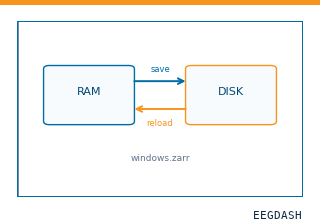 Save and reload prepared dataCache a windowed dataset to disk and reattach it without recompute.
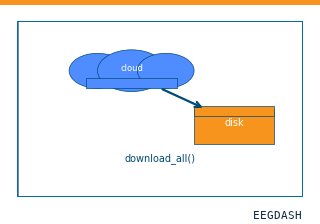 Download a dataset locallyPrefetch BIDS files to a local cache and validate the layout.
Swap any load_dataset(...) call for nm000367 to reproduce the tutorial on this dataset.
Citation
Jie Zheng, Mar Yebra, Andrea G. P. Schjetnan, Kramay Patel, Chaim N. Katz, … (2024). Cognitive boundaries and theta phase precession: human microwire LFP during movie-clip encoding, scene recognition and time discrimination (Zheng et al. 2024, DANDI 000940). 10.82901/nemar.nm000367
Provenance
¹Contributed to nemar in BIDS format.
²Curated & ingested by the EEGDash catalog; see CITATION.cff for canonical reference.
³Persistent identifier: 10.82901/nemar.nm000367.
See Also#
eegdash.dataset.EEGDashDataseteegdash.dataset