


NM000385: eeg dataset, 14 subjects#
Siena Scalp EEG Database: video-EEG monitoring of 14 adults with epilepsy (47 annotated seizures)
Access recordings and metadata through EEGDash.
Citation: Paolo Detti (2020). Siena Scalp EEG Database: video-EEG monitoring of 14 adults with epilepsy (47 annotated seizures). 10.82901/nemar.nm000385
Modality: eeg Subjects: 14 Recordings: 41 License: CC-BY-4.0 Source: nemar
Metadata: Complete (100%)
14-participant EEG dataset — Siena Scalp EEG Database: video-EEG monitoring of 14 adults with epilepsy (47 annotated seizures).
Quickstart#
Install
pip install eegdash
Access the data
from eegdash.dataset import NM000385

dataset = NM000385(cache_dir="./data")
# Get the raw object of the first recording
raw = dataset.datasets[0].raw
print(raw.info)
Filter by subject
dataset = NM000385(cache_dir="./data", subject="01")
Advanced query
dataset = NM000385(
    cache_dir="./data",
    query={"subject": {"$in": ["01", "02"]}},
)
Iterate recordings
for rec in dataset:
    print(rec.subject, rec.raw.info['sfreq'])
If you use this dataset in your research, please cite the original authors.
BibTeX
@dataset{nm000385,
  title = {Siena Scalp EEG Database: video-EEG monitoring of 14 adults with epilepsy (47 annotated seizures)},
  author = {Paolo Detti},
  doi = {10.82901/nemar.nm000385},
  url = {https://doi.org/10.82901/nemar.nm000385},
}
About This Dataset#
Scalp video-EEG of 14 adults with epilepsy (9 male, 5 female; aged 20–71), recorded at the Unit of Neurology and Neurophysiology of
the University of Siena, Italy, with 47 annotated seizures in about 128 hours of recording. Sampling rate 512 Hz; electrodes on the international 10-20 system (most patients also have 10-10 positions); most recordings include 1 or 2 EKG channels. This is a BIDS curation of the PhysioNet release (Detti 2020, doi:10.13026/5d4a-j060), described in Detti, Vatti & Zabalo Manrique de Lara 2020, Processes 8(7):846.
Siena. Subjects include 9 males (ages 25-71) and 5 females (ages 20-58).” (The paper gives 36–71 for the males; subject_info.csv,
used for
participants.tsv, has male ages 25–71.)
Siena Scalp EEG Database (PhysioNet siena-scalp-eeg 1.0.0), EEG-BIDS
“The data were acquired employing EB Neuro and Natus Quantum LTM amplifiers, and reusable silver/gold cup electrodes. Patients were asked to stay in the bed as much as possible, either asleep or awake.”
“The diagnosis of epilepsy and the classification of seizures according to the criteria of the International League Against Epilepsy were performed by an expert clinician after a careful review of the clinical and electrophysiological data of each patient.”
View full README
Siena Scalp EEG Database (PhysioNet siena-scalp-eeg 1.0.0), EEG-BIDS
“The data were acquired employing EB Neuro and Natus Quantum LTM amplifiers, and reusable silver/gold cup electrodes. Patients were asked to stay in the bed as much as possible, either asleep or awake.”
“The diagnosis of epilepsy and the classification of seizures according to the criteria of the International League Against Epilepsy were performed by an expert clinician after a careful review of the clinical and electrophysiological data of each patient.”
“The data has been collected … during a regional research project, called PANACEE, aiming at the development of noninvasive patient-specific monitoring/control low-cost devices for the prediction of epileptic seizures.”
Ethics (verbatim, PhysioNet page and paper)
The Ethical Committee of the University of Siena approved the data in accordance with the Declaration of Helsinki. At the time of admission at the clinics, each patient signed a written informed consent in which agrees to the video registration and to the use of the data for a possible scientific divulgation.
Contents
sub-PNxx/eeg/sub-PNxx_task-szMonitoring_run-NN_eeg.edf: the 41 original EDF files, byte-identical to the release (no re-reference, filter, resampling or re-write).sub-PNxx_scans.tsvmaps every run to its original file name (e.g.PN10-4.5.6.edf).*_channels.tsv: channel names exactly as in the EDF. The release’sSeizures-list-PNxx.txtlists the channels that carry the EEG and EKG signals and says “all other channels in the edf files must be ignored”. Its channel numbers do not match the EDF channel order in several files (e.g. PN01, PN03), so channels were matched by name: EDFEEG X= listedX(the listed “1” is a truncated “O1”), and the listed “EKG 1”/”EKG 2” = the EDF channels labelled1/2. Listed channels arestatus=good; all other channels (e.g.EKG EKG,SPO2,HR,PLET,MK, unlabelled numbers/letters, and EEG positions the list leaves out) arestatus=badwith that reason.release_labelgives the listed name. Types: EEG, ECG, MISC. Units from the EDF header.*_events.tsv: one row per seizure (trial_type=seizure), 47 in total.onset= seizure clock time in the release minus the EDF header start time (modulo 24 h);release_start_time/release_end_timekeep the release strings verbatim.participants.tsv: age, sex, ILAE seizure type (IAS focal onset impaired awareness; WIAS focal onset without impaired awareness; FBTC focal to bilateral tonic-clonic), localisation, lateralisation, channel and seizure counts and recording minutes, fromsubject_info.csv.sourcedata/physionet-siena-scalp-eeg-1.0.0/: the complete original release (EDF files, Seizures-list text files,subject_info.csv,RECORDS,LICENSE.txt,SHA256SUMS.txt), verified against PhysioNet’s SHA256SUMS.
Dates and privacy
The release states that “all dates in the .edf files are de-identified”: every EDF header reads 01.01.yy, and the patient and recording identification fields are blank. They are kept as released. Times of day are real clock times and are kept because the seizure annotations are given as clock times.
Release inconsistencies (kept visible, not silently corrected)
PN00/PN00-3.edfseizure 3: seizure end (19.29.29) lies after the end of the recording (registration end 18.57.13); duration set to n/a (release value not corrected). The SzCORE annotation inderivatives/szcorereads it as 18.29.29 (60 s).PN01/PN01-1.edfseizure 1: no file name in release text; subject has one file.PN01/PN01-1.edfseizure 2: no file name in release text; subject has one file.PN05/PN05-3.edfseizure 3: release registration start 06.01.23 differs from EDF header start 06.01.13.PN06/PN06-1.edfseizure 1: file name typo in release: ‘PNO6-1.edf’ -> PN06-1.edf.PN06/PN06-2.edfseizure 2: file name typo in release: ‘PNO6-2.edf’ -> PN06-2.edf.PN06/PN06-4.edfseizure 4: file name typo in release: ‘PNO6-4.edf’ -> PN06-4.edf.PN10/PN10-2.edfseizure 2: release gives two end times (“11.41.04 opure 11.40.43”; Italian “oppure” = “or”); the first is used.PN10/PN10-3.edfseizure 3: release gives clinical and electrical onset (“15.43.53 (CLINICAL ONSET); 15.43.59 (ELECTRIC ONSET)”); the first (clinical) is used.PN10/PN10-4.5.6.edfseizure 6: release gives clinical and electrical onset (“15.18.26 (CLINICAL ONSET)”); the first (clinical) is used.PN11/PN11-1.edfseizure 1: file name typo in release: ‘PN11-.edf’ -> PN11-1.edf (only file).PN14/PN14-3.edfseizure 3: release registration start 16.17.45 differs from EDF header start 19.17.45; the EDF header start is correct (19.17.45 + 41995 s = 06.57.40, the release registration end).PN10:
subject_info.csvgives 20 EEG channels, butSeizures-list-PN10.txtlists 19 EEG positions (Fp1, F3, C3, P3, O1, F7, T3, T5, Fz, Cz, Pz, Fp2, F4, C4, P4, O2, F8, T4, T6); those 19 arestatus=goodand the other EEG channels in the PN10 EDFs arestatus=badas the release instructs.The channel numbers in the Seizures-list files do not match the EDF channel order in many files (45 listed channels across the release); channels were matched by name (see Contents).
SzCORE annotations (derivatives/szcore)
derivatives/szcore/ holds the seizure annotations of the BIDS Siena Scalp EEG Database v1.0.0 released for the SzCORE
seizure-detection benchmark by Jonathan Dan and Paolo Detti (Zenodo, doi:10.5281/zenodo.10640762; Dan et al. 2024, Epilepsia,
doi:10.1111/epi.18113), copied byte-for-byte and renamed to this dataset’s subject and run labels. They add a standardised
seizure type per event (sz_foc_ia, sz_foc_a, sz_foc_f2b, with HED tags). Of 47 seizures, 41 agree with the raw
events.tsv within 0.5 s. The release-text ambiguities behind the other 6 are listed in derivatives/szcore/README.md. One is
an error in the SzCORE release: PN14 run-03 is 3 h late there (17540 s instead of 6740 s). For PN00 run-03 the raw duration stays n/a (the release end time
is after the end of the recording); SzCORE gives 60 s.
Licence and citation
Creative Commons Attribution 4.0 International (CC BY 4.0), as stated by PhysioNet for siena-scalp-eeg 1.0.0 (LICENSE.txt in
sourcedata). Cite Detti (2020), PhysioNet, doi:10.13026/5d4a-j060; Detti, Vatti & Zabalo Manrique de Lara (2020), Processes 8(7):846,
doi:10.3390/pr8070846; and PhysioNet (Pollard et al. 2026, Nature Health, doi:10.1038/s44360-026-00096-z). If you use
derivatives/szcore/, also cite Dan & Detti (2024), Zenodo, doi:10.5281/zenodo.10640762 and Dan et al. (2024), Epilepsia
66(S3):14-24, doi:10.1111/epi.18113.
Funding (verbatim, paper)
This work was partially supported by the grant “PANACEE” (Prevision and analysis of brain activity in transitions: epilepsy and sleep) of the Regione Toscana-PAR FAS 2007-20131.1.a.1.1.2-B22I14000770002.
NEMAR Metadata#
[](https://doi.org/10.82901/nemar.nm000385) # Siena Scalp EEG Database (PhysioNet siena-scalp-eeg 1.0.0), EEG-BIDS Scalp video-EEG of 14 adults with epilepsy (9 male, 5 female; aged 20–71), recorded at the Unit of Neurology and Neurophysiology of the University of Siena, Italy, with 47 annotated seizures in about 128 hours of recording. Sampling rate 512 Hz; electrodes on the international 10-20 system (most patients also have 10-10 positions); most recordings include 1 or 2 EKG channels. This is a BIDS curation of the PhysioNet release (Detti 2020, doi:10.13026/5d4a-j060), described in Detti, Vatti & Zabalo Manrique de Lara 2020, Processes 8(7):846. ## Source description (PhysioNet, verbatim excerpts) - “The database consists of EEG recordings of 14 patients acquired at the Unit of Neurology and Neurophysiology of the University of
Siena. Subjects include 9 males (ages 25-71) and 5 females (ages 20-58).” (The paper gives 36–71 for the males; subject_info.csv, used for participants.tsv, has male ages 25–71.)
“The data were acquired employing EB Neuro and Natus Quantum LTM amplifiers, and reusable silver/gold cup electrodes. Patients were asked to stay in the bed as much as possible, either asleep or awake.”
“The diagnosis of epilepsy and the classification of seizures according to the criteria of the International League Against Epilepsy were performed by an expert clinician after a careful review of the clinical and electrophysiological data of each patient.”
“The data has been collected … during a regional research project, called PANACEE, aiming at the development of noninvasive patient-specific monitoring/control low-cost devices for the prediction of epileptic seizures.”
## Ethics (verbatim, PhysioNet page and paper) The Ethical Committee of the University of Siena approved the data in accordance with the Declaration of Helsinki. At the time of admission at the clinics, each patient signed a written informed consent in which agrees to the video registration and to the use of the data for a possible scientific divulgation. ## Contents - sub-PNxx/eeg/sub-PNxx_task-szMonitoring_run-NN_eeg.edf: the 41 original EDF files, byte-identical to the release
(no re-reference, filter, resampling or re-write). sub-PNxx_scans.tsv maps every run to its original file name (e.g. PN10-4.5.6.edf).
*_channels.tsv: channel names exactly as in the EDF. The release’s Seizures-list-PNxx.txt lists the channels that carry the EEG and EKG signals and says “all other channels in the edf files must be ignored”. Its channel numbers do not match the EDF channel order in several files (e.g. PN01, PN03), so channels were matched by name: EDF EEG X = listed X (the listed “1” is a truncated “O1”), and the listed “EKG 1”/”EKG 2” = the EDF channels labelled 1/2. Listed channels are status=good; all other channels (e.g. EKG EKG, SPO2, HR, PLET, MK, unlabelled numbers/letters, and EEG positions the list leaves out) are status=bad with that reason. release_label gives the listed name. Types: EEG, ECG, MISC. Units from the EDF header.
*_events.tsv: one row per seizure (trial_type=seizure), 47 in total. onset = seizure clock time in the release minus the EDF header start time (modulo 24 h); release_start_time / release_end_time keep the release strings verbatim.
participants.tsv: age, sex, ILAE seizure type (IAS focal onset impaired awareness; WIAS focal onset without impaired awareness; FBTC focal to bilateral tonic-clonic), localisation, lateralisation, channel and seizure counts and recording minutes, from subject_info.csv.
sourcedata/physionet-siena-scalp-eeg-1.0.0/: the complete original release (EDF files, Seizures-list text files, subject_info.csv, RECORDS, LICENSE.txt, SHA256SUMS.txt), verified against PhysioNet’s SHA256SUMS.
## Dates and privacy The release states that “all dates in the .edf files are de-identified”: every EDF header reads 01.01.yy, and the patient and recording identification fields are blank. They are kept as released. Times of day are real clock times and are kept because the seizure annotations are given as clock times. ## Release inconsistencies (kept visible, not silently corrected) - PN00/PN00-3.edf seizure 3: seizure end (19.29.29) lies after the end of the recording (registration end 18.57.13); duration set to n/a (release value not corrected). The SzCORE annotation in derivatives/szcore reads it as 18.29.29 (60 s). - PN01/PN01-1.edf seizure 1: no file name in release text; subject has one file. - PN01/PN01-1.edf seizure 2: no file name in release text; subject has one file. - PN05/PN05-3.edf seizure 3: release registration start 06.01.23 differs from EDF header start 06.01.13. - PN06/PN06-1.edf seizure 1: file name typo in release: ‘PNO6-1.edf’ -> PN06-1.edf. - PN06/PN06-2.edf seizure 2: file name typo in release: ‘PNO6-2.edf’ -> PN06-2.edf. - PN06/PN06-4.edf seizure 4: file name typo in release: ‘PNO6-4.edf’ -> PN06-4.edf. - PN10/PN10-2.edf seizure 2: release gives two end times (“11.41.04 opure 11.40.43”; Italian “oppure” = “or”); the first is used. - PN10/PN10-3.edf seizure 3: release gives clinical and electrical onset (“15.43.53 (CLINICAL ONSET); 15.43.59 (ELECTRIC ONSET)”); the first (clinical) is used. - PN10/PN10-4.5.6.edf seizure 6: release gives clinical and electrical onset (“15.18.26 (CLINICAL ONSET)”); the first (clinical) is used. - PN11/PN11-1.edf seizure 1: file name typo in release: ‘PN11-.edf’ -> PN11-1.edf (only file). - PN14/PN14-3.edf seizure 3: release registration start 16.17.45 differs from EDF header start 19.17.45; the EDF header start is correct (19.17.45 + 41995 s = 06.57.40, the release registration end). - PN10: subject_info.csv gives 20 EEG channels, but Seizures-list-PN10.txt lists 19 EEG positions (Fp1, F3, C3, P3, O1, F7, T3, T5, Fz, Cz, Pz, Fp2, F4, C4, P4, O2, F8, T4, T6); those 19 are status=good and the other EEG channels in the PN10 EDFs are status=bad as the release instructs. - The channel numbers in the Seizures-list files do not match the EDF channel order in many files (45 listed channels across the release); channels were matched by name (see Contents). ## SzCORE annotations (derivatives/szcore) derivatives/szcore/ holds the seizure annotations of the BIDS Siena Scalp EEG Database v1.0.0 released for the SzCORE seizure-detection benchmark by Jonathan Dan and Paolo Detti (Zenodo, doi:10.5281/zenodo.10640762; Dan et al. 2024, Epilepsia, doi:10.1111/epi.18113), copied byte-for-byte and renamed to this dataset’s subject and run labels. They add a standardised seizure type per event (sz_foc_ia, sz_foc_a, sz_foc_f2b, with HED tags). Of 47 seizures, 41 agree with the raw events.tsv within 0.5 s. The release-text ambiguities behind the other 6 are listed in derivatives/szcore/README.md. One is an error in the SzCORE release: PN14 run-03 is 3 h late there (17540 s instead of 6740 s). For PN00 run-03 the raw duration stays n/a (the release end time is after the end of the recording); SzCORE gives 60 s. ## Licence and citation Creative Commons Attribution 4.0 International (CC BY 4.0), as stated by PhysioNet for siena-scalp-eeg 1.0.0 (LICENSE.txt in sourcedata). Cite Detti (2020), PhysioNet, doi:10.13026/5d4a-j060; Detti, Vatti & Zabalo Manrique de Lara (2020), Processes 8(7):846, doi:10.3390/pr8070846; and PhysioNet (Pollard et al. 2026, Nature Health, doi:10.1038/s44360-026-00096-z). If you use derivatives/szcore/, also cite Dan & Detti (2024), Zenodo, doi:10.5281/zenodo.10640762 and Dan et al. (2024), Epilepsia 66(S3):14-24, doi:10.1111/epi.18113. ## Funding (verbatim, paper) This work was partially supported by the grant “PANACEE” (Prevision and analysis of brain activity in transitions: epilepsy and sleep) of the Regione Toscana-PAR FAS 2007-20131.1.a.1.1.2-B22I14000770002.
License: CC-BY-4.0
Authors:
Paolo Detti
Versions:
Version |
DOI |
Released |
|---|---|---|
|
Cohort#
Dataset Statistics#
Age distribution by gender (n=14, range 20–71 yr, mean 43.5 yr)
Sex composition
Channel counts (ch)
Sampling frequencies: 512.0 Hz (n=41 recordings)
Total recording duration: 141 h
Signal · Electrodes & live trace#
Live trace viewer — sub-PN00 · task-szMonitoring · run-03
Showing one representative recording out of
14 subjects and 41 recordings in this dataset.
Browse the full set on OpenNeuro;
drop any other _eeg.{set,edf,bdf,vhdr} file onto the
viewer (or pass ?eeg=<url>) to inspect it.
No scalp electrode layout is currently indexed for this dataset. Once the eegdash montage registry ingests it, the interactive viewer will appear here automatically.
NEMAR Processing Statistics#
The plots below are generated by NEMAR’s automated EEG pipeline. The histogram shows pipeline success for data cleaning and ICA decomposition, the percentage of data frames and EEG channels retained after artefact removal, line noise per channel (RMS, dB), and the age/gender distribution of participants.

HED event descriptors word cloud

Manifest#
File Explorer#
Browse the BIDS file structure of this dataset. Records are fetched on demand from the EEGDash catalog the first time you open the explorer.
Full dataset metadata table
Dataset ID |
|
Title |
Siena Scalp EEG Database: video-EEG monitoring of 14 adults with epilepsy (47 annotated seizures) |
Author (year) |
— |
Canonical |
— |
Importable as |
|
Year |
2020 |
Authors |
Paolo Detti |
License |
CC-BY-4.0 |
Citation / DOI |
|
Source links |
OpenNeuro | NeMAR | Source URL |
Copy-paste BibTeX
@dataset{nm000385,
  title = {Siena Scalp EEG Database: video-EEG monitoring of 14 adults with epilepsy (47 annotated seizures)},
  author = {Paolo Detti},
  doi = {10.82901/nemar.nm000385},
  url = {https://doi.org/10.82901/nemar.nm000385},
}
API Reference#
eegdash.datasetEEGDashDataset- class eegdash.dataset.NM000385(cache_dir: str, query: dict | None = None, s3_bucket: str | None = None, **kwargs)[source]#
Siena Scalp EEG Database: video-EEG monitoring of 14 adults with epilepsy (47 annotated seizures)
- Study:
nm000385(NeMAR)- Author (year):
—
- Canonical:
—
Also importable as:
NM000385.Modality:
eeg; Subject type:Unknown. Subjects: 14; recordings: 41; tasks: 1.- Parameters:
cache_dir (str | Path) – Directory where data are cached locally.
query (dict | None) – Additional MongoDB-style filters to AND with the dataset selection. Must not contain the key
dataset.s3_bucket (str | None) – Base S3 bucket used to locate the data.
**kwargs (dict) – Additional keyword arguments forwarded to
EEGDashDataset.
- data_dir#
Local dataset cache directory (
cache_dir / dataset_id).- Type:
Path
Notes
Each item is a recording; recording-level metadata are available via
dataset.description.querysupports MongoDB-style filters on fields inALLOWED_QUERY_FIELDSand is combined with the dataset filter. Dataset-specific caveats are not provided in the summary metadata.References
OpenNeuro dataset: https://openneuro.org/datasets/nm000385 NeMAR dataset: https://nemar.org/dataexplorer/detail?dataset_id=nm000385 DOI: https://doi.org/10.82901/nemar.nm000385
Examples
>>> from eegdash.dataset import NM000385
>>> dataset = NM000385(cache_dir="./data")
>>> recording = dataset[0]
>>> raw = recording.load()
- __init__(cache_dir: str, query: dict | None = None, s3_bucket: str | None = None, **kwargs)[source]#
- save(path: str, overwrite: bool = False, offset: int = 0)[source]#
Save datasets to files by creating one subdirectory for each dataset:
path/
    0/
        0-raw.fif | 0-epo.fif
        description.json
        raw_preproc_kwargs.json (if raws were preprocessed)
        window_kwargs.json (if this is a windowed dataset)
        window_preproc_kwargs.json  (if windows were preprocessed)
        target_name.json (if target_name is not None and dataset is raw)
    1/
        1-raw.fif | 1-epo.fif
        description.json
        raw_preproc_kwargs.json (if raws were preprocessed)
        window_kwargs.json (if this is a windowed dataset)
        window_preproc_kwargs.json  (if windows were preprocessed)
        target_name.json (if target_name is not None and dataset is raw)
- Parameters:
path (str) –
- Directory in which subdirectories are created to store
-raw.fif | -epo.fif and .json files to.
overwrite (bool) – Whether to delete old subdirectories that will be saved to in this call.
offset (int) – If provided, the integer is added to the id of the dataset in the concat. This is useful in the setting of very large datasets, where one dataset has to be processed and saved at a time to account for its original position.
BaseDataset from braindecode — windowed via create_windows_from_events.braindecodeDataLoader; supports parallel workers and on-the-fly augmentations.pytorch Find datasets with the EEGDash APIQuery the catalogue, filter by task or modality, list candidates.
 Load one EEG recordingResolve a single record to an MNE Raw with channels and events.
 EEG recording to PyTorch DataLoaderWrap braindecode windows in a DataLoader for model training.
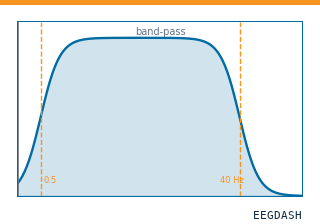 Preprocess EEG and create windowsFilter, resample, epoch — and persist the windowed dataset.
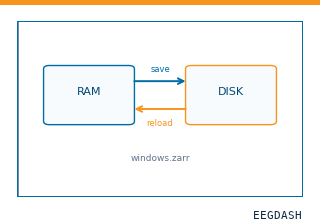 Save and reload prepared dataCache a windowed dataset to disk and reattach it without recompute.
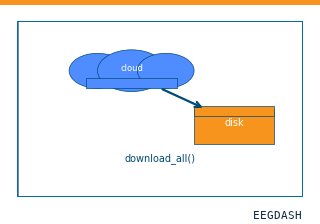 Download a dataset locallyPrefetch BIDS files to a local cache and validate the layout.
Swap any load_dataset(...) call for nm000385 to reproduce the tutorial on this dataset.
Citation
Paolo Detti (2020). Siena Scalp EEG Database: video-EEG monitoring of 14 adults with epilepsy (47 annotated seizures). 10.82901/nemar.nm000385
Provenance
¹Contributed to nemar in BIDS format.
²Curated & ingested by the EEGDash catalog; see CITATION.cff for canonical reference.
³Persistent identifier: 10.82901/nemar.nm000385.
See Also#
eegdash.dataset.EEGDashDataseteegdash.dataset