


NM000435: ieeg dataset, 11 subjects#
Human medial temporal lobe iEEG during a visual working memory task (Boran et al.; DANDI 000575)
Access recordings and metadata through EEGDash.
Citation: Ece Boran, Peter Hilfiker, Lennart Stieglitz, Jan Hohenheim, Peter Klaver, Johannes Sarnthein (2023). Human medial temporal lobe iEEG during a visual working memory task (Boran et al.; DANDI 000575). 10.82901/nemar.nm000435
Modality: ieeg Subjects: 11 Recordings: 13 License: CC-BY-4.0 Source: nemar
Metadata: Complete (100%)
11-participant iEEG dataset — Human medial temporal lobe iEEG during a visual working memory task (Boran et al.; DANDI 000575).
Quickstart#
Install
pip install eegdash
Access the data
from eegdash.dataset import NM000435

dataset = NM000435(cache_dir="./data")
# Get the raw object of the first recording
raw = dataset.datasets[0].raw
print(raw.info)
Filter by subject
dataset = NM000435(cache_dir="./data", subject="01")
Advanced query
dataset = NM000435(
    cache_dir="./data",
    query={"subject": {"$in": ["01", "02"]}},
)
Iterate recordings
for rec in dataset:
    print(rec.subject, rec.raw.info['sfreq'])
If you use this dataset in your research, please cite the original authors.
BibTeX
@dataset{nm000435,
  title = {Human medial temporal lobe iEEG during a visual working memory task (Boran et al.; DANDI 000575)},
  author = {Ece Boran and Peter Hilfiker and Lennart Stieglitz and Jan Hohenheim and Peter Klaver and Johannes Sarnthein},
  doi = {10.82901/nemar.nm000435},
  url = {https://doi.org/10.82901/nemar.nm000435},
}
About This Dataset#
Human medial temporal lobe iEEG during a visual working memory task (Boran et al.; DANDI 000575)
Intracranial recordings from depth electrodes in the medial temporal lobe (amygdala, hippocampus, entorhinal and
parahippocampal cortex) of patients with drug-resistant epilepsy under invasive monitoring at the University Hospital Zurich, while they performed a visual working memory (change detection) task: arrays of 1, 2, 4 or 6 coloured squares were memorised (encoding 0.8 s), held over a delay (retention 0.9 s), and compared with a test array (probe, 2 s; answer “same” or “different”). About 192 trials per session.
- This dataset is a BIDS-iEEG representation of the continuous iEEG series (“LFP”) that the authors released in NWB:
Boran E, Hilfiker P, Stieglitz L, Hohenheim J, Klaver P, Sarnthein J (2023). Dataset of human medial temporal lobe neurons during a visual working memory task (Version 0.231010.1811). DANDI archive. https://doi.org/10.48324/dandi.000575/0.231010.1811 (license CC-BY-4.0) Article: Boran E, Hilfiker P, Stieglitz L, Sarnthein J, Klaver P (2022). Persistent neuronal firing in the medial temporal lobe supports performance and workload of visual working memory in humans. NeuroImage 254:119123. https://doi.org/10.1016/j.neuroimage.2022.119123
View full README
- This dataset is a BIDS-iEEG representation of the continuous iEEG series (“LFP”) that the authors released in NWB:
Boran E, Hilfiker P, Stieglitz L, Hohenheim J, Klaver P, Sarnthein J (2023). Dataset of human medial temporal lobe neurons during a visual working memory task (Version 0.231010.1811). DANDI archive. https://doi.org/10.48324/dandi.000575/0.231010.1811 (license CC-BY-4.0) Article: Boran E, Hilfiker P, Stieglitz L, Sarnthein J, Klaver P (2022). Persistent neuronal firing in the medial temporal lobe supports performance and workload of visual working memory in humans. NeuroImage 254:119123. https://doi.org/10.1016/j.neuroimage.2022.119123
Please cite both. The same release is on GIN (https://gin.g-node.org/USZ_NCH/Human_MTL_units_visual_WM).
Task files (Presentation): https://www.neurobs.com/ex_files/expt_view?id=285. Example NWB reader from the authors: janhohenheim/nwb-example.
Funding (DANDI record): Swiss National Science Foundation 204651; The Kavli Foundation 2586.
Contents
11 participants with iEEG (sub-01, 03, 04, 05, 06, 07, 08, 09, 10, 12, 13), 12 sessions, 13 recordings (sub-10 is split in two runs, see below), 24-64 contacts per recording.
- sub-<label>/ses-<n>/ieeg/ BrainVision (.vhdr/.vmrk/.eeg), IEEE float32, microvolts; channels.tsv; ieeg.json;
events.tsv; electrodes.tsv (MNI coordinates) + coordsystem.json
sub-<label>/sub-<label>_scans.tsv source NWB, recording month, NWB rate attribute, sampling rate used sourcedata/dandi-000575/ all 18 NWB files of the release (date masked, see Privacy); they also hold the
single-unit spike times and waveforms, which are not converted (see below). sourcedata/sourcedata_provenance.json: DANDI asset id, original DANDI SHA-256 and SHA-256 of the masked copy.
Session labels: ses-01 / ses-02 are the session numbers of the NWB identifier (Human_MTL_units_visual_WM_subjectXX_sessionYY).
Not in the BIDS signal tree because their NWB file has no continuous series (units and trials only; kept in sourcedata): sub-02 (ses-01), sub-03 ses-02, sub-11 (ses-01), sub-12 ses-02. sub-02 and sub-11 are therefore not in participants.tsv. For sub-12 ses-01 the release has two NWB files whose iEEG series are identical (sample check) and differ only in the rate attribute (obj-1h9ryn9: 0.00025; obj-p4v231: 32000); obj-1h9ryn9 was converted.
In both of these files the iEEG series has 63 columns but only 32 distinct contacts: the series’ electrode reference lists 31 contacts twice (AHL2-AHL8, AL1-AL8, ECL1-ECL8, PHR1-PHR8), and the two columns of each repeated contact are identical over the whole series (checked sample by sample by the conversion script, which stops otherwise). Each contact is written once, so sub-12 has 32 channels; the dropped source columns are listed in the conversion report (conversion_report: dropped_duplicate_cols). The NWB files in sourcedata are unchanged.
Why this is a derivative dataset
The recordings were made with a Neuralynx ATLAS system (hardware passband 1-8000 Hz, NWB electrodes.filtering). The authors exported them through FieldTrip MATLAB files; 9 of the 12 sessions (10 of 13 recordings) are at 4 kHz, i.e. downsampled by the authors (the method is not documented), and sub-10 was concatenated from two parts. The dataset is therefore labelled DatasetType “derivative”. sub-04, sub-07 and sub-13 are at 32 kHz.
Sampling rate: the NWB ‘rate’ attribute is wrong in most files (please read)
Of the 13 NWB files with a continuous series, 11 store rate = 32000 Hz, one stores 0.00025 (a sample period stored as a rate; the authors’ converter code passes rate=0.00025, i.e. 4 kHz) and one (sub-10) stores explicit timestamps. We set the rate per recording from three independent checks:
the 50 Hz mains peak (Switzerland): its position in cycles/sample gives 4000 Hz for sub-01, 03, 05, 06, 08 (both sessions), 09, 10 and 12, and 32000 Hz for sub-04, 07 and 13;
coverage: at the chosen rate each series covers all trial, response and spike times of its NWB file (at 32 kHz the 4 kHz series would end long before the task does);
sub-10 stores explicit timestamps with a 0.25 ms step (4 kHz).
The rate used and the rate attribute found are listed for every recording in scans.tsv (sampling_frequency_used, source_rate_attribute). The conversion script re-checks 1 for every file and stops if the evidence disagrees.
Amplitude unit: the NWB says unit “volts” with conversion 1, but the stored numbers are microvolts (median channel SD 4-60 for the 4 kHz series; the authors’ converter writes the FieldTrip matrix unscaled while it scales the spike waveforms from microvolts by 1e-6). We wrote the stored values as microvolts, unchanged apart from float32 rounding.
No filtering, resampling, re-referencing or cropping was done by this conversion; the only channel change is the removal of the exact duplicate columns of sub-12 described above. sub-10: the NWB timestamps restart once (sample 2,013,312: from 503.33 s back to 26.48 s). The authors’ converter joined two recording parts with an offset taken from the trial log and a hand-copied lag; the result is not monotonic, so the true position of part 2 on the task clock is unknown. Part 1 is run-1 (with the 71 trials that fall inside it, plus their epochs and responses); part 2 is run-2, without events. All trials remain in the NWB file in sourcedata. sub-12 ses-01: the 4 kHz series lasts 2806 s, longer than the 191 trials of this file (last trial ends at 1406 s); the release does not say what the remaining part contains (the ses-02 trials are in a separate NWB without iEEG and we did not assume a common clock).
Channels and electrodes
Channel names are the authors’ contact labels (e.g. AHL1-AHL8 = left anterior hippocampus electrode, contacts 1-8; AL/AR amygdala, ECL/ECR entorhinal cortex, PHL/PHR parahippocampal cortex). Reference: “Common intracranial reference” (NWB). channels.tsv/electrodes.tsv column soz = contact inside the seizure onset zone (NWB is_inside_soz). electrodes.tsv: MNI coordinates (mm) and the authors’ Brainnetome anatomical label. The NWB stores the coordinates in the NWB axis convention (x = -MNI y, y = -MNI z, z = MNI x, as written in the authors’ converter); we converted them back. The MNI template is not specified in the release (coordsystem “Other”).
Events
events.tsv rows: trial (start to end of each trial; set_size; solution same/different), the trial periods fixation, memory (encoding), retention and probe (intervals/epochs), and response (button press: same/different). onset is the NWB time minus the time of the first sample of the series. source_table/source_row_id point back to the NWB.
Not converted
Single units (spike times, mean/SD waveforms, observation intervals) are in the NWB files in sourcedata/ unchanged; no BIDS derivative was made from them.
Same participants in other public releases
The authors’ conversion metadata (janhohenheim/usz-neuro-conversion, in/metadata/participants.csv) links 7 participants of this release to their verbal working memory release (GIN; NEMAR nm000363, OpenNeuro ds004752) and/or the fear-video release (OpenNeuro ds003374 / DANDI 000576). See participants.tsv same_participant_in. These are different tasks and different recordings; no data are duplicated.
Privacy (review 2026-10-08)
All string attributes and datasets of the 18 NWB files were listed. They contain: subject numbers, age, sex, handedness, pathology, electrode lists, contact labels, anatomical labels, institution/lab, the experimenter (author), the task description and the session start date-times. The session dates are real recording dates, so: in the sourcedata copies the day of session_start_time and timestamps_reference_time is set to 01 (year, month and time of day kept), and the dates in the file names are masked the same way; BIDS files carry only the recording month (scans.tsv). No names, birth dates or hospital IDs were found in the NWB files. The authors’ public conversion repository holds hospital patient numbers; the hospital therefore keeps a key, and none of those numbers is copied here.
Ethics
Verbatim from Boran E, Hilfiker P, Stieglitz L, Sarnthein J, Klaver P (2022). Persistent neuronal firing in the medial temporal lobe supports performance and workload of visual working memory in humans. NeuroImage 254:119123. https://doi.org/10.1016/j.neuroimage.2022.119123, section “Ethics statement”:
The study was approved by the institutional ethics review board (Kantonale Ethikkommission Zürich, PB-2016-02055) and all participants gave written informed consent.
NEMAR Metadata#
[](https://doi.org/10.82901/nemar.nm000435) Human medial temporal lobe iEEG during a visual working memory task (Boran et al.; DANDI 000575) ================================================================================================= Overview ——– Intracranial recordings from depth electrodes in the medial temporal lobe (amygdala, hippocampus, entorhinal and parahippocampal cortex) of patients with drug-resistant epilepsy under invasive monitoring at the University Hospital Zurich, while they performed a visual working memory (change detection) task: arrays of 1, 2, 4 or 6 coloured squares were memorised (encoding 0.8 s), held over a delay (retention 0.9 s), and compared with a test array (probe, 2 s; answer “same” or “different”). About 192 trials per session. This dataset is a BIDS-iEEG representation of the continuous iEEG series (“LFP”) that the authors released in NWB:
Boran E, Hilfiker P, Stieglitz L, Hohenheim J, Klaver P, Sarnthein J (2023). Dataset of human medial temporal lobe neurons during a visual working memory task (Version 0.231010.1811). DANDI archive. https://doi.org/10.48324/dandi.000575/0.231010.1811 (license CC-BY-4.0) Article: Boran E, Hilfiker P, Stieglitz L, Sarnthein J, Klaver P (2022). Persistent neuronal firing in the medial temporal lobe supports performance and workload of visual working memory in humans. NeuroImage 254:119123. https://doi.org/10.1016/j.neuroimage.2022.119123
Please cite both. The same release is on GIN (https://gin.g-node.org/USZ_NCH/Human_MTL_units_visual_WM). Task files (Presentation): https://www.neurobs.com/ex_files/expt_view?id=285. Example NWB reader from the authors: janhohenheim/nwb-example. Funding (DANDI record): Swiss National Science Foundation 204651; The Kavli Foundation 2586. Contents ——– 11 participants with iEEG (sub-01, 03, 04, 05, 06, 07, 08, 09, 10, 12, 13), 12 sessions, 13 recordings (sub-10 is split in two runs, see below), 24-64 contacts per recording.
- sub-<label>/ses-<n>/ieeg/ BrainVision (.vhdr/.vmrk/.eeg), IEEE float32, microvolts; channels.tsv; ieeg.json;
events.tsv; electrodes.tsv (MNI coordinates) + coordsystem.json
sub-<label>/sub-<label>_scans.tsv source NWB, recording month, NWB rate attribute, sampling rate used sourcedata/dandi-000575/ all 18 NWB files of the release (date masked, see Privacy); they also hold the
single-unit spike times and waveforms, which are not converted (see below). sourcedata/sourcedata_provenance.json: DANDI asset id, original DANDI SHA-256 and SHA-256 of the masked copy.
Session labels: ses-01 / ses-02 are the session numbers of the NWB identifier (Human_MTL_units_visual_WM_subjectXX_sessionYY). Not in the BIDS signal tree because their NWB file has no continuous series (units and trials only; kept in sourcedata): sub-02 (ses-01), sub-03 ses-02, sub-11 (ses-01), sub-12 ses-02. sub-02 and sub-11 are therefore not in participants.tsv. For sub-12 ses-01 the release has two NWB files whose iEEG series are identical (sample check) and differ only in the rate attribute (obj-1h9ryn9: 0.00025; obj-p4v231: 32000); obj-1h9ryn9 was converted. In both of these files the iEEG series has 63 columns but only 32 distinct contacts: the series’ electrode reference lists 31 contacts twice (AHL2-AHL8, AL1-AL8, ECL1-ECL8, PHR1-PHR8), and the two columns of each repeated contact are identical over the whole series (checked sample by sample by the conversion script, which stops otherwise). Each contact is written once, so sub-12 has 32 channels; the dropped source columns are listed in the conversion report (conversion_report: dropped_duplicate_cols). The NWB files in sourcedata are unchanged. Why this is a derivative dataset ——————————– The recordings were made with a Neuralynx ATLAS system (hardware passband 1-8000 Hz, NWB electrodes.filtering). The authors exported them through FieldTrip MATLAB files; 9 of the 12 sessions (10 of 13 recordings) are at 4 kHz, i.e. downsampled by the authors (the method is not documented), and sub-10 was concatenated from two parts. The dataset is therefore labelled DatasetType “derivative”. sub-04, sub-07 and sub-13 are at 32 kHz. Sampling rate: the NWB ‘rate’ attribute is wrong in most files (please read) ————————————————————————- Of the 13 NWB files with a continuous series, 11 store rate = 32000 Hz, one stores 0.00025 (a sample period stored as a rate; the authors’ converter code passes rate=0.00025, i.e. 4 kHz) and one (sub-10) stores explicit timestamps. We set the rate per recording from three independent checks:
the 50 Hz mains peak (Switzerland): its position in cycles/sample gives 4000 Hz for sub-01, 03, 05, 06, 08 (both sessions), 09, 10 and 12, and 32000 Hz for sub-04, 07 and 13;
coverage: at the chosen rate each series covers all trial, response and spike times of its NWB file (at 32 kHz the 4 kHz series would end long before the task does);
sub-10 stores explicit timestamps with a 0.25 ms step (4 kHz).
The rate used and the rate attribute found are listed for every recording in scans.tsv (sampling_frequency_used, source_rate_attribute). The conversion script re-checks 1 for every file and stops if the evidence disagrees. Amplitude unit: the NWB says unit “volts” with conversion 1, but the stored numbers are microvolts (median channel SD 4-60 for the 4 kHz series; the authors’ converter writes the FieldTrip matrix unscaled while it scales the spike waveforms from microvolts by 1e-6). We wrote the stored values as microvolts, unchanged apart from float32 rounding. No filtering, resampling, re-referencing or cropping was done by this conversion; the only channel change is the removal of the exact duplicate columns of sub-12 described above. sub-10: the NWB timestamps restart once (sample 2,013,312: from 503.33 s back to 26.48 s). The authors’ converter joined two recording parts with an offset taken from the trial log and a hand-copied lag; the result is not monotonic, so the true position of part 2 on the task clock is unknown. Part 1 is run-1 (with the 71 trials that fall inside it, plus their epochs and responses); part 2 is run-2, without events. All trials remain in the NWB file in sourcedata. sub-12 ses-01: the 4 kHz series lasts 2806 s, longer than the 191 trials of this file (last trial ends at 1406 s); the release does not say what the remaining part contains (the ses-02 trials are in a separate NWB without iEEG and we did not assume a common clock). Channels and electrodes ———————– Channel names are the authors’ contact labels (e.g. AHL1-AHL8 = left anterior hippocampus electrode, contacts 1-8; AL/AR amygdala, ECL/ECR entorhinal cortex, PHL/PHR parahippocampal cortex). Reference: “Common intracranial reference” (NWB). channels.tsv/electrodes.tsv column soz = contact inside the seizure onset zone (NWB is_inside_soz). electrodes.tsv: MNI coordinates (mm) and the authors’ Brainnetome anatomical label. The NWB stores the coordinates in the NWB axis convention (x = -MNI y, y = -MNI z, z = MNI x, as written in the authors’ converter); we converted them back. The MNI template is not specified in the release (coordsystem “Other”). Events —— events.tsv rows: trial (start to end of each trial; set_size; solution same/different), the trial periods fixation, memory (encoding), retention and probe (intervals/epochs), and response (button press: same/different). onset is the NWB time minus the time of the first sample of the series. source_table/source_row_id point back to the NWB. Not converted ————- Single units (spike times, mean/SD waveforms, observation intervals) are in the NWB files in sourcedata/ unchanged; no BIDS derivative was made from them. Same participants in other public releases —————————————— The authors’ conversion metadata (janhohenheim/usz-neuro-conversion, in/metadata/participants.csv) links 7 participants of this release to their verbal working memory release (GIN; NEMAR nm000363, OpenNeuro ds004752) and/or the fear-video release (OpenNeuro ds003374 / DANDI 000576). See participants.tsv same_participant_in. These are different tasks and different recordings; no data are duplicated. Privacy (review 2026-10-08) ————————— All string attributes and datasets of the 18 NWB files were listed. They contain: subject numbers, age, sex, handedness, pathology, electrode lists, contact labels, anatomical labels, institution/lab, the experimenter (author), the task description and the session start date-times. The session dates are real recording dates, so: in the sourcedata copies the day of session_start_time and timestamps_reference_time is set to 01 (year, month and time of day kept), and the dates in the file names are masked the same way; BIDS files carry only the recording month (scans.tsv). No names, birth dates or hospital IDs were found in the NWB files. The authors’ public conversion repository holds hospital patient numbers; the hospital therefore keeps a key, and none of those numbers is copied here. ## Ethics Verbatim from Boran E, Hilfiker P, Stieglitz L, Sarnthein J, Klaver P (2022). Persistent neuronal firing in the medial temporal lobe supports performance and workload of visual working memory in humans. NeuroImage 254:119123. https://doi.org/10.1016/j.neuroimage.2022.119123, section “Ethics statement”: > The study was approved by the institutional ethics review board (Kantonale Ethikkommission Zürich, PB-2016-02055) and all participants gave written informed consent.
License: CC-BY-4.0
Authors:
Ece Boran
Peter Hilfiker
Lennart Stieglitz
Jan Hohenheim
Peter Klaver
… and 1 more
Versions:
Version |
DOI |
Released |
|---|---|---|
|
Cohort#
Dataset Statistics#
Age distribution by gender (n=11, range 18–56 yr, mean 33.5 yr)
Sex composition
Channel counts (ch)
Sampling frequencies (Hz)
Total recording duration: 5 h 34 min
Signal · Electrodes & live trace#
Live trace viewer — sub-01 · ses-01 · task-visualwm
Showing one representative recording out of
11 subjects and 13 recordings in this dataset.
Browse the full set on OpenNeuro;
drop any other _ieeg.{set,edf,bdf,vhdr} file onto the
viewer (or pass ?ieeg=<url>) to inspect it.
Electrode layout — iEEG · 64 sensors — 64 channels
NEMAR Processing Statistics#
The plots below are generated by NEMAR’s automated EEG pipeline. The histogram shows pipeline success for data cleaning and ICA decomposition, the percentage of data frames and EEG channels retained after artefact removal, line noise per channel (RMS, dB), and the age/gender distribution of participants.

HED event descriptors word cloud

Manifest#
File Explorer#
Browse the BIDS file structure of this dataset. Records are fetched on demand from the EEGDash catalog the first time you open the explorer.
Full dataset metadata table
Dataset ID |
|
Title |
Human medial temporal lobe iEEG during a visual working memory task (Boran et al.; DANDI 000575) |
Author (year) |
— |
Canonical |
— |
Importable as |
|
Year |
2023 |
Authors |
Ece Boran, Peter Hilfiker, Lennart Stieglitz, Jan Hohenheim, Peter Klaver, Johannes Sarnthein |
License |
CC-BY-4.0 |
Citation / DOI |
|
Source links |
OpenNeuro | NeMAR | Source URL |
Copy-paste BibTeX
@dataset{nm000435,
  title = {Human medial temporal lobe iEEG during a visual working memory task (Boran et al.; DANDI 000575)},
  author = {Ece Boran and Peter Hilfiker and Lennart Stieglitz and Jan Hohenheim and Peter Klaver and Johannes Sarnthein},
  doi = {10.82901/nemar.nm000435},
  url = {https://doi.org/10.82901/nemar.nm000435},
}
API Reference#
eegdash.datasetEEGDashDataset- class eegdash.dataset.NM000435(cache_dir: str, query: dict | None = None, s3_bucket: str | None = None, **kwargs)[source]#
Human medial temporal lobe iEEG during a visual working memory task (Boran et al.; DANDI 000575)
- Study:
nm000435(NeMAR)- Author (year):
—
- Canonical:
—
Also importable as:
NM000435.Modality:
ieeg; Subject type:Unknown. Subjects: 11; recordings: 13; tasks: 1.- Parameters:
cache_dir (str | Path) – Directory where data are cached locally.
query (dict | None) – Additional MongoDB-style filters to AND with the dataset selection. Must not contain the key
dataset.s3_bucket (str | None) – Base S3 bucket used to locate the data.
**kwargs (dict) – Additional keyword arguments forwarded to
EEGDashDataset.
- data_dir#
Local dataset cache directory (
cache_dir / dataset_id).- Type:
Path
Notes
Each item is a recording; recording-level metadata are available via
dataset.description.querysupports MongoDB-style filters on fields inALLOWED_QUERY_FIELDSand is combined with the dataset filter. Dataset-specific caveats are not provided in the summary metadata.References
OpenNeuro dataset: https://openneuro.org/datasets/nm000435 NeMAR dataset: https://nemar.org/dataexplorer/detail?dataset_id=nm000435 DOI: https://doi.org/10.82901/nemar.nm000435
Examples
>>> from eegdash.dataset import NM000435
>>> dataset = NM000435(cache_dir="./data")
>>> recording = dataset[0]
>>> raw = recording.load()
- __init__(cache_dir: str, query: dict | None = None, s3_bucket: str | None = None, **kwargs)[source]#
- save(path: str, overwrite: bool = False, offset: int = 0)[source]#
Save datasets to files by creating one subdirectory for each dataset:
path/
    0/
        0-raw.fif | 0-epo.fif
        description.json
        raw_preproc_kwargs.json (if raws were preprocessed)
        window_kwargs.json (if this is a windowed dataset)
        window_preproc_kwargs.json  (if windows were preprocessed)
        target_name.json (if target_name is not None and dataset is raw)
    1/
        1-raw.fif | 1-epo.fif
        description.json
        raw_preproc_kwargs.json (if raws were preprocessed)
        window_kwargs.json (if this is a windowed dataset)
        window_preproc_kwargs.json  (if windows were preprocessed)
        target_name.json (if target_name is not None and dataset is raw)
- Parameters:
path (str) –
- Directory in which subdirectories are created to store
-raw.fif | -epo.fif and .json files to.
overwrite (bool) – Whether to delete old subdirectories that will be saved to in this call.
offset (int) – If provided, the integer is added to the id of the dataset in the concat. This is useful in the setting of very large datasets, where one dataset has to be processed and saved at a time to account for its original position.
BaseDataset from braindecode — windowed via create_windows_from_events.braindecodeDataLoader; supports parallel workers and on-the-fly augmentations.pytorch Find datasets with the EEGDash APIQuery the catalogue, filter by task or modality, list candidates.
 Load one EEG recordingResolve a single record to an MNE Raw with channels and events.
 EEG recording to PyTorch DataLoaderWrap braindecode windows in a DataLoader for model training.
 Preprocess EEG and create windowsFilter, resample, epoch — and persist the windowed dataset.
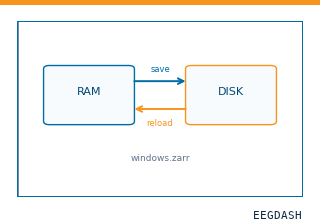 Save and reload prepared dataCache a windowed dataset to disk and reattach it without recompute.
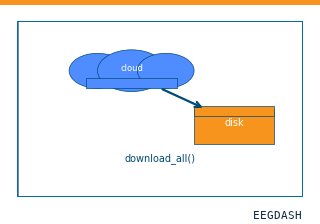 Download a dataset locallyPrefetch BIDS files to a local cache and validate the layout.
Swap any load_dataset(...) call for nm000435 to reproduce the tutorial on this dataset.
Citation
Ece Boran, Peter Hilfiker, Lennart Stieglitz, Jan Hohenheim, Peter Klaver, … (2023). Human medial temporal lobe iEEG during a visual working memory task (Boran et al.; DANDI 000575). 10.82901/nemar.nm000435
Provenance
¹Contributed to nemar in BIDS format.
²Curated & ingested by the EEGDash catalog; see CITATION.cff for canonical reference.
³Persistent identifier: 10.82901/nemar.nm000435.
See Also#
eegdash.dataset.EEGDashDataseteegdash.dataset