


NM000354: ieeg dataset, 20 subjects#
Arithmetic calculations measured by intracranial EEG in the human brain
Access recordings and metadata through EEGDash.
Citation: M. Kalinova, B. Kerkova, A. Kalina, V. Pytelova, J. Amlerova, R. Janca, P. Jezdik, D. Krysl, M. Kudr, P. Krsek, P. Marusic, J. Hammer (2026). Arithmetic calculations measured by intracranial EEG in the human brain. 10.82901/nemar.nm000354
Modality: ieeg Subjects: 20 Recordings: 20 License: CC-BY-4.0 Source: nemar
Metadata: Complete (100%)
20-participant iEEG dataset — Arithmetic calculations measured by intracranial EEG in the human brain.
Quickstart#
Install
pip install eegdash
Access the data
from eegdash.dataset import NM000354

dataset = NM000354(cache_dir="./data")
# Get the raw object of the first recording
raw = dataset.datasets[0].raw
print(raw.info)
Filter by subject
dataset = NM000354(cache_dir="./data", subject="01")
Advanced query
dataset = NM000354(
    cache_dir="./data",
    query={"subject": {"$in": ["01", "02"]}},
)
Iterate recordings
for rec in dataset:
    print(rec.subject, rec.raw.info['sfreq'])
If you use this dataset in your research, please cite the original authors.
BibTeX
@dataset{nm000354,
  title = {Arithmetic calculations measured by intracranial EEG in the human brain},
  author = {M. Kalinova and B. Kerkova and A. Kalina and V. Pytelova and J. Amlerova and R. Janca and P. Jezdik and D. Krysl and M. Kudr and P. Krsek and P. Marusic and J. Hammer},
  doi = {10.82901/nemar.nm000354},
  url = {https://doi.org/10.82901/nemar.nm000354},
}
About This Dataset#
IEEG006 arithmetic SEEG - deposited as a DERIVATIVE, not raw.
Intracranial (stereo-EEG) recordings from 20 epilepsy surgery candidates performing a sequential three-operand arithmetic
task, as deposited by the authors on Zenodo (Hammer J, Marusic P (2026), “Dataset: arithmetic calculations measured by intracranial EEG in the human brain”, v4, doi:10.5281/zenodo.19550714, CC-BY-4.0), supporting Kalinova et al. 2026, Sci Rep 16:5587, doi:10.1038/s41598-026-36122-z.
The deposited data are preprocessed, bipolar-referenced epochs, so this is a BIDS derivative dataset.
Source publication (Kalinova et al. 2026, Sci Rep, doi:10.1038/s41598-026-36122-z) describes acquisition
at 2048 Hz with DIXI SEEG electrodes and a Natus Quantum system, then LOW-PASS FILTERING, DOWNSAMPLING to
512 Hz, BIPOLAR RE-REFERENCING and EPOCHING (deposited epochs: -2..+7 s around the first operand) before deposit. The
deposited trials_P*.mat arrays match exactly this processed/epoched form (512 Hz, bipolar channel names
like J1~J2, 4609-sample windows spanning -2..+7 s in all 20 files), not acquisition-raw signal. (The publication’s
Methods extract -2..+9 s trials for its own analyses; the deposited files hold -2..+7 s, source D.time.)
Per campaign policy, this is therefore placed under derivatives/source-preprocessed-seeg/, not sourcedata-
View full README
The deposited data are preprocessed, bipolar-referenced epochs, so this is a BIDS derivative dataset.
Source publication (Kalinova et al. 2026, Sci Rep, doi:10.1038/s41598-026-36122-z) describes acquisition
at 2048 Hz with DIXI SEEG electrodes and a Natus Quantum system, then LOW-PASS FILTERING, DOWNSAMPLING to
512 Hz, BIPOLAR RE-REFERENCING and EPOCHING (deposited epochs: -2..+7 s around the first operand) before deposit. The
deposited trials_P*.mat arrays match exactly this processed/epoched form (512 Hz, bipolar channel names
like J1~J2, 4609-sample windows spanning -2..+7 s in all 20 files), not acquisition-raw signal. (The publication’s
Methods extract -2..+9 s trials for its own analyses; the deposited files hold -2..+7 s, source D.time.)
Per campaign policy, this is therefore placed under derivatives/source-preprocessed-seeg/, not sourcedata-
as-raw BIDS.
Cohort
20 subjects (eight females, average age 36.2 years, range 18-63) with pharmacoresistant epilepsy, implanted with stereo-EEG (SEEG) electrodes during pre-surgical evaluation with iEEG video monitoring; implantation typically lasted 7-14 days, and “The implantation scheme depended solely on the clinical hypothesis” (Kalinova et al. 2026, Sci Rep 16:5587, doi:10.1038/s41598-026-36122-z, Methods “Participants”).
Recording centre: Department of Neurology, Second Faculty of Medicine, Charles University and Motol University Hospital, Prague, Czechia.
Electrodes and system: “iEEG data were recorded by SEEG electrodes (DIXI Medical) sampled at 2048 Hz by Natus Quantum amplifiers, with the reference and the ground electrodes placed at the depth of the white matter” (same, Methods).
Channels in this dataset: 1518 bipolar SEEG channels in total (32-116 per subject); 1925 trials (49-123 per subject).
Per-participant age, sex, handedness, implantation site, electrode/contact counts and task success rate from the publication’s Supplementary Table T1 are in
participants.tsv/participants.json(added after the original conversion; the “Channel/value units” paragraph below describes the deposited data files, which carry no demographics).
Task
Sequential arithmetic equations, e.g. 6 + 3 - 2 = 8 (yes/no): fixation cross (a star) for 1.05-1.55 s, then operand N1, operator O1 (plus or minus), operand N2, operator O2, operand N3, equals sign and proposed result; “All stimuli were presented for 1.05 s, with the exception of the fixation period”. The result was correct in 50% of trials, otherwise off by one. Answer within 5 s on a Logitech F310 gamepad: green = true, red = false, blue = don’t know; feedback followed each answer.
“Easy” equations: results not exceeding 10, operands as Arabic numbers, dice symbols, fingers or number words (one format per equation). “Difficult” equations: results greater than 10, Arabic numbers only. Run in separate sessions (easy about 6 min, difficult about 2 min), 4-5 sessions, at least 40 equations per stimulus category.
Presentation with PsychToolBox 3.0 on a PC screen about 1.5 m away; stimulus onsets were synchronized with the iEEG through a parallel-port trigger channel (Kalinova et al. 2026, Sci Rep 16:5587, doi:10.1038/s41598-026-36122-z, Methods “Sequential arithmetic equations task”).
Source per-trial table D.stimuliValues (N1, N2, N3, O1, O2, RT in s, stimType = easy|diff _ ARAB|DICE|FING|WORD) is described in the data README but is not exported to events.tsv (see below).
Files
sub-P<n>/ieeg/*_ieeg.vhdr/.vmrk/.eeg: all epochs of the subject written back-to-back (BrainVision);RecordingTypeisepochedwithEpochLength9.001953125 s (4609 samples at 512 Hz).*_events.tsv: one row per epoch;onset= epoch start in the file; the first operand N1 appears 2.0 s afteronset(sourceD.timeruns from -2.0 to +7.0 s, 0 s = N1 onset);trial_type= trial-NNN in source order.*_channels.tsv: bipolar channels namedA~B(sourceD.channels_names).*_electrodes.tsv/*_coordsystem.json: sourceD.channels_MNI, the MNI coordinates of the centre of each bipolar pair. The source ROI assignment per channel (D.channels_ROI) is not exported.*_ieeg.json: acquisition system, filters and reference as stated by the publication and the data README.
Preprocessing applied by the source
Publication (Kalinova et al. 2026, Sci Rep 16:5587, doi:10.1038/s41598-026-36122-z, Methods “iEEG data recording and preprocessing”): contacts in the seizure onset or irritative zones rejected; low-pass 8th order Chebyshev Type I IIR (cutoff 400 Hz, zero phase) and downsampling to 512 Hz; broken channels with artefacts rejected after visual inspection; bipolar referencing between every contact and its closest neighbour on each shank, starting from the deepest contact; high-pass 0.1 Hz (Butterworth, 6th order, zero phase); notch at 50 Hz and harmonics (100, 150 Hz; e.g. 48-52 Hz stop band, Butterworth, 6th order, zero phase). The publication also rejected detected inter-ictal spikes (0.5 s windows) for its analyses; whether that rejection is reflected in the deposited epochs is not stated.
Data README (Zenodo raw_data.zip, trialsData_readme): “Raw iEEG data means that they were bipolar referenced, high-pass filtered (at 0.1 Hz) and notch filtered at 50 Hz and harmonics.”
All of the above is recorded in
SoftwareFiltersandiEEGReferenceof each*_ieeg.jsonand inGeneratedBy.*_channels.tsv:low_cutoff0.1 Hz = the publication’s and data README’s high-pass;high_cutoff400 Hz = the publication’s anti-aliasing low-pass, applied at 2048 Hz before downsampling (the released 512 Hz signal has a Nyquist frequency of 256 Hz).
Known caveats
Everything in the original notes is kept in this README (first paragraphs and the sections below); only the epoch window in the first paragraph was corrected from “-2..+9s” to the files’ -2..+7 s.
The *_ieeg.json
Manufacturerpreviously read “Brain Products” (a BrainVision writer default); it now reads Natus (Quantum).The coordinate system label MNI152NLin2009cAsym was chosen at conversion; the source says only that the MRI scans were normalized to MNI space with SPM12.
trial_typecarries no stimulus content: equations, difficulty/format, reaction times and correctness are only in the source table.
Each subject’s trials are concatenated back-to-back along time to form a single BrainVision file so that mne-bids can write it; this is an explicit non-physiological concatenation for storage, NOT a claim of a continuous recording. events.tsv onsets mark each trial boundary in the concatenated series; trial_type is only a positional index (trial-NNN), not stimulus content, because the source MATLAB ‘stimuliValues’ table (per-trial equation/difficulty/correctness/response) could not be decoded from the HDF5-backed MAT structure with the tools available in this pass and is NOT fabricated here. It remains available in sourcedata/raw_data.zip for a future pass with a MATLAB-table-capable reader.
Channel/value units: the source does not state physical units for ‘trials’; values are treated as unconfirmed microvolt-scale for file-writer purposes only. electrodes.tsv uses source channels_MNI coordinates (mm assumed by MNI convention). Participant age/sex are reported only at the cohort level in the source publication (20 adults, 8 female, mean 36.2, range 18-63); per-participant demographics are NOT in the deposited files and are therefore left n/a rather than invented.
Known identical-content release: Zenodo 18245516 raw_data.zip has the same size and MD5 as this 19550714 v4 copy and must not be deposited again. Zenodo 16778665 is an older, different-size archive and is excluded from this deposit.
Ethics
Ethics statement (verbatim from the source publication, Kalinova et al. 2026, Sci Rep 16:5587):
Subjects participated voluntarily in the study after signing informed consent. The study was approved by the ethical committee of Motol University Hospital (EK-1340.27/20), Prague, Czechia.
All ethical regulations relevant to human research participants were performed in accordance with the Declaration of Helsinki.
Funding
“The research was supported by ERDF-Project Brain Dynamics, No. CZ.02.01.01/00/22_008/0004643, and Grant Agency of Charles University (GA UK, Grant No. 272221).” (Kalinova et al. 2026, Sci Rep 16:5587, doi:10.1038/s41598-026-36122-z, Funding)
How to load
from mne_bids import BIDSPath, read_raw_bids
import mne, pandas as pd
bp = BIDSPath(root=".", subject="P1", task="arithmetic", datatype="ieeg")
raw = read_raw_bids(bp)
ev = pd.read_csv(bp.copy().update(suffix="events", extension=".tsv").fpath, sep="\t")
events = (ev["sample"].to_numpy()[:, None] * [1, 0, 0]) + [[0, 0, 1]]
epochs = mne.Epochs(raw, events, tmin=0.0, tmax=4608 / 512, baseline=None)  # one source trial per epoch; N1 at +2.0 s
Citations
Kalinova M, Kerkova B, Kalina A, Pytelova V, Amlerova J, Janca R, Jezdik P, Krysl D, Kudr M, Krsek P, Marusic P, Hammer J (2026). Temporal order of activations and interactions during arithmetic calculations measured by intracranial electrophysiological recordings in the human brain. Scientific Reports 16:5587. doi:10.1038/s41598-026-36122-z
Hammer J, Marusic P (2026). Dataset: arithmetic calculations measured by intracranial EEG in the human brain (v4). Zenodo. doi:10.5281/zenodo.19550714
Analysis code: JiriHammer/SEEG_dataAnalysis
Source and provenance
Zenodo record 19550714 (v4: “iEEG data + published article”; published 2026-04-13; creators Jiri Hammer, Petr Marusic; CC-BY-4.0), file raw_data.zip with trials_P1.mat … trials_P20.mat (MATLAB 7.3, variable D) and the data-structure README.
NEMAR Metadata#
[](https://doi.org/10.82901/nemar.nm000354) IEEG006 arithmetic SEEG - deposited as a DERIVATIVE, not raw. ## Overview Intracranial (stereo-EEG) recordings from 20 epilepsy surgery candidates performing a sequential three-operand arithmetic task, as deposited by the authors on Zenodo (Hammer J, Marusic P (2026), “Dataset: arithmetic calculations measured by intracranial EEG in the human brain”, v4, doi:10.5281/zenodo.19550714, CC-BY-4.0), supporting Kalinova et al. 2026, Sci Rep 16:5587, doi:10.1038/s41598-026-36122-z. The deposited data are preprocessed, bipolar-referenced epochs, so this is a BIDS derivative dataset. Source publication (Kalinova et al. 2026, Sci Rep, doi:10.1038/s41598-026-36122-z) describes acquisition at 2048 Hz with DIXI SEEG electrodes and a Natus Quantum system, then LOW-PASS FILTERING, DOWNSAMPLING to 512 Hz, BIPOLAR RE-REFERENCING and EPOCHING (deposited epochs: -2..+7 s around the first operand) before deposit. The deposited trials_P*.mat arrays match exactly this processed/epoched form (512 Hz, bipolar channel names like J1~J2, 4609-sample windows spanning -2..+7 s in all 20 files), not acquisition-raw signal. (The publication’s Methods extract -2..+9 s trials for its own analyses; the deposited files hold -2..+7 s, source D.time.) Per campaign policy, this is therefore placed under derivatives/source-preprocessed-seeg/, not sourcedata- as-raw BIDS. ## Cohort - 20 subjects (eight females, average age 36.2 years, range 18-63) with pharmacoresistant epilepsy, implanted with
stereo-EEG (SEEG) electrodes during pre-surgical evaluation with iEEG video monitoring; implantation typically lasted 7-14 days, and “The implantation scheme depended solely on the clinical hypothesis” (Kalinova et al. 2026, Sci Rep 16:5587, doi:10.1038/s41598-026-36122-z, Methods “Participants”).
Recording centre: Department of Neurology, Second Faculty of Medicine, Charles University and Motol University Hospital, Prague, Czechia.
Electrodes and system: “iEEG data were recorded by SEEG electrodes (DIXI Medical) sampled at 2048 Hz by Natus Quantum amplifiers, with the reference and the ground electrodes placed at the depth of the white matter” (same, Methods).
Channels in this dataset: 1518 bipolar SEEG channels in total (32-116 per subject); 1925 trials (49-123 per subject).
Per-participant age, sex, handedness, implantation site, electrode/contact counts and task success rate from the publication’s Supplementary Table T1 are in participants.tsv / participants.json (added after the original conversion; the “Channel/value units” paragraph below describes the deposited data files, which carry no demographics).
## Task - Sequential arithmetic equations, e.g. 6 + 3 - 2 = 8 (yes/no): fixation cross (a star) for 1.05-1.55 s, then operand N1,
operator O1 (plus or minus), operand N2, operator O2, operand N3, equals sign and proposed result; “All stimuli were presented for 1.05 s, with the exception of the fixation period”. The result was correct in 50% of trials, otherwise off by one. Answer within 5 s on a Logitech F310 gamepad: green = true, red = false, blue = don’t know; feedback followed each answer.
“Easy” equations: results not exceeding 10, operands as Arabic numbers, dice symbols, fingers or number words (one format per equation). “Difficult” equations: results greater than 10, Arabic numbers only. Run in separate sessions (easy about 6 min, difficult about 2 min), 4-5 sessions, at least 40 equations per stimulus category.
Presentation with PsychToolBox 3.0 on a PC screen about 1.5 m away; stimulus onsets were synchronized with the iEEG through a parallel-port trigger channel (Kalinova et al. 2026, Sci Rep 16:5587, doi:10.1038/s41598-026-36122-z, Methods “Sequential arithmetic equations task”).
Source per-trial table D.stimuliValues (N1, N2, N3, O1, O2, RT in s, stimType = easy|diff _ ARAB|DICE|FING|WORD) is described in the data README but is not exported to events.tsv (see below).
## Files - sub-P<n>/ieeg/*_ieeg.vhdr/.vmrk/.eeg: all epochs of the subject written back-to-back (BrainVision); RecordingType is
epoched with EpochLength 9.001953125 s (4609 samples at 512 Hz).
*_events.tsv: one row per epoch; onset = epoch start in the file; the first operand N1 appears 2.0 s after onset (source D.time runs from -2.0 to +7.0 s, 0 s = N1 onset); trial_type = trial-NNN in source order.
*_channels.tsv: bipolar channels named A~B (source D.channels_names).
*_electrodes.tsv / *_coordsystem.json: source D.channels_MNI, the MNI coordinates of the centre of each bipolar pair. The source ROI assignment per channel (D.channels_ROI) is not exported.
*_ieeg.json: acquisition system, filters and reference as stated by the publication and the data README.
## Preprocessing applied by the source - Publication (Kalinova et al. 2026, Sci Rep 16:5587, doi:10.1038/s41598-026-36122-z, Methods “iEEG data recording and preprocessing”): contacts in the seizure onset or irritative zones
rejected; low-pass 8th order Chebyshev Type I IIR (cutoff 400 Hz, zero phase) and downsampling to 512 Hz; broken channels with artefacts rejected after visual inspection; bipolar referencing between every contact and its closest neighbour on each shank, starting from the deepest contact; high-pass 0.1 Hz (Butterworth, 6th order, zero phase); notch at 50 Hz and harmonics (100, 150 Hz; e.g. 48-52 Hz stop band, Butterworth, 6th order, zero phase). The publication also rejected detected inter-ictal spikes (0.5 s windows) for its analyses; whether that rejection is reflected in the deposited epochs is not stated.
Data README (Zenodo raw_data.zip, trialsData_readme): “Raw iEEG data means that they were bipolar referenced, high-pass filtered (at 0.1 Hz) and notch filtered at 50 Hz and harmonics.”
All of the above is recorded in SoftwareFilters and iEEGReference of each *_ieeg.json and in GeneratedBy.
*_channels.tsv: low_cutoff 0.1 Hz = the publication’s and data README’s high-pass; high_cutoff 400 Hz = the publication’s anti-aliasing low-pass, applied at 2048 Hz before downsampling (the released 512 Hz signal has a Nyquist frequency of 256 Hz).
## Known caveats - Everything in the original notes is kept in this README (first paragraphs and the sections below); only the epoch
window in the first paragraph was corrected from “-2..+9s” to the files’ -2..+7 s.
The *_ieeg.json Manufacturer previously read “Brain Products” (a BrainVision writer default); it now reads Natus (Quantum).
The coordinate system label MNI152NLin2009cAsym was chosen at conversion; the source says only that the MRI scans were normalized to MNI space with SPM12.
trial_type carries no stimulus content: equations, difficulty/format, reaction times and correctness are only in the source table.
Each subject’s trials are concatenated back-to-back along time to form a single BrainVision file so that
mne-bids can write it; this is an explicit non-physiological concatenation for storage, NOT a claim of a
continuous recording. events.tsv onsets mark each trial boundary in the concatenated series; trial_type
is only a positional index (trial-NNN), not stimulus content, because the source MATLAB ‘stimuliValues’
table (per-trial equation/difficulty/correctness/response) could not be decoded from the HDF5-backed MAT
structure with the tools available in this pass and is NOT fabricated here. It remains available in
sourcedata/raw_data.zip for a future pass with a MATLAB-table-capable reader.
Channel/value units: the source does not state physical units for ‘trials’; values are treated as
unconfirmed microvolt-scale for file-writer purposes only. electrodes.tsv uses source channels_MNI
coordinates (mm assumed by MNI convention). Participant age/sex are reported only at the cohort level
in the source publication (20 adults, 8 female, mean 36.2, range 18-63); per-participant demographics
are NOT in the deposited files and are therefore left n/a rather than invented.
Known identical-content release: Zenodo 18245516 raw_data.zip has the same size and MD5 as this
19550714 v4 copy and must not be deposited again. Zenodo 16778665 is an older, different-size archive
and is excluded from this deposit.
## Ethics
Ethics statement (verbatim from the source publication, Kalinova et al. 2026, Sci Rep 16:5587):
Subjects participated voluntarily in the study after signing informed consent. The study was
approved by the ethical committee of Motol University Hospital (EK-1340.27/20), Prague, Czechia.
All ethical regulations relevant to human research participants were performed in accordance
with the Declaration of Helsinki.
## Funding
“The research was supported by ERDF-Project Brain Dynamics, No. CZ.02.01.01/00/22_008/0004643, and Grant Agency of Charles
University (GA UK, Grant No. 272221).” (Kalinova et al. 2026, Sci Rep 16:5587, doi:10.1038/s41598-026-36122-z, Funding)
## How to load
`python
from mne_bids import BIDSPath, read_raw_bids
import mne, pandas as pd
bp = BIDSPath(root=".", subject="P1", task="arithmetic", datatype="ieeg")
raw = read_raw_bids(bp)
ev = pd.read_csv(bp.copy().update(suffix="events", extension=".tsv").fpath, sep="\t")
events = (ev["sample"].to_numpy()[:, None] * [1, 0, 0]) + [[0, 0, 1]]
epochs = mne.Epochs(raw, events, tmin=0.0, tmax=4608 / 512, baseline=None)  # one source trial per epoch; N1 at +2.0 s
`
## Citations
- Kalinova M, Kerkova B, Kalina A, Pytelova V, Amlerova J, Janca R, Jezdik P, Krysl D, Kudr M, Krsek P, Marusic P, Hammer J
(2026). Temporal order of activations and interactions during arithmetic calculations measured by intracranial electrophysiological recordings in the human brain. Scientific Reports 16:5587. doi:10.1038/s41598-026-36122-z
Hammer J, Marusic P (2026). Dataset: arithmetic calculations measured by intracranial EEG in the human brain (v4). Zenodo. doi:10.5281/zenodo.19550714
Analysis code: JiriHammer/SEEG_dataAnalysis
## Source and provenance Zenodo record 19550714 (v4: “iEEG data + published article”; published 2026-04-13; creators Jiri Hammer, Petr Marusic; CC-BY-4.0), file raw_data.zip with trials_P1.mat … trials_P20.mat (MATLAB 7.3, variable D) and the data-structure README.
License: CC-BY-4.0
Authors:
Kalinova
Kerkova
Kalina
Pytelova
Amlerova
… and 7 more
Versions:
Version |
DOI |
Released |
|---|---|---|
|
Cohort#
Dataset Statistics#
Age distribution by gender (n=20, range 18–63 yr, mean 36.2 yr)
Sex composition
Channel counts (ch)
Sampling frequencies: 512.0 Hz (n=20 recordings)
Total recording duration: 4 h 48 min
Signal · Electrodes & live trace#
Live trace viewer — sub-P10 · task-arithmetic
Showing one representative recording out of
20 subjects and 20 recordings in this dataset.
Browse the full set on OpenNeuro;
drop any other _ieeg.{set,edf,bdf,vhdr} file onto the
viewer (or pass ?ieeg=<url>) to inspect it.
Electrode layout — iEEG · 55 sensors — 55 channels
NEMAR Processing Statistics#
The plots below are generated by NEMAR’s automated EEG pipeline. The histogram shows pipeline success for data cleaning and ICA decomposition, the percentage of data frames and EEG channels retained after artefact removal, line noise per channel (RMS, dB), and the age/gender distribution of participants.

HED event descriptors word cloud

Manifest#
File Explorer#
Browse the BIDS file structure of this dataset. Records are fetched on demand from the EEGDash catalog the first time you open the explorer.
Full dataset metadata table
Dataset ID |
|
Title |
Arithmetic calculations measured by intracranial EEG in the human brain |
Author (year) |
— |
Canonical |
— |
Importable as |
|
Year |
2026 |
Authors |
|
License |
CC-BY-4.0 |
Citation / DOI |
|
Source links |
OpenNeuro | NeMAR | Source URL |
Copy-paste BibTeX
@dataset{nm000354,
  title = {Arithmetic calculations measured by intracranial EEG in the human brain},
  author = {M. Kalinova and B. Kerkova and A. Kalina and V. Pytelova and J. Amlerova and R. Janca and P. Jezdik and D. Krysl and M. Kudr and P. Krsek and P. Marusic and J. Hammer},
  doi = {10.82901/nemar.nm000354},
  url = {https://doi.org/10.82901/nemar.nm000354},
}
API Reference#
eegdash.datasetEEGDashDataset- class eegdash.dataset.NM000354(cache_dir: str, query: dict | None = None, s3_bucket: str | None = None, **kwargs)[source]#
Arithmetic calculations measured by intracranial EEG in the human brain
- Study:
nm000354(NeMAR)- Author (year):
—
- Canonical:
—
Also importable as:
NM000354.Modality:
ieeg; Subject type:Unknown. Subjects: 20; recordings: 20; tasks: 1.- Parameters:
cache_dir (str | Path) – Directory where data are cached locally.
query (dict | None) – Additional MongoDB-style filters to AND with the dataset selection. Must not contain the key
dataset.s3_bucket (str | None) – Base S3 bucket used to locate the data.
**kwargs (dict) – Additional keyword arguments forwarded to
EEGDashDataset.
- data_dir#
Local dataset cache directory (
cache_dir / dataset_id).- Type:
Path
Notes
Each item is a recording; recording-level metadata are available via
dataset.description.querysupports MongoDB-style filters on fields inALLOWED_QUERY_FIELDSand is combined with the dataset filter. Dataset-specific caveats are not provided in the summary metadata.References
OpenNeuro dataset: https://openneuro.org/datasets/nm000354 NeMAR dataset: https://nemar.org/dataexplorer/detail?dataset_id=nm000354 DOI: https://doi.org/10.82901/nemar.nm000354
Examples
>>> from eegdash.dataset import NM000354
>>> dataset = NM000354(cache_dir="./data")
>>> recording = dataset[0]
>>> raw = recording.load()
- __init__(cache_dir: str, query: dict | None = None, s3_bucket: str | None = None, **kwargs)[source]#
- save(path: str, overwrite: bool = False, offset: int = 0)[source]#
Save datasets to files by creating one subdirectory for each dataset:
path/
    0/
        0-raw.fif | 0-epo.fif
        description.json
        raw_preproc_kwargs.json (if raws were preprocessed)
        window_kwargs.json (if this is a windowed dataset)
        window_preproc_kwargs.json  (if windows were preprocessed)
        target_name.json (if target_name is not None and dataset is raw)
    1/
        1-raw.fif | 1-epo.fif
        description.json
        raw_preproc_kwargs.json (if raws were preprocessed)
        window_kwargs.json (if this is a windowed dataset)
        window_preproc_kwargs.json  (if windows were preprocessed)
        target_name.json (if target_name is not None and dataset is raw)
- Parameters:
path (str) –
- Directory in which subdirectories are created to store
-raw.fif | -epo.fif and .json files to.
overwrite (bool) – Whether to delete old subdirectories that will be saved to in this call.
offset (int) – If provided, the integer is added to the id of the dataset in the concat. This is useful in the setting of very large datasets, where one dataset has to be processed and saved at a time to account for its original position.
BaseDataset from braindecode — windowed via create_windows_from_events.braindecodeDataLoader; supports parallel workers and on-the-fly augmentations.pytorch Find datasets with the EEGDash APIQuery the catalogue, filter by task or modality, list candidates.
 Load one EEG recordingResolve a single record to an MNE Raw with channels and events.
 EEG recording to PyTorch DataLoaderWrap braindecode windows in a DataLoader for model training.
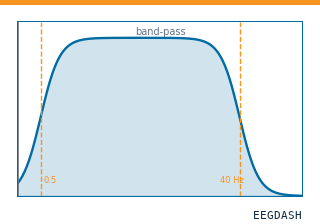 Preprocess EEG and create windowsFilter, resample, epoch — and persist the windowed dataset.
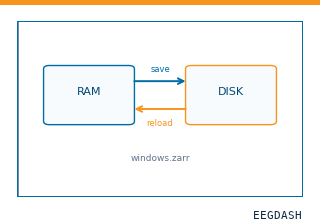 Save and reload prepared dataCache a windowed dataset to disk and reattach it without recompute.
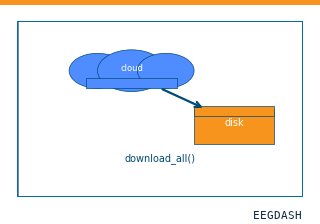 Download a dataset locallyPrefetch BIDS files to a local cache and validate the layout.
Swap any load_dataset(...) call for nm000354 to reproduce the tutorial on this dataset.
Citation
M. Kalinova, B. Kerkova, A. Kalina, V. Pytelova, J. Amlerova, … (2026). Arithmetic calculations measured by intracranial EEG in the human brain. 10.82901/nemar.nm000354
Provenance
¹Contributed to nemar in BIDS format.
²Curated & ingested by the EEGDash catalog; see CITATION.cff for canonical reference.
³Persistent identifier: 10.82901/nemar.nm000354.
See Also#
eegdash.dataset.EEGDashDataseteegdash.dataset