


NM000379: ieeg dataset, 6 subjects#
Rapid coordination of effective learning by the human hippocampus: intracranial EEG during scene recognition with eye tracking
Access recordings and metadata through EEGDash.
Citation: James E. Kragel, Stephan Schuele, Stephen VanHaerents, Joshua M. Rosenow, Joel L. Voss (2021). Rapid coordination of effective learning by the human hippocampus: intracranial EEG during scene recognition with eye tracking. 10.82901/nemar.nm000379
Modality: ieeg Subjects: 6 Recordings: 31 License: CC-BY-4.0 Source: nemar
Metadata: Complete (100%)
6-participant iEEG dataset — Rapid coordination of effective learning by the human hippocampus: intracranial EEG during scene recognition with eye tracking.
Quickstart#
Install
pip install eegdash
Access the data
from eegdash.dataset import NM000379

dataset = NM000379(cache_dir="./data")
# Get the raw object of the first recording
raw = dataset.datasets[0].raw
print(raw.info)
Filter by subject
dataset = NM000379(cache_dir="./data", subject="01")
Advanced query
dataset = NM000379(
    cache_dir="./data",
    query={"subject": {"$in": ["01", "02"]}},
)
Iterate recordings
for rec in dataset:
    print(rec.subject, rec.raw.info['sfreq'])
If you use this dataset in your research, please cite the original authors.
BibTeX
@dataset{nm000379,
  title = {Rapid coordination of effective learning by the human hippocampus: intracranial EEG during scene recognition with eye tracking},
  author = {James E. Kragel and Stephan Schuele and Stephen VanHaerents and Joshua M. Rosenow and Joel L. Voss},
  doi = {10.82901/nemar.nm000379},
  url = {https://doi.org/10.82901/nemar.nm000379},
}
About This Dataset#
Stereo-EEG from 6 patients with medically refractory epilepsy (Northwestern Memorial Hospital Comprehensive Epilepsy
Center, Chicago) performing a scene recognition memory task with concurrent EyeLink eye tracking. Re-packaged in iEEG-BIDS from the authors’ public release (Zenodo record 4728229, v1.0.0, “Data and scripts related to: Rapid coordination of effective learning by the human hippocampus”, CC BY 4.0).
Reference article: Kragel JE, Schuele S, VanHaerents S, Rosenow JM, Voss JL (2021). *Rapid coordination of effective
learning by the human hippocampus.* Science Advances 7(25):eabf7144. https://doi.org/10.1126/sciadv.abf7144
Rapid coordination of effective learning by the human hippocampus — intracranial EEG + eye tracking
Overview
Participants
Six participants (three females; average age 29 years, range 24–38) with medically refractory epilepsy and depth
View full README
Rapid coordination of effective learning by the human hippocampus — intracranial EEG + eye tracking
Overview
Participants
Six participants (three females; average age 29 years, range 24–38) with medically refractory epilepsy and depth
electrodes including the hippocampus (inclusion criterion), implanted for neurosurgical monitoring before elective surgery
(Kragel et al. 2021). Sex and age are reported only at group level, so participants.tsv lists n/a per participant.
The NEMAR dataset on006065 (Kragel et al. 2025, closed-loop theta stimulation) comes from the same laboratory; it is a different study, task and set of recordings.
Clinical summary at cohort level (Kragel et al. 2021, Materials and Methods): average FSIQ (WAIS-IV) 98.3 (range 76-112);
no hippocampal sclerosis on neuroimaging in any participant; etiology typically cortical dysplasia (N = 4); seizure onset
zones within mesial (N = 2), lateral (N = 1) or multiple (N = 1) temporal lobe structures, with additional onset zones in
the cingulate cortex (N = 1) and in nodular heterotopic grey matter lining the temporal and occipital horns of the lateral
ventricle (N = 1). Per participant, participants.tsv gives implanted hemispheres (from the authors’ MNI coordinates:
sub-01 both, sub-02 to sub-04 right, sub-05 and sub-06 left), SEEG channel and contact counts, the sampling rate and the
recording year and month (2019-05 to 2020-06, from the EyeLink EDF headers of the release; the day is not given).
Task
Scene recognition memory task (Presentation 18.0): eight blocks; in each block the participant studied a sequence of 24
images (natural scenes from Microsoft COCO 2017 train images with people, animals or food; eight of each category per
block) followed by a recognition test. Each BIDS run is one block exported by the authors (S<N>_sl_block<k>.m00 →
run-<k>; participant 3 has blocks 1, 2 and 4 only; participants 4–6 fewer blocks, as released). The scene images are
not redistributed (COCO); the image identifiers are in sourcedata/KragelEtal21_SciAdv/data/behav/S*/S*_stim_array*.txt.
Timing (Materials and Methods): at study each scene was shown for 3 s after a 0.5 s central fixation cross, with a 0.8-1.2 s jittered intertrial interval; scenes subtended about 24 x 24 degrees. At test, 24 repeated and 24 novel content-matched scenes were shown in pseudorandom order with gaze-contingent viewing (grey overlay revealed through a Gaussian window, sigma 1.25 degrees, at the gaze position), starting from a cue at the highest- or lowest-salience object (DeepGaze II); the participant pressed a button to indicate whether the scene was repeated or novel. Eye movements were recorded at 500 Hz with an EyeLink 1000 remote system, validated before every study and test phase.
Recording
Nihon Kohden amplifier, 1 or 2 kHz per clinical needs (participants 1–3: 2000 Hz; 4–6: 1000 Hz, from the export headers),
hardware band-pass 0.6–600 Hz. Clinical reference and ground: an implanted strip facing the scalp or a scalp electrode.
AD-TECH depth electrodes (contacts 5–10 mm apart). Participant 6 also has scalp channels (sCz, sPz, typed EEG) and a
Ref3 channel (MISC).
What was converted, and how
Source: Nihon Kohden ASCII exports (
.m00), header \`TimePoints= Channels= BeginSweep[ms]=0.00 SamplingInterval[ms]=… Bins/uV=1.000 Time=…\`, then one row per sample with microvolt values printed with 2 decimals. Each value was written as a BrainVisionINT_32count with resolution 0.01 µV — lossless (the converter asserts that value×100 is an integer for every sample, and the round-trip re-reads every ASCII file).Channel names: as in the export header with the export’s
*flag characters and a split “REF 1” token removed (the same clean-up as the authors’ascii_to_h5.m); the original header token is kept inchannels.tsv:source_label. Thereferencecolumn is the part after the hyphen (e.g.REF1). Participant 3’s exports listJ2-REF1twice (columns with different data positions); both are kept, the repeat is namedJ2-REF1_2(noted instatus_description).The
DC03/DC04channel is the DC input that the authors’ code uses as the sync-pulse channel (ecog_reref.m); typed TRIG. Its header unit label ((cm)or empty) is recorded instatus_description; the values are written in the same scaling as all other channels.No bipolar re-referencing, line-noise removal or epileptiform-data exclusion (all done in the paper’s analysis) was applied.
Events: the release has no event table aligned to the iEEG samples. Task events in the paper are built by the authors’ code from the EyeLink EDF files, the behavioural arrays and the sync pulses (
code/preproc/create_events.m,adjust_S1_events.m). These inputs and the code are included undersourcedata/, but noevents.tsvis generated here, to avoid inventing an alignment.Electrodes: contact coordinates from
data/localization/S*/S*_mni.csv(authors’ MNI coordinates: T1 normalized with SPM12, deformations applied to CT-identified contacts with Bioimage Suite). They are labelledspace-IXI549Space, the BIDS label for SPM12’s normalization template; the extra csv columns are kept (source_*).
Analysis preprocessing in the paper (not applied here)
Bipolar re-referencing of adjacent contacts; DFT removal of 60, 120 and 180 Hz; exclusion of data within 1 s of interictal epileptiform discharges (automated detector); bipolar pairs with at least one contact in hippocampus, dorsal attention network or visual network analysed.
sourcedata/
sourcedata/KragelEtal21_SciAdv/ holds the release content: the original .m00 files, behavioural arrays, localization
CSVs, MATLAB code (GPL-3.0-or-later per the release; includes third-party toolboxes under their own licences) and the
EyeLink .edf files. EyeLink files were de-identified: the ** DATE: header line (recording date and time) was
changed to keep year, month and clock time, with the day set to 01 and the weekday masked (---), same byte length;
nothing else was changed (SHA-256 of original and public versions in sourcedata/b2zen_provenance_IEEG041.json). The
unmodified originals remain only in the Zenodo release. External datasets used in the paper (FIGRIM, Memory I/II, Yeo
parcellation, Harvard-Oxford atlas, DeepGaze II predictions) are not included; see the release readme.
Licence
Data: CC BY 4.0 (Zenodo metadata license id cc-by-4.0). Code in sourcedata/: GNU GPL v3 or later, as stated in the
release.
Known caveats
No
events.tsv: task events must be rebuilt with the authors’ code from the EyeLink files, behavioural arrays and sync pulses (see “What was converted, and how”).Age and sex are only reported at group level; per-participant values are n/a.
Participant 3 has iEEG for blocks 1, 2 and 4 only; participants 4-6 have fewer blocks, as released.
Recording year-month comes from the eye-tracker clock (EDF headers), not from the iEEG exports.
How to load
from mne_bids import BIDSPath, read_raw_bids
raw = read_raw_bids(BIDSPath(root=".", subject="01", task="scenerecognition", run="01", datatype="ieeg"))
Citation
Kragel JE, Schuele S, VanHaerents S, Rosenow JM, Voss JL (2021). Rapid coordination of effective learning by the human hippocampus. Science Advances 7(25):eabf7144. doi:10.1126/sciadv.abf7144. Data: doi:10.5281/zenodo.4728229.
Provenance of the metadata
Article full text (PMC8213228); Zenodo record 4728229 and release files (export headers, localization CSVs, EyeLink EDF headers). Enriched 2026-10-07.
NEMAR Metadata#
[](https://doi.org/10.82901/nemar.nm000379) # Rapid coordination of effective learning by the human hippocampus — intracranial EEG + eye tracking ## Overview Stereo-EEG from 6 patients with medically refractory epilepsy (Northwestern Memorial Hospital Comprehensive Epilepsy Center, Chicago) performing a scene recognition memory task with concurrent EyeLink eye tracking. Re-packaged in iEEG-BIDS from the authors’ public release (Zenodo record [4728229](https://doi.org/10.5281/zenodo.4728229), v1.0.0, “Data and scripts related to: Rapid coordination of effective learning by the human hippocampus”, CC BY 4.0). Reference article: Kragel JE, Schuele S, VanHaerents S, Rosenow JM, Voss JL (2021). Rapid coordination of effective learning by the human hippocampus. Science Advances 7(25):eabf7144. https://doi.org/10.1126/sciadv.abf7144 ## Participants Six participants (three females; average age 29 years, range 24–38) with medically refractory epilepsy and depth electrodes including the hippocampus (inclusion criterion), implanted for neurosurgical monitoring before elective surgery (Kragel et al. 2021). Sex and age are reported only at group level, so participants.tsv lists n/a per participant. The NEMAR dataset on006065 (Kragel et al. 2025, closed-loop theta stimulation) comes from the same laboratory; it is a different study, task and set of recordings. Clinical summary at cohort level (Kragel et al. 2021, Materials and Methods): average FSIQ (WAIS-IV) 98.3 (range 76-112); no hippocampal sclerosis on neuroimaging in any participant; etiology typically cortical dysplasia (N = 4); seizure onset zones within mesial (N = 2), lateral (N = 1) or multiple (N = 1) temporal lobe structures, with additional onset zones in the cingulate cortex (N = 1) and in nodular heterotopic grey matter lining the temporal and occipital horns of the lateral ventricle (N = 1). Per participant, participants.tsv gives implanted hemispheres (from the authors’ MNI coordinates: sub-01 both, sub-02 to sub-04 right, sub-05 and sub-06 left), SEEG channel and contact counts, the sampling rate and the recording year and month (2019-05 to 2020-06, from the EyeLink EDF headers of the release; the day is not given). ## Task Scene recognition memory task (Presentation 18.0): eight blocks; in each block the participant studied a sequence of 24 images (natural scenes from Microsoft COCO 2017 train images with people, animals or food; eight of each category per block) followed by a recognition test. Each BIDS run is one block exported by the authors (S<N>_sl_block<k>.m00 → run-<k>; participant 3 has blocks 1, 2 and 4 only; participants 4–6 fewer blocks, as released). The scene images are not redistributed (COCO); the image identifiers are in sourcedata/KragelEtal21_SciAdv/data/behav/S*/S*_stim_array*.txt. Timing (Materials and Methods): at study each scene was shown for 3 s after a 0.5 s central fixation cross, with a 0.8-1.2 s jittered intertrial interval; scenes subtended about 24 x 24 degrees. At test, 24 repeated and 24 novel content-matched scenes were shown in pseudorandom order with gaze-contingent viewing (grey overlay revealed through a Gaussian window, sigma 1.25 degrees, at the gaze position), starting from a cue at the highest- or lowest-salience object (DeepGaze II); the participant pressed a button to indicate whether the scene was repeated or novel. Eye movements were recorded at 500 Hz with an EyeLink 1000 remote system, validated before every study and test phase. ## Recording Nihon Kohden amplifier, 1 or 2 kHz per clinical needs (participants 1–3: 2000 Hz; 4–6: 1000 Hz, from the export headers), hardware band-pass 0.6–600 Hz. Clinical reference and ground: an implanted strip facing the scalp or a scalp electrode. AD-TECH depth electrodes (contacts 5–10 mm apart). Participant 6 also has scalp channels (sCz, sPz, typed EEG) and a Ref3 channel (MISC). ## What was converted, and how - Source: Nihon Kohden ASCII exports (.m00), header `TimePoints= Channels= BeginSweep[ms]=0.00 SamplingInterval[ms]=…
Bins/uV=1.000 Time=…, then one row per sample with microvolt values printed with 2 decimals. Each value was written as a BrainVision `INT_32 count with resolution 0.01 µV — lossless (the converter asserts that value×100 is an integer for every sample, and the round-trip re-reads every ASCII file).
Channel names: as in the export header with the export’s * flag characters and a split “REF 1” token removed (the same clean-up as the authors’ ascii_to_h5.m); the original header token is kept in channels.tsv:source_label. The reference column is the part after the hyphen (e.g. REF1). Participant 3’s exports list J2-REF1 twice (columns with different data positions); both are kept, the repeat is named J2-REF1_2 (noted in status_description).
The DC03/DC04 channel is the DC input that the authors’ code uses as the sync-pulse channel (ecog_reref.m); typed TRIG. Its header unit label ((cm) or empty) is recorded in status_description; the values are written in the same scaling as all other channels.
No bipolar re-referencing, line-noise removal or epileptiform-data exclusion (all done in the paper’s analysis) was applied.
Events: the release has no event table aligned to the iEEG samples. Task events in the paper are built by the authors’ code from the EyeLink EDF files, the behavioural arrays and the sync pulses (code/preproc/create_events.m, adjust_S1_events.m). These inputs and the code are included under sourcedata/, but no events.tsv is generated here, to avoid inventing an alignment.
Electrodes: contact coordinates from data/localization/S*/S*_mni.csv (authors’ MNI coordinates: T1 normalized with SPM12, deformations applied to CT-identified contacts with Bioimage Suite). They are labelled space-IXI549Space, the BIDS label for SPM12’s normalization template; the extra csv columns are kept (source_*).
## Analysis preprocessing in the paper (not applied here) Bipolar re-referencing of adjacent contacts; DFT removal of 60, 120 and 180 Hz; exclusion of data within 1 s of interictal epileptiform discharges (automated detector); bipolar pairs with at least one contact in hippocampus, dorsal attention network or visual network analysed. ## sourcedata/ sourcedata/KragelEtal21_SciAdv/ holds the release content: the original .m00 files, behavioural arrays, localization CSVs, MATLAB code (GPL-3.0-or-later per the release; includes third-party toolboxes under their own licences) and the EyeLink .edf files. EyeLink files were de-identified: the ** DATE: header line (recording date and time) was changed to keep year, month and clock time, with the day set to 01 and the weekday masked (—), same byte length; nothing else was changed (SHA-256 of original and public versions in sourcedata/b2zen_provenance_IEEG041.json). The unmodified originals remain only in the Zenodo release. External datasets used in the paper (FIGRIM, Memory I/II, Yeo parcellation, Harvard-Oxford atlas, DeepGaze II predictions) are not included; see the release readme. ## Licence Data: CC BY 4.0 (Zenodo metadata license id cc-by-4.0). Code in sourcedata/: GNU GPL v3 or later, as stated in the release. ## Known caveats - No events.tsv: task events must be rebuilt with the authors’ code from the EyeLink files, behavioural arrays and
sync pulses (see “What was converted, and how”).
Age and sex are only reported at group level; per-participant values are n/a.
Participant 3 has iEEG for blocks 1, 2 and 4 only; participants 4-6 have fewer blocks, as released.
Recording year-month comes from the eye-tracker clock (EDF headers), not from the iEEG exports.
## How to load
`python
from mne_bids import BIDSPath, read_raw_bids
raw = read_raw_bids(BIDSPath(root=".", subject="01", task="scenerecognition", run="01", datatype="ieeg"))
`
## Citation
Kragel JE, Schuele S, VanHaerents S, Rosenow JM, Voss JL (2021). Rapid coordination of effective learning by the human
hippocampus. Science Advances 7(25):eabf7144. doi:10.1126/sciadv.abf7144. Data: doi:10.5281/zenodo.4728229.
## Provenance of the metadata
Article full text (PMC8213228); Zenodo record 4728229 and release files (export headers, localization CSVs, EyeLink EDF
headers). Enriched 2026-10-07.
License: CC-BY-4.0
Authors:
James E. Kragel
Stephan Schuele
Stephen VanHaerents
Joshua M. Rosenow
Joel L. Voss
Versions:
Version |
DOI |
Released |
|---|---|---|
|
Cohort#
Dataset Statistics#
Channel counts (ch)
Sampling frequencies (Hz)
Total recording duration: 4 h 43 min
Signal · Electrodes & live trace#
Live trace viewer — sub-04 · task-scenerecognition · run-01
Showing one representative recording out of
6 subjects and 31 recordings in this dataset.
Browse the full set on OpenNeuro;
drop any other _ieeg.{set,edf,bdf,vhdr} file onto the
viewer (or pass ?ieeg=<url>) to inspect it.
Electrode layout — iEEG · 102 sensors — 102 channels
NEMAR Processing Statistics#
The plots below are generated by NEMAR’s automated EEG pipeline. The histogram shows pipeline success for data cleaning and ICA decomposition, the percentage of data frames and EEG channels retained after artefact removal, line noise per channel (RMS, dB), and the age/gender distribution of participants.

HED event descriptors word cloud

Manifest#
File Explorer#
Browse the BIDS file structure of this dataset. Records are fetched on demand from the EEGDash catalog the first time you open the explorer.
Full dataset metadata table
Dataset ID |
|
Title |
Rapid coordination of effective learning by the human hippocampus: intracranial EEG during scene recognition with eye tracking |
Author (year) |
— |
Canonical |
— |
Importable as |
|
Year |
2021 |
Authors |
James E. Kragel, Stephan Schuele, Stephen VanHaerents, Joshua M. Rosenow, Joel L. Voss |
License |
CC-BY-4.0 |
Citation / DOI |
|
Source links |
OpenNeuro | NeMAR | Source URL |
Copy-paste BibTeX
@dataset{nm000379,
  title = {Rapid coordination of effective learning by the human hippocampus: intracranial EEG during scene recognition with eye tracking},
  author = {James E. Kragel and Stephan Schuele and Stephen VanHaerents and Joshua M. Rosenow and Joel L. Voss},
  doi = {10.82901/nemar.nm000379},
  url = {https://doi.org/10.82901/nemar.nm000379},
}
API Reference#
eegdash.datasetEEGDashDataset- class eegdash.dataset.NM000379(cache_dir: str, query: dict | None = None, s3_bucket: str | None = None, **kwargs)[source]#
Rapid coordination of effective learning by the human hippocampus: intracranial EEG during scene recognition with eye tracking
- Study:
nm000379(NeMAR)- Author (year):
—
- Canonical:
—
Also importable as:
NM000379.Modality:
ieeg; Subject type:Unknown. Subjects: 6; recordings: 31; tasks: 1.- Parameters:
cache_dir (str | Path) – Directory where data are cached locally.
query (dict | None) – Additional MongoDB-style filters to AND with the dataset selection. Must not contain the key
dataset.s3_bucket (str | None) – Base S3 bucket used to locate the data.
**kwargs (dict) – Additional keyword arguments forwarded to
EEGDashDataset.
- data_dir#
Local dataset cache directory (
cache_dir / dataset_id).- Type:
Path
Notes
Each item is a recording; recording-level metadata are available via
dataset.description.querysupports MongoDB-style filters on fields inALLOWED_QUERY_FIELDSand is combined with the dataset filter. Dataset-specific caveats are not provided in the summary metadata.References
OpenNeuro dataset: https://openneuro.org/datasets/nm000379 NeMAR dataset: https://nemar.org/dataexplorer/detail?dataset_id=nm000379 DOI: https://doi.org/10.82901/nemar.nm000379
Examples
>>> from eegdash.dataset import NM000379
>>> dataset = NM000379(cache_dir="./data")
>>> recording = dataset[0]
>>> raw = recording.load()
- __init__(cache_dir: str, query: dict | None = None, s3_bucket: str | None = None, **kwargs)[source]#
- save(path: str, overwrite: bool = False, offset: int = 0)[source]#
Save datasets to files by creating one subdirectory for each dataset:
path/
    0/
        0-raw.fif | 0-epo.fif
        description.json
        raw_preproc_kwargs.json (if raws were preprocessed)
        window_kwargs.json (if this is a windowed dataset)
        window_preproc_kwargs.json  (if windows were preprocessed)
        target_name.json (if target_name is not None and dataset is raw)
    1/
        1-raw.fif | 1-epo.fif
        description.json
        raw_preproc_kwargs.json (if raws were preprocessed)
        window_kwargs.json (if this is a windowed dataset)
        window_preproc_kwargs.json  (if windows were preprocessed)
        target_name.json (if target_name is not None and dataset is raw)
- Parameters:
path (str) –
- Directory in which subdirectories are created to store
-raw.fif | -epo.fif and .json files to.
overwrite (bool) – Whether to delete old subdirectories that will be saved to in this call.
offset (int) – If provided, the integer is added to the id of the dataset in the concat. This is useful in the setting of very large datasets, where one dataset has to be processed and saved at a time to account for its original position.
BaseDataset from braindecode — windowed via create_windows_from_events.braindecodeDataLoader; supports parallel workers and on-the-fly augmentations.pytorch Find datasets with the EEGDash APIQuery the catalogue, filter by task or modality, list candidates.
 Load one EEG recordingResolve a single record to an MNE Raw with channels and events.
 EEG recording to PyTorch DataLoaderWrap braindecode windows in a DataLoader for model training.
 Preprocess EEG and create windowsFilter, resample, epoch — and persist the windowed dataset.
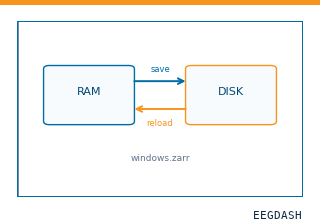 Save and reload prepared dataCache a windowed dataset to disk and reattach it without recompute.
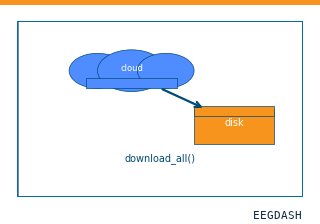 Download a dataset locallyPrefetch BIDS files to a local cache and validate the layout.
Swap any load_dataset(...) call for nm000379 to reproduce the tutorial on this dataset.
Citation
James E. Kragel, Stephan Schuele, Stephen VanHaerents, Joshua M. Rosenow, Joel L. Voss (2021). Rapid coordination of effective learning by the human hippocampus: intracranial EEG during scene recognition with eye tracking. 10.82901/nemar.nm000379
Provenance
¹Contributed to nemar in BIDS format.
²Curated & ingested by the EEGDash catalog; see CITATION.cff for canonical reference.
³Persistent identifier: 10.82901/nemar.nm000379.
See Also#
eegdash.dataset.EEGDashDataseteegdash.dataset