


NM000352: ieeg dataset, 24 subjects#
IEEG004: A library of human electrocorticographic data and analyses (Kai J. Miller) - calibrated task subset
Access recordings and metadata through EEGDash.
Citation: Kai J. Miller (2019). IEEG004: A library of human electrocorticographic data and analyses (Kai J. Miller) - calibrated task subset. 10.82901/nemar.nm000352
Modality: ieeg Subjects: 24 Recordings: 111 License: CC-BY-SA-4.0 Source: nemar
Metadata: Complete (100%)
24-participant iEEG dataset — IEEG004: A library of human electrocorticographic data and analyses (Kai J. Miller) - calibrated task subset.
Quickstart#
Install
pip install eegdash
Access the data
from eegdash.dataset import NM000352

dataset = NM000352(cache_dir="./data")
# Get the raw object of the first recording
raw = dataset.datasets[0].raw
print(raw.info)
Filter by subject
dataset = NM000352(cache_dir="./data", subject="01")
Advanced query
dataset = NM000352(
    cache_dir="./data",
    query={"subject": {"$in": ["01", "02"]}},
)
Iterate recordings
for rec in dataset:
    print(rec.subject, rec.raw.info['sfreq'])
If you use this dataset in your research, please cite the original authors.
BibTeX
@dataset{nm000352,
  title = {IEEG004: A library of human electrocorticographic data and analyses (Kai J. Miller) - calibrated task subset},
  author = {Kai J. Miller},
  doi = {10.82901/nemar.nm000352},
  url = {https://doi.org/10.82901/nemar.nm000352},
}
About This Dataset#
IEEG004 calibrated-task subset (fingerflex, gestures, imagerybasic, motorbasic, speechbasic, speechlists)
Subset of “A library of human electrocorticographic data and analyses” (Kai J. Miller; Stanford Digital Repository
https://purl.stanford.edu/zk881ps0522, CC BY-SA 4.0). The library holds “204 individual datasets from 34 patients made with the same amplifiers (at the same sampling rate and filter settings)” for 16 behavioural experiments, with electrode positions registered to brain anatomy and MATLAB analysis code (SDR record abstract; Miller KJ (2019), Nat Hum Behav 3:1225-1235, doi:10.1038/s41562-019-0678-3). This NEMAR dataset contains the six task archives whose READMEs document a physical-unit calibration: fingerflex, gestures, imagery_basic, motor_basic, speech_basic and speech_lists (111 recordings, 24 participants).
Cohort
24 patients (source two-letter codes, which “are not the patient’s initials” per the task READMEs), recorded at Harborview Hospital in Seattle (library publication acknowledgements; joystick/mouse task READMEs). Age, sex, handedness, grid location and seizure focus, where the source patient table gives them, are in
participants.tsv/participants.json.Clinical population: patients with subdural electrode grids placed for extended clinical monitoring and localization of seizure foci for medically refractory epilepsy (Miller et al. 2012 PLoS Comput Biol, Methods, for the fingerflex patients; BCI
View full README
Cohort
24 patients (source two-letter codes, which “are not the patient’s initials” per the task READMEs), recorded at Harborview Hospital in Seattle (library publication acknowledgements; joystick/mouse task READMEs). Age, sex, handedness, grid location and seizure focus, where the source patient table gives them, are in
participants.tsv/participants.json.Clinical population: patients with subdural electrode grids placed for extended clinical monitoring and localization of seizure foci for medically refractory epilepsy (Miller et al. 2012 PLoS Comput Biol, Methods, for the fingerflex patients; BCI Competition IV dataset 4 description).
Implant: subdural ECoG electrodes (all signal channels typed ECOG). For the fingerflex patients the source publication states: “The platinum electrode arrays (Ad-Tech, Racine, WI) were configured as combinations of ‘grid’ (4x8 8x8) and strip arrays, numbering between 32 and 81 in total. The electrode pads had 4 mm diameter (2.3 mm exposed), 1 cm inter-electrode distance” (Miller et al. 2012, doi:10.1371/journal.pcbi.1002655, Methods).
ElectrodeManufactureris set only for the fingerflex recordings, the only task whose patients that publication covers.Amplifier: Synamps2 (Neuroscan, El Paso, TX), per the BCI Competition IV dataset 4 description (“Signals from the electrode grid were amplified and digitized using Synamps2 amplifiers (Neuroscan, El Paso, TX)”) and Miller et al. 2012 (“recorded with Synamps2 (Neuroscan, El Paso, TX) biosignal amplifiers at 1 kHz”); the library states that all datasets were made with the same amplifiers. Signals were acquired with the general-purpose BCI2000 software (same sources). The *_ieeg.json
Manufacturerpreviously read “Brain Products”, which was a default of the BrainVision writer, not the recording system; it now reads Neuroscan / Synamps2.Sampling rate 1000 Hz; built-in amplifier band pass 0.15-200 Hz, 1-pole, so there is no sharp corner at 200 Hz; the amplitude roll-off function is in
ns_1k_1_300_filt.matin the source (all six task READMEs; recorded inHardwareFilters). Miller et al. 2012 reports the Seattle instrumental band pass as 0.3-200 Hz; the task READMEs, which describe these files, are followed here.Reference: motor_basic and imagery_basic READMEs: “Data were recorded with respect to a scalp reference.” (
iEEGReferenceset for those two tasks only); the BCI Competition IV description also states acquisition “with respect to a scalp reference and ground”. The other task READMEs do not state the reference (iEEGReferencen/a).
Tasks
| task | recordings | participants | source paradigm (task README) |
|---|---|---|---|
| fingerflex | 9 | bp cc ht jc jp mv wc wm zt | cued flexion of individual fingers, 2 s movement / 2 s rest, 30 cues per finger (Miller et al. 2012 PLoS Comput Biol) |
| gestures (acq base, fingerflex, thumbfore, pinch, freeform, rhlh, motth, glovefingersgrasp) | 22 | bp ca cc de wm | baseline fixation and cued hand/finger gestures (unpublished per README) |
| imagerybasic (acq motth = movement, imth = kinesthetic imagery) | 14 | bp fp hh jc jm rh rr | hand/tongue movement and imagery, 2-3 s cue blocks (Miller et al. 2010 PNAS) |
| motorbasic (acq motth) | 19 | 19 patients | hand/tongue movement, 2-3 s cue blocks (Miller et al. 2007 J Neurosci) |
| speechbasic (acq verbs / nouns) | 11 | bp hl in jc wc ww zt | verb generation / noun reading, 1.6 s cue + 1.6 s blank (Miller et al. 2011 J Neurosurg Pediatr) |
| speechlists (acq nouns/verbs x list 1-2 x run 1-3) | 36 | jc wc ww | two 40-noun lists, read 3x then verb generation 3x |
Each *_ieeg.json carries the task description (TaskDescription), and Instructions where the README states them.
Files
*_ieeg.vhdr/.vmrk/.eeg: BrainVision recordings; ECoG channelsecogNNNplus, where the source file has a stim vector, aSTIMCODEchannel (type MISC) with that vector verbatim.*_channels.tsv: channel list;low_cutoff0.15 /high_cutoff200.0 Hz on the ECoG channels = the built-in 1-pole amplifier band pass stated in every task README (no sharp corner at 200 Hz; roll-off inns_1k_1_300_filt.mat).*_events.tsv/*_events.json: one event per constant segment of the source stim vector;trial_type=stimcode-<N>, with the meaning of each code intrial_type.Levelsof the events.json, taken from the task README and, for gestures, from thestimtextcue-text variable of the source file. Codes the README does not define are labelled as such (fingerflex -1/-2, motor_basic 13 (gf) and 15 (zt), gestures baseline code 1). For speechlists, codes 1-40 map to the 40 nouns of LIST 1 or LIST 2 as printed in the speech_lists README.valueis a writer-assigned integer ID, not the source code.speechbasic recordings have no events file and no STIMCODE channel: their source files carry the cue timing in a variable named
cues(notstim), which the conversion did not export.sub-<s>_electrodes.tsv/sub-<s>_coordsystem.json: source electrode positions (see Conversion notes).participants.tsv: per-patient information from the source patient table.
Preprocessing applied by the source
Channel rejection: motor_basic README: “I have attempted to remove the contaminated channels”; the imagery_basic README contains the same sentence and also “I have not rejected bad /epileptic channels from these data”; gestures README: “I have not rejected bad channels from these data.”
motor_basic README: “electrode montages may be different from same task in same patient elsewhere in this library (when electrodes were artifactual for a different task within the same experiment, those electrodes would be deleted across to the board)”.
Audio of patient speech is not included in speech_basic and speech_lists (removed by the source for anonymity).
No other processing is stated; the data are the hardware-filtered 1 kHz recordings scaled to volts (Conversion notes).
Known caveats
See “Conversion notes” below (kept verbatim): synthetic channel names, numeric stim codes, coordinate units assumed (mm).
PowerLineFrequencyis n/a: the reviewed source documents do not state it.Some README code tables do not match the files: gestures
rh_lhfiles use codes 5/6/7 (stimtext right/left/both) where the README lists 1/2/3; the gestures baseline README saysstimis all zeros, but the files contain code 1 segments.
Ethics statement (verbatim, required by source license):
All patients participated in a purely voluntary manner, after providing informed written consent, under experimental protocols approved by the Institutional Review Board of the University of Washington (#12193). All patient data was anonymized according to IRB protocol, in accordance with HIPAA mandate. It was made available through the library described in “A Library of Human Electrocorticographic Data and Analyses” by Kai Miller, freely available at https://searchworks.stanford.edu/view/zk881ps0522 .
Funding
Library publication (Miller KJ (2019), Nat Hum Behav 3:1225-1235, doi:10.1038/s41562-019-0678-3): “I am financially supported by the Van Wagenen Foundation. Data collection was supported by NSF grant no. BCS-0642848 and NIH grant no. RO1NS065186.” Conversion notes: data were scaled from stored amplifier units to volts using the source-documented factor 1 amplifier unit = 0.0298 microvolts (2.98e-8 V/unit), applied once. Channel names ecogNNN are SYNTHETIC source-order indices, not acquisition electrode labels (none were supplied). The STIMCODE channel preserves the source stim vector verbatim; events.tsv trial_type values are the raw numeric stim codes (stimcode-<N>); see each archive’s original README (preserved in research/ieeg004-conversion/<task>-readme.txt on the lab copy) for the source-defined code meanings.
Electrode coordinates, where present, are Talairach via the LOC package; coordinate units are an assumption (mm), not confirmed by source documentation (see coordsystem.json).
The BCI Competition IV dataset 4 archive and the mouse/joystick/visual_search/fixation tasks without a documented physical-unit calibration are intentionally excluded from this subset.
How to load
import mne, pandas as pd
raw = mne.io.read_raw_brainvision("sub-bp/ieeg/sub-bp_task-fingerflex_ieeg.vhdr", preload=False)
events = pd.read_csv("sub-bp/ieeg/sub-bp_task-fingerflex_events.tsv", sep="\t")
or with MNE-BIDS:
from mne_bids import BIDSPath, read_raw_bids raw = read_raw_bids(BIDSPath(root=”.”, subject=”bp”, task=”fingerflex”, datatype=”ieeg”))
Citations
Miller KJ (2019). A library of human electrocorticographic data and analyses. Nature Human Behaviour 3:1225-1235. doi:10.1038/s41562-019-0678-3
Miller, Kai Joshua (2016). A library of human electrocorticographic data and analyses. Stanford Digital Repository. https://purl.stanford.edu/zk881ps0522
Task papers named in the READMEs: Miller et al. 2007 J Neurosci 27:2424-2432 (doi:10.1523/JNEUROSCI.3886-06.2007; motor_basic); Miller et al. 2010 PNAS (doi:10.1073/pnas.0913697107; imagery_basic); Miller et al. 2012 PLoS Comput Biol 8:e1002655 (doi:10.1371/journal.pcbi.1002655; fingerflex); Miller et al. 2011 J Neurosurg Pediatr 7:482 (doi:10.3171/2011.2.PEDS1156; speech_basic).
Miller KJ, Schalk G (2008). Prediction of finger flexion: 4th Brain-Computer Interface Data Competition (dataset 4 description). https://www.bbci.de/competition/iv/desc_4.pdf
Source and provenance
Stanford Digital Repository druid zk881ps0522 (deposited 2019-02-05; CC BY-SA 4.0), task archives fingerflex.zip, gestures.zip, imagery_basic.zip, motor_basic.zip, speech_basic.zip, speech_lists.zip and the patient table kjm_ECoGLibrary_PatientTaskTable.pdf.
NEMAR Metadata#
[](https://doi.org/10.82901/nemar.nm000352) IEEG004 calibrated-task subset (fingerflex, gestures, imagerybasic, motorbasic, speechbasic, speechlists) ## Overview Subset of “A library of human electrocorticographic data and analyses” (Kai J. Miller; Stanford Digital Repository https://purl.stanford.edu/zk881ps0522, CC BY-SA 4.0). The library holds “204 individual datasets from 34 patients made with the same amplifiers (at the same sampling rate and filter settings)” for 16 behavioural experiments, with electrode positions registered to brain anatomy and MATLAB analysis code (SDR record abstract; Miller KJ (2019), Nat Hum Behav 3:1225-1235, doi:10.1038/s41562-019-0678-3). This NEMAR dataset contains the six task archives whose READMEs document a physical-unit calibration: fingerflex, gestures, imagery_basic, motor_basic, speech_basic and speech_lists (111 recordings, 24 participants). ## Cohort - 24 patients (source two-letter codes, which “are not the patient’s initials” per the task READMEs), recorded at Harborview
Hospital in Seattle (library publication acknowledgements; joystick/mouse task READMEs). Age, sex, handedness, grid location and seizure focus, where the source patient table gives them, are in participants.tsv / participants.json.
Clinical population: patients with subdural electrode grids placed for extended clinical monitoring and localization of seizure foci for medically refractory epilepsy (Miller et al. 2012 PLoS Comput Biol, Methods, for the fingerflex patients; BCI Competition IV dataset 4 description).
Implant: subdural ECoG electrodes (all signal channels typed ECOG). For the fingerflex patients the source publication states: “The platinum electrode arrays (Ad-Tech, Racine, WI) were configured as combinations of ‘grid’ (4x8 8x8) and strip arrays, numbering between 32 and 81 in total. The electrode pads had 4 mm diameter (2.3 mm exposed), 1 cm inter-electrode distance” (Miller et al. 2012, doi:10.1371/journal.pcbi.1002655, Methods). ElectrodeManufacturer is set only for the fingerflex recordings, the only task whose patients that publication covers.
Amplifier: Synamps2 (Neuroscan, El Paso, TX), per the BCI Competition IV dataset 4 description (“Signals from the electrode grid were amplified and digitized using Synamps2 amplifiers (Neuroscan, El Paso, TX)”) and Miller et al. 2012 (“recorded with Synamps2 (Neuroscan, El Paso, TX) biosignal amplifiers at 1 kHz”); the library states that all datasets were made with the same amplifiers. Signals were acquired with the general-purpose BCI2000 software (same sources). The *_ieeg.json Manufacturer previously read “Brain Products”, which was a default of the BrainVision writer, not the recording system; it now reads Neuroscan / Synamps2.
Sampling rate 1000 Hz; built-in amplifier band pass 0.15-200 Hz, 1-pole, so there is no sharp corner at 200 Hz; the amplitude roll-off function is in ns_1k_1_300_filt.mat in the source (all six task READMEs; recorded in HardwareFilters). Miller et al. 2012 reports the Seattle instrumental band pass as 0.3-200 Hz; the task READMEs, which describe these files, are followed here.
Reference: motor_basic and imagery_basic READMEs: “Data were recorded with respect to a scalp reference.” (iEEGReference set for those two tasks only); the BCI Competition IV description also states acquisition “with respect to a scalp reference and ground”. The other task READMEs do not state the reference (iEEGReference n/a).
## Tasks | task | recordings | participants | source paradigm (task README) | |---|—|---|—| | fingerflex | 9 | bp cc ht jc jp mv wc wm zt | cued flexion of individual fingers, 2 s movement / 2 s rest, 30 cues per finger (Miller et al. 2012 PLoS Comput Biol) | | gestures (acq base, fingerflex, thumbfore, pinch, freeform, rhlh, motth, glovefingersgrasp) | 22 | bp ca cc de wm | baseline fixation and cued hand/finger gestures (unpublished per README) | | imagerybasic (acq motth = movement, imth = kinesthetic imagery) | 14 | bp fp hh jc jm rh rr | hand/tongue movement and imagery, 2-3 s cue blocks (Miller et al. 2010 PNAS) | | motorbasic (acq motth) | 19 | 19 patients | hand/tongue movement, 2-3 s cue blocks (Miller et al. 2007 J Neurosci) | | speechbasic (acq verbs / nouns) | 11 | bp hl in jc wc ww zt | verb generation / noun reading, 1.6 s cue + 1.6 s blank (Miller et al. 2011 J Neurosurg Pediatr) | | speechlists (acq nouns/verbs x list 1-2 x run 1-3) | 36 | jc wc ww | two 40-noun lists, read 3x then verb generation 3x | Each *_ieeg.json carries the task description (TaskDescription), and Instructions where the README states them. ## Files - *_ieeg.vhdr/.vmrk/.eeg: BrainVision recordings; ECoG channels ecogNNN plus, where the source file has a stim vector, a
STIMCODE channel (type MISC) with that vector verbatim.
*_channels.tsv: channel list; low_cutoff 0.15 / high_cutoff 200.0 Hz on the ECoG channels = the built-in 1-pole amplifier band pass stated in every task README (no sharp corner at 200 Hz; roll-off in ns_1k_1_300_filt.mat).
*_events.tsv / *_events.json: one event per constant segment of the source stim vector; trial_type = stimcode-<N>, with the meaning of each code in trial_type.Levels of the events.json, taken from the task README and, for gestures, from the stimtext cue-text variable of the source file. Codes the README does not define are labelled as such (fingerflex -1/-2, motor_basic 13 (gf) and 15 (zt), gestures baseline code 1). For speechlists, codes 1-40 map to the 40 nouns of LIST 1 or LIST 2 as printed in the speech_lists README. value is a writer-assigned integer ID, not the source code.
speechbasic recordings have no events file and no STIMCODE channel: their source files carry the cue timing in a variable named cues (not stim), which the conversion did not export.
sub-<s>_electrodes.tsv / sub-<s>_coordsystem.json: source electrode positions (see Conversion notes).
participants.tsv: per-patient information from the source patient table.
## Preprocessing applied by the source - Channel rejection: motor_basic README: “I have attempted to remove the contaminated channels”; the imagery_basic README
contains the same sentence and also “I have not rejected bad /epileptic channels from these data”; gestures README: “I have not rejected bad channels from these data.”
motor_basic README: “electrode montages may be different from same task in same patient elsewhere in this library (when electrodes were artifactual for a different task within the same experiment, those electrodes would be deleted across to the board)”.
Audio of patient speech is not included in speech_basic and speech_lists (removed by the source for anonymity).
No other processing is stated; the data are the hardware-filtered 1 kHz recordings scaled to volts (Conversion notes).
## Known caveats - See “Conversion notes” below (kept verbatim): synthetic channel names, numeric stim codes, coordinate units assumed (mm). - PowerLineFrequency is n/a: the reviewed source documents do not state it. - Some README code tables do not match the files: gestures rh_lh files use codes 5/6/7 (stimtext right/left/both) where
the README lists 1/2/3; the gestures baseline README says stim is all zeros, but the files contain code 1 segments.
Ethics statement (verbatim, required by source license):
All patients participated in a purely voluntary manner, after providing informed written consent,
under experimental protocols approved by the Institutional Review Board of the University of
Washington (#12193). All patient data was anonymized according to IRB protocol, in accordance with
HIPAA mandate. It was made available through the library described in “A Library of Human
Electrocorticographic Data and Analyses” by Kai Miller, freely available at
https://searchworks.stanford.edu/view/zk881ps0522 .
## Funding
Library publication (Miller KJ (2019), Nat Hum Behav 3:1225-1235, doi:10.1038/s41562-019-0678-3): “I am financially supported by the Van Wagenen Foundation. Data collection was supported by NSF
grant no. BCS-0642848 and NIH grant no. RO1NS065186.”
Conversion notes: data were scaled from stored amplifier units to volts using the source-documented
factor 1 amplifier unit = 0.0298 microvolts (2.98e-8 V/unit), applied once. Channel names ecogNNN are
SYNTHETIC source-order indices, not acquisition electrode labels (none were supplied). The STIMCODE
channel preserves the source stim vector verbatim; events.tsv trial_type values are the raw numeric
stim codes (stimcode-<N>); see each archive’s original README (preserved in
research/ieeg004-conversion/<task>-readme.txt on the lab copy) for the source-defined code meanings.
Electrode coordinates, where present, are Talairach via the LOC package; coordinate units are an
assumption (mm), not confirmed by source documentation (see coordsystem.json).
The BCI Competition IV dataset 4 archive and the mouse/joystick/visual_search/fixation tasks without a
documented physical-unit calibration are intentionally excluded from this subset.
## How to load
`python
import mne, pandas as pd
raw = mne.io.read_raw_brainvision("sub-bp/ieeg/sub-bp_task-fingerflex_ieeg.vhdr", preload=False)
events = pd.read_csv("sub-bp/ieeg/sub-bp_task-fingerflex_events.tsv", sep="\t")
# or with MNE-BIDS:
from mne_bids import BIDSPath, read_raw_bids
raw = read_raw_bids(BIDSPath(root=".", subject="bp", task="fingerflex", datatype="ieeg"))
`
## Citations
- Miller KJ (2019). A library of human electrocorticographic data and analyses. Nature Human Behaviour 3:1225-1235.
doi:10.1038/s41562-019-0678-3
Miller, Kai Joshua (2016). A library of human electrocorticographic data and analyses. Stanford Digital Repository. https://purl.stanford.edu/zk881ps0522
Task papers named in the READMEs: Miller et al. 2007 J Neurosci 27:2424-2432 (doi:10.1523/JNEUROSCI.3886-06.2007; motor_basic); Miller et al. 2010 PNAS (doi:10.1073/pnas.0913697107; imagery_basic); Miller et al. 2012 PLoS Comput Biol 8:e1002655 (doi:10.1371/journal.pcbi.1002655; fingerflex); Miller et al. 2011 J Neurosurg Pediatr 7:482 (doi:10.3171/2011.2.PEDS1156; speech_basic).
Miller KJ, Schalk G (2008). Prediction of finger flexion: 4th Brain-Computer Interface Data Competition (dataset 4 description). https://www.bbci.de/competition/iv/desc_4.pdf
## Source and provenance Stanford Digital Repository druid zk881ps0522 (deposited 2019-02-05; CC BY-SA 4.0), task archives fingerflex.zip, gestures.zip, imagery_basic.zip, motor_basic.zip, speech_basic.zip, speech_lists.zip and the patient table kjm_ECoGLibrary_PatientTaskTable.pdf.
License: CC-BY-SA-4.0
Authors:
Kai J. Miller
Versions:
Version |
DOI |
Released |
|---|---|---|
|
Cohort#
Dataset Statistics#
Age distribution by gender (n=18, range 18–49 yr, mean 30.7 yr)
Sex composition
Channel counts (ch)
Sampling frequencies: 1000.0 Hz (n=111 recordings)
Total recording duration: 8 h 16 min
Signal · Electrodes & live trace#
Live trace viewer — sub-ug · task-motorbasic
Showing one representative recording out of
24 subjects and 111 recordings in this dataset.
Browse the full set on OpenNeuro;
drop any other _ieeg.{set,edf,bdf,vhdr} file onto the
viewer (or pass ?ieeg=<url>) to inspect it.
Electrode layout — iEEG · 48 sensors — 48 channels
NEMAR Processing Statistics#
The plots below are generated by NEMAR’s automated EEG pipeline. The histogram shows pipeline success for data cleaning and ICA decomposition, the percentage of data frames and EEG channels retained after artefact removal, line noise per channel (RMS, dB), and the age/gender distribution of participants.

HED event descriptors word cloud

Manifest#
File Explorer#
Browse the BIDS file structure of this dataset. Records are fetched on demand from the EEGDash catalog the first time you open the explorer.
Full dataset metadata table
Dataset ID |
|
Title |
IEEG004: A library of human electrocorticographic data and analyses (Kai J. Miller) - calibrated task subset |
Author (year) |
— |
Canonical |
— |
Importable as |
|
Year |
2019 |
Authors |
Kai J. Miller |
License |
CC-BY-SA-4.0 |
Citation / DOI |
|
Source links |
OpenNeuro | NeMAR | Source URL |
Copy-paste BibTeX
@dataset{nm000352,
  title = {IEEG004: A library of human electrocorticographic data and analyses (Kai J. Miller) - calibrated task subset},
  author = {Kai J. Miller},
  doi = {10.82901/nemar.nm000352},
  url = {https://doi.org/10.82901/nemar.nm000352},
}
API Reference#
eegdash.datasetEEGDashDataset- class eegdash.dataset.NM000352(cache_dir: str, query: dict | None = None, s3_bucket: str | None = None, **kwargs)[source]#
IEEG004: A library of human electrocorticographic data and analyses (Kai J. Miller) - calibrated task subset
- Study:
nm000352(NeMAR)- Author (year):
—
- Canonical:
—
Also importable as:
NM000352.Modality:
ieeg; Subject type:Unknown. Subjects: 24; recordings: 111; tasks: 6.- Parameters:
cache_dir (str | Path) – Directory where data are cached locally.
query (dict | None) – Additional MongoDB-style filters to AND with the dataset selection. Must not contain the key
dataset.s3_bucket (str | None) – Base S3 bucket used to locate the data.
**kwargs (dict) – Additional keyword arguments forwarded to
EEGDashDataset.
- data_dir#
Local dataset cache directory (
cache_dir / dataset_id).- Type:
Path
Notes
Each item is a recording; recording-level metadata are available via
dataset.description.querysupports MongoDB-style filters on fields inALLOWED_QUERY_FIELDSand is combined with the dataset filter. Dataset-specific caveats are not provided in the summary metadata.References
OpenNeuro dataset: https://openneuro.org/datasets/nm000352 NeMAR dataset: https://nemar.org/dataexplorer/detail?dataset_id=nm000352 DOI: https://doi.org/10.82901/nemar.nm000352
Examples
>>> from eegdash.dataset import NM000352
>>> dataset = NM000352(cache_dir="./data")
>>> recording = dataset[0]
>>> raw = recording.load()
- __init__(cache_dir: str, query: dict | None = None, s3_bucket: str | None = None, **kwargs)[source]#
- save(path: str, overwrite: bool = False, offset: int = 0)[source]#
Save datasets to files by creating one subdirectory for each dataset:
path/
    0/
        0-raw.fif | 0-epo.fif
        description.json
        raw_preproc_kwargs.json (if raws were preprocessed)
        window_kwargs.json (if this is a windowed dataset)
        window_preproc_kwargs.json  (if windows were preprocessed)
        target_name.json (if target_name is not None and dataset is raw)
    1/
        1-raw.fif | 1-epo.fif
        description.json
        raw_preproc_kwargs.json (if raws were preprocessed)
        window_kwargs.json (if this is a windowed dataset)
        window_preproc_kwargs.json  (if windows were preprocessed)
        target_name.json (if target_name is not None and dataset is raw)
- Parameters:
path (str) –
- Directory in which subdirectories are created to store
-raw.fif | -epo.fif and .json files to.
overwrite (bool) – Whether to delete old subdirectories that will be saved to in this call.
offset (int) – If provided, the integer is added to the id of the dataset in the concat. This is useful in the setting of very large datasets, where one dataset has to be processed and saved at a time to account for its original position.
BaseDataset from braindecode — windowed via create_windows_from_events.braindecodeDataLoader; supports parallel workers and on-the-fly augmentations.pytorch Find datasets with the EEGDash APIQuery the catalogue, filter by task or modality, list candidates.
 Load one EEG recordingResolve a single record to an MNE Raw with channels and events.
 EEG recording to PyTorch DataLoaderWrap braindecode windows in a DataLoader for model training.
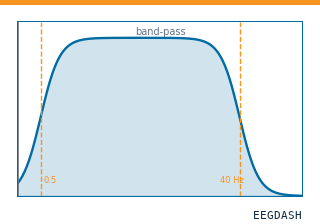 Preprocess EEG and create windowsFilter, resample, epoch — and persist the windowed dataset.
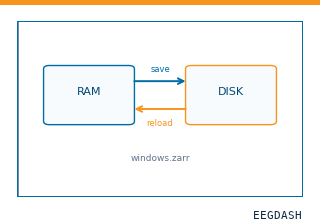 Save and reload prepared dataCache a windowed dataset to disk and reattach it without recompute.
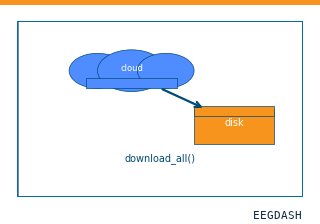 Download a dataset locallyPrefetch BIDS files to a local cache and validate the layout.
Swap any load_dataset(...) call for nm000352 to reproduce the tutorial on this dataset.
Citation
Kai J. Miller (2019). IEEG004: A library of human electrocorticographic data and analyses (Kai J. Miller) - calibrated task subset. 10.82901/nemar.nm000352
Provenance
¹Contributed to nemar in BIDS format.
²Curated & ingested by the EEGDash catalog; see CITATION.cff for canonical reference.
³Persistent identifier: 10.82901/nemar.nm000352.
See Also#
eegdash.dataset.EEGDashDataseteegdash.dataset