


NM000112: eeg dataset, 123 subjects#
FACED - Finer-grained Affective Computing EEG Dataset
Access recordings and metadata through EEGDash.
Citation: Yisi Liu, Olga Sourina, Minh Khoa Nguyen (2023). FACED - Finer-grained Affective Computing EEG Dataset. 10.82901/nemar.nm000112
Modality: eeg Subjects: 123 Recordings: 123 License: CC-BY-4.0 Source: nemar
Metadata: Complete (100%)
123-participant EEG dataset — FACED - Finer-grained Affective Computing EEG Dataset.
Quickstart#
Install
pip install eegdash
Access the data
from eegdash.dataset import NM000112

dataset = NM000112(cache_dir="./data")
# Get the raw object of the first recording
raw = dataset.datasets[0].raw
print(raw.info)
Filter by subject
dataset = NM000112(cache_dir="./data", subject="01")
Advanced query
dataset = NM000112(
    cache_dir="./data",
    query={"subject": {"$in": ["01", "02"]}},
)
Iterate recordings
for rec in dataset:
    print(rec.subject, rec.raw.info['sfreq'])
If you use this dataset in your research, please cite the original authors.
BibTeX
@dataset{nm000112,
  title = {FACED - Finer-grained Affective Computing EEG Dataset},
  author = {Yisi Liu and Olga Sourina and Minh Khoa Nguyen},
  doi = {10.82901/nemar.nm000112},
  url = {https://doi.org/10.82901/nemar.nm000112},
}
About This Dataset#
The Finer-grained Affective Computing EEG Dataset (FACED) contains scalp EEG recordings from 123 healthy participants who watched 28 emotion-eliciting video clips designed to evoke nine different emotion categories. The dataset includes four negative emotions (anger, fear, disgust, sadness) from Ekman’s basic emotions and four positive emotions (amusement, inspiration, joy, tenderness) selected based on recent psychological and neuroscience progress and application needs. Participants provided detailed self-reported emotion ratings on 12 dimensions: eight emotions, arousal, valence, liking, and familiarity. The dataset is designed to facilitate cross-subject affective computing research and development of EEG-based emotion recognition algorithms for real-world applications.
Participants (123 subjects, 75 female, ages 17-38, mean=23.2 years) were seated 60 cm from a 22-inch LCD monitor in a regular office environment. Each trial consisted of: (1) a 5-second fixation cross, (2) a video clip of varying length (typically 30-60 seconds), and (3) subjective emotional rating on 12 items (anger, fear, disgust, sadness, amusement, inspiration, joy, tenderness, valence, arousal, liking, familiarity) on a continuous 0-7 scale, followed by at least 30 seconds rest. Video clips were presented in blocks: three positive blocks, three negative blocks, and one neutral block, with 20 arithmetic problems between blocks to minimize carryover effects. The 28 video clips were designed to target nine emotion categories, with randomized presentation order across participants. EEG was recorded using a 32-channel biosignal recording system sampled at either 1000 Hz (92 subjects) or 250 Hz (31 subjects), with channels positioned according to the International 10-20 system. Signal units were recorded in either Volts or microVolts depending on the hardware configuration used.
Video stimulus information: The dataset includes 28 video clips designed to elicit nine emotion categories (Trigger values 1–28): - Anger (Videos 1-3): Durations 73-81 seconds, negative valence - Disgust (Videos 4-6): Durations 69-91 seconds, negative valence - Fear (Videos 7-9): Durations 56-106 seconds, negative valence - Sadness (Videos 10-12): Durations 45-82 seconds, negative valence - Neutral (Videos 13-16): Durations 35-43 seconds, neutral valence - Amusement (Videos 17-19): Durations 56-73 seconds, positive valence - Inspiration (Videos 20-22): Durations 76-129 seconds, positive valence - Joy (Videos 23-25): Durations 34-68 seconds, positive valence - Tenderness (Videos 26-28): Durations 54-77 seconds, positive valence
FACED - Finer-grained Affective Computing EEG Dataset
Introduction
Metadata for each video (duration, source film, source database, valence, targeted emotion) is read from Stimuli_info.xlsx. Event markers (from evt.bdf annotations): - 100: Task/block start
View full README
FACED - Finer-grained Affective Computing EEG Dataset
Introduction
Metadata for each video (duration, source film, source database, valence, targeted emotion) is read from Stimuli_info.xlsx. Event markers (from evt.bdf annotations): - 100: Task/block start - 101: Video onset - 102: Video offset - 1–28: Video index (appears just before 101, used to link to stimulus metadata) - 201/202: Block boundary markers - “Start Impedance” / “Stop Impedance”: Technical markers (ignored)
The conversion script reads evt.bdf annotations for each subject, parses video presentation spans (from video index + 101 to 102), and creates MNE Annotations with the source film title (video_title) as description. These annotations are exported to BIDS events.tsv with extra columns: - emotion_label: targeted emotion category (Anger, Disgust, Fear, Sadness, Neutral, Amusement, Inspiration, Joy, Tenderness) - binary_label: positive/negative/neutral classification - video_index: 1–28 - Self-reported ratings (Joy, Tenderness, Inspiration, Amusement, Anger, Disgust, Fear, Sadness, Arousal, Valence, Familiarity, Liking)
Description of the preprocessing if any
Raw BDF files from the biosignal recording system have been converted to BIDS format. Channel names are standardized to match the International 10-20 nomenclature. Subjects have been assigned numeric IDs (sub-000 through sub-122) corresponding to their original subject designations in the dataset. Recording dates have been set to a default value (2023-01-01) due to privacy considerations, while time relationships between files are preserved. Subject demographic information (age, sex) has been extracted from the Recording_info.csv file and properly formatted for BIDS.
Stimulus timing information from the evt.bdf event files has been parsed and enriched with metadata from Stimuli_info.xlsx. Each video presentation is annotated with the targeted emotion category (Anger, Disgust, Fear, Sadness, Neutral, Amusement, Inspiration, Joy, Tenderness) and includes self-reported ratings from After_remarks.mat when available.
Citation
When using this dataset, please cite: 1. Liu, Y., Sourina, O., & Nguyen, M. K. (2023). Finer-grained Affective Computing EEG Dataset. Scientific Data, 10(1), 809. https://doi.org/10.1038/s41597-023-02650-w 2. Synapse Platform: https://www.synapse.org/#!Synapse:syn50614194 3. The dataset is available at the Synapse platform repository.
Data curators: Pierre Guetschel (BIDS conversion) Original data collection team: - Yisi Liu (Nanyang Technological University) - Olga Sourina (Nanyang Technological University)
- Minh Khoa Nguyen (Nanyang Technological University)
Automatic report
Report automatically generated by ``mne_bids.make_report()``.
The FACED - Finer-grained Affective Computing EEG Dataset dataset was created
by Yisi Liu, Olga Sourina, and Minh Khoa Nguyen and conforms to BIDS version 1.7.0. This report was generated with MNE-BIDS (https://doi.org/10.21105/joss.01896). The dataset consists of 123 participants (comprised of 48 male and 75 female participants; handedness were all unknown; ages ranged from 17.0 to 38.0 (mean = 22.94, std = 4.66)) . Data was recorded using an EEG system (Biosemi) sampled at 1000.0, and 250.0 Hz with line noise at n/a Hz. There were 123 scans in total. Recording durations ranged from 3468.0 to 6743.0 seconds (mean = 4544.83, std = 647.24), for a total of 559013.71 seconds of data recorded over all scans. For each dataset, there were on average 32.0 (std = 0.0) recording channels per scan, out of which 32.0 (std = 0.0) were used in analysis (0.0 +/- 0.0 were removed from analysis).
NEMAR Metadata#
[](https://doi.org/10.82901/nemar.nm000112) # FACED - Finer-grained Affective Computing EEG Dataset ## Introduction The Finer-grained Affective Computing EEG Dataset (FACED) contains scalp EEG recordings from 123 healthy participants who watched 28 emotion-eliciting video clips designed to evoke nine different emotion categories. The dataset includes four negative emotions (anger, fear, disgust, sadness) from Ekman’s basic emotions and four positive emotions (amusement, inspiration, joy, tenderness) selected based on recent psychological and neuroscience progress and application needs. Participants provided detailed self-reported emotion ratings on 12 dimensions: eight emotions, arousal, valence, liking, and familiarity. The dataset is designed to facilitate cross-subject affective computing research and development of EEG-based emotion recognition algorithms for real-world applications. ## Overview of the experiment Participants (123 subjects, 75 female, ages 17-38, mean=23.2 years) were seated 60 cm from a 22-inch LCD monitor in a regular office environment. Each trial consisted of: (1) a 5-second fixation cross, (2) a video clip of varying length (typically 30-60 seconds), and (3) subjective emotional rating on 12 items (anger, fear, disgust, sadness, amusement, inspiration, joy, tenderness, valence, arousal, liking, familiarity) on a continuous 0-7 scale, followed by at least 30 seconds rest. Video clips were presented in blocks: three positive blocks, three negative blocks, and one neutral block, with 20 arithmetic problems between blocks to minimize carryover effects. The 28 video clips were designed to target nine emotion categories, with randomized presentation order across participants. EEG was recorded using a 32-channel biosignal recording system sampled at either 1000 Hz (92 subjects) or 250 Hz (31 subjects), with channels positioned according to the International 10-20 system. Signal units were recorded in either Volts or microVolts depending on the hardware configuration used. Video stimulus information: The dataset includes 28 video clips designed to elicit nine emotion categories (Trigger values 1–28): - Anger (Videos 1-3): Durations 73-81 seconds, negative valence - Disgust (Videos 4-6): Durations 69-91 seconds, negative valence - Fear (Videos 7-9): Durations 56-106 seconds, negative valence - Sadness (Videos 10-12): Durations 45-82 seconds, negative valence - Neutral (Videos 13-16): Durations 35-43 seconds, neutral valence - Amusement (Videos 17-19): Durations 56-73 seconds, positive valence - Inspiration (Videos 20-22): Durations 76-129 seconds, positive valence - Joy (Videos 23-25): Durations 34-68 seconds, positive valence - Tenderness (Videos 26-28): Durations 54-77 seconds, positive valence Metadata for each video (duration, source film, source database, valence, targeted emotion) is read from Stimuli_info.xlsx. Event markers (from evt.bdf annotations): - 100: Task/block start - 101: Video onset - 102: Video offset - 1–28: Video index (appears just before 101, used to link to stimulus metadata) - 201/202: Block boundary markers - “Start Impedance” / “Stop Impedance”: Technical markers (ignored) The conversion script reads evt.bdf annotations for each subject, parses video presentation spans (from video index + 101 to 102), and creates MNE Annotations with the source film title (video_title) as description. These annotations are exported to BIDS events.tsv with extra columns: - emotion_label: targeted emotion category (Anger, Disgust, Fear, Sadness, Neutral, Amusement, Inspiration, Joy, Tenderness) - binary_label: positive/negative/neutral classification - video_index: 1–28 - Self-reported ratings (Joy, Tenderness, Inspiration, Amusement, Anger, Disgust, Fear, Sadness, Arousal, Valence, Familiarity, Liking) ## Description of the preprocessing if any Raw BDF files from the biosignal recording system have been converted to BIDS format. Channel names are standardized to match the International 10-20 nomenclature. Subjects have been assigned numeric IDs (sub-000 through sub-122) corresponding to their original subject designations in the dataset. Recording dates have been set to a default value (2023-01-01) due to privacy considerations, while time relationships between files are preserved. Subject demographic information (age, sex) has been extracted from the Recording_info.csv file and properly formatted for BIDS. Stimulus timing information from the evt.bdf event files has been parsed and enriched with metadata from Stimuli_info.xlsx. Each video presentation is annotated with the targeted emotion category (Anger, Disgust, Fear, Sadness, Neutral, Amusement, Inspiration, Joy, Tenderness) and includes self-reported ratings from After_remarks.mat when available. ## Citation When using this dataset, please cite: 1. Liu, Y., Sourina, O., & Nguyen, M. K. (2023). Finer-grained Affective Computing EEG Dataset. Scientific Data, 10(1), 809. https://doi.org/10.1038/s41597-023-02650-w 2. Synapse Platform: https://www.synapse.org/#!Synapse:syn50614194 3. The dataset is available at the Synapse platform repository. Data curators: Pierre Guetschel (BIDS conversion) Original data collection team: - Yisi Liu (Nanyang Technological University) - Olga Sourina (Nanyang Technological University) - Minh Khoa Nguyen (Nanyang Technological University) — ## Automatic report Report automatically generated by `mne_bids.make_report()`. > The FACED - Finer-grained Affective Computing EEG Dataset dataset was created by Yisi Liu, Olga Sourina, and Minh Khoa Nguyen and conforms to BIDS version 1.7.0. This report was generated with MNE-BIDS (https://doi.org/10.21105/joss.01896). The dataset consists of 123 participants (comprised of 48 male and 75 female participants; handedness were all unknown; ages ranged from 17.0 to 38.0 (mean = 22.94, std = 4.66)) . Data was recorded using an EEG system (Biosemi) sampled at 1000.0, and 250.0 Hz with line noise at n/a Hz. There were 123 scans in total. Recording durations ranged from 3468.0 to 6743.0 seconds (mean = 4544.83, std = 647.24), for a total of 559013.71 seconds of data recorded over all scans. For each dataset, there were on average 32.0 (std = 0.0) recording channels per scan, out of which 32.0 (std = 0.0) were used in analysis (0.0 +/- 0.0 were removed from analysis).
License: CC-BY-4.0
Authors:
Yisi Liu
Olga Sourina
Minh Khoa Nguyen
Versions:
Version |
DOI |
Released |
|---|---|---|
|
Cohort#
Dataset Statistics#
Age distribution by gender (n=123, range 17–38 yr, mean 22.9 yr)
Sex composition
Channel counts: 32 ch (n=123 recordings)
Sampling frequencies (Hz)
Total recording duration: 155 h
Signal · Electrodes & live trace#
Live trace viewer — sub-021 · task-watchingVideoClips
Showing one representative recording out of
123 subjects and 123 recordings in this dataset.
Browse the full set on OpenNeuro;
drop any other _eeg.{set,edf,bdf,vhdr} file onto the
viewer (or pass ?eeg=<url>) to inspect it.
Electrode layout — EEG · 30 sensors — 30 channels
NEMAR Processing Statistics#
The plots below are generated by NEMAR’s automated EEG pipeline. The histogram shows pipeline success for data cleaning and ICA decomposition, the percentage of data frames and EEG channels retained after artefact removal, line noise per channel (RMS, dB), and the age/gender distribution of participants.

HED event descriptors word cloud

Manifest#
File Explorer#
Browse the BIDS file structure of this dataset. Records are fetched on demand from the EEGDash catalog the first time you open the explorer.
Full dataset metadata table
Dataset ID |
|
Title |
FACED - Finer-grained Affective Computing EEG Dataset |
Author (year) |
|
Canonical |
— |
Importable as |
|
Year |
2023 |
Authors |
Yisi Liu, Olga Sourina, Minh Khoa Nguyen |
License |
CC-BY-4.0 |
Citation / DOI |
|
Source links |
Copy-paste BibTeX
@dataset{nm000112,
  title = {FACED - Finer-grained Affective Computing EEG Dataset},
  author = {Yisi Liu and Olga Sourina and Minh Khoa Nguyen},
  doi = {10.82901/nemar.nm000112},
  url = {https://doi.org/10.82901/nemar.nm000112},
}
API Reference#
eegdash.datasetEEGDashDatasetNM000112 · Liu2024_112eegdash/dataset/registry.py · [source ↗]- class eegdash.dataset.NM000112(cache_dir: str, query: dict | None = None, s3_bucket: str | None = None, **kwargs)[source]#
FACED - Finer-grained Affective Computing EEG Dataset
- Study:
nm000112(NeMAR)- Author (year):
Liu2024_112- Canonical:
—
Also importable as:
NM000112,Liu2024_112.Modality:
eeg; Experiment type:Affect; Subject type:Healthy. Subjects: 123; recordings: 0; tasks: 1.- Parameters:
cache_dir (str | Path) – Directory where data are cached locally.
query (dict | None) – Additional MongoDB-style filters to AND with the dataset selection. Must not contain the key
dataset.s3_bucket (str | None) – Base S3 bucket used to locate the data.
**kwargs (dict) – Additional keyword arguments forwarded to
EEGDashDataset.
- data_dir#
Local dataset cache directory (
cache_dir / dataset_id).- Type:
Path
Notes
Each item is a recording; recording-level metadata are available via
dataset.description.querysupports MongoDB-style filters on fields inALLOWED_QUERY_FIELDSand is combined with the dataset filter. Dataset-specific caveats are not provided in the summary metadata.References
OpenNeuro dataset: https://openneuro.org/datasets/nm000112 NeMAR dataset: https://nemar.org/dataexplorer/detail?dataset_id=nm000112 DOI: https://doi.org/10.82901/nemar.nm000112
Examples
>>> from eegdash.dataset import NM000112
>>> dataset = NM000112(cache_dir="./data")
>>> recording = dataset[0]
>>> raw = recording.load()
- __init__(cache_dir: str, query: dict | None = None, s3_bucket: str | None = None, **kwargs)[source]#
- save(path: str, overwrite: bool = False, offset: int = 0)[source]#
Save datasets to files by creating one subdirectory for each dataset:
path/
    0/
        0-raw.fif | 0-epo.fif
        description.json
        raw_preproc_kwargs.json (if raws were preprocessed)
        window_kwargs.json (if this is a windowed dataset)
        window_preproc_kwargs.json  (if windows were preprocessed)
        target_name.json (if target_name is not None and dataset is raw)
    1/
        1-raw.fif | 1-epo.fif
        description.json
        raw_preproc_kwargs.json (if raws were preprocessed)
        window_kwargs.json (if this is a windowed dataset)
        window_preproc_kwargs.json  (if windows were preprocessed)
        target_name.json (if target_name is not None and dataset is raw)
- Parameters:
path (str) –
- Directory in which subdirectories are created to store
-raw.fif | -epo.fif and .json files to.
overwrite (bool) – Whether to delete old subdirectories that will be saved to in this call.
offset (int) – If provided, the integer is added to the id of the dataset in the concat. This is useful in the setting of very large datasets, where one dataset has to be processed and saved at a time to account for its original position.
BaseDataset from braindecode — windowed via create_windows_from_events.braindecodeDataLoader; supports parallel workers and on-the-fly augmentations.pytorchdatasets.load_dataset("EEGDash/nm000112").huggingface Find datasets with the EEGDash APIQuery the catalogue, filter by task or modality, list candidates.
 Load one EEG recordingResolve a single record to an MNE Raw with channels and events.
 EEG recording to PyTorch DataLoaderWrap braindecode windows in a DataLoader for model training.
 Preprocess EEG and create windowsFilter, resample, epoch — and persist the windowed dataset.
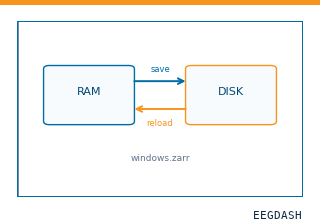 Save and reload prepared dataCache a windowed dataset to disk and reattach it without recompute.
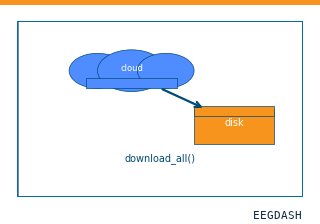 Download a dataset locallyPrefetch BIDS files to a local cache and validate the layout.
Swap any load_dataset(...) call for nm000112 to reproduce the tutorial on this dataset.
Citation
Yisi Liu, Olga Sourina, Minh Khoa Nguyen (2023). FACED - Finer-grained Affective Computing EEG Dataset. 10.82901/nemar.nm000112
Provenance
¹Contributed to nemar in BIDS format.
²Curated & ingested by the EEGDash catalog; see CITATION.cff for canonical reference.
³Persistent identifier: 10.82901/nemar.nm000112.
See Also#
eegdash.dataset.EEGDashDataseteegdash.dataset