


NM000110: eeg dataset, 24 subjects#
CHB-MIT
Access recordings and metadata through EEGDash.
Citation: Jack Connolly, Herman Edwards, Blaise Bourgeois, S. Ted Treves, Ali Shoeb, John Guttag (2010). CHB-MIT. 10.82901/nemar.nm000110
Modality: eeg Subjects: 24 Recordings: 686 License: ODC-By-1.0 Source: nemar
Metadata: Complete (100%)
24-participant EEG dataset — CHB-MIT.
Quickstart#
Install
pip install eegdash
Access the data
from eegdash.dataset import NM000110

dataset = NM000110(cache_dir="./data")
# Get the raw object of the first recording
raw = dataset.datasets[0].raw
print(raw.info)
Filter by subject
dataset = NM000110(cache_dir="./data", subject="01")
Advanced query
dataset = NM000110(
    cache_dir="./data",
    query={"subject": {"$in": ["01", "02"]}},
)
Iterate recordings
for rec in dataset:
    print(rec.subject, rec.raw.info['sfreq'])
If you use this dataset in your research, please cite the original authors.
BibTeX
@dataset{nm000110,
  title = {CHB-MIT},
  author = {Jack Connolly and Herman Edwards and Blaise Bourgeois and S. Ted Treves and Ali Shoeb and John Guttag},
  doi = {10.82901/nemar.nm000110},
  url = {https://doi.org/10.82901/nemar.nm000110},
}
About This Dataset#
The CHB-MIT Scalp EEG Database consists of EEG recordings from pediatric subjects with intractable seizures. This dataset was collected at the Children’s Hospital Boston and includes recordings from 22 subjects (5 males, ages 3-22; and 17 females, ages 1.5-19) with epilepsy. The recordings contain 198 annotated seizures and were originally collected to characterize seizures and assess patients’ candidacy for surgical intervention.
Subjects were monitored for up to several days following withdrawal of anti-seizure medication in a controlled hospital environment. The purpose was to capture and characterize their seizure patterns using continuous scalp EEG monitoring. Each case (subject) contains between 9 and 42 continuous EEG recording files. All signals were sampled at 256 samples per second with 16-bit resolution. Most files contain 23 EEG signals recorded using the International 10-20 system of EEG electrode positions and nomenclature. The recordings use bipolar montages, where each channel represents the potential difference between two electrode sites. Hardware limitations resulted in gaps between consecutively-numbered files, typically 10 seconds or less, during which signals were not recorded. Most recording files contain exactly one hour of digitized EEG signals, though some cases contain two-hour or four-hour recordings. Additional signals such as ECG and vagal nerve stimulus (VNS) were recorded in some cases.
CHB-MIT
Introduction
Description of the preprocessing if any
The original .edf files from PhysioNet have been converted to BIDS format. Channel names have been standardized to match the standard 10-05 montage naming convention. Bipolar channel pairs are represented in the format “Electrode1-Electrode2” (e.g., “FP1-F7”). Non-EEG channels such as ECG are preserved with appropriate BIDS channel types. Channels that did not match expected formats or could not be mapped to the standard montage were marked as “misc” type. All protected health information (PHI) in the original files has been replaced with surrogate information. Dates have been replaced with surrogate dates while preserving time relationships between files. Subject birthdates are calculated based on age at recording time when available.
View full README
CHB-MIT
Introduction
Description of the preprocessing if any
The original .edf files from PhysioNet have been converted to BIDS format. Channel names have been standardized to match the standard 10-05 montage naming convention. Bipolar channel pairs are represented in the format “Electrode1-Electrode2” (e.g., “FP1-F7”). Non-EEG channels such as ECG are preserved with appropriate BIDS channel types. Channels that did not match expected formats or could not be mapped to the standard montage were marked as “misc” type. All protected health information (PHI) in the original files has been replaced with surrogate information. Dates have been replaced with surrogate dates while preserving time relationships between files. Subject birthdates are calculated based on age at recording time when available.
Description of the event values if any
The events.tsv files contain seizure onset and offset annotations. Each seizure event has: - onset: Time in seconds from the beginning of the recording when the seizure starts - duration: Duration of the seizure in seconds - value: “seizure” - indicating a seizure event - sample: Sample number at onset
The seizure annotations were originally marked with ‘[’ for onset and ‘]’ for offset in the .seizures annotation files and have been converted to BIDS-compliant event format. In total, the dataset contains 198 seizure events across all subjects (182 in the original 23 cases, plus 16 additional seizures from case chb24 added in December 2010).
Citation
When using this dataset, please cite: 1. Ali Shoeb. Application of Machine Learning to Epileptic Seizure Onset Detection and Treatment. PhD Thesis, Massachusetts Institute of Technology, September 2009. http://hdl.handle.net/1721.1/54669 2. Guttag, J. (2010). CHB-MIT Scalp EEG Database (version 1.0.0). PhysioNet. https://doi.org/10.13026/C2K01R 3. Goldberger, A., Amaral, L., Glass, L., Hausdorff, J., Ivanov, P. C., Mark, R., … & Stanley, H. E. (2000). PhysioBank, PhysioToolkit, and PhysioNet: Components of a new research resource for complex physiologic signals. Circulation [Online]. 101 (23), pp. e215–e220.
Data curators: Pierre Guetschel (BIDS conversion) Original data collection team: - Jack Connolly, REEGT (Children’s Hospital Boston) - Herman Edwards, REEGT (Children’s Hospital Boston) - Blaise Bourgeois, MD (Children’s Hospital Boston) - S. Ted Treves, MD (Children’s Hospital Boston) - Ali Shoeb, PhD (Massachusetts Institute of Technology)
- Professor John Guttag (Massachusetts Institute of Technology)
Automatic report
Report automatically generated by ``mne_bids.make_report()``.
The CHB-MIT dataset was created by Jack Connolly, Herman Edwards, Blaise
Bourgeois, S. Ted Treves, Ali Shoeb, and John Guttag and conforms to BIDS version 1.7.0. This report was generated with MNE-BIDS (https://doi.org/10.21105/joss.01896). The dataset consists of 24 participants (comprised of 5 male and 18 female participants; handedness were all unknown; ages ranged from 71.0 to 91.0 (mean = 79.04, std = 5.51; 1 with unknown age)) .
Data was recorded using an EEG system sampled at 256.0 Hz with line noise at n/a Hz. There were 686 scans in total. Recording durations ranged from 600.0 to 14427.0 seconds (mean = 5158.26, std = 3657.58), for a total of 3538564.32 seconds of data recorded over all scans. For each dataset, there were on average 26.03 (std = 3.81) recording channels per scan, out of which 26.03 (std = 3.81) were used in analysis (0.0 +/- 0.0 were removed from analysis).
NEMAR Metadata#
[](https://doi.org/10.82901/nemar.nm000110) # CHB-MIT ## Introduction The CHB-MIT Scalp EEG Database consists of EEG recordings from pediatric subjects with intractable seizures. This dataset was collected at the Children’s Hospital Boston and includes recordings from 22 subjects (5 males, ages 3-22; and 17 females, ages 1.5-19) with epilepsy. The recordings contain 198 annotated seizures and were originally collected to characterize seizures and assess patients’ candidacy for surgical intervention. ## Overview of the experiment Subjects were monitored for up to several days following withdrawal of anti-seizure medication in a controlled hospital environment. The purpose was to capture and characterize their seizure patterns using continuous scalp EEG monitoring. Each case (subject) contains between 9 and 42 continuous EEG recording files. All signals were sampled at 256 samples per second with 16-bit resolution. Most files contain 23 EEG signals recorded using the International 10-20 system of EEG electrode positions and nomenclature. The recordings use bipolar montages, where each channel represents the potential difference between two electrode sites. Hardware limitations resulted in gaps between consecutively-numbered files, typically 10 seconds or less, during which signals were not recorded. Most recording files contain exactly one hour of digitized EEG signals, though some cases contain two-hour or four-hour recordings. Additional signals such as ECG and vagal nerve stimulus (VNS) were recorded in some cases. ## Description of the preprocessing if any The original .edf files from PhysioNet have been converted to BIDS format. Channel names have been standardized to match the standard 10-05 montage naming convention. Bipolar channel pairs are represented in the format “Electrode1-Electrode2” (e.g., “FP1-F7”). Non-EEG channels such as ECG are preserved with appropriate BIDS channel types. Channels that did not match expected formats or could not be mapped to the standard montage were marked as “misc” type. All protected health information (PHI) in the original files has been replaced with surrogate information. Dates have been replaced with surrogate dates while preserving time relationships between files. Subject birthdates are calculated based on age at recording time when available. ## Description of the event values if any The events.tsv files contain seizure onset and offset annotations. Each seizure event has: - onset: Time in seconds from the beginning of the recording when the seizure starts - duration: Duration of the seizure in seconds - value: “seizure” - indicating a seizure event - sample: Sample number at onset The seizure annotations were originally marked with ‘[’ for onset and ‘]’ for offset in the .seizures annotation files and have been converted to BIDS-compliant event format. In total, the dataset contains 198 seizure events across all subjects (182 in the original 23 cases, plus 16 additional seizures from case chb24 added in December 2010). ## Citation When using this dataset, please cite: 1. Ali Shoeb. Application of Machine Learning to Epileptic Seizure Onset Detection and Treatment. PhD Thesis, Massachusetts Institute of Technology, September 2009. http://hdl.handle.net/1721.1/54669 2. Guttag, J. (2010). CHB-MIT Scalp EEG Database (version 1.0.0). PhysioNet. https://doi.org/10.13026/C2K01R 3. Goldberger, A., Amaral, L., Glass, L., Hausdorff, J., Ivanov, P. C., Mark, R., … & Stanley, H. E. (2000). PhysioBank, PhysioToolkit, and PhysioNet: Components of a new research resource for complex physiologic signals. Circulation [Online]. 101 (23), pp. e215–e220. Data curators: Pierre Guetschel (BIDS conversion) Original data collection team: - Jack Connolly, REEGT (Children’s Hospital Boston) - Herman Edwards, REEGT (Children’s Hospital Boston) - Blaise Bourgeois, MD (Children’s Hospital Boston) - S. Ted Treves, MD (Children’s Hospital Boston) - Ali Shoeb, PhD (Massachusetts Institute of Technology) - Professor John Guttag (Massachusetts Institute of Technology) — ## Automatic report Report automatically generated by `mne_bids.make_report()`. > The CHB-MIT dataset was created by Jack Connolly, Herman Edwards, Blaise Bourgeois, S. Ted Treves, Ali Shoeb, and John Guttag and conforms to BIDS version 1.7.0. This report was generated with MNE-BIDS (https://doi.org/10.21105/joss.01896). The dataset consists of 24 participants (comprised of 5 male and 18 female participants; handedness were all unknown; ages ranged from 71.0 to 91.0 (mean = 79.04, std = 5.51; 1 with unknown age)) . Data was recorded using an EEG system sampled at 256.0 Hz with line noise at n/a Hz. There were 686 scans in total. Recording durations ranged from 600.0 to 14427.0 seconds (mean = 5158.26, std = 3657.58), for a total of 3538564.32 seconds of data recorded over all scans. For each dataset, there were on average 26.03 (std = 3.81) recording channels per scan, out of which 26.03 (std = 3.81) were used in analysis (0.0 +/- 0.0 were removed from analysis).
License: ODC-By-1.0
Authors:
Jack Connolly
Herman Edwards
Blaise Bourgeois
Ted Treves
Ali Shoeb
… and 1 more
Versions:
Version |
DOI |
Released |
|---|---|---|
|
Cohort#
Dataset Statistics#
Age distribution by gender (n=23, range 71–89 yr, mean 79.0 yr)
Sex composition
Channel counts (ch)
Sampling frequencies: 256.0 Hz (n=686 recordings)
Total recording duration: 982 h
Signal · Electrodes & live trace#
Live trace viewer — sub-chb05 · task-rest · run-17
Showing one representative recording out of
24 subjects and 686 recordings in this dataset.
Browse the full set on OpenNeuro;
drop any other _eeg.{set,edf,bdf,vhdr} file onto the
viewer (or pass ?eeg=<url>) to inspect it.
No scalp electrode layout is currently indexed for this dataset. Once the eegdash montage registry ingests it, the interactive viewer will appear here automatically.
NEMAR Processing Statistics#
The plots below are generated by NEMAR’s automated EEG pipeline. The histogram shows pipeline success for data cleaning and ICA decomposition, the percentage of data frames and EEG channels retained after artefact removal, line noise per channel (RMS, dB), and the age/gender distribution of participants.

HED event descriptors word cloud

Manifest#
File Explorer#
Browse the BIDS file structure of this dataset. Records are fetched on demand from the EEGDash catalog the first time you open the explorer.
Full dataset metadata table
Dataset ID |
|
Title |
CHB-MIT |
Author (year) |
|
Canonical |
— |
Importable as |
|
Year |
2010 |
Authors |
Jack Connolly, Herman Edwards, Blaise Bourgeois, S. Ted Treves, Ali Shoeb, John Guttag |
License |
ODC-By-1.0 |
Citation / DOI |
|
Source links |
Copy-paste BibTeX
@dataset{nm000110,
  title = {CHB-MIT},
  author = {Jack Connolly and Herman Edwards and Blaise Bourgeois and S. Ted Treves and Ali Shoeb and John Guttag},
  doi = {10.82901/nemar.nm000110},
  url = {https://doi.org/10.82901/nemar.nm000110},
}
API Reference#
eegdash.datasetEEGDashDatasetNM000110 · Connolly2010eegdash/dataset/registry.py · [source ↗]- class eegdash.dataset.NM000110(cache_dir: str, query: dict | None = None, s3_bucket: str | None = None, **kwargs)[source]#
CHB-MIT
- Study:
nm000110(NeMAR)- Author (year):
Connolly2010- Canonical:
—
Also importable as:
NM000110,Connolly2010.Modality:
eeg; Experiment type:Clinical; Subject type:Epilepsy. Subjects: 24; recordings: 0; tasks: 1.- Parameters:
cache_dir (str | Path) – Directory where data are cached locally.
query (dict | None) – Additional MongoDB-style filters to AND with the dataset selection. Must not contain the key
dataset.s3_bucket (str | None) – Base S3 bucket used to locate the data.
**kwargs (dict) – Additional keyword arguments forwarded to
EEGDashDataset.
- data_dir#
Local dataset cache directory (
cache_dir / dataset_id).- Type:
Path
Notes
Each item is a recording; recording-level metadata are available via
dataset.description.querysupports MongoDB-style filters on fields inALLOWED_QUERY_FIELDSand is combined with the dataset filter. Dataset-specific caveats are not provided in the summary metadata.References
OpenNeuro dataset: https://openneuro.org/datasets/nm000110 NeMAR dataset: https://nemar.org/dataexplorer/detail?dataset_id=nm000110 DOI: https://doi.org/10.82901/nemar.nm000110
Examples
>>> from eegdash.dataset import NM000110
>>> dataset = NM000110(cache_dir="./data")
>>> recording = dataset[0]
>>> raw = recording.load()
- __init__(cache_dir: str, query: dict | None = None, s3_bucket: str | None = None, **kwargs)[source]#
- save(path: str, overwrite: bool = False, offset: int = 0)[source]#
Save datasets to files by creating one subdirectory for each dataset:
path/
    0/
        0-raw.fif | 0-epo.fif
        description.json
        raw_preproc_kwargs.json (if raws were preprocessed)
        window_kwargs.json (if this is a windowed dataset)
        window_preproc_kwargs.json  (if windows were preprocessed)
        target_name.json (if target_name is not None and dataset is raw)
    1/
        1-raw.fif | 1-epo.fif
        description.json
        raw_preproc_kwargs.json (if raws were preprocessed)
        window_kwargs.json (if this is a windowed dataset)
        window_preproc_kwargs.json  (if windows were preprocessed)
        target_name.json (if target_name is not None and dataset is raw)
- Parameters:
path (str) –
- Directory in which subdirectories are created to store
-raw.fif | -epo.fif and .json files to.
overwrite (bool) – Whether to delete old subdirectories that will be saved to in this call.
offset (int) – If provided, the integer is added to the id of the dataset in the concat. This is useful in the setting of very large datasets, where one dataset has to be processed and saved at a time to account for its original position.
BaseDataset from braindecode — windowed via create_windows_from_events.braindecodeDataLoader; supports parallel workers and on-the-fly augmentations.pytorchdatasets.load_dataset("EEGDash/nm000110").huggingface Find datasets with the EEGDash APIQuery the catalogue, filter by task or modality, list candidates.
 Load one EEG recordingResolve a single record to an MNE Raw with channels and events.
 EEG recording to PyTorch DataLoaderWrap braindecode windows in a DataLoader for model training.
 Preprocess EEG and create windowsFilter, resample, epoch — and persist the windowed dataset.
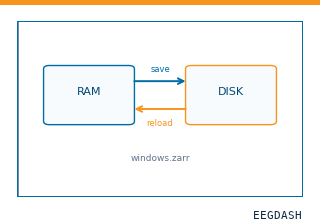 Save and reload prepared dataCache a windowed dataset to disk and reattach it without recompute.
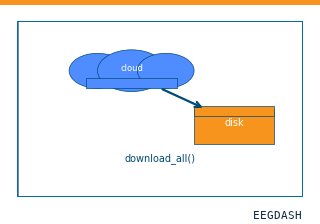 Download a dataset locallyPrefetch BIDS files to a local cache and validate the layout.
Swap any load_dataset(...) call for nm000110 to reproduce the tutorial on this dataset.
Citation
Jack Connolly, Herman Edwards, Blaise Bourgeois, S. Ted Treves, Ali Shoeb, … (2010). CHB-MIT. 10.82901/nemar.nm000110
Provenance
¹Contributed to nemar in BIDS format.
²Curated & ingested by the EEGDash catalog; see CITATION.cff for canonical reference.
³Persistent identifier: 10.82901/nemar.nm000110.
See Also#
eegdash.dataset.EEGDashDataseteegdash.dataset