


NM000453: ieeg dataset, 131 subjects#
DBS microelectrode recordings from 132 patients, University Clinical Centre Gdańsk (Osowska, Szymański, Libionka 2026; derivative: authors’ band-passed, classifier-selected MER segments)
Access recordings and metadata through EEGDash.
Citation: Katarzyna Osowska, Julian Szymański, Witold Libionka (2026). DBS microelectrode recordings from 132 patients, University Clinical Centre Gdańsk (Osowska, Szymański, Libionka 2026; derivative: authors’ band-passed, classifier-selected MER segments). 10.82901/nemar.nm000453
Modality: ieeg Subjects: 131 Recordings: 6675 License: CC0-1.0 Source: nemar
Metadata: Complete (100%)
131-participant iEEG dataset — DBS microelectrode recordings from 132 patients, University Clinical Centre Gdańsk (Osowska, Szymański, Libionka 2026; derivative: authors' band-passed, classifier-selected MER segments).
Quickstart#
Install
pip install eegdash
Access the data
from eegdash.dataset import NM000453

dataset = NM000453(cache_dir="./data")
# Get the raw object of the first recording
raw = dataset.datasets[0].raw
print(raw.info)
Filter by subject
dataset = NM000453(cache_dir="./data", subject="01")
Advanced query
dataset = NM000453(
    cache_dir="./data",
    query={"subject": {"$in": ["01", "02"]}},
)
Iterate recordings
for rec in dataset:
    print(rec.subject, rec.raw.info['sfreq'])
If you use this dataset in your research, please cite the original authors.
BibTeX
@dataset{nm000453,
  title = {DBS microelectrode recordings from 132 patients, University Clinical Centre Gdańsk (Osowska, Szymański, Libionka 2026; derivative: authors' band-passed, classifier-selected MER segments)},
  author = {Katarzyna Osowska and Julian Szymański and Witold Libionka},
  doi = {10.82901/nemar.nm000453},
  url = {https://doi.org/10.82901/nemar.nm000453},
}
About This Dataset#
Intraoperative microelectrode recordings (MER) from 132 patients undergoing deep brain stimulation (DBS) surgery at the
University Clinical Centre in Gdańsk, Poland (Parkinson’s disease, Huntington’s disease, dystonia, tremor/other movement disorders, epilepsy; awake surgery under local anaesthesia). Up to five parallel microelectrodes (Ben-gun: central, anterior, posterior, medial, lateral; inomed ISIS MER system, MicroMacro electrodes) were advanced towards the target, recording at successive depths relative to the MRI-planned target (typically from -10 mm; 0 mm = target). Scalp reference, chest ground.
signal-quality classifier (0.5 s windows: neuronal activity / background / artifact) kept only the longest continuous
fragment with >= 3 consecutive ‘neuronal activity’ windows, or else the longest artefact-free fragment of >= 2 s. Here: median 10.00 s, range 1.54-143.41 s; 22.43 h in 6646 runs. RecordingType is ‘epoched’ (one epoch per run).
source_time_start_s(scans.tsv) is the offset of the kept segment within the unreleased site recording. Segments of different electrodes at the same depth were selected independently and are NOT time-aligned; each electrode/depth is its own run.
DBS microelectrode recordings, University Clinical Centre Gdańsk (Osowska, Szymański, Libionka 2026) - DERIVATIVE
The signal channel
<label>is the CSV column ‘2: preprocessed’: software band-pass 500-5000 Hz (4th-order Butterworth, causal scipy lfilter, after an int16 overflow correction) and amplitude clipped to +-500 (authors’ parser, codes.zip).Units: the authors had no manufacturer conversion; amplitudes are ‘instrument units’ that they interpret as ‘µV-equivalent’, possibly off by an unknown global factor (article, Methods). They are labelled µV here as in the release README; treat the absolute scale with that caveat.
View full README
DBS microelectrode recordings, University Clinical Centre Gdańsk (Osowska, Szymański, Libionka 2026) - DERIVATIVE
The signal channel
<label>is the CSV column ‘2: preprocessed’: software band-pass 500-5000 Hz (4th-order Butterworth, causal scipy lfilter, after an int16 overflow correction) and amplitude clipped to +-500 (authors’ parser, codes.zip).Units: the authors had no manufacturer conversion; amplitudes are ‘instrument units’ that they interpret as ‘µV-equivalent’, possibly off by an unknown global factor (article, Methods). They are labelled µV here as in the release README; treat the absolute scale with that caveat.
Where the CSV also has ‘1: raw’ (the 29 annotated excerpts), it is kept as a second channel
<label>_raw: the int16 values decoded from the .dat file over the same samples, unfiltered (also instrument units).
Layout
sub-<P###>: the authors’ patient code (P001-P132).participants.tsv: age, sex, ICD-10 diagnosis, surgical target and procedure year-month from metadata.csv (36 patients have no retrievable diagnosis/target: n/a).task-mer_acq-<label>_run-<k>: one released MER/<P>/depth<d>_kanal<label>.csv. acq = electrode label from the file name in lower case (central, anterior, posterior, medial, lateral; a leading digit 3-5 is the amplifier channel number that the authors’ parser kept, e.g. 3central;centrallateralis the label ‘Central3Lateral’ that comes from a protocol line ‘2: Central3: Lateral’ and cannot be resolved to one electrode). Run k follows the protocol site order, then depth. Side (hemisphere) is not recorded in the release: n/a.task-merannot_acq-<label>_run-<k>: the 29 expert-annotated excerpts (brain_layer_annotations; patients P106 and P121, GPi-targeted trajectories): striatum/putamen, external (GPe) or internal (GPi) globus pallidus. The structure is in scans.tsv (annotated_structure) and events.tsv. When the excerpt’s interval on the source time axis lies inside the matching task-mer segment (same patient, electrode, depth), that run’s events.tsv carries anannotated_<structure>interval too. This mapping uses the CSV ‘Time’ values only: the excerpts’ preprocessed values are NOT sample-identical to the task-mer files (the authors evidently filtered the excerpts separately), see code/conversion_report.json.sub-<P>_scans.tsv: depth (mm from target), electrode label, trajectory, protocol site number, source CSV, segment start/end on the source time axis, samples, raw-channel flag, annotated structure.events.tsvper run: the whole segment (mer_segment, with depth) plus any annotated intervals.Data format: BrainVision IEEE float32 at 20 kHz. The CSV text values (float64 printouts of float32 processing) were cast to float32; max |difference| 1.53e-05; every .eeg was read back and is bit-identical to float32 of the CSV values; the integer raw values are exact. MNE reads every file.
No electrode coordinates are released; brain location is given by depth relative to the planned target, the surgical target per patient and the expert structure labels.
sourcedata/mostwiedzynq8v-t162
metadata.csv and readme.md (unchanged), the per-patient acquisition protocols (dates set to day 01, archive ids in .dat paths replaced by <id>), the authors’ codes.zip (member dates day 01, .pyc dropped, one first name in the parser’s exclusion list redacted), and file_map.tsv (every source CSV -> BIDS run, with SHA-256 of the released CSV).
Related data (not duplicates)
Mendeley Data tr93krswn2 (‘RAW Deep Brain Stimulation Recordings’, 46 PD surgeries) and h9tbvgjgjv (‘STN/SNr raw DBS recordings’, 83 PD surgeries) by K.A. Ciecierski and T. Mandat (CC BY-NC 3.0, Warsaw) are separate MER collections; they are not on NEMAR. This Gdańsk release states a single centre (University Clinical Centre in Gdańsk) and shares no patient codes or file names with them; no patient overlap can be established from either release.
Source
Dataset: Szymański J. et al., “DBS recordings”, MOST Wiedzy, Gdańsk University of Technology, doi:10.34808/nq8v-t162 (CC0 1.0).
Article: Osowska K., Szymański J., Libionka W. (2026) “A Dataset of Microelectrode Recordings from Deep Brain Stimulation Procedures”, Scientific Data 13:870, doi:10.1038/s41597-026-07492-w.
Code: kasiaOsowska/Deep-Brain-Stimulation-Microelectrode-Recordings
Funding: Gdańsk University of Technology (partial); CAISE platform grant KPOD.05.10-IW.10-0005/24 (European IPCEI-CIS, NRRP).
Ethics: University of Warmia and Mazury 43/2016; Nicolaus Copernicus University Toruń KB 416/2008, KB 28/2010.
Privacy
Patient codes P001-P132 are the authors’ pseudonyms. metadata.csv holds year-month only. The protocols carried full procedure dates (day set to 01 here) and numeric archive ids in file paths (replaced). No names were found in file names, CSV headers or protocols.
NEMAR Metadata#
[](https://doi.org/10.82901/nemar.nm000453) # DBS microelectrode recordings, University Clinical Centre Gdańsk (Osowska, Szymański, Libionka 2026) - DERIVATIVE Intraoperative microelectrode recordings (MER) from 132 patients undergoing deep brain stimulation (DBS) surgery at the University Clinical Centre in Gdańsk, Poland (Parkinson’s disease, Huntington’s disease, dystonia, tremor/other movement disorders, epilepsy; awake surgery under local anaesthesia). Up to five parallel microelectrodes (Ben-gun: central, anterior, posterior, medial, lateral; inomed ISIS MER system, MicroMacro electrodes) were advanced towards the target, recording at successive depths relative to the MRI-planned target (typically from -10 mm; 0 mm = target). Scalp reference, chest ground. ## THIS IS A DERIVATIVE DATASET of short, filtered, classifier-selected segments - The original surgical recordings (ISIS .dat files, int16, 20 kHz) were NOT released by the authors. - Every run is ONE SHORT SEGMENT, not a continuous recording: from each depth recording the authors’ Random Forest
signal-quality classifier (0.5 s windows: neuronal activity / background / artifact) kept only the longest continuous fragment with >= 3 consecutive ‘neuronal activity’ windows, or else the longest artefact-free fragment of >= 2 s. Here: median 10.00 s, range 1.54-143.41 s; 22.43 h in 6646 runs. RecordingType is ‘epoched’ (one epoch per run). source_time_start_s (scans.tsv) is the offset of the kept segment within the unreleased site recording. Segments of different electrodes at the same depth were selected independently and are NOT time-aligned; each electrode/depth is its own run.
The signal channel <label> is the CSV column ‘2: preprocessed’: software band-pass 500-5000 Hz (4th-order Butterworth, causal scipy lfilter, after an int16 overflow correction) and amplitude clipped to +-500 (authors’ parser, codes.zip).
Units: the authors had no manufacturer conversion; amplitudes are ‘instrument units’ that they interpret as ‘µV-equivalent’, possibly off by an unknown global factor (article, Methods). They are labelled µV here as in the release README; treat the absolute scale with that caveat.
Where the CSV also has ‘1: raw’ (the 29 annotated excerpts), it is kept as a second channel <label>_raw: the int16 values decoded from the .dat file over the same samples, unfiltered (also instrument units).
## Layout - sub-<P###>: the authors’ patient code (P001-P132). participants.tsv: age, sex, ICD-10 diagnosis, surgical target and
procedure year-month from metadata.csv (36 patients have no retrievable diagnosis/target: n/a).
task-mer_acq-<label>_run-<k>: one released MER/<P>/depth<d>_kanal<label>.csv. acq = electrode label from the file name in lower case (central, anterior, posterior, medial, lateral; a leading digit 3-5 is the amplifier channel number that the authors’ parser kept, e.g. 3central; centrallateral is the label ‘Central3Lateral’ that comes from a protocol line ‘2: Central3: Lateral’ and cannot be resolved to one electrode). Run k follows the protocol site order, then depth. Side (hemisphere) is not recorded in the release: n/a.
task-merannot_acq-<label>_run-<k>: the 29 expert-annotated excerpts (brain_layer_annotations; patients P106 and P121, GPi-targeted trajectories): striatum/putamen, external (GPe) or internal (GPi) globus pallidus. The structure is in scans.tsv (annotated_structure) and events.tsv. When the excerpt’s interval on the source time axis lies inside the matching task-mer segment (same patient, electrode, depth), that run’s events.tsv carries an annotated_<structure> interval too. This mapping uses the CSV ‘Time’ values only: the excerpts’ preprocessed values are NOT sample-identical to the task-mer files (the authors evidently filtered the excerpts separately), see code/conversion_report.json.
sub-<P>_scans.tsv: depth (mm from target), electrode label, trajectory, protocol site number, source CSV, segment start/end on the source time axis, samples, raw-channel flag, annotated structure.
events.tsv per run: the whole segment (mer_segment, with depth) plus any annotated intervals.
Data format: BrainVision IEEE float32 at 20 kHz. The CSV text values (float64 printouts of float32 processing) were cast to float32; max |difference| 1.53e-05; every .eeg was read back and is bit-identical to float32 of the CSV values; the integer raw values are exact. MNE reads every file.
No electrode coordinates are released; brain location is given by depth relative to the planned target, the surgical target per patient and the expert structure labels.
## sourcedata/most_wiedzy_nq8v-t162 metadata.csv and readme.md (unchanged), the per-patient acquisition protocols (dates set to day 01, archive ids in .dat paths replaced by <id>), the authors’ codes.zip (member dates day 01, .pyc dropped, one first name in the parser’s exclusion list redacted), and file_map.tsv (every source CSV -> BIDS run, with SHA-256 of the released CSV). ## Related data (not duplicates) Mendeley Data tr93krswn2 (‘RAW Deep Brain Stimulation Recordings’, 46 PD surgeries) and h9tbvgjgjv (‘STN/SNr raw DBS recordings’, 83 PD surgeries) by K.A. Ciecierski and T. Mandat (CC BY-NC 3.0, Warsaw) are separate MER collections; they are not on NEMAR. This Gdańsk release states a single centre (University Clinical Centre in Gdańsk) and shares no patient codes or file names with them; no patient overlap can be established from either release. ## Source - Dataset: Szymański J. et al., “DBS recordings”, MOST Wiedzy, Gdańsk University of Technology, doi:10.34808/nq8v-t162 (CC0 1.0). - Article: Osowska K., Szymański J., Libionka W. (2026) “A Dataset of Microelectrode Recordings from Deep Brain Stimulation
Procedures”, Scientific Data 13:870, doi:10.1038/s41597-026-07492-w.
Code: kasiaOsowska/Deep-Brain-Stimulation-Microelectrode-Recordings
Funding: Gdańsk University of Technology (partial); CAISE platform grant KPOD.05.10-IW.10-0005/24 (European IPCEI-CIS, NRRP).
Ethics: University of Warmia and Mazury 43/2016; Nicolaus Copernicus University Toruń KB 416/2008, KB 28/2010.
## Privacy Patient codes P001-P132 are the authors’ pseudonyms. metadata.csv holds year-month only. The protocols carried full procedure dates (day set to 01 here) and numeric archive ids in file paths (replaced). No names were found in file names, CSV headers or protocols.
License: CC0-1.0
Authors:
Katarzyna Osowska
Julian Szymański
Witold Libionka
Versions:
Version |
DOI |
Released |
|---|---|---|
|
Cohort#
Dataset Statistics#
Age distribution by gender (n=121, range 9–75 yr, mean 53.5 yr)
Sex composition
Channel counts (ch)
Sampling frequencies: 20000.0 Hz (n=6675 recordings)
Total recording duration: 22 h 26 min
Signal · Electrodes & live trace#
Live trace viewer — sub-P001 · task-mer · run-015
Showing one representative recording out of
131 subjects and 6675 recordings in this dataset.
Browse the full set on OpenNeuro;
drop any other _ieeg.{set,edf,bdf,vhdr} file onto the
viewer (or pass ?ieeg=<url>) to inspect it.
No scalp electrode layout is currently indexed for this dataset. Once the eegdash montage registry ingests it, the interactive viewer will appear here automatically.
NEMAR Processing Statistics#
The plots below are generated by NEMAR’s automated EEG pipeline. The histogram shows pipeline success for data cleaning and ICA decomposition, the percentage of data frames and EEG channels retained after artefact removal, line noise per channel (RMS, dB), and the age/gender distribution of participants.

HED event descriptors word cloud

Manifest#
File Explorer#
Browse the BIDS file structure of this dataset. Records are fetched on demand from the EEGDash catalog the first time you open the explorer.
Full dataset metadata table
Dataset ID |
|
Title |
DBS microelectrode recordings from 132 patients, University Clinical Centre Gdańsk (Osowska, Szymański, Libionka 2026; derivative: authors’ band-passed, classifier-selected MER segments) |
Author (year) |
— |
Canonical |
— |
Importable as |
|
Year |
2026 |
Authors |
Katarzyna Osowska, Julian Szymański, Witold Libionka |
License |
CC0-1.0 |
Citation / DOI |
|
Source links |
OpenNeuro | NeMAR | Source URL |
Copy-paste BibTeX
@dataset{nm000453,
  title = {DBS microelectrode recordings from 132 patients, University Clinical Centre Gdańsk (Osowska, Szymański, Libionka 2026; derivative: authors' band-passed, classifier-selected MER segments)},
  author = {Katarzyna Osowska and Julian Szymański and Witold Libionka},
  doi = {10.82901/nemar.nm000453},
  url = {https://doi.org/10.82901/nemar.nm000453},
}
API Reference#
eegdash.datasetEEGDashDataset- class eegdash.dataset.NM000453(cache_dir: str, query: dict | None = None, s3_bucket: str | None = None, **kwargs)[source]#
DBS microelectrode recordings from 132 patients, University Clinical Centre Gdańsk (Osowska, Szymański, Libionka 2026; derivative: authors’ band-passed, classifier-selected MER segments)
- Study:
nm000453(NeMAR)- Author (year):
—
- Canonical:
—
Also importable as:
NM000453.Modality:
ieeg; Subject type:Unknown. Subjects: 131; recordings: 6675; tasks: 2.- Parameters:
cache_dir (str | Path) – Directory where data are cached locally.
query (dict | None) – Additional MongoDB-style filters to AND with the dataset selection. Must not contain the key
dataset.s3_bucket (str | None) – Base S3 bucket used to locate the data.
**kwargs (dict) – Additional keyword arguments forwarded to
EEGDashDataset.
- data_dir#
Local dataset cache directory (
cache_dir / dataset_id).- Type:
Path
Notes
Each item is a recording; recording-level metadata are available via
dataset.description.querysupports MongoDB-style filters on fields inALLOWED_QUERY_FIELDSand is combined with the dataset filter. Dataset-specific caveats are not provided in the summary metadata.References
OpenNeuro dataset: https://openneuro.org/datasets/nm000453 NeMAR dataset: https://nemar.org/dataexplorer/detail?dataset_id=nm000453 DOI: https://doi.org/10.82901/nemar.nm000453
Examples
>>> from eegdash.dataset import NM000453
>>> dataset = NM000453(cache_dir="./data")
>>> recording = dataset[0]
>>> raw = recording.load()
- __init__(cache_dir: str, query: dict | None = None, s3_bucket: str | None = None, **kwargs)[source]#
- save(path: str, overwrite: bool = False, offset: int = 0)[source]#
Save datasets to files by creating one subdirectory for each dataset:
path/
    0/
        0-raw.fif | 0-epo.fif
        description.json
        raw_preproc_kwargs.json (if raws were preprocessed)
        window_kwargs.json (if this is a windowed dataset)
        window_preproc_kwargs.json  (if windows were preprocessed)
        target_name.json (if target_name is not None and dataset is raw)
    1/
        1-raw.fif | 1-epo.fif
        description.json
        raw_preproc_kwargs.json (if raws were preprocessed)
        window_kwargs.json (if this is a windowed dataset)
        window_preproc_kwargs.json  (if windows were preprocessed)
        target_name.json (if target_name is not None and dataset is raw)
- Parameters:
path (str) –
- Directory in which subdirectories are created to store
-raw.fif | -epo.fif and .json files to.
overwrite (bool) – Whether to delete old subdirectories that will be saved to in this call.
offset (int) – If provided, the integer is added to the id of the dataset in the concat. This is useful in the setting of very large datasets, where one dataset has to be processed and saved at a time to account for its original position.
BaseDataset from braindecode — windowed via create_windows_from_events.braindecodeDataLoader; supports parallel workers and on-the-fly augmentations.pytorch Find datasets with the EEGDash APIQuery the catalogue, filter by task or modality, list candidates.
 Load one EEG recordingResolve a single record to an MNE Raw with channels and events.
 EEG recording to PyTorch DataLoaderWrap braindecode windows in a DataLoader for model training.
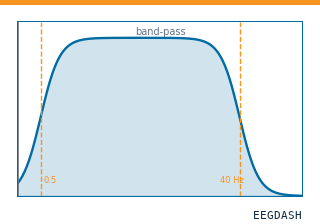 Preprocess EEG and create windowsFilter, resample, epoch — and persist the windowed dataset.
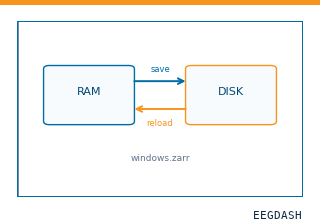 Save and reload prepared dataCache a windowed dataset to disk and reattach it without recompute.
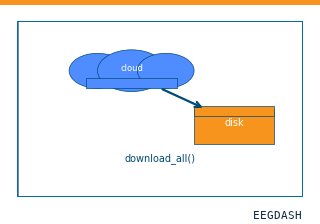 Download a dataset locallyPrefetch BIDS files to a local cache and validate the layout.
Swap any load_dataset(...) call for nm000453 to reproduce the tutorial on this dataset.
Citation
Katarzyna Osowska, Julian Szymański, Witold Libionka (2026). DBS microelectrode recordings from 132 patients, University Clinical Centre Gdańsk (Osowska, Szymański, Libionka 2026; derivative: authors' band-passed, classifier-selected MER segments). 10.82901/nemar.nm000453
Provenance
¹Contributed to nemar in BIDS format.
²Curated & ingested by the EEGDash catalog; see CITATION.cff for canonical reference.
³Persistent identifier: 10.82901/nemar.nm000453.
See Also#
eegdash.dataset.EEGDashDataseteegdash.dataset