


NM000456: eeg, ieeg dataset, 13 subjects#
Human-AI collaboration for co-managing epilepsy in real time: scalp EEG and SEEG from 13 epilepsy monitoring unit patients
Access recordings and metadata through EEGDash.
Citation: Haoer Shi, Zack Goldblum, William Ojemann, Carlos Aguila, Kerry Nix, Katherine Walsh, Sarah Lavelle, Kathryn Davis, Nishant Sinha, Erin Conrad, Brian Litt (20). Human-AI collaboration for co-managing epilepsy in real time: scalp EEG and SEEG from 13 epilepsy monitoring unit patients. 10.82901/nemar.nm000456
Modality: eeg, ieeg Subjects: 13 Recordings: 69 License: CC-BY-NC-SA-4.0 Source: nemar
Metadata: Complete (100%)
13-participant EEG, iEEG dataset — Human-AI collaboration for co-managing epilepsy in real time: scalp EEG and SEEG from 13 epilepsy monitoring unit patients.
Quickstart#
Install
pip install eegdash
Access the data
from eegdash.dataset import NM000456

dataset = NM000456(cache_dir="./data")
# Get the raw object of the first recording
raw = dataset.datasets[0].raw
print(raw.info)
Filter by subject
dataset = NM000456(cache_dir="./data", subject="01")
Advanced query
dataset = NM000456(
    cache_dir="./data",
    query={"subject": {"$in": ["01", "02"]}},
)
Iterate recordings
for rec in dataset:
    print(rec.subject, rec.raw.info['sfreq'])
If you use this dataset in your research, please cite the original authors.
BibTeX
@dataset{nm000456,
  title = {Human-AI collaboration for co-managing epilepsy in real time: scalp EEG and SEEG from 13 epilepsy monitoring unit patients},
  author = {Haoer Shi and Zack Goldblum and William Ojemann and Carlos Aguila and Kerry Nix and Katherine Walsh and Sarah Lavelle and Kathryn Davis and Nishant Sinha and Erin Conrad and Brian Litt},
  doi = {10.82901/nemar.nm000456},
  url = {https://doi.org/10.82901/nemar.nm000456},
}
About This Dataset#
BIDS version of Pennsieve Discover dataset 696 version 2, “Data for Human-AI Collaboration for Co-Managing Epilepsy in Real Time”
(Shi, Goldblum, Ojemann, Aguila, Nix, Walsh, Lavelle, Davis, Sinha, Conrad, Litt; doi:10.26275/xbu9-ulpn; licence CC-BY-NC-SA-4.0, kept unchanged). Paper: Goldblum Z, Shi H, Xu Z, et al., “An Implantable Device that Converses with Patients and Learns to Co-Manage Epilepsy”, medRxiv 2026, doi:10.64898/2026.01.26.26344234. Ethics: University of Pennsylvania IRB protocol #849276. Task / paradigm. Inpatient prototype linking scalp and intracranial EEG to a conversational AI agent on the patient’s smartphone during continuous video-EEG monitoring in the Penn Level 4 EMU; 13 patients; seizure detection retrained with patient/clinician feedback (Goldblum, Shi et al., medRxiv 2026, doi:10.64898/2026.01.26.26344234, abstract and Methods). Deposit: one EDF per recording day (raw_data/edf/PennEPIxxxxx/PennEPIxxxxx_dayNN.edf, 69 files), annotation CSVs (seizure_events, patient_events, sleep, medications, databricks_events) and model outputs (deposit readme.md). Modality.**participants.tsv recording_type: 11 of 13 patients are Scalp** EEG; only 2 are SEEG (PID007 = PennEPI00202, PID013 = PennEPI02154) (deposit files/participants.tsv). The atlas modality “ECoG+SEEG” should read “scalp EEG + SEEG (2 of 13)”. Recording system / filters. Processing: bandpass 0.5-100 Hz (scalp) and 0.5-250 Hz (iEEG), notch 60 and 120 Hz; CAR or bipolar re-referencing per algorithm (paper Methods “Cloud data processing”). Acquisition amplifier and sampling rate not stated (n/a; read from EDF headers). Localisation method. None in the deposit or paper: only clinical lobe-level epilepsy localization and laterality per patient (participants.tsv Localization/Laterality). PennEPI00202 and PennEPI02154 (the 2 SEEG patients) are not among the 104 public PennEPI single-subject releases, so no public electrode localisation exists for them.
together as one dataset as deposited.
Human-AI collaboration for co-managing epilepsy in real time (scalp EEG + SEEG)
One EDF per deposit recording day:
sub-<id>_task-monitoring_run-<NN>_<eeg|ieeg>.edf, run NN = deposit day number (filedayNN); 69 recordings. Scalp: 46 signal channels at 256 Hz (10-20 + Fpz/Pz/A1/A2, F9/F10/T9/T10/P9/P10, LOC/ROC, EKG, X11-X18, DC1-4, OSAT, PR). SEEG: 1024 Hz depth contacts (L*), plus ECG, DC, TRIG, OSAT/PR/Pleth and unused inputs (C99-C128, typed MISC). Channel types are inferred from labels; references, amplifier and hardware filters are not stated by the source (n/a).events.tsvper run from the deposit annotation CSVs: seizures (seizure_events), patient push-button events (patient_events),
View full README
Human-AI collaboration for co-managing epilepsy in real time (scalp EEG + SEEG)
One EDF per deposit recording day:
sub-<id>_task-monitoring_run-<NN>_<eeg|ieeg>.edf, run NN = deposit day number (filedayNN); 69 recordings. Scalp: 46 signal channels at 256 Hz (10-20 + Fpz/Pz/A1/A2, F9/F10/T9/T10/P9/P10, LOC/ROC, EKG, X11-X18, DC1-4, OSAT, PR). SEEG: 1024 Hz depth contacts (L*), plus ECG, DC, TRIG, OSAT/PR/Pleth and unused inputs (C99-C128, typed MISC). Channel types are inferred from labels; references, amplifier and hardware filters are not stated by the source (n/a).events.tsvper run from the deposit annotation CSVs: seizures (seizure_events), patient push-button events (patient_events), sleep-stage onsets (sleep), medication administrations (medications) and patient annotations through the human-AI platform (databricks_events). Onsets are seconds from the EDF start; events outside the span of any EDF stay only in sourcedata/annots.derivatives/humanai-seizure-detection/: the deposit’sintermediate_data(CITL day-by-day predictions, fine-tuning runs, metrics) - model outputs, not raw data.sourcedata/:annots/(deposit annotation CSVs, dates scrubbed as below),pennsieve/(deposit readme, changelog, manifest, participants table and sidecar),edf_provenance.tsv(deposit path -> BIDS path, sha256 of the data records of both files),edf_discontinuities.tsv(EDF+D record gaps).
Conversion and privacy review (2026-10-08)
The EDFs are the deposit files with a header-only edit. Every header was scanned: patient field
X X X X, recording fieldStartdate DD-JAN-2001 X X X, no names or hospital numbers in any header or channel field, and no text in any EDF+ annotation of any data record. The deposit had already shifted all dates to January 2001 with DD = deposit day; following the release rule (keep year and month, day -> 01) the day was set to 01 in the startdate field and in theStartdaterecording subfield of 58 files (the other 11 files already had day 01 and are byte-identical to the deposit). The data records are unchanged: sha256 of the data region of each written file equals that of the deposit file (sourcedata/edf_provenance.tsv). The original headers of the edited files (only difference: the day number, which is kept as the run label / scans.tsv deposit_day) are not redistributed; the unchanged deposit files remain at the DOI above.Annotation CSVs and model outputs: every timestamp column has its day set to 01, and the deposit day is kept in an added
<column>_deposit_daycolumn, so relative timing is preserved. One free-text medication note in participants.tsv contained a month/day calendar date; its day was set to 01.PennEPI identifiers are research identifiers of the Penn epilepsy registry, used as subject labels as in the deposit.
Some scalp files are EDF+D (discontinuous; scans.tsv edf_subtype). RecordingDuration is the wall-clock span; gaps are listed in sourcedata/edf_discontinuities.tsv.
Overlap with other public data
Not in NEMAR, OpenNeuro, DANDI or EEGDash (searched 2026-10-07/08 by DOI, title, authors and PennEPI ids). Of the 13 patients, only PennEPI00037 also has a public PennEPI single-subject release (Pennsieve 613, doi:10.26275/zm8u-bo15), which holds a different, intracranial recording; the scalp EEG here is not part of it. The two SEEG patients (PennEPI00202, PennEPI02154) have no PennEPI release, and no electrode coordinates or contact localisation are public for them (participants.tsv gives the clinical lobe-level localisation and laterality only).
Electrodes
The two SEEG subjects have electrodes.tsv (contact names from the EDF labels, group = shaft prefix, x/y/z = n/a) and
coordsystem.json (space Other, unknown): no electrode localisation is public for them. events.tsv event_text holds the
source free text; response_onset is the patient’s platform response time in seconds from the EDF start.
NEMAR Metadata#
[](https://doi.org/10.82901/nemar.nm000456) # Human-AI collaboration for co-managing epilepsy in real time (scalp EEG + SEEG) BIDS version of Pennsieve Discover dataset 696 version 2, “Data for Human-AI Collaboration for Co-Managing Epilepsy in Real Time” (Shi, Goldblum, Ojemann, Aguila, Nix, Walsh, Lavelle, Davis, Sinha, Conrad, Litt; doi:10.26275/xbu9-ulpn; licence CC-BY-NC-SA-4.0, kept unchanged). Paper: Goldblum Z, Shi H, Xu Z, et al., “An Implantable Device that Converses with Patients and Learns to Co-Manage Epilepsy”, medRxiv 2026, doi:10.64898/2026.01.26.26344234. Ethics: University of Pennsylvania IRB protocol #849276. Task / paradigm. Inpatient prototype linking scalp and intracranial EEG to a conversational AI agent on the patient’s smartphone during continuous video-EEG monitoring in the Penn Level 4 EMU; 13 patients; seizure detection retrained with patient/clinician feedback (Goldblum, Shi et al., medRxiv 2026, doi:10.64898/2026.01.26.26344234, abstract and Methods). Deposit: one EDF per recording day (raw_data/edf/PennEPIxxxxx/PennEPIxxxxx_dayNN.edf, 69 files), annotation CSVs (seizure_events, patient_events, sleep, medications, databricks_events) and model outputs (deposit readme.md). Modality. participants.tsv recording_type: 11 of 13 patients are Scalp EEG; only 2 are SEEG (PID007 = PennEPI00202, PID013 = PennEPI02154) (deposit files/participants.tsv). The atlas modality “ECoG+SEEG” should read “scalp EEG + SEEG (2 of 13)”. Recording system / filters. Processing: bandpass 0.5-100 Hz (scalp) and 0.5-250 Hz (iEEG), notch 60 and 120 Hz; CAR or bipolar re-referencing per algorithm (paper Methods “Cloud data processing”). Acquisition amplifier and sampling rate not stated (n/a; read from EDF headers). Localisation method. None in the deposit or paper: only clinical lobe-level epilepsy localization and laterality per patient (participants.tsv Localization/Laterality). PennEPI00202 and PennEPI02154 (the 2 SEEG patients) are not among the 104 public PennEPI single-subject releases, so no public electrode localisation exists for them. ## Contents - 13 subjects, sub-<PennEPI id>. 11 scalp-EEG patients (eeg/) and 2 stereo-EEG patients (ieeg/: sub-PennEPI00202, sub-PennEPI02154), kept
together as one dataset as deposited.
One EDF per deposit recording day: sub-<id>_task-monitoring_run-<NN>_<eeg|ieeg>.edf, run NN = deposit day number (file dayNN); 69 recordings. Scalp: 46 signal channels at 256 Hz (10-20 + Fpz/Pz/A1/A2, F9/F10/T9/T10/P9/P10, LOC/ROC, EKG, X11-X18, DC1-4, OSAT, PR). SEEG: 1024 Hz depth contacts (L*), plus ECG, DC, TRIG, OSAT/PR/Pleth and unused inputs (C99-C128, typed MISC). Channel types are inferred from labels; references, amplifier and hardware filters are not stated by the source (n/a).
events.tsv per run from the deposit annotation CSVs: seizures (seizure_events), patient push-button events (patient_events), sleep-stage onsets (sleep), medication administrations (medications) and patient annotations through the human-AI platform (databricks_events). Onsets are seconds from the EDF start; events outside the span of any EDF stay only in sourcedata/annots.
derivatives/humanai-seizure-detection/: the deposit’s intermediate_data (CITL day-by-day predictions, fine-tuning runs, metrics) - model outputs, not raw data.
sourcedata/: annots/ (deposit annotation CSVs, dates scrubbed as below), pennsieve/ (deposit readme, changelog, manifest, participants table and sidecar), edf_provenance.tsv (deposit path -> BIDS path, sha256 of the data records of both files), edf_discontinuities.tsv (EDF+D record gaps).
## Conversion and privacy review (2026-10-08) - The EDFs are the deposit files with a header-only edit. Every header was scanned: patient field X X X X, recording field
Startdate DD-JAN-2001 X X X, no names or hospital numbers in any header or channel field, and no text in any EDF+ annotation of any data record. The deposit had already shifted all dates to January 2001 with DD = deposit day; following the release rule (keep year and month, day -> 01) the day was set to 01 in the startdate field and in the Startdate recording subfield of 58 files (the other 11 files already had day 01 and are byte-identical to the deposit). The data records are unchanged: sha256 of the data region of each written file equals that of the deposit file (sourcedata/edf_provenance.tsv). The original headers of the edited files (only difference: the day number, which is kept as the run label / scans.tsv deposit_day) are not redistributed; the unchanged deposit files remain at the DOI above.
Annotation CSVs and model outputs: every timestamp column has its day set to 01, and the deposit day is kept in an added <column>_deposit_day column, so relative timing is preserved. One free-text medication note in participants.tsv contained a month/day calendar date; its day was set to 01.
PennEPI identifiers are research identifiers of the Penn epilepsy registry, used as subject labels as in the deposit.
Some scalp files are EDF+D (discontinuous; scans.tsv edf_subtype). RecordingDuration is the wall-clock span; gaps are listed in sourcedata/edf_discontinuities.tsv.
## Overlap with other public data Not in NEMAR, OpenNeuro, DANDI or EEGDash (searched 2026-10-07/08 by DOI, title, authors and PennEPI ids). Of the 13 patients, only PennEPI00037 also has a public PennEPI single-subject release (Pennsieve 613, doi:10.26275/zm8u-bo15), which holds a different, intracranial recording; the scalp EEG here is not part of it. The two SEEG patients (PennEPI00202, PennEPI02154) have no PennEPI release, and no electrode coordinates or contact localisation are public for them (participants.tsv gives the clinical lobe-level localisation and laterality only). ## Electrodes The two SEEG subjects have electrodes.tsv (contact names from the EDF labels, group = shaft prefix, x/y/z = n/a) and coordsystem.json (space Other, unknown): no electrode localisation is public for them. events.tsv event_text holds the source free text; response_onset is the patient’s platform response time in seconds from the EDF start.
License: CC-BY-NC-SA-4.0
Authors:
Haoer Shi
Zack Goldblum
William Ojemann
Carlos Aguila
Kerry Nix
… and 6 more
Versions:
Version |
DOI |
Released |
|---|---|---|
|
Cohort#
Dataset Statistics#
Sex composition
Channel counts (ch)
Sampling frequencies (Hz)
Total recording duration: 1392 h
Signal · Electrodes & live trace#
Live trace viewer — sub-PennEPI00037 · task-monitoring · run-06
Showing one representative recording out of
13 subjects and 69 recordings in this dataset.
Browse the full set on OpenNeuro;
drop any other _eeg.{set,edf,bdf,vhdr} file onto the
viewer (or pass ?eeg=<url>) to inspect it.
Electrode layout — EEG · 28 sensors — 28 channels
NEMAR Processing Statistics#
The plots below are generated by NEMAR’s automated EEG pipeline. The histogram shows pipeline success for data cleaning and ICA decomposition, the percentage of data frames and EEG channels retained after artefact removal, line noise per channel (RMS, dB), and the age/gender distribution of participants.

HED event descriptors word cloud

Manifest#
File Explorer#
Browse the BIDS file structure of this dataset. Records are fetched on demand from the EEGDash catalog the first time you open the explorer.
Full dataset metadata table
Dataset ID |
|
Title |
Human-AI collaboration for co-managing epilepsy in real time: scalp EEG and SEEG from 13 epilepsy monitoring unit patients |
Author (year) |
— |
Canonical |
— |
Importable as |
|
Year |
20 |
Authors |
Haoer Shi, Zack Goldblum, William Ojemann, Carlos Aguila, Kerry Nix, Katherine Walsh, Sarah Lavelle, Kathryn Davis, Nishant Sinha, Erin Conrad, Brian Litt |
License |
CC-BY-NC-SA-4.0 |
Citation / DOI |
|
Source links |
OpenNeuro | NeMAR | Source URL |
Copy-paste BibTeX
@dataset{nm000456,
  title = {Human-AI collaboration for co-managing epilepsy in real time: scalp EEG and SEEG from 13 epilepsy monitoring unit patients},
  author = {Haoer Shi and Zack Goldblum and William Ojemann and Carlos Aguila and Kerry Nix and Katherine Walsh and Sarah Lavelle and Kathryn Davis and Nishant Sinha and Erin Conrad and Brian Litt},
  doi = {10.82901/nemar.nm000456},
  url = {https://doi.org/10.82901/nemar.nm000456},
}
API Reference#
eegdash.datasetEEGDashDataset- class eegdash.dataset.NM000456(cache_dir: str, query: dict | None = None, s3_bucket: str | None = None, **kwargs)[source]#
Human-AI collaboration for co-managing epilepsy in real time: scalp EEG and SEEG from 13 epilepsy monitoring unit patients
- Study:
nm000456(NeMAR)- Author (year):
—
- Canonical:
—
Also importable as:
NM000456.Modality:
eeg, ieeg; Subject type:Unknown. Subjects: 13; recordings: 69; tasks: 1.- Parameters:
cache_dir (str | Path) – Directory where data are cached locally.
query (dict | None) – Additional MongoDB-style filters to AND with the dataset selection. Must not contain the key
dataset.s3_bucket (str | None) – Base S3 bucket used to locate the data.
**kwargs (dict) – Additional keyword arguments forwarded to
EEGDashDataset.
- data_dir#
Local dataset cache directory (
cache_dir / dataset_id).- Type:
Path
Notes
Each item is a recording; recording-level metadata are available via
dataset.description.querysupports MongoDB-style filters on fields inALLOWED_QUERY_FIELDSand is combined with the dataset filter. Dataset-specific caveats are not provided in the summary metadata.References
OpenNeuro dataset: https://openneuro.org/datasets/nm000456 NeMAR dataset: https://nemar.org/dataexplorer/detail?dataset_id=nm000456 DOI: https://doi.org/10.82901/nemar.nm000456
Examples
>>> from eegdash.dataset import NM000456
>>> dataset = NM000456(cache_dir="./data")
>>> recording = dataset[0]
>>> raw = recording.load()
- __init__(cache_dir: str, query: dict | None = None, s3_bucket: str | None = None, **kwargs)[source]#
- save(path: str, overwrite: bool = False, offset: int = 0)[source]#
Save datasets to files by creating one subdirectory for each dataset:
path/
    0/
        0-raw.fif | 0-epo.fif
        description.json
        raw_preproc_kwargs.json (if raws were preprocessed)
        window_kwargs.json (if this is a windowed dataset)
        window_preproc_kwargs.json  (if windows were preprocessed)
        target_name.json (if target_name is not None and dataset is raw)
    1/
        1-raw.fif | 1-epo.fif
        description.json
        raw_preproc_kwargs.json (if raws were preprocessed)
        window_kwargs.json (if this is a windowed dataset)
        window_preproc_kwargs.json  (if windows were preprocessed)
        target_name.json (if target_name is not None and dataset is raw)
- Parameters:
path (str) –
- Directory in which subdirectories are created to store
-raw.fif | -epo.fif and .json files to.
overwrite (bool) – Whether to delete old subdirectories that will be saved to in this call.
offset (int) – If provided, the integer is added to the id of the dataset in the concat. This is useful in the setting of very large datasets, where one dataset has to be processed and saved at a time to account for its original position.
BaseDataset from braindecode — windowed via create_windows_from_events.braindecodeDataLoader; supports parallel workers and on-the-fly augmentations.pytorch Find datasets with the EEGDash APIQuery the catalogue, filter by task or modality, list candidates.
 Load one EEG recordingResolve a single record to an MNE Raw with channels and events.
 EEG recording to PyTorch DataLoaderWrap braindecode windows in a DataLoader for model training.
 Preprocess EEG and create windowsFilter, resample, epoch — and persist the windowed dataset.
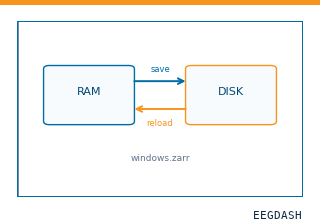 Save and reload prepared dataCache a windowed dataset to disk and reattach it without recompute.
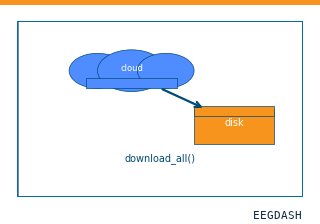 Download a dataset locallyPrefetch BIDS files to a local cache and validate the layout.
Swap any load_dataset(...) call for nm000456 to reproduce the tutorial on this dataset.
Citation
Haoer Shi, Zack Goldblum, William Ojemann, Carlos Aguila, Kerry Nix, … (20). Human-AI collaboration for co-managing epilepsy in real time: scalp EEG and SEEG from 13 epilepsy monitoring unit patients. 10.82901/nemar.nm000456
Provenance
¹Contributed to nemar in BIDS format.
²Curated & ingested by the EEGDash catalog; see CITATION.cff for canonical reference.
³Persistent identifier: 10.82901/nemar.nm000456.
See Also#
eegdash.dataset.EEGDashDataseteegdash.dataset