


NM000371: ieeg dataset, 10 subjects#
Dataset of Speech Production in intracranial Electroencephalography (SingleWordProductionDutch-iBIDS)
Access recordings and metadata through EEGDash.
Citation: Maxime Verwoert, Maarten C. Ottenhoff, Sophocles Goulis, Albert J. Colon, Louis Wagner, Simon Tousseyn, Johannes P. van Dijk, Pieter L. Kubben, Christian Herff (2022). Dataset of Speech Production in intracranial Electroencephalography (SingleWordProductionDutch-iBIDS). 10.82901/nemar.nm000371
Modality: ieeg Subjects: 10 Recordings: 20 License: CC-BY-4.0 Source: nemar
Metadata: Complete (100%)
10-participant iEEG dataset — Dataset of Speech Production in intracranial Electroencephalography (SingleWordProductionDutch-iBIDS).
Quickstart#
Install
pip install eegdash
Access the data
from eegdash.dataset import NM000371

dataset = NM000371(cache_dir="./data")
# Get the raw object of the first recording
raw = dataset.datasets[0].raw
print(raw.info)
Filter by subject
dataset = NM000371(cache_dir="./data", subject="01")
Advanced query
dataset = NM000371(
    cache_dir="./data",
    query={"subject": {"$in": ["01", "02"]}},
)
Iterate recordings
for rec in dataset:
    print(rec.subject, rec.raw.info['sfreq'])
If you use this dataset in your research, please cite the original authors.
BibTeX
@dataset{nm000371,
  title = {Dataset of Speech Production in intracranial Electroencephalography (SingleWordProductionDutch-iBIDS)},
  author = {Maxime Verwoert and Maarten C. Ottenhoff and Sophocles Goulis and Albert J. Colon and Louis Wagner and Simon Tousseyn and Johannes P. van Dijk and Pieter L. Kubben and Christian Herff},
  doi = {10.82901/nemar.nm000371},
  url = {https://doi.org/10.82901/nemar.nm000371},
}
About This Dataset#
Stereo-EEG (sEEG) from 10 Dutch-speaking patients with pharmaco-resistant epilepsy (5 female, 5 male, age 16-50 years,
mean 32) who read aloud 100 Dutch words shown one at a time on a laptop screen (2 s word, 1 s fixation cross; about 300 s per participant), while intracranial EEG and the participant’s speech audio were recorded simultaneously. 1103 recorded contacts in total, covering cortical and subcortical (incl. deep) structures.
Original publication: Verwoert, M., Ottenhoff, M.C., Goulis, S., Colon, A.J., Wagner, L., Tousseyn, S., van Dijk, J.P.,
Kubben, P.L., Herff, C. Dataset of Speech Production in intracranial Electroencephalography. Scientific Data 9, 434 (2022). https://doi.org/10.1038/s41597-022-01542-9 Original data record: https://doi.org/10.17605/OSF.IO/NRGX6 (OSF project “Dataset of Speech Production in intracranial Electroencephalography”, license CC-By Attribution 4.0 International). Code: neuralinterfacinglab/SingleWordProductionDutch
Dataset of Speech Production in intracranial Electroencephalography (SingleWordProductionDutch-iBIDS)
Overview
Participants / cohort (data descriptor, Methods ‘Participants’ and Table 1)
10 participants with pharmaco-resistant epilepsy (mean age 32, range 16-50; 5 male, 5 female), all native speakers of Dutch,
View full README
Dataset of Speech Production in intracranial Electroencephalography (SingleWordProductionDutch-iBIDS)
Overview
Participants / cohort (data descriptor, Methods ‘Participants’ and Table 1)
10 participants with pharmaco-resistant epilepsy (mean age 32, range 16-50; 5 male, 5 female), all native speakers of Dutch, implanted with sEEG as part of their clinical therapy at the Academic Center for Epileptology Kempenhaeghe/Maastricht UMC+ (The Netherlands); electrode locations purely clinical. 1317 contacts implanted, 1103 recorded (Table 1).
Implanted hemispheres (from the released electrode tables): left only 2 (sub-08, sub-09), right only 2 (sub-04, sub-10), bilateral 6. 5-19 shafts per participant.
Not reported by the source: handedness, seizure onset zone, aetiology, epilepsy duration, medication, recording dates/years.
Ethics: approved by the Institutional Review Boards of Maastricht University and Epilepsy Center Kempenhaeghe; written informed consent; recording supervised by experienced healthcare staff.
Task (data descriptor, ‘Experimental design’)
Participants read aloud words shown on a laptop screen: one random word from the stimulus library (Dutch IFA corpus extended
with the numbers one to ten in word form) was shown for 2 s, during which the participant read it aloud once, followed by a
1 s fixation cross; 100 words, about 300 s per participant. Instruction (source sidecar): “Speak the word presented on the
screen out-loud”. events.tsv gives every word and fixation with the word text in value.
Acquisition (data descriptor)
Electrodes: Dixi Medical Microdeep sEEG shafts (platinum-iridium, 0.8 mm diameter, 2 mm contacts, 1.5 mm spacing, 5-18 contacts per shaft); locations purely clinical.
Amplifiers: two or more Micromed SD LTM amplifiers (64 channels each). Contacts referenced to a common white-matter contact.
Recorded at 1024 Hz or 2048 Hz and downsampled by the authors to 1024 Hz (all files here: 1024 Hz). No further filtering by us.
Audio: notebook microphone at 48 kHz, pitch-shifted by the authors by a random constant offset of 1-3 semitones (up or down) per participant to protect anonymity (LibRosa). Neural, audio and stimulus streams were synchronised with LabStreamingLayer.
Task: words from the Dutch IFA corpus extended with the numbers one to ten; each word shown 2 s, then a 1 s fixation cross, 100 words.
Electrode localisation: img_pipe (pre-implant T1 MRI co-registered with post-implant CT); anatomical labels (channels.tsv ‘description’) from the Destrieux atlas. Coordinates in native ACPC space (mm).
Ethics: approved by the Institutional Review Boards of Maastricht University and Epilepsy Center Kempenhaeghe; written informed consent.
Preprocessing applied by the source
Only the authors’ downsampling to 1024 Hz (where recorded at 2048 Hz; method not reported) and the pitch shift of the audio.
The descriptor’s technical validation (70-170 Hz envelope, 50 Hz harmonics band-stop) is analysis code, not applied to the files. The authors report no significant acoustic contamination of the neural data (Roussel et al. method, p > 0.01, all participants).
Files (what is in this package)
sub-XX/ieeg/*_ieeg.vhdr/.vmrk/.eeg: the NWB ‘iEEG’ stream of each participant. Signals: the NWB ‘iEEG’ acquisition stream (float64, microvolts) re-encoded losslessly as BrainVision integer codes x resolution (every source sample is an exact integer multiple of the stated resolution); per participant: sub-01: INT_16 x 0.09765625 uV; sub-02: INT_16 x 0.09765625 uV; sub-03: INT_16 x 0.09765625 uV; sub-04: INT_16 x 0.09765625 uV; sub-05: INT_16 x 0.09765625 uV; sub-06: the original NWB file is the raw file (its float64 values are not on any integer grid, consistent with the authors’ downsampling from 2048 Hz - not verified; no lossless BrainVision encoding exists; this NWB also contains the Audio and Stimulus streams); sub-07: INT_16 x 0.09765625 uV; sub-08: INT_16 x 0.09765625 uV; sub-09: the original NWB file is the raw file (its float64 values are not on any integer grid, consistent with the authors’ downsampling from 2048 Hz - not verified; no lossless BrainVision encoding exists; this NWB also contains the Audio and Stimulus streams); sub-10: INT_16 x 0.09765625 uV. Verified per participant: integer code x resolution equals the source float64 value for every sample; same sample count, channel order, 1024 Hz.*_channels.tsv,*_events.tsv,*_space-ACPC_electrodes.tsv,*_coordsystem.json: from the source iBIDS release (electrodes/coordsystem renamed without the task entity). Sidecars enriched from the data descriptor (amplifier and electrode make; the source sidecar’s ‘BrainProducts’ manufacturer field is kept as SourceManufacturerField and replaced by Micromed as stated in the paper).participants.tsv: age and sex from the source; contacts implanted/recorded from Table 1 of the paper; implanted hemisphere(s) and shaft counts derived from the released electrode tables (see participants.json). Handedness is not reported (n/a).derivatives/freesurfer/sub-XX/: FreeSurfer outputs released by the authors (pial meshes, skull-stripped brain, Destrieux and white-matter parcellations), byte-identical.sourcedata/osf-nrgx6/: the original OSF zip (byte-identical, checksums in acquisition_receipt.json) and its unpacked content, including the original*_ieeg.nwbfiles. The participants’ pitch-shifted speech audio (48 kHz, NWB acquisition ‘Audio’) and the per-sample stimulus word stream (‘Stimulus’) are in these NWB files (and in the raw NWB files of the participants listed above as NWB), exactly as openly published by the authors under CC BY 4.0; read them with pynwb or h5py (acquisition/Audio/data+acquisition/Audio/timestamps, LSL clock). The iEEG timestamps of the NWB files are the LSL timestamps; the BrainVision files assume the nominal 1024 Hz rate stated by the source.
Known caveats / notes
No recording dates are present (NWB session_start_time is the placeholder 2020-01-01T12:00).
Events: onset in seconds from the first iEEG sample; ‘sample’ is the 0-based iEEG sample index from the source.
License: CC BY 4.0 (OSF record). Cite the paper and the OSF record when using these data.
How to load
import mne_bids
bp = mne_bids.BIDSPath(root=".", subject="01", task="wordProduction", datatype="ieeg")
raw = mne_bids.read_raw_bids(bp)  # BrainVision; sub-06 and sub-09 are NWB (read with pynwb)
Citation
Verwoert M. et al. (2022) Sci Data 9:434, https://doi.org/10.1038/s41597-022-01542-9 ; data https://doi.org/10.17605/OSF.IO/NRGX6 .
Provenance
OSF project nrgx6 (created 2022-03-25), file SingleWordProductionDutch-iBIDS.zip; data descriptor full text PMC9307753.
Metadata enriched 2026-10-07 (participants cohort text, implanted hemispheres/shaft counts from the released electrode tables, task/acquisition sections, corrected SourceManufacturerField note).
NEMAR Metadata#
[](https://doi.org/10.82901/nemar.nm000371) # Dataset of Speech Production in intracranial Electroencephalography (SingleWordProductionDutch-iBIDS) ## Overview Stereo-EEG (sEEG) from 10 Dutch-speaking patients with pharmaco-resistant epilepsy (5 female, 5 male, age 16-50 years, mean 32) who read aloud 100 Dutch words shown one at a time on a laptop screen (2 s word, 1 s fixation cross; about 300 s per participant), while intracranial EEG and the participant’s speech audio were recorded simultaneously. 1103 recorded contacts in total, covering cortical and subcortical (incl. deep) structures. Original publication: Verwoert, M., Ottenhoff, M.C., Goulis, S., Colon, A.J., Wagner, L., Tousseyn, S., van Dijk, J.P., Kubben, P.L., Herff, C. Dataset of Speech Production in intracranial Electroencephalography. Scientific Data 9, 434 (2022). https://doi.org/10.1038/s41597-022-01542-9 Original data record: https://doi.org/10.17605/OSF.IO/NRGX6 (OSF project “Dataset of Speech Production in intracranial Electroencephalography”, license CC-By Attribution 4.0 International). Code: neuralinterfacinglab/SingleWordProductionDutch ## Participants / cohort (data descriptor, Methods ‘Participants’ and Table 1) - 10 participants with pharmaco-resistant epilepsy (mean age 32, range 16-50; 5 male, 5 female), all native speakers of Dutch,
implanted with sEEG as part of their clinical therapy at the Academic Center for Epileptology Kempenhaeghe/Maastricht UMC+ (The Netherlands); electrode locations purely clinical. 1317 contacts implanted, 1103 recorded (Table 1).
Implanted hemispheres (from the released electrode tables): left only 2 (sub-08, sub-09), right only 2 (sub-04, sub-10), bilateral 6. 5-19 shafts per participant.
Not reported by the source: handedness, seizure onset zone, aetiology, epilepsy duration, medication, recording dates/years.
Ethics: approved by the Institutional Review Boards of Maastricht University and Epilepsy Center Kempenhaeghe; written informed consent; recording supervised by experienced healthcare staff.
## Task (data descriptor, ‘Experimental design’) Participants read aloud words shown on a laptop screen: one random word from the stimulus library (Dutch IFA corpus extended with the numbers one to ten in word form) was shown for 2 s, during which the participant read it aloud once, followed by a 1 s fixation cross; 100 words, about 300 s per participant. Instruction (source sidecar): “Speak the word presented on the screen out-loud”. events.tsv gives every word and fixation with the word text in value. ## Acquisition (data descriptor) - Electrodes: Dixi Medical Microdeep sEEG shafts (platinum-iridium, 0.8 mm diameter, 2 mm contacts, 1.5 mm spacing, 5-18 contacts per shaft); locations purely clinical. - Amplifiers: two or more Micromed SD LTM amplifiers (64 channels each). Contacts referenced to a common white-matter contact. - Recorded at 1024 Hz or 2048 Hz and downsampled by the authors to 1024 Hz (all files here: 1024 Hz). No further filtering by us. - Audio: notebook microphone at 48 kHz, pitch-shifted by the authors by a random constant offset of 1-3 semitones (up or down) per participant to protect anonymity (LibRosa). Neural, audio and stimulus streams were synchronised with LabStreamingLayer. - Task: words from the Dutch IFA corpus extended with the numbers one to ten; each word shown 2 s, then a 1 s fixation cross, 100 words. - Electrode localisation: img_pipe (pre-implant T1 MRI co-registered with post-implant CT); anatomical labels (channels.tsv ‘description’) from the Destrieux atlas. Coordinates in native ACPC space (mm). - Ethics: approved by the Institutional Review Boards of Maastricht University and Epilepsy Center Kempenhaeghe; written informed consent. ## Preprocessing applied by the source Only the authors’ downsampling to 1024 Hz (where recorded at 2048 Hz; method not reported) and the pitch shift of the audio. The descriptor’s technical validation (70-170 Hz envelope, 50 Hz harmonics band-stop) is analysis code, not applied to the files. The authors report no significant acoustic contamination of the neural data (Roussel et al. method, p > 0.01, all participants). ## Files (what is in this package) - sub-XX/ieeg/*_ieeg.vhdr/.vmrk/.eeg: the NWB ‘iEEG’ stream of each participant. Signals: the NWB ‘iEEG’ acquisition stream (float64, microvolts) re-encoded losslessly as BrainVision integer codes x resolution (every source sample is an exact integer multiple of the stated resolution); per participant: sub-01: INT_16 x 0.09765625 uV; sub-02: INT_16 x 0.09765625 uV; sub-03: INT_16 x 0.09765625 uV; sub-04: INT_16 x 0.09765625 uV; sub-05: INT_16 x 0.09765625 uV; sub-06: the original NWB file is the raw file (its float64 values are not on any integer grid, consistent with the authors’ downsampling from 2048 Hz - not verified; no lossless BrainVision encoding exists; this NWB also contains the Audio and Stimulus streams); sub-07: INT_16 x 0.09765625 uV; sub-08: INT_16 x 0.09765625 uV; sub-09: the original NWB file is the raw file (its float64 values are not on any integer grid, consistent with the authors’ downsampling from 2048 Hz - not verified; no lossless BrainVision encoding exists; this NWB also contains the Audio and Stimulus streams); sub-10: INT_16 x 0.09765625 uV.
Verified per participant: integer code x resolution equals the source float64 value for every sample; same sample count, channel order, 1024 Hz.
*_channels.tsv, *_events.tsv, *_space-ACPC_electrodes.tsv, *_coordsystem.json: from the source iBIDS release (electrodes/coordsystem renamed without the task entity). Sidecars enriched from the data descriptor (amplifier and electrode make; the source sidecar’s ‘BrainProducts’ manufacturer field is kept as SourceManufacturerField and replaced by Micromed as stated in the paper).
participants.tsv: age and sex from the source; contacts implanted/recorded from Table 1 of the paper; implanted hemisphere(s) and shaft counts derived from the released electrode tables (see participants.json). Handedness is not reported (n/a).
derivatives/freesurfer/sub-XX/: FreeSurfer outputs released by the authors (pial meshes, skull-stripped brain, Destrieux and white-matter parcellations), byte-identical.
sourcedata/osf-nrgx6/: the original OSF zip (byte-identical, checksums in acquisition_receipt.json) and its unpacked content, including the original *_ieeg.nwb files. The participants’ pitch-shifted speech audio (48 kHz, NWB acquisition ‘Audio’) and the per-sample stimulus word stream (‘Stimulus’) are in these NWB files (and in the raw NWB files of the participants listed above as NWB), exactly as openly published by the authors under CC BY 4.0; read them with pynwb or h5py (acquisition/Audio/data + acquisition/Audio/timestamps, LSL clock). The iEEG timestamps of the NWB files are the LSL timestamps; the BrainVision files assume the nominal 1024 Hz rate stated by the source.
## Known caveats / notes
- No recording dates are present (NWB session_start_time is the placeholder 2020-01-01T12:00).
- Events: onset in seconds from the first iEEG sample; ‘sample’ is the 0-based iEEG sample index from the source.
- License: CC BY 4.0 (OSF record). Cite the paper and the OSF record when using these data.
## How to load
`python
import mne_bids
bp = mne_bids.BIDSPath(root=".", subject="01", task="wordProduction", datatype="ieeg")
raw = mne_bids.read_raw_bids(bp)  # BrainVision; sub-06 and sub-09 are NWB (read with pynwb)
`
## Citation
Verwoert M. et al. (2022) Sci Data 9:434, https://doi.org/10.1038/s41597-022-01542-9 ; data https://doi.org/10.17605/OSF.IO/NRGX6 .
## Provenance
OSF project nrgx6 (created 2022-03-25), file SingleWordProductionDutch-iBIDS.zip; data descriptor full text PMC9307753.
Metadata enriched 2026-10-07 (participants cohort text, implanted hemispheres/shaft counts from the released electrode tables,
task/acquisition sections, corrected SourceManufacturerField note).
License: CC-BY-4.0
Authors:
Maxime Verwoert
Maarten C. Ottenhoff
Sophocles Goulis
Albert J. Colon
Louis Wagner
… and 4 more
Versions:
Version |
DOI |
Released |
|---|---|---|
|
Cohort#
Dataset Statistics#
Age distribution by gender (n=10, range 16–50 yr, mean 32.4 yr)
Sex composition
Channel counts (ch)
Sampling frequencies: 1024.0 Hz (n=20 recordings)
Total recording duration: 1 h 39 min
Signal · Electrodes & live trace#
Live trace viewer — sub-04 · task-wordProduction
Showing one representative recording out of
10 subjects and 20 recordings in this dataset.
Browse the full set on OpenNeuro;
drop any other _ieeg.{set,edf,bdf,vhdr} file onto the
viewer (or pass ?ieeg=<url>) to inspect it.
Electrode layout — iEEG · 184 sensors — 184 channels
NEMAR Processing Statistics#
The plots below are generated by NEMAR’s automated EEG pipeline. The histogram shows pipeline success for data cleaning and ICA decomposition, the percentage of data frames and EEG channels retained after artefact removal, line noise per channel (RMS, dB), and the age/gender distribution of participants.

HED event descriptors word cloud

Manifest#
File Explorer#
Browse the BIDS file structure of this dataset. Records are fetched on demand from the EEGDash catalog the first time you open the explorer.
Full dataset metadata table
Dataset ID |
|
Title |
Dataset of Speech Production in intracranial Electroencephalography (SingleWordProductionDutch-iBIDS) |
Author (year) |
— |
Canonical |
— |
Importable as |
|
Year |
2022 |
Authors |
Maxime Verwoert, Maarten C. Ottenhoff, Sophocles Goulis, Albert J. Colon, Louis Wagner, Simon Tousseyn, Johannes P. van Dijk, Pieter L. Kubben, Christian Herff |
License |
CC-BY-4.0 |
Citation / DOI |
|
Source links |
OpenNeuro | NeMAR | Source URL |
Copy-paste BibTeX
@dataset{nm000371,
  title = {Dataset of Speech Production in intracranial Electroencephalography (SingleWordProductionDutch-iBIDS)},
  author = {Maxime Verwoert and Maarten C. Ottenhoff and Sophocles Goulis and Albert J. Colon and Louis Wagner and Simon Tousseyn and Johannes P. van Dijk and Pieter L. Kubben and Christian Herff},
  doi = {10.82901/nemar.nm000371},
  url = {https://doi.org/10.82901/nemar.nm000371},
}
API Reference#
eegdash.datasetEEGDashDataset- class eegdash.dataset.NM000371(cache_dir: str, query: dict | None = None, s3_bucket: str | None = None, **kwargs)[source]#
Dataset of Speech Production in intracranial Electroencephalography (SingleWordProductionDutch-iBIDS)
- Study:
nm000371(NeMAR)- Author (year):
—
- Canonical:
—
Also importable as:
NM000371.Modality:
ieeg; Subject type:Unknown. Subjects: 10; recordings: 20; tasks: 1.- Parameters:
cache_dir (str | Path) – Directory where data are cached locally.
query (dict | None) – Additional MongoDB-style filters to AND with the dataset selection. Must not contain the key
dataset.s3_bucket (str | None) – Base S3 bucket used to locate the data.
**kwargs (dict) – Additional keyword arguments forwarded to
EEGDashDataset.
- data_dir#
Local dataset cache directory (
cache_dir / dataset_id).- Type:
Path
Notes
Each item is a recording; recording-level metadata are available via
dataset.description.querysupports MongoDB-style filters on fields inALLOWED_QUERY_FIELDSand is combined with the dataset filter. Dataset-specific caveats are not provided in the summary metadata.References
OpenNeuro dataset: https://openneuro.org/datasets/nm000371 NeMAR dataset: https://nemar.org/dataexplorer/detail?dataset_id=nm000371 DOI: https://doi.org/10.82901/nemar.nm000371
Examples
>>> from eegdash.dataset import NM000371
>>> dataset = NM000371(cache_dir="./data")
>>> recording = dataset[0]
>>> raw = recording.load()
- __init__(cache_dir: str, query: dict | None = None, s3_bucket: str | None = None, **kwargs)[source]#
- save(path: str, overwrite: bool = False, offset: int = 0)[source]#
Save datasets to files by creating one subdirectory for each dataset:
path/
    0/
        0-raw.fif | 0-epo.fif
        description.json
        raw_preproc_kwargs.json (if raws were preprocessed)
        window_kwargs.json (if this is a windowed dataset)
        window_preproc_kwargs.json  (if windows were preprocessed)
        target_name.json (if target_name is not None and dataset is raw)
    1/
        1-raw.fif | 1-epo.fif
        description.json
        raw_preproc_kwargs.json (if raws were preprocessed)
        window_kwargs.json (if this is a windowed dataset)
        window_preproc_kwargs.json  (if windows were preprocessed)
        target_name.json (if target_name is not None and dataset is raw)
- Parameters:
path (str) –
- Directory in which subdirectories are created to store
-raw.fif | -epo.fif and .json files to.
overwrite (bool) – Whether to delete old subdirectories that will be saved to in this call.
offset (int) – If provided, the integer is added to the id of the dataset in the concat. This is useful in the setting of very large datasets, where one dataset has to be processed and saved at a time to account for its original position.
BaseDataset from braindecode — windowed via create_windows_from_events.braindecodeDataLoader; supports parallel workers and on-the-fly augmentations.pytorch Find datasets with the EEGDash APIQuery the catalogue, filter by task or modality, list candidates.
 Load one EEG recordingResolve a single record to an MNE Raw with channels and events.
 EEG recording to PyTorch DataLoaderWrap braindecode windows in a DataLoader for model training.
 Preprocess EEG and create windowsFilter, resample, epoch — and persist the windowed dataset.
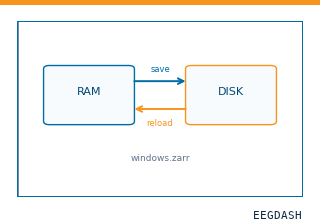 Save and reload prepared dataCache a windowed dataset to disk and reattach it without recompute.
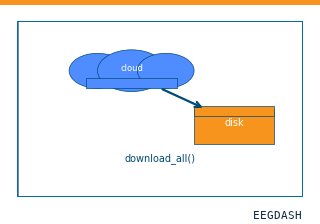 Download a dataset locallyPrefetch BIDS files to a local cache and validate the layout.
Swap any load_dataset(...) call for nm000371 to reproduce the tutorial on this dataset.
Citation
Maxime Verwoert, Maarten C. Ottenhoff, Sophocles Goulis, Albert J. Colon, Louis Wagner, … (2022). Dataset of Speech Production in intracranial Electroencephalography (SingleWordProductionDutch-iBIDS). 10.82901/nemar.nm000371
Provenance
¹Contributed to nemar in BIDS format.
²Curated & ingested by the EEGDash catalog; see CITATION.cff for canonical reference.
³Persistent identifier: 10.82901/nemar.nm000371.
See Also#
eegdash.dataset.EEGDashDataseteegdash.dataset