


NM000360: ieeg dataset, 25 subjects#
Annotated interictal epileptiform discharges in intracranial EEG (iEEG) sleep data (Falach et al., 2024)
Access recordings and metadata through EEGDash.
Citation: Rotem Falach, Maya Geva-Sagiv, Dawn Eliashiv, Lilach Goldstein, Ofer Budin, Guy Gurevitch, Genela Morris, Ido Strauss, Amir Globerson, Firas Fahoum, Itzhak Fried, Yuval Nir (2024). Annotated interictal epileptiform discharges in intracranial EEG (iEEG) sleep data (Falach et al., 2024). 10.82901/nemar.nm000360
Modality: ieeg Subjects: 25 Recordings: 25 License: CC-BY-NC-4.0 Source: nemar
Metadata: Complete (100%)
25-participant iEEG dataset — Annotated interictal epileptiform discharges in intracranial EEG (iEEG) sleep data (Falach et al., 2024).
Quickstart#
Install
pip install eegdash
Access the data
from eegdash.dataset import NM000360

dataset = NM000360(cache_dir="./data")
# Get the raw object of the first recording
raw = dataset.datasets[0].raw
print(raw.info)
Filter by subject
dataset = NM000360(cache_dir="./data", subject="01")
Advanced query
dataset = NM000360(
    cache_dir="./data",
    query={"subject": {"$in": ["01", "02"]}},
)
Iterate recordings
for rec in dataset:
    print(rec.subject, rec.raw.info['sfreq'])
If you use this dataset in your research, please cite the original authors.
BibTeX
@dataset{nm000360,
  title = {Annotated interictal epileptiform discharges in intracranial EEG (iEEG) sleep data (Falach et al., 2024)},
  author = {Rotem Falach and Maya Geva-Sagiv and Dawn Eliashiv and Lilach Goldstein and Ofer Budin and Guy Gurevitch and Genela Morris and Ido Strauss and Amir Globerson and Firas Fahoum and Itzhak Fried and Yuval Nir},
  doi = {10.82901/nemar.nm000360},
  url = {https://doi.org/10.82901/nemar.nm000360},
}
About This Dataset#
This dataset comprises multichannel intracranial EEG (iEEG) recordings from 25 epilepsy patients during overnight sleep, collected at two medical centers.
The recordings include 852 annotated interictal epileptiform discharges, primarily from the medial temporal lobe, identified by expert neurologists.
The data is formatted according to the BIDS (Brain Imaging Data Structure) standard for iEEG recordings.
Interictal epileptiform discharge annotations in sleep iEEG Data
Dataset Overview
Dataset Structure
participants.tsv: Contains demographic and clinical information for each participant, including:
View full README
Interictal epileptiform discharge annotations in sleep iEEG Data
Dataset Overview
Dataset Structure
participants.tsv: Contains demographic and clinical information for each participant, including: - participant_id: Unique identifier for each participant. - age: Age at the time of the study (in years). - sex: Biological sex (M/F). - SOZ: Seizure onset zone. - TimeFromSleepOnset: Time from sleep onset (in minutes). - SleepScoring: Sleep stages scored according to AASM criteria.
sub-<subject_id>/: Contains the iEEG recordings and metadata for each participant. - sub-<subject_id>_task-sleep_ieeg.edf: The raw iEEG data in EDF format. - sub-<subject_id>_task-sleep_events.tsv: Event annotations, such as expert-determined IED (interictal epileptiform discharges) timings. - sub-<subject_id>_electrodes.tsv: Electrode names and MNI coordinates (for select subjects). - sub-<subject_id>_coordsystem.json: Describes the coordinate system used for electrode localization.
derivatives/: Contains processed files, such as: - sub-<subject_id>_task-sleep_events_interpretation.tsv: Interpretation of events for each participant. - channels.tsv: Information on channel names
License and Data Use
The dataset is shared under the CC-BY-NC license. Users are free to use the data for non-commercial purposes with appropriate attribution.
Citation
If you use this dataset in your research, please cite the following publication:
Falach R, Geva-Sagiv M, Eliashiv D, Goldstein L, Budin O, Gurevitch G, Morris G, Strauss I, Globerson A, Fahoum F, Fried I, Nir Y. Annotated interictal discharges in intracranial EEG sleep data and related machine learning detection scheme. Sci Data. 2024 Dec 18;11(1):1354. doi: 10.1038/s41597-024-04187-y.
Redistribution on NEMAR (added 2026-10-06; everything above this line is the authors’ README.txt, unchanged)
Source
Figshare: Falach R, Geva-Sagiv M, Eliashiv D, Goldstein L, Budin O, Gurevitch G, Morris G, Strauss I, Globerson A, Fahoum F, Fried I, Nir Y (2024). *Annotated interictal epileptiform discharges in intracranial EEG (iEEG) sleep data.* figshare. Dataset. https://doi.org/10.6084/m9.figshare.26131978.v3 (article 26131978, version 3, published 2024-12-30; single file
ieeg_ieds_bids_final.zip, 272,009,926 bytes, MD5 cdf392d5f92ba106b1f6794844147109).Data descriptor: Falach R. et al. Annotated interictal discharges in intracranial EEG sleep data and related machine learning detection scheme. Scientific Data 11, 1354 (2024). https://doi.org/10.1038/s41597-024-04187-y
The original archive is included unchanged as
sourcedata/ieeg_ieds_bids_final.zip.
This NEMAR copy is the authors’ own BIDS dataset with the minimal changes needed to pass the current BIDS
validator. Every change is listed in CHANGES (version 1.0.1). No recording was modified: the 25 EDF files are
byte-identical to the archive (SHA-256 checked). No filtering, resampling, re-referencing or channel removal was
done for this redistribution.
Licence
Two licence statements exist for this dataset, and they disagree:
1. Figshare record 26131978 v3, licence field: “CC BY 4.0” (https://creativecommons.org/licenses/by/4.0/).
2. Inside the archive, dataset_description.json: "License": "CC-BY-NC"; and the authors’ README.txt (above):
“The dataset is shared under the CC-BY-NC license. Users are free to use the data for non-commercial purposes with appropriate attribution.”
The archive statement gives no version number. The depositor (Bruno Aristimunha, 2026-10-06) decided to apply
the most restrictive of the stated licences. This redistribution is therefore released under
**CC BY-NC 4.0 (CC-BY-NC-4.0)**. The version “4.0” is the depositor’s choice: the source states no version,
and 4.0 is the Creative Commons version of the Figshare record. Commercial use is not permitted under this copy.
If the authors clarify the licence, this copy will be updated.
Ethics (from Falach et al., 2024)
“All patients provided written informed consent to participate in the research study, under the approval of the Institutional Review Board at the Tel Aviv Sourasky Medical Center (TASMC, 9 patients), or the Medical Institutional Review Board at the University of California, Los Angeles (UCLA, 16 patients). In their consent, patients explicitly agreed for anonymized data to be shared and used in future scientific publications. UCLA Hospital IRB protocol: 10-000973, TLVMC IRB protocol: TLV-008-12.”
Recording facts worth knowing (from the paper and the files)
25 patients (sub-01 to sub-09: Tel Aviv Sourasky Medical Center, 50 Hz mains; sub-10 to sub-25: UCLA, 60 Hz mains, per
InstitutionNameandPowerLineFrequencyin each_ieeg.json).Each EDF is a short sleep excerpt, 61 to 291 s long (total 4,603 s = 76.7 min, matching the paper’s “76 minutes”), not a whole night.
The paper reports acquisition with a Blackrock system “referenced to a central scalp electrode and sampled at 2KHz”. The shared EDF files are at 1000 Hz, so the authors resampled the data before sharing. The EDF headers carry no filter information (
SoftwareFiltersis “n/a” in the source sidecars).Some participants’ files also contain bipolar derivations (channel names such as
RA1-RA3) next to the referential channels. The authors added these to help annotation (see the paper). They are kept as provided.events.tsv: one row per expert-annotated interictal epileptiform discharge (duration0,trial_type= the neurologist’s free-text label,sample= onset sample). The 25 files hold 853 rows in total; the paper reports 852 IEDs. The rows are kept as provided.derivatives/holds the authors’ per-event channel lists (*_events_interpretation.tsv) and the channel-abbreviation table (channels.tsv).Electrode coordinates (MNI152Lin, mm) are provided by the authors for 18 participants. For the other 7 (sub-08, sub-10 to sub-15), the archive has no coordinates.
electrodes.tsvfor these lists the referential contact names with x/y/z = n/a, andcoordsystem.jsonsays “Other” with units “n/a”. No coordinates were invented. The paper’s figure used group-average positions for these patients; those values are not in the archive.
RecordingDuration reconciliation
The source sidecars gave RecordingDuration values of 60.999 to 290.999 s. The EDF headers give
n_records x record_duration = 61 to 291 s, at 1000 Hz with 1-s records: exactly 0.001 s (one sample) longer
for every file. The source values follow the (n_samples - 1)/fs convention. BIDS defines the field as the length
of the recording, so the sidecars now carry the header value (n_samples/fs). The per-file old and new values are
in CHANGES.
Privacy
The EDF headers were already de-identified by the authors with MNE-BIDS (“X X X” patient field, “Startdate 01-JAN-1985 X mne-bids_anonymize X”). The times of day were kept and the dates were replaced. The TSV and JSON files contain participant codes, age in years, sex, seizure-onset zone, minutes from sleep onset and sleep-stage vectors. They contain no names, dates of birth, record numbers or imaging. A byte-level review was run
before this deposit.
Additional description (lane L metadata enrichment, 2026-10-06; sources: Falach et al. 2024, Sci Data 11:1354, doi:10.1038/s41597-024-04187-y, sections named below)
Cohort and acquisition (Methods: Participants, EEG Recordings)
25 patients with drug-resistant epilepsy, implanted with depth iEEG electrodes for clinical evaluation of seizure foci; electrode locations were based solely on clinical criteria. 9 patients from Tel Aviv Sourasky Medical Center (TASMC, recruited 2017-2023) and 16 from UCLA (2007-2012, 2017-2021), who volunteered for an overnight sleep research recording session.
Implant type: depth electrodes (SEEG-type), platinum contacts along the shaft. All 980 channels in the shared files are depth-electrode channels (typed SEEG), including the authors’ bipolar derivations.
Amplifier: Blackrock system; sampled at 2 kHz, referenced to a central scalp electrode. The shared EDFs are 1000 Hz (see “Recording facts” above).
Channel naming: hemisphere letter (R/L) + 1-3 region letters (e.g. A amygdala, EC entorhinal cortex, AH anterior hippocampus; full list in derivatives/channels.tsv) + contact number from 1 (most mesial) increasing laterally. Channel selection was based on availability, without regard to IED presence.
In 15 patients, sleep scoring also used scalp polysomnography (C3, C4, Pz, EOG, chin EMG). These scalp channels are not part of the shared EDF files.
Sleep staging (Methods: Sleep staging)
Manual scoring per AASM guidelines with the Visbrain sleep module (data resampled to 250 Hz, 30-s epochs, with EOG and optionally EMG). Where only iEEG was available, a validated automatic algorithm detected NREM from neocortical slow waves and spindles, and all other epochs were marked “wake/REM”. The per-subject sleep-scoring vector (30-s resolution, 15 patients) and time from sleep onset (22 patients) are in participants.tsv.
Annotation procedure (Methods: Manual annotations)
Two neurologists annotated the data (D.E.: full montage of all intracranial channels for 10 UCLA patients; L.G.: the other 15 patients, montage of the three most medial MTL channels). Annotation used mainly a scalp-reference montage; for patients with only MTL signals an additional bipolar montage was included. Criteria: IFCN criteria for interictal epileptiform discharges with intracerebral considerations (Frauscher et al.). Annotators were blinded to the clinical profile and used Nicolet Reader (Natus) or Persyst. Each tag has a timestamp and the brain location of the abnormal activity; tags were then converted into channel lists (derivatives/*_events_interpretation.tsv). Inter-rater agreement on 6 patients: Cohen’s kappa 0.63 +/- 0.23 (1-s resolution).
Files
sub-XX/ieeg/*_ieeg.edf: EDF, 1000 Hz, microvolts, referential (and some bipolar) depth channels.
*_ieeg.json: site, power line frequency, recording duration, channel counts, reference.
*_channels.tsv: channel type/units/cutoffs plus side (L/R) and soz_region (1 = in the seizure-onset zone).
*_events.tsv: one row per annotated IED (onset s, duration 0, trial_type = neurologist’s free-text label, sample = onset x 1000).
*_electrodes.tsv / *_coordsystem.json: MNI152Lin coordinates (mm) for 18 participants; n/a for 7 (see above).
derivatives/channels.tsv: channel-abbreviation definitions; derivatives/*_events_interpretation.tsv: per-IED channel lists (time_in_sec, annotation, chans).
sourcedata/ieeg_ieds_bids_final.zip: the authors’ original archive.
Preprocessing already applied by the source
Resampling from the 2 kHz acquisition to the shared 1000 Hz (method not stated by the authors); bipolar derivations added for some patients. The 0.1-500 Hz band-pass and 50/60 Hz notch described in the paper’s “Technical Validation” were applied for the detection model, not to the shared files (SoftwareFilters “n/a” in the source sidecars).
How to load
from mne_bids import BIDSPath, read_raw_bids bp = BIDSPath(root=”<dataset root>”, subject=”01”, task=”sleep”, datatype=”ieeg”, suffix=”ieeg”, extension=”.edf”) raw = read_raw_bids(bp) # IED annotations from events.tsv appear in raw.annotations
The authors’ detection code: NirLab-TAU/iEEG_ied_detection
Funding and acknowledgements
See dataset_description.json (Funding, Acknowledgements), copied from the paper’s Acknowledgements.
NEMAR Metadata#
[](https://doi.org/10.82901/nemar.nm000360) # Interictal epileptiform discharge annotations in sleep iEEG Data ## Dataset Overview This dataset comprises multichannel intracranial EEG (iEEG) recordings from 25 epilepsy patients during overnight sleep, collected at two medical centers. The recordings include 852 annotated interictal epileptiform discharges, primarily from the medial temporal lobe, identified by expert neurologists. The data is formatted according to the BIDS (Brain Imaging Data Structure) standard for iEEG recordings. ## Dataset Structure - participants.tsv: Contains demographic and clinical information for each participant, including:
participant_id: Unique identifier for each participant.
age: Age at the time of the study (in years).
sex: Biological sex (M/F).
SOZ: Seizure onset zone.
TimeFromSleepOnset: Time from sleep onset (in minutes).
SleepScoring: Sleep stages scored according to AASM criteria.
sub-<subject_id>/: Contains the iEEG recordings and metadata for each participant. - sub-<subject_id>_task-sleep_ieeg.edf: The raw iEEG data in EDF format. - sub-<subject_id>_task-sleep_events.tsv: Event annotations, such as expert-determined IED (interictal epileptiform discharges) timings. - sub-<subject_id>_electrodes.tsv: Electrode names and MNI coordinates (for select subjects). - sub-<subject_id>_coordsystem.json: Describes the coordinate system used for electrode localization.
derivatives/: Contains processed files, such as: - sub-<subject_id>_task-sleep_events_interpretation.tsv: Interpretation of events for each participant. - channels.tsv: Information on channel names
## License and Data Use The dataset is shared under the CC-BY-NC license. Users are free to use the data for non-commercial purposes with appropriate attribution. ## Citation If you use this dataset in your research, please cite the following publication: Falach R, Geva-Sagiv M, Eliashiv D, Goldstein L, Budin O, Gurevitch G, Morris G, Strauss I, Globerson A, Fahoum F, Fried I, Nir Y. Annotated interictal discharges in intracranial EEG sleep data and related machine learning detection scheme. Sci Data. 2024 Dec 18;11(1):1354. doi: 10.1038/s41597-024-04187-y. ————————————————————————— ## Redistribution on NEMAR (added 2026-10-06; everything above this line is the authors’ README.txt, unchanged) ### Source - Figshare: Falach R, Geva-Sagiv M, Eliashiv D, Goldstein L, Budin O, Gurevitch G, Morris G, Strauss I,
Globerson A, Fahoum F, Fried I, Nir Y (2024). Annotated interictal epileptiform discharges in intracranial EEG (iEEG) sleep data. figshare. Dataset. https://doi.org/10.6084/m9.figshare.26131978.v3 (article 26131978, version 3, published 2024-12-30; single file ieeg_ieds_bids_final.zip, 272,009,926 bytes, MD5 cdf392d5f92ba106b1f6794844147109).
Data descriptor: Falach R. et al. Annotated interictal discharges in intracranial EEG sleep data and related machine learning detection scheme. Scientific Data 11, 1354 (2024). https://doi.org/10.1038/s41597-024-04187-y
The original archive is included unchanged as sourcedata/ieeg_ieds_bids_final.zip.
This NEMAR copy is the authors’ own BIDS dataset with the minimal changes needed to pass the current BIDS validator. Every change is listed in CHANGES (version 1.0.1). No recording was modified: the 25 EDF files are byte-identical to the archive (SHA-256 checked). No filtering, resampling, re-referencing or channel removal was done for this redistribution. ### Licence Two licence statements exist for this dataset, and they disagree: 1. Figshare record 26131978 v3, licence field: “CC BY 4.0” (https://creativecommons.org/licenses/by/4.0/). 2. Inside the archive, dataset_description.json: “License”: “CC-BY-NC”; and the authors’ README.txt (above):
“The dataset is shared under the CC-BY-NC license. Users are free to use the data for non-commercial purposes with appropriate attribution.”
The archive statement gives no version number. The depositor (Bruno Aristimunha, 2026-10-06) decided to apply the most restrictive of the stated licences. This redistribution is therefore released under CC BY-NC 4.0 (`CC-BY-NC-4.0`). The version “4.0” is the depositor’s choice: the source states no version, and 4.0 is the Creative Commons version of the Figshare record. Commercial use is not permitted under this copy. If the authors clarify the licence, this copy will be updated. ### Ethics (from Falach et al., 2024) “All patients provided written informed consent to participate in the research study, under the approval of the Institutional Review Board at the Tel Aviv Sourasky Medical Center (TASMC, 9 patients), or the Medical Institutional Review Board at the University of California, Los Angeles (UCLA, 16 patients). In their consent, patients explicitly agreed for anonymized data to be shared and used in future scientific publications. UCLA Hospital IRB protocol: 10-000973, TLVMC IRB protocol: TLV-008-12.” ### Recording facts worth knowing (from the paper and the files) - 25 patients (sub-01 to sub-09: Tel Aviv Sourasky Medical Center, 50 Hz mains; sub-10 to sub-25: UCLA, 60 Hz
mains, per InstitutionName and PowerLineFrequency in each _ieeg.json).
Each EDF is a short sleep excerpt, 61 to 291 s long (total 4,603 s = 76.7 min, matching the paper’s “76 minutes”), not a whole night.
The paper reports acquisition with a Blackrock system “referenced to a central scalp electrode and sampled at 2KHz”. The shared EDF files are at 1000 Hz, so the authors resampled the data before sharing. The EDF headers carry no filter information (SoftwareFilters is “n/a” in the source sidecars).
Some participants’ files also contain bipolar derivations (channel names such as RA1-RA3) next to the referential channels. The authors added these to help annotation (see the paper). They are kept as provided.
events.tsv: one row per expert-annotated interictal epileptiform discharge (duration 0, trial_type = the neurologist’s free-text label, sample = onset sample). The 25 files hold 853 rows in total; the paper reports 852 IEDs. The rows are kept as provided. derivatives/ holds the authors’ per-event channel lists (*_events_interpretation.tsv) and the channel-abbreviation table (channels.tsv).
Electrode coordinates (MNI152Lin, mm) are provided by the authors for 18 participants. For the other 7 (sub-08, sub-10 to sub-15), the archive has no coordinates. electrodes.tsv for these lists the referential contact names with x/y/z = n/a, and coordsystem.json says “Other” with units “n/a”. No coordinates were invented. The paper’s figure used group-average positions for these patients; those values are not in the archive.
### RecordingDuration reconciliation The source sidecars gave RecordingDuration values of 60.999 to 290.999 s. The EDF headers give n_records x record_duration = 61 to 291 s, at 1000 Hz with 1-s records: exactly 0.001 s (one sample) longer for every file. The source values follow the (n_samples - 1)/fs convention. BIDS defines the field as the length of the recording, so the sidecars now carry the header value (n_samples/fs). The per-file old and new values are in CHANGES. ### Privacy The EDF headers were already de-identified by the authors with MNE-BIDS (“X X X” patient field, “Startdate 01-JAN-1985 X mne-bids_anonymize X”). The times of day were kept and the dates were replaced. The TSV and JSON files contain participant codes, age in years, sex, seizure-onset zone, minutes from sleep onset and sleep-stage vectors. They contain no names, dates of birth, record numbers or imaging. A byte-level review was run before this deposit. ————————————————————————— ## Additional description (lane L metadata enrichment, 2026-10-06; sources: Falach et al. 2024, Sci Data 11:1354, doi:10.1038/s41597-024-04187-y, sections named below) ### Cohort and acquisition (Methods: Participants, EEG Recordings) - 25 patients with drug-resistant epilepsy, implanted with depth iEEG electrodes for clinical evaluation of seizure
foci; electrode locations were based solely on clinical criteria. 9 patients from Tel Aviv Sourasky Medical Center (TASMC, recruited 2017-2023) and 16 from UCLA (2007-2012, 2017-2021), who volunteered for an overnight sleep research recording session.
Implant type: depth electrodes (SEEG-type), platinum contacts along the shaft. All 980 channels in the shared files are depth-electrode channels (typed SEEG), including the authors’ bipolar derivations.
Amplifier: Blackrock system; sampled at 2 kHz, referenced to a central scalp electrode. The shared EDFs are 1000 Hz (see “Recording facts” above).
Channel naming: hemisphere letter (R/L) + 1-3 region letters (e.g. A amygdala, EC entorhinal cortex, AH anterior hippocampus; full list in derivatives/channels.tsv) + contact number from 1 (most mesial) increasing laterally. Channel selection was based on availability, without regard to IED presence.
In 15 patients, sleep scoring also used scalp polysomnography (C3, C4, Pz, EOG, chin EMG). These scalp channels are not part of the shared EDF files.
### Sleep staging (Methods: Sleep staging) Manual scoring per AASM guidelines with the Visbrain sleep module (data resampled to 250 Hz, 30-s epochs, with EOG and optionally EMG). Where only iEEG was available, a validated automatic algorithm detected NREM from neocortical slow waves and spindles, and all other epochs were marked “wake/REM”. The per-subject sleep-scoring vector (30-s resolution, 15 patients) and time from sleep onset (22 patients) are in participants.tsv. ### Annotation procedure (Methods: Manual annotations) Two neurologists annotated the data (D.E.: full montage of all intracranial channels for 10 UCLA patients; L.G.: the other 15 patients, montage of the three most medial MTL channels). Annotation used mainly a scalp-reference montage; for patients with only MTL signals an additional bipolar montage was included. Criteria: IFCN criteria for interictal epileptiform discharges with intracerebral considerations (Frauscher et al.). Annotators were blinded to the clinical profile and used Nicolet Reader (Natus) or Persyst. Each tag has a timestamp and the brain location of the abnormal activity; tags were then converted into channel lists (derivatives/*_events_interpretation.tsv). Inter-rater agreement on 6 patients: Cohen’s kappa 0.63 +/- 0.23 (1-s resolution). ### Files - sub-XX/ieeg/*_ieeg.edf: EDF, 1000 Hz, microvolts, referential (and some bipolar) depth channels. - *_ieeg.json: site, power line frequency, recording duration, channel counts, reference. - *_channels.tsv: channel type/units/cutoffs plus side (L/R) and soz_region (1 = in the seizure-onset zone). - *_events.tsv: one row per annotated IED (onset s, duration 0, trial_type = neurologist’s free-text label,
sample = onset x 1000).
*_electrodes.tsv / *_coordsystem.json: MNI152Lin coordinates (mm) for 18 participants; n/a for 7 (see above).
derivatives/channels.tsv: channel-abbreviation definitions; derivatives/*_events_interpretation.tsv: per-IED channel lists (time_in_sec, annotation, chans).
sourcedata/ieeg_ieds_bids_final.zip: the authors’ original archive.
### Preprocessing already applied by the source Resampling from the 2 kHz acquisition to the shared 1000 Hz (method not stated by the authors); bipolar derivations added for some patients. The 0.1-500 Hz band-pass and 50/60 Hz notch described in the paper’s “Technical Validation” were applied for the detection model, not to the shared files (SoftwareFilters “n/a” in the source sidecars). ### How to load
from mne_bids import BIDSPath, read_raw_bids bp = BIDSPath(root=”<dataset root>”, subject=”01”, task=”sleep”, datatype=”ieeg”, suffix=”ieeg”, extension=”.edf”) raw = read_raw_bids(bp) # IED annotations from events.tsv appear in raw.annotations
The authors’ detection code: NirLab-TAU/iEEG_ied_detection ### Funding and acknowledgements See dataset_description.json (Funding, Acknowledgements), copied from the paper’s Acknowledgements.
License: CC-BY-NC-4.0
Authors:
Rotem Falach
Maya Geva-Sagiv
Dawn Eliashiv
Lilach Goldstein
Ofer Budin
… and 7 more
Versions:
Version |
DOI |
Released |
|---|---|---|
|
Cohort#
Dataset Statistics#
Age distribution by gender (n=25, range 17–47 yr, mean 32.0 yr)
Sex composition
Channel counts (ch)
Sampling frequencies: 1000.0 Hz (n=25 recordings)
Total recording duration: 1 h 16 min
Signal · Electrodes & live trace#
Live trace viewer — sub-04 · task-sleep
Showing one representative recording out of
25 subjects and 25 recordings in this dataset.
Browse the full set on OpenNeuro;
drop any other _ieeg.{set,edf,bdf,vhdr} file onto the
viewer (or pass ?ieeg=<url>) to inspect it.
Electrode layout — iEEG · 70 sensors — 70 channels
NEMAR Processing Statistics#
The plots below are generated by NEMAR’s automated EEG pipeline. The histogram shows pipeline success for data cleaning and ICA decomposition, the percentage of data frames and EEG channels retained after artefact removal, line noise per channel (RMS, dB), and the age/gender distribution of participants.

HED event descriptors word cloud

Manifest#
File Explorer#
Browse the BIDS file structure of this dataset. Records are fetched on demand from the EEGDash catalog the first time you open the explorer.
Full dataset metadata table
Dataset ID |
|
Title |
Annotated interictal epileptiform discharges in intracranial EEG (iEEG) sleep data (Falach et al., 2024) |
Author (year) |
— |
Canonical |
— |
Importable as |
|
Year |
2024 |
Authors |
Rotem Falach, Maya Geva-Sagiv, Dawn Eliashiv, Lilach Goldstein, Ofer Budin, Guy Gurevitch, Genela Morris, Ido Strauss, Amir Globerson, Firas Fahoum, Itzhak Fried, Yuval Nir |
License |
CC-BY-NC-4.0 |
Citation / DOI |
|
Source links |
OpenNeuro | NeMAR | Source URL |
Copy-paste BibTeX
@dataset{nm000360,
  title = {Annotated interictal epileptiform discharges in intracranial EEG (iEEG) sleep data (Falach et al., 2024)},
  author = {Rotem Falach and Maya Geva-Sagiv and Dawn Eliashiv and Lilach Goldstein and Ofer Budin and Guy Gurevitch and Genela Morris and Ido Strauss and Amir Globerson and Firas Fahoum and Itzhak Fried and Yuval Nir},
  doi = {10.82901/nemar.nm000360},
  url = {https://doi.org/10.82901/nemar.nm000360},
}
API Reference#
eegdash.datasetEEGDashDataset- class eegdash.dataset.NM000360(cache_dir: str, query: dict | None = None, s3_bucket: str | None = None, **kwargs)[source]#
Annotated interictal epileptiform discharges in intracranial EEG (iEEG) sleep data (Falach et al., 2024)
- Study:
nm000360(NeMAR)- Author (year):
—
- Canonical:
—
Also importable as:
NM000360.Modality:
ieeg; Subject type:Unknown. Subjects: 25; recordings: 25; tasks: 1.- Parameters:
cache_dir (str | Path) – Directory where data are cached locally.
query (dict | None) – Additional MongoDB-style filters to AND with the dataset selection. Must not contain the key
dataset.s3_bucket (str | None) – Base S3 bucket used to locate the data.
**kwargs (dict) – Additional keyword arguments forwarded to
EEGDashDataset.
- data_dir#
Local dataset cache directory (
cache_dir / dataset_id).- Type:
Path
Notes
Each item is a recording; recording-level metadata are available via
dataset.description.querysupports MongoDB-style filters on fields inALLOWED_QUERY_FIELDSand is combined with the dataset filter. Dataset-specific caveats are not provided in the summary metadata.References
OpenNeuro dataset: https://openneuro.org/datasets/nm000360 NeMAR dataset: https://nemar.org/dataexplorer/detail?dataset_id=nm000360 DOI: https://doi.org/10.82901/nemar.nm000360
Examples
>>> from eegdash.dataset import NM000360
>>> dataset = NM000360(cache_dir="./data")
>>> recording = dataset[0]
>>> raw = recording.load()
- __init__(cache_dir: str, query: dict | None = None, s3_bucket: str | None = None, **kwargs)[source]#
- save(path: str, overwrite: bool = False, offset: int = 0)[source]#
Save datasets to files by creating one subdirectory for each dataset:
path/
    0/
        0-raw.fif | 0-epo.fif
        description.json
        raw_preproc_kwargs.json (if raws were preprocessed)
        window_kwargs.json (if this is a windowed dataset)
        window_preproc_kwargs.json  (if windows were preprocessed)
        target_name.json (if target_name is not None and dataset is raw)
    1/
        1-raw.fif | 1-epo.fif
        description.json
        raw_preproc_kwargs.json (if raws were preprocessed)
        window_kwargs.json (if this is a windowed dataset)
        window_preproc_kwargs.json  (if windows were preprocessed)
        target_name.json (if target_name is not None and dataset is raw)
- Parameters:
path (str) –
- Directory in which subdirectories are created to store
-raw.fif | -epo.fif and .json files to.
overwrite (bool) – Whether to delete old subdirectories that will be saved to in this call.
offset (int) – If provided, the integer is added to the id of the dataset in the concat. This is useful in the setting of very large datasets, where one dataset has to be processed and saved at a time to account for its original position.
BaseDataset from braindecode — windowed via create_windows_from_events.braindecodeDataLoader; supports parallel workers and on-the-fly augmentations.pytorch Find datasets with the EEGDash APIQuery the catalogue, filter by task or modality, list candidates.
 Load one EEG recordingResolve a single record to an MNE Raw with channels and events.
 EEG recording to PyTorch DataLoaderWrap braindecode windows in a DataLoader for model training.
 Preprocess EEG and create windowsFilter, resample, epoch — and persist the windowed dataset.
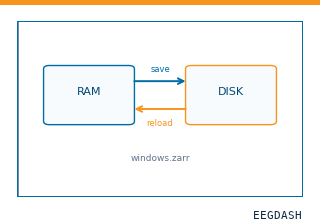 Save and reload prepared dataCache a windowed dataset to disk and reattach it without recompute.
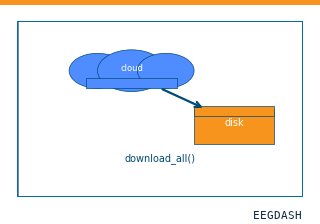 Download a dataset locallyPrefetch BIDS files to a local cache and validate the layout.
Swap any load_dataset(...) call for nm000360 to reproduce the tutorial on this dataset.
Citation
Rotem Falach, Maya Geva-Sagiv, Dawn Eliashiv, Lilach Goldstein, Ofer Budin, … (2024). Annotated interictal epileptiform discharges in intracranial EEG (iEEG) sleep data (Falach et al., 2024). 10.82901/nemar.nm000360
Provenance
¹Contributed to nemar in BIDS format.
²Curated & ingested by the EEGDash catalog; see CITATION.cff for canonical reference.
³Persistent identifier: 10.82901/nemar.nm000360.
See Also#
eegdash.dataset.EEGDashDataseteegdash.dataset