


DS007808: eeg dataset, 3 subjects#
EEG-Speech Brain Decoding Dataset
Access recordings and metadata through EEGDash.
Citation: Motoshige Sato, Ilya Horiguchi, Masakazu Inoue, Kenichi Tomeoka, Eri Hatakeyama, Yuya Kita, Atsushi Yamamoto, Ippei Fujisawa, Shuntaro Sasai (20). EEG-Speech Brain Decoding Dataset. 10.18112/openneuro.ds007808.v1.0.0
Modality: eeg Subjects: 3 Recordings: 1974 License: CC0 Source: openneuro
Metadata: Complete (100%)
3-participant EEG dataset — EEG-Speech Brain Decoding Dataset.
Quickstart#
Install
pip install eegdash
Access the data
from eegdash.dataset import DS007808

dataset = DS007808(cache_dir="./data")
# Get the raw object of the first recording
raw = dataset.datasets[0].raw
print(raw.info)
Filter by subject
dataset = DS007808(cache_dir="./data", subject="01")
Advanced query
dataset = DS007808(
    cache_dir="./data",
    query={"subject": {"$in": ["01", "02"]}},
)
Iterate recordings
for rec in dataset:
    print(rec.subject, rec.raw.info['sfreq'])
If you use this dataset in your research, please cite the original authors.
BibTeX
@dataset{ds007808,
  title = {EEG-Speech Brain Decoding Dataset},
  author = {Motoshige Sato and Ilya Horiguchi and Masakazu Inoue and Kenichi Tomeoka and Eri Hatakeyama and Yuya Kita and Atsushi Yamamoto and Ippei Fujisawa and Shuntaro Sasai},
  doi = {10.18112/openneuro.ds007808.v1.0.0},
  url = {https://doi.org/10.18112/openneuro.ds007808.v1.0.0},
}
About This Dataset#
This dataset contains EEG recordings and audio data.
Sessions are labeled by recording date in YYYYMMDD format.
Example:
ses-20240401= recorded on April 1, 2024
EEG-Speech Brain Decoding Dataset
Overview
Multiple recordings on the same day are distinguished by run numbers:
- run-N: Nth recording of the day
Tasks
View full README
EEG-Speech Brain Decoding Dataset
Overview
Multiple recordings on the same day are distinguished by run numbers:
- run-N: Nth recording of the day
Tasks
speechopen: Overt speech production task - Participants vocalize visually presented text
listening: Auditory listening task - Participants listen to prerecorded speech stimuli
listeningcovert: Auditory listening followed by covert speech imagery
EEG Acquisition Devices
Recordings are split by acquisition label: - acq-pangolin: g.tec g.Pangolin. Stored channels include 128 EEG channels plus audio monitor, EOG, EMG, trigger, and in 140-channel recordings one auxiliary mastoid/reference channel that is not used for analysis. - acq-scarabeo: g.tec g.SCARABEO. Stored channels include 64 EEG-related channels, with channels 62 and 63 corresponding to mastoid electrodes, plus audio monitor, EOG, EMG, and trigger channels. - acq-eego: ANT Neuro eego sports. Stored channels include EEG channels 0..30 and 32..63, channel 31 as miscellaneous, audio monitor, EOG, upper- and lower-lip EMG, miscellaneous auxiliary channels, and trigger.
Run-level *_channels.tsv files provide the authoritative channel typing for each recording.
For g.Pangolin sessions, *_electrodes.tsv and *_coordsystem.json files provide 3D coordinates for EEG001..EEG128 from g.tec electrode digitization (electrodes_uhd.xml). Electrode coordinate files are not provided for g.SCARABEO or eego sports sessions because verified channel-to-position coordinate mappings are not available in this release.
File Format Notes
EEG Data
Raw EEG data is stored:
- Path: sub-*/ses-*/eeg/*_eeg.edf
- Note: EDF files are included as the raw EEG recordings for this BIDS-EEG dataset.
Behavioral Data (Audio)
Task audio files are stored in beh/ directories:
- Speech production: sub-*/ses-*/beh/*_recording-vocal_beh.wav
- Listening: sub-*/ses-*/beh/*_recording-audio_beh.wav
- Note: Not officially part of BIDS-EEG spec, but included for analysis convenience
- Excluded in .bidsignore
Directory Structure
dataset_root/
├── README                          (this file)
├── CHANGES                         (version history)
├── dataset_description.json        (dataset metadata)
├── participants.tsv                (participant information)
├── participants.json               (participant column descriptions)
├── task-speechopen_acq-pangolin_eeg.json               (speech production EEG metadata)
├── task-speechopen_acq-scarabeo_eeg.json               (speech production EEG metadata)
├── task-speechopen_acq-eego_eeg.json                   (speech production EEG metadata)
├── task-listening_acq-pangolin_eeg.json                (listening EEG metadata)
├── task-speechopen_acq-pangolin_events.json            (speech production events column descriptions)
├── task-speechopen_acq-pangolin_recording-vocal_beh.json
├── task-listening_acq-pangolin_recording-audio_beh.json
├── .bidsignore                     (files to ignore in validation)
│
├── code/                           (analysis and preprocessing code)
│   ├── preprocessing/              (EEG and audio preprocessing)
│   ├── training/                   (model training scripts)
│   ├── evaluation/                 (evaluation metrics)
│   └── bids/                       (BIDS conversion scripts)
│
├── sub-01/                         (participant data)
│   └── ses-YYYYMMDD/              (session by date)
│       ├── eeg/                    (EEG recordings)
│       └── beh/                    (behavioral/audio data)
│
└── derivatives/                    (processed data)
    └── pipeline-standard/          (standard preprocessing)
Cohort#
Dataset Statistics#
Age distribution by gender (n=3, range 22–44 yr, mean 32.7 yr)
Sex composition
Channel counts (ch)
Sampling frequencies (Hz)
Total recording duration: 1020 h
Signal · Electrodes & live trace#
Live trace viewer — sub-01 · ses-20231213 · task-speechopen · run-01
Showing one representative recording out of
3 subjects and 1974 recordings in this dataset.
Browse the full set on OpenNeuro;
drop any other _eeg.{set,edf,bdf,vhdr} file onto the
viewer (or pass ?eeg=<url>) to inspect it.
Electrode layout — EEG · 128 sensors — 128 channels
NEMAR Processing Statistics#
The plots below are generated by NEMAR’s automated EEG pipeline. The histogram shows pipeline success for data cleaning and ICA decomposition, the percentage of data frames and EEG channels retained after artefact removal, line noise per channel (RMS, dB), and the age/gender distribution of participants.

HED event descriptors word cloud

Manifest#
File Explorer#
Browse the BIDS file structure of this dataset. Records are fetched on demand from the EEGDash catalog the first time you open the explorer.
Full dataset metadata table
Dataset ID |
|
Title |
EEG-Speech Brain Decoding Dataset |
Author (year) |
— |
Canonical |
— |
Importable as |
|
Year |
20 |
Authors |
Motoshige Sato, Ilya Horiguchi, Masakazu Inoue, Kenichi Tomeoka, Eri Hatakeyama, Yuya Kita, Atsushi Yamamoto, Ippei Fujisawa, Shuntaro Sasai |
License |
CC0 |
Citation / DOI |
|
Source links |
Copy-paste BibTeX
@dataset{ds007808,
  title = {EEG-Speech Brain Decoding Dataset},
  author = {Motoshige Sato and Ilya Horiguchi and Masakazu Inoue and Kenichi Tomeoka and Eri Hatakeyama and Yuya Kita and Atsushi Yamamoto and Ippei Fujisawa and Shuntaro Sasai},
  doi = {10.18112/openneuro.ds007808.v1.0.0},
  url = {https://doi.org/10.18112/openneuro.ds007808.v1.0.0},
}
API Reference#
eegdash.datasetEEGDashDataset- class eegdash.dataset.DS007808(cache_dir: str, query: dict | None = None, s3_bucket: str | None = None, **kwargs)[source]#
EEG-Speech Brain Decoding Dataset
- Study:
ds007808(OpenNeuro)- Author (year):
—
- Canonical:
—
Also importable as:
DS007808.Modality:
eeg; Experiment type:Perception; Subject type:Healthy. Subjects: 3; recordings: 1974; tasks: 3.- Parameters:
cache_dir (str | Path) – Directory where data are cached locally.
query (dict | None) – Additional MongoDB-style filters to AND with the dataset selection. Must not contain the key
dataset.s3_bucket (str | None) – Base S3 bucket used to locate the data.
**kwargs (dict) – Additional keyword arguments forwarded to
EEGDashDataset.
- data_dir#
Local dataset cache directory (
cache_dir / dataset_id).- Type:
Path
Notes
Each item is a recording; recording-level metadata are available via
dataset.description.querysupports MongoDB-style filters on fields inALLOWED_QUERY_FIELDSand is combined with the dataset filter. Dataset-specific caveats are not provided in the summary metadata.References
OpenNeuro dataset: https://openneuro.org/datasets/ds007808 NeMAR dataset: https://nemar.org/dataexplorer/detail?dataset_id=ds007808 DOI: https://doi.org/10.18112/openneuro.ds007808.v1.0.0
Examples
>>> from eegdash.dataset import DS007808
>>> dataset = DS007808(cache_dir="./data")
>>> recording = dataset[0]
>>> raw = recording.load()
- __init__(cache_dir: str, query: dict | None = None, s3_bucket: str | None = None, **kwargs)[source]#
- save(path: str, overwrite: bool = False, offset: int = 0)[source]#
Save datasets to files by creating one subdirectory for each dataset:
path/
    0/
        0-raw.fif | 0-epo.fif
        description.json
        raw_preproc_kwargs.json (if raws were preprocessed)
        window_kwargs.json (if this is a windowed dataset)
        window_preproc_kwargs.json  (if windows were preprocessed)
        target_name.json (if target_name is not None and dataset is raw)
    1/
        1-raw.fif | 1-epo.fif
        description.json
        raw_preproc_kwargs.json (if raws were preprocessed)
        window_kwargs.json (if this is a windowed dataset)
        window_preproc_kwargs.json  (if windows were preprocessed)
        target_name.json (if target_name is not None and dataset is raw)
- Parameters:
path (str) –
- Directory in which subdirectories are created to store
-raw.fif | -epo.fif and .json files to.
overwrite (bool) – Whether to delete old subdirectories that will be saved to in this call.
offset (int) – If provided, the integer is added to the id of the dataset in the concat. This is useful in the setting of very large datasets, where one dataset has to be processed and saved at a time to account for its original position.
BaseDataset from braindecode — windowed via create_windows_from_events.braindecodeDataLoader; supports parallel workers and on-the-fly augmentations.pytorch Find datasets with the EEGDash APIQuery the catalogue, filter by task or modality, list candidates.
 Load one EEG recordingResolve a single record to an MNE Raw with channels and events.
 EEG recording to PyTorch DataLoaderWrap braindecode windows in a DataLoader for model training.
 Preprocess EEG and create windowsFilter, resample, epoch — and persist the windowed dataset.
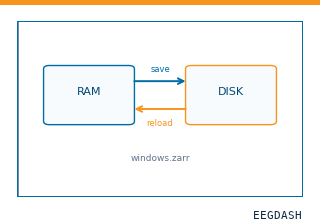 Save and reload prepared dataCache a windowed dataset to disk and reattach it without recompute.
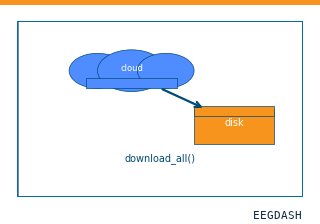 Download a dataset locallyPrefetch BIDS files to a local cache and validate the layout.
Swap any load_dataset(...) call for ds007808 to reproduce the tutorial on this dataset.
Citation
Motoshige Sato, Ilya Horiguchi, Masakazu Inoue, Kenichi Tomeoka, Eri Hatakeyama, … (20). EEG-Speech Brain Decoding Dataset. 10.18112/openneuro.ds007808.v1.0.0
Provenance
¹Contributed to openneuro in BIDS format.
²Curated & ingested by the EEGDash catalog; see CITATION.cff for canonical reference.
³Persistent identifier: 10.18112/openneuro.ds007808.v1.0.0.
See Also#
eegdash.dataset.EEGDashDataseteegdash.dataset