


DS007827: eeg dataset, 99 subjects#
Loneliness EEG - Roving Oddball Task
Access recordings and metadata through EEGDash.
Citation: Joe Bathelt, Corine van Dijk, Marte Otten (2026). Loneliness EEG - Roving Oddball Task. 10.18112/openneuro.ds007827.v1.0.1
Modality: eeg Subjects: 99 Recordings: 99 License: CC0 Source: openneuro
Metadata: Good (80%)
99-participant EEG dataset — Loneliness EEG - Roving Oddball Task.
Quickstart#
Install
pip install eegdash
Access the data
from eegdash.dataset import DS007827

dataset = DS007827(cache_dir="./data")
# Get the raw object of the first recording
raw = dataset.datasets[0].raw
print(raw.info)
Filter by subject
dataset = DS007827(cache_dir="./data", subject="01")
Advanced query
dataset = DS007827(
    cache_dir="./data",
    query={"subject": {"$in": ["01", "02"]}},
)
Iterate recordings
for rec in dataset:
    print(rec.subject, rec.raw.info['sfreq'])
If you use this dataset in your research, please cite the original authors.
BibTeX
@dataset{ds007827,
  title = {Loneliness EEG - Roving Oddball Task},
  author = {Joe Bathelt and Corine van Dijk and Marte Otten},
  doi = {10.18112/openneuro.ds007827.v1.0.1},
  url = {https://doi.org/10.18112/openneuro.ds007827.v1.0.1},
}
About This Dataset#
This dataset contains 64-channel EEG recordings from young adults performing a
roving oddball task with emotional face stimuli, together with behavioural ratings of the same stimuli on valence, arousal, and dominance. Participants were recruited and grouped by their score on the UCLA Loneliness Scale (Version 3) to investigate whether subjective loneliness is associated with altered automatic processing of social-emotional information, indexed by ERP components elicited by emotional facial expressions in a roving oddball stream. - Institution: Department of Psychology, University of Amsterdam - Acquisition system: BioSemi ActiveTwo (72 channels, 2048 Hz) - Reference / ground: CMS at Cz / DRL at Fz (BioSemi active-electrode design) - BIDS version: 1.9.0 - License: CC-BY-4.0
participants.tsvlists 99 adults grouped by UCLA Loneliness Scale (UCLA-LS)
score into Lonely (n = 36) and Non-Lonely (n = 63). The file also includes
demographics (age, gender, handedness via the Edinburgh Handedness Inventory
laterality quotient, educational attainment, self-reported ethnic background)
and self-report questionnaire totals: Brief Symptom Inventory-53 (per-subscale
mean item scores plus GSI/PSDI/PST), Lubben Social Network Scale-6
(family/friends/total), GAD-7, PSS-10, and PHQ-9. Variable definitions and
units are documented in participants.json.
Loneliness EEG — Roving Oddball Task
Overview
The exclude column flags 7 participants (sub-22, sub-37, sub-42, sub-56,
sub-65, sub-77, sub-87) recommended for exclusion from primary analyses due
to data-quality or protocol issues. Excluded participants are retained in
the dataset so that users may make their own inclusion decisions.
View full README
Loneliness EEG — Roving Oddball Task
Overview
The exclude column flags 7 participants (sub-22, sub-37, sub-42, sub-56,
sub-65, sub-77, sub-87) recommended for exclusion from primary analyses due
to data-quality or protocol issues. Excluded participants are retained in
the dataset so that users may make their own inclusion decisions.
Note: an empty cell in ucla-ls (n/a) indicates a participant who screened
were screened into one of the groups based on their UCLA-LS score, but their actual score was not recorded due to a data-collection error.
Tasks
task-RovingOddball (EEG)
A roving auditory-style oddball implemented in the visual domain with face stimuli. Trains of repeated presentations of a single face identity are interrupted by a change to a new identity, which acts as the “deviant” beginning of the next train (i.e., every deviant is also the first standard of the following train). Face stimuli were selected from the FACES database, and preprocessed using webmorphR and SHINE. Faces displayed either a happy**or ** angry expression.
Trials are framed by a fixation cross whose colour signals the response
requirement on the upcoming train:
- White fixation cross (trigger 20): no response required (no_response).
- Red fixation cross (trigger 30): participant should respond on any
catch trial within the upcoming train (
response).
Each face presentation carries a two-digit trigger code XY, where X
indexes the (colour × emotion) combination and Y indexes the serial
position within the train (1 = deviant, 2–8 = standards):
| `X` | Colour × emotion         |
|----:|--------------------------|
| 1   | red × angry              |
| 2   | white × angry            |
| 3   | red × happy              |
| 4   | white × happy            |
| 5   | red × neutral *(rare)*   |
| 6   | white × neutral *(rare)* |
Additional codes appearing in *_events.tsv:
| Code | Meaning                                  |
|-----:|------------------------------------------|
| 20   | Fixation cross, white (no-response cue)  |
| 30   | Fixation cross, red (response cue)       |
| 101  | End-of-task marker                       |
| 111  | Button press                             |
| 200  | Feedback                                 |
The full numeric→label mapping used by the preprocessing pipeline (e.g.
41 → white/happy/deviant/1) is defined in
code/1_organise_bids.py::EVENT_DICT in the analysis repository. No
events.json is shipped because trial types are retained as raw integer
trigger codes in *_events.tsv to keep the source-of-truth unambiguous;
users wishing to recode to descriptive labels should consult that mapping.
task-ImageRatings (behavioural)
After the EEG session, participants rated each face stimulus on three
Self-Assessment Manikin (SAM) dimensions — valence, arousal, and
dominance — on a 1–5 Likert scale. Data are stored as
sub-<ID>/beh/sub-<ID>_task-ImageRatings_beh.tsv. Columns: stim_file,
emotion (happy/angry), dimension, rating. The accompanying
task-ImageRatings_beh.json sidecar at the dataset root documents the
levels and instructions.
Stimuli
The face images used in the experiment are drawn from a restricted-access
FACES database and **cannot be redistributed**. The stimuli/ folder
therefore contains 1×1 black JPEG placeholders that share the original
filenames, so that the stim_file paths referenced in events/behavioural
TSVs resolve to a real file on disk and satisfy the BIDS validator. See
stimuli/README for details and filename conventions
(SHINEd_<id>_<age>_<sex>_<emotion>_<version>.jpg). To obtain the original
images, contact the dataset maintainer: https://faces.mpdl.mpg.de/imeji/
Derivatives
derivatives/ contains the outputs of the preprocessing pipeline used in
the accompanying analyses:
- derivatives/sub-<ID>/eeg/sub-<ID>_task-RovingOddball_eeg-epo.fif.gz —
cleaned, filtered, ICA-corrected, and epoched EEG (MNE-Python
Epochs).
derivatives/sub-<ID>/eeg/sub-<ID>_task-RovingOddball_eeg.html— per-subject preprocessing QC report.derivatives/task-RovingOddball_desc-preprocessing_qc.tsv— dataset-level QC table with per-subject epoch counts (broken down by emotion × repetition), retained sampling frequency, and bad channels.
Derivatives are provided for convenience and reproducibility of the reported analyses; users may always recompute them from the raw data.
Recommended citation
If you use this dataset, please cite:
Bathelt, J., van Dijk, C., & Otten, M. (forthcoming). Loneliness in the Brain: Distinguishing Between Hypersensitivity and Hyperalertness. University of Amsterdam.
Acknowledgements
We thank Famke Bruggeman, Rosalind Dingarten, Vita Karkauskaite, Cleo Rong, Sophie Serrarens, Evi Veer, and Jari Vink for their assistance with data collection. We are also grateful to the participants who generously gave their time to this research.
Contact
Joe Bathelt — Department of Psychology, University of Amsterdam: j.m.c.bathelt@uva.nl
Cohort#
Dataset Statistics#
Age distribution (n=98, range 18–35 yr, mean 21.4 yr · sex per subject not reported)
Sex composition
Signal · Electrodes & live trace#
Live trace viewer — sub-13 · task-RovingOddball
Showing one representative recording out of
99 subjects and 99 recordings in this dataset.
Browse the full set on OpenNeuro;
drop any other _eeg.{set,edf,bdf,vhdr} file onto the
viewer (or pass ?eeg=<url>) to inspect it.
No scalp electrode layout is currently indexed for this dataset. Once the eegdash montage registry ingests it, the interactive viewer will appear here automatically.
NEMAR Processing Statistics#
The plots below are generated by NEMAR’s automated EEG pipeline. The histogram shows pipeline success for data cleaning and ICA decomposition, the percentage of data frames and EEG channels retained after artefact removal, line noise per channel (RMS, dB), and the age/gender distribution of participants.

HED event descriptors word cloud

Manifest#
File Explorer#
Browse the BIDS file structure of this dataset. Records are fetched on demand from the EEGDash catalog the first time you open the explorer.
Full dataset metadata table
Dataset ID |
|
Title |
Loneliness EEG - Roving Oddball Task |
Author (year) |
— |
Canonical |
— |
Importable as |
|
Year |
2026 |
Authors |
Joe Bathelt, Corine van Dijk, Marte Otten |
License |
CC0 |
Citation / DOI |
|
Source links |
OpenNeuro | NeMAR | Source URL |
Copy-paste BibTeX
@dataset{ds007827,
  title = {Loneliness EEG - Roving Oddball Task},
  author = {Joe Bathelt and Corine van Dijk and Marte Otten},
  doi = {10.18112/openneuro.ds007827.v1.0.1},
  url = {https://doi.org/10.18112/openneuro.ds007827.v1.0.1},
}
API Reference#
eegdash.datasetEEGDashDataset- class eegdash.dataset.DS007827(cache_dir: str, query: dict | None = None, s3_bucket: str | None = None, **kwargs)[source]#
Loneliness EEG - Roving Oddball Task
- Study:
ds007827(OpenNeuro)- Author (year):
—
- Canonical:
—
Also importable as:
DS007827.Modality:
eeg; Experiment type:Attention, Affect; Subject type:Healthy. Subjects: 99; recordings: 0; tasks: 1.- Parameters:
cache_dir (str | Path) – Directory where data are cached locally.
query (dict | None) – Additional MongoDB-style filters to AND with the dataset selection. Must not contain the key
dataset.s3_bucket (str | None) – Base S3 bucket used to locate the data.
**kwargs (dict) – Additional keyword arguments forwarded to
EEGDashDataset.
- data_dir#
Local dataset cache directory (
cache_dir / dataset_id).- Type:
Path
Notes
Each item is a recording; recording-level metadata are available via
dataset.description.querysupports MongoDB-style filters on fields inALLOWED_QUERY_FIELDSand is combined with the dataset filter. Dataset-specific caveats are not provided in the summary metadata.References
OpenNeuro dataset: https://openneuro.org/datasets/ds007827 NeMAR dataset: https://nemar.org/dataexplorer/detail?dataset_id=ds007827 DOI: https://doi.org/10.18112/openneuro.ds007827.v1.0.1
Examples
>>> from eegdash.dataset import DS007827
>>> dataset = DS007827(cache_dir="./data")
>>> recording = dataset[0]
>>> raw = recording.load()
- __init__(cache_dir: str, query: dict | None = None, s3_bucket: str | None = None, **kwargs)[source]#
- save(path: str, overwrite: bool = False, offset: int = 0)[source]#
Save datasets to files by creating one subdirectory for each dataset:
path/
    0/
        0-raw.fif | 0-epo.fif
        description.json
        raw_preproc_kwargs.json (if raws were preprocessed)
        window_kwargs.json (if this is a windowed dataset)
        window_preproc_kwargs.json  (if windows were preprocessed)
        target_name.json (if target_name is not None and dataset is raw)
    1/
        1-raw.fif | 1-epo.fif
        description.json
        raw_preproc_kwargs.json (if raws were preprocessed)
        window_kwargs.json (if this is a windowed dataset)
        window_preproc_kwargs.json  (if windows were preprocessed)
        target_name.json (if target_name is not None and dataset is raw)
- Parameters:
path (str) –
- Directory in which subdirectories are created to store
-raw.fif | -epo.fif and .json files to.
overwrite (bool) – Whether to delete old subdirectories that will be saved to in this call.
offset (int) – If provided, the integer is added to the id of the dataset in the concat. This is useful in the setting of very large datasets, where one dataset has to be processed and saved at a time to account for its original position.
BaseDataset from braindecode — windowed via create_windows_from_events.braindecodeDataLoader; supports parallel workers and on-the-fly augmentations.pytorch Find datasets with the EEGDash APIQuery the catalogue, filter by task or modality, list candidates.
 Load one EEG recordingResolve a single record to an MNE Raw with channels and events.
 EEG recording to PyTorch DataLoaderWrap braindecode windows in a DataLoader for model training.
 Preprocess EEG and create windowsFilter, resample, epoch — and persist the windowed dataset.
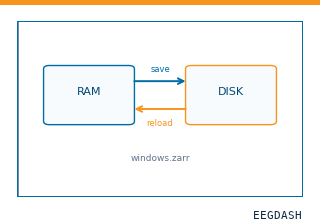 Save and reload prepared dataCache a windowed dataset to disk and reattach it without recompute.
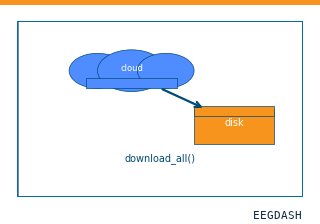 Download a dataset locallyPrefetch BIDS files to a local cache and validate the layout.
Swap any load_dataset(...) call for ds007827 to reproduce the tutorial on this dataset.
Citation
Joe Bathelt, Corine van Dijk, Marte Otten (2026). Loneliness EEG - Roving Oddball Task. 10.18112/openneuro.ds007827.v1.0.1
Provenance
¹Contributed to openneuro in BIDS format.
²Curated & ingested by the EEGDash catalog; see CITATION.cff for canonical reference.
³Persistent identifier: 10.18112/openneuro.ds007827.v1.0.1.
See Also#
eegdash.dataset.EEGDashDataseteegdash.dataset