


DS007688: eeg dataset, 44 subjects#
The Temporal Sequence of Party Leader Incongruence
Access recordings and metadata through EEGDash.
Citation: Gustavo Couto de Jesus, Bert N. Bakker, Gijs Schumacher, Joe Bathelt (2026). The Temporal Sequence of Party Leader Incongruence. 10.18112/openneuro.ds007688.v1.0.0
Modality: eeg Subjects: 44 Recordings: 88 License: CC0 Source: openneuro
Metadata: Complete (100%)
44-participant EEG dataset — The Temporal Sequence of Party Leader Incongruence.
Quickstart#
Install
pip install eegdash
Access the data
from eegdash.dataset import DS007688

dataset = DS007688(cache_dir="./data")
# Get the raw object of the first recording
raw = dataset.datasets[0].raw
print(raw.info)
Filter by subject
dataset = DS007688(cache_dir="./data", subject="01")
Advanced query
dataset = DS007688(
    cache_dir="./data",
    query={"subject": {"$in": ["01", "02"]}},
)
Iterate recordings
for rec in dataset:
    print(rec.subject, rec.raw.info['sfreq'])
If you use this dataset in your research, please cite the original authors.
BibTeX
@dataset{ds007688,
  title = {The Temporal Sequence of Party Leader Incongruence},
  author = {Gustavo Couto de Jesus and Bert N. Bakker and Gijs Schumacher and Joe Bathelt},
  doi = {10.18112/openneuro.ds007688.v1.0.0},
  url = {https://doi.org/10.18112/openneuro.ds007688.v1.0.0},
}
About This Dataset#
This dataset contains high-density EEG (and linked behavioral data) from a preregistered study investigating how partisans process political incongruence. The study tests the ‘Hot Cognition’ hypothesis by disentangling the temporal sequence of neural responses to party leaders (identity incongruence) and their messages (source-content incongruence).
Data was collected in the Netherlands, using supporters of the progressive GreenLeft/Labour (GL/PvdA)**party as the in-party group and the far-right Party for Freedom (PVV)** as the out-party group.
The Temporal Sequence of Party Leader Incongruence: A multitask EEG dataset
Introduction
Dataset Content
The dataset includes data from 44 healthy adult participants. It is organized according to BIDS v1.8.0.
The release includes:
View full README
The Temporal Sequence of Party Leader Incongruence: A multitask EEG dataset
Introduction
Dataset Content
The dataset includes data from 44 healthy adult participants. It is organized according to BIDS v1.8.0.
The release includes:
1. Raw EEG recordings in EDF format with BIDS-compliant JSON sidecars. Find original downsampled fif. files in sourcedata.
2. Behavioral data: Subjective ratings of agreement, surprise, and upset (Likert scales) and reaction times. You can find it in https://osf.io/xrtcy/overview
3. Event Annotations: Trial-by-trial logs including stimulus onsets, durations, trial types (congruent/incongruent), and specific stimulus file references.
4. Stimuli: A root-level /stimuli folder containing the facial cut-outs (JPG) of the political leaders used.
5. Code: Companion preprocessing and analysis scripts.
6. Derivatives: Preprocessed data
6. Metadata: Additional information
Experimental Design
The study utilized two primary tasks to isolate different stages of political information processing:
1. Just Faces Task (Identity Incongruence)
* **Goal**: To measure automatic neural responses to political social identity. * **Stimuli**: Four political leaders (Frans Timmermans & Jesse Klaver for GL/PvdA; Geert Wilders & Fleur Agema for PVV) and two unfamiliar control faces. * **Procedure**: 260 trials. Faces were presented for 700ms. * **Task**: Participants pressed a key only for unfamiliar faces to ensure attention during Just Faces task.
2. Statements & Faces Task (Source-Content Incongruence)
* **Goal**: To investigate how source identity of a political message is processed given source-content congruent and incongruent messages * **Design**: 2x2 factorial design (Face: In-party vs. Out-party; Statement: Pro-attitudinal vs. Counter-attitudinal). * **Stimuli**: 240 trials. A statement (1830–2880ms) was followed by a politician’s face (1200–1400ms). * **Issues**: Immigration, climate change, EU expansion, gender equality, vegetarianism, and cultural integration. * **Task**: In ~18% of trials, participants rated their agreement, surprise, or upset.
Data Acquisition
* **EEG System**: 64-channel BioSemi ActiveTwo system. * **Electrodes**: International 10-20 layout, including EOG, ECG, and mastoid leads. * **Reference**: Recorded with CMS/DRL; re-referenced to average reference during preprocessing. * **Filtering**: Data were band-pass filtered offline (0.5–40 Hz). * **Software**: Stimuli were presented and analysed using PsychoPy and MNE-Python.
Technical Validation
* **Behavioral**: Analysis confirmed strong in-party favoritism. Participants agreed more with in-party leaders and felt greater surprise/upset when in-party leaders were paired with counter-attitudinal statements. * **Neural (ERP)**: Cluster-based permutation tests revealed an enhanced early posterior positivity (Visual P2) for out-party stimuli emerging as early as 148ms, suggesting rapid, pre-conscious detection of political opponents.
Data Quality Notes
- * **Participant Exclusions**:
Just Faces (H1): n=37 included after excluding for EEG noise/bad channels.
Statements & Faces (H3): n=36 included due to technical issues in trial recording for some participants.
* **Bad Channels**: Frequently interpolated channels included AF7, F7, FT8, FC5, and C2. * **Demographics**: The sample consists primarily of young, progressive-leaning university students (Mean age = 21.4).
Usage Recommendations
* **Citing this dataset**: Please search associated the preprint or paper with the following name:
Couto de Jesus, G., Bakker, B. N., Schumacher, G., & Bathelt, J. (2026). The Temporal Sequence of Party Leader Incongruence: a data-driven ERP study.
* **Running its code**
The python scripts stored in code were built to analyse downsampled fif. files (see sourcedata).
Acknowledgements
Funding was provided by: * **IP-PAD**: European Union’s Horizon Europe MSCA Doctoral Networks (Grant No. 101072992). * **POLEMIC**: European Research Council (ERC) (Grant No. 759079). * **NWO**: Talent Programme VIDI (Project No. VI.Vidi.211.055).
Special thanks to Anna Mae van Dooren, Lois van Petegem, and Rayna Akil for data collection assistance.
Cohort#
Dataset Statistics#
Age distribution by gender (n=44, range 19–38 yr, mean 21.4 yr)
Sex composition
Channel counts: 69 ch (n=88 recordings)
Sampling frequencies: 250.0 Hz (n=88 recordings)
Total recording duration: 22 h 45 min
Signal · Electrodes & live trace#
Live trace viewer — sub-P23 · task-JustFaces
Showing one representative recording out of
44 subjects and 88 recordings in this dataset.
Browse the full set on OpenNeuro;
drop any other _eeg.{set,edf,bdf,vhdr} file onto the
viewer (or pass ?eeg=<url>) to inspect it.
No scalp electrode layout is currently indexed for this dataset. Once the eegdash montage registry ingests it, the interactive viewer will appear here automatically.
NEMAR Processing Statistics#
The plots below are generated by NEMAR’s automated EEG pipeline. The histogram shows pipeline success for data cleaning and ICA decomposition, the percentage of data frames and EEG channels retained after artefact removal, line noise per channel (RMS, dB), and the age/gender distribution of participants.

HED event descriptors word cloud

Manifest#
File Explorer#
Browse the BIDS file structure of this dataset. Records are fetched on demand from the EEGDash catalog the first time you open the explorer.
Full dataset metadata table
Dataset ID |
|
Title |
The Temporal Sequence of Party Leader Incongruence |
Author (year) |
— |
Canonical |
— |
Importable as |
|
Year |
2026 |
Authors |
Gustavo Couto de Jesus, Bert N. Bakker, Gijs Schumacher, Joe Bathelt |
License |
CC0 |
Citation / DOI |
|
Source links |
Copy-paste BibTeX
@dataset{ds007688,
  title = {The Temporal Sequence of Party Leader Incongruence},
  author = {Gustavo Couto de Jesus and Bert N. Bakker and Gijs Schumacher and Joe Bathelt},
  doi = {10.18112/openneuro.ds007688.v1.0.0},
  url = {https://doi.org/10.18112/openneuro.ds007688.v1.0.0},
}
API Reference#
eegdash.datasetEEGDashDataset- class eegdash.dataset.DS007688(cache_dir: str, query: dict | None = None, s3_bucket: str | None = None, **kwargs)[source]#
The Temporal Sequence of Party Leader Incongruence
- Study:
ds007688(OpenNeuro)- Author (year):
—
- Canonical:
—
Also importable as:
DS007688.Modality:
eeg; Experiment type:Perception; Subject type:Healthy. Subjects: 44; recordings: 88; tasks: 2.- Parameters:
cache_dir (str | Path) – Directory where data are cached locally.
query (dict | None) – Additional MongoDB-style filters to AND with the dataset selection. Must not contain the key
dataset.s3_bucket (str | None) – Base S3 bucket used to locate the data.
**kwargs (dict) – Additional keyword arguments forwarded to
EEGDashDataset.
- data_dir#
Local dataset cache directory (
cache_dir / dataset_id).- Type:
Path
Notes
Each item is a recording; recording-level metadata are available via
dataset.description.querysupports MongoDB-style filters on fields inALLOWED_QUERY_FIELDSand is combined with the dataset filter. Dataset-specific caveats are not provided in the summary metadata.References
OpenNeuro dataset: https://openneuro.org/datasets/ds007688 NeMAR dataset: https://nemar.org/dataexplorer/detail?dataset_id=ds007688 DOI: https://doi.org/10.18112/openneuro.ds007688.v1.0.0
Examples
>>> from eegdash.dataset import DS007688
>>> dataset = DS007688(cache_dir="./data")
>>> recording = dataset[0]
>>> raw = recording.load()
- __init__(cache_dir: str, query: dict | None = None, s3_bucket: str | None = None, **kwargs)[source]#
- save(path: str, overwrite: bool = False, offset: int = 0)[source]#
Save datasets to files by creating one subdirectory for each dataset:
path/
    0/
        0-raw.fif | 0-epo.fif
        description.json
        raw_preproc_kwargs.json (if raws were preprocessed)
        window_kwargs.json (if this is a windowed dataset)
        window_preproc_kwargs.json  (if windows were preprocessed)
        target_name.json (if target_name is not None and dataset is raw)
    1/
        1-raw.fif | 1-epo.fif
        description.json
        raw_preproc_kwargs.json (if raws were preprocessed)
        window_kwargs.json (if this is a windowed dataset)
        window_preproc_kwargs.json  (if windows were preprocessed)
        target_name.json (if target_name is not None and dataset is raw)
- Parameters:
path (str) –
- Directory in which subdirectories are created to store
-raw.fif | -epo.fif and .json files to.
overwrite (bool) – Whether to delete old subdirectories that will be saved to in this call.
offset (int) – If provided, the integer is added to the id of the dataset in the concat. This is useful in the setting of very large datasets, where one dataset has to be processed and saved at a time to account for its original position.
BaseDataset from braindecode — windowed via create_windows_from_events.braindecodeDataLoader; supports parallel workers and on-the-fly augmentations.pytorch Find datasets with the EEGDash APIQuery the catalogue, filter by task or modality, list candidates.
 Load one EEG recordingResolve a single record to an MNE Raw with channels and events.
 EEG recording to PyTorch DataLoaderWrap braindecode windows in a DataLoader for model training.
 Preprocess EEG and create windowsFilter, resample, epoch — and persist the windowed dataset.
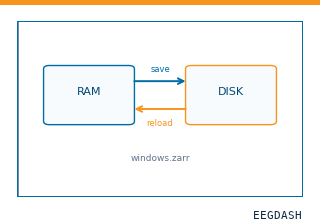 Save and reload prepared dataCache a windowed dataset to disk and reattach it without recompute.
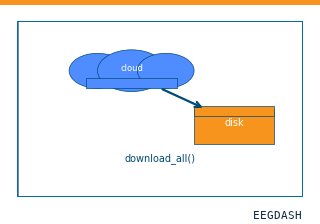 Download a dataset locallyPrefetch BIDS files to a local cache and validate the layout.
Swap any load_dataset(...) call for ds007688 to reproduce the tutorial on this dataset.
Citation
Gustavo Couto de Jesus, Bert N. Bakker, Gijs Schumacher, Joe Bathelt (2026). The Temporal Sequence of Party Leader Incongruence. 10.18112/openneuro.ds007688.v1.0.0
Provenance
¹Contributed to openneuro in BIDS format.
²Curated & ingested by the EEGDash catalog; see CITATION.cff for canonical reference.
³Persistent identifier: 10.18112/openneuro.ds007688.v1.0.0.
See Also#
eegdash.dataset.EEGDashDataseteegdash.dataset