


DS007816: fnirs dataset, 6 subjects#
Visual Semantic Encoding and Identification of Naturalistic Movies via High-Density Diffuse Optical Tomography
Access recordings and metadata through EEGDash.
Citation: Wiete Fehner, Morgan Fogarty, Jerry Tang, Dana Wilhelm, Aahana Bajracharya, Zachary E. Markow, Amelia M. Hines, Jason W. Trobaugh, Alexander G. Huth, Joseph P. Culver (2026). Visual Semantic Encoding and Identification of Naturalistic Movies via High-Density Diffuse Optical Tomography. 10.18112/openneuro.ds007816.v1.1.0
Modality: fnirs Subjects: 6 Recordings: 178 License: CC0 Source: openneuro
Metadata: Good (80%)
6-participant fNIRS dataset — Visual Semantic Encoding and Identification of Naturalistic Movies via High-Density Diffuse Optical Tomography.
Quickstart#
Install
pip install eegdash
Access the data
from eegdash.dataset import DS007816

dataset = DS007816(cache_dir="./data")
# Get the raw object of the first recording
raw = dataset.datasets[0].raw
print(raw.info)
Filter by subject
dataset = DS007816(cache_dir="./data", subject="01")
Advanced query
dataset = DS007816(
    cache_dir="./data",
    query={"subject": {"$in": ["01", "02"]}},
)
Iterate recordings
for rec in dataset:
    print(rec.subject, rec.raw.info['sfreq'])
If you use this dataset in your research, please cite the original authors.
BibTeX
@dataset{ds007816,
  title = {Visual Semantic Encoding and Identification of Naturalistic Movies via High-Density Diffuse Optical Tomography},
  author = {Wiete Fehner and Morgan Fogarty and Jerry Tang and Dana Wilhelm and Aahana Bajracharya and Zachary E. Markow and Amelia M. Hines and Jason W. Trobaugh and Alexander G. Huth and Joseph P. Culver},
  doi = {10.18112/openneuro.ds007816.v1.1.0},
  url = {https://doi.org/10.18112/openneuro.ds007816.v1.1.0},
}
About This Dataset#
<!DOCTYPE html>
<html lang=”en”> <head>
<meta charset=”UTF-8”>
</head>
<body> <p><strong>Overview</strong></p> <p>This dataset contains high-density diffuse optical tomography (HD-DOT) and functional MRI (fMRI) data from six healthy adult participants. DOT data were collected across three imaging sessions, and fMRI data were collected in a separate fourth session. Participants passively viewed silent natural movie clips, totaling 120 minutes of unique training content and 90 minutes of repeated test content (10 minutes per run). All movie stimuli were drawn from Nishimoto et al. (2011); the semantic labels were drawn from Huth et al. (2012). The test set contains a 1-minute deviation from the original Nishimoto et al. (2011) stimulus set (clip 8, seconds 421–480), for which semantic labels were generated separately following the annotation methods described in Huth et al. (2012).</p> <p>Data were acquired on a custom-built, whole-head Very High-Density Diffuse Optical Tomography (VHD-DOT) system Fogarty et al. (2025) at Washington University in St. Louis, USA. The continuous-wave system included 255 source positions (685 and 830 nm) and 252 avalanche photodiode detectors coupled to the head using optic fiber bundles. The imaging cap provided a first-nearest-neighbor separation of ∼9.75 mm, yielding 9,160 possible measurements with source-detector separations ≤40 mm across both wavelengths. </p> <p><strong>Stimuli and task design</strong></p> <p>Training movies comprised 12 unique 10-minute runs (Trn001–Trn012). Event files (events.tsv) label these as TRAINMOVIE.</p> <p>Test movies comprised nine unique 1-minute clips, each repeated 10 times across three sessions. Each session covered three consecutive clips: session 1 covered clips 1–3, session 2 clips 4–6, and session 3 clips 7–9, with 3–4 repetitions per run. In filenames, test movie runs are labeled Val<em>S</em>c<em>N</em> where <em>S</em> is the session number (1–3) and <em>N</em> is the clip index within that session (1–3); for example, Val2c1 refers to the first clip of session 2 (clip 4 of the full test set). Event files use the session-relative labels TESTMOVIECLIP1, TESTMOVIECLIP2, TESTMOVIECLIP3, which map to the same indexing.</p> <p>Localizer tasks used a block design and included two runs per session: an auditory word list task (HW) and a visual checkerboard task with left and right stimulation (AC).</p> <p><strong>Data organization</strong></p> <p>Data are organized in BIDS format.</p> <ul>
<li><code>sub-*/</code>: Raw HD-DOT and fMRI data; defaced T1w anatomical scans.</li> <li><code>derivatives/Processed_fMRI/</code>: Fully preprocessed fMRI data (.mat and .nii).</li> <li><code>derivatives/freesurfer/</code>: FreeSurfer segmentation masks (aseg). Masks were generated using both T1w and T2w images; T2w scans are not included in this release.</li> <li><code>derivatives/reconDOT/</code>: Reconstructed HD-DOT images (HbO and HbR) in image space, one .mat file per run. Each file includes an <code>info.paradigm</code> field encoding task events as pulse indices: Pulse 1 = rest; HW Pulse 2 = word list onset; AC Pulse 2 = right and Pulse 3 = left checkerboard onset; Trn Pulse 2 = movie onset; Val Pulse 2–4 = clips 1–3 onset (session-relative, as described above). The <code>info.movName</code> field contains the run label (e.g., <code>Val001c1</code>, <code>Trn001</code>).</li> <li><code>derivatives/Amats/</code>: A-matrices used for DOT image reconstruction (.mat).</li> <li><code>derivatives/Viz/</code>: Field-of-view and cortical surface files per participant.</li> <li><code>derivatives/DOT_MovieData_Full/</code>: Concatenated HD-DOT responses. TrainFull: 7200×nVox; TestFull: 10×540×nVox.</li> <li><code>derivatives/SemanticLabels/</code>: Binary semantic annotation matrices. X_test: 540×1708; X_train: 7200×1708. Category labels are in <code>utils/wordnet_categories.txt</code>.</li> <li><code>derivatives/Stimulus/</code>: Movie stimuli at 15 Hz. TestMovies: 512×512×3×8100; TrainMovies: 512×512×3×108000.</li>
</ul> <p><strong>Notes</strong></p> <ul>
<li>Model weights and analysis scripts accompanying this work are available at the associated G-Node GIN repository, <a href=”https://gin.g-node.org/wfehner/visual-semantic-hddot”>https://gin.g-node.org/wfehner/visual-semantic-hddot</a> (<a href=”https://doi.org/10.12751/g-node.qf5ttf”>DOI: 10.12751/g-node.qf5ttf</a>).</li> <li>See the associated preprint for full acquisition and preprocessing details.</li> <li><strong>Associated preprint.</strong> Fehner, W., Fogarty, M., Tang, J., Wilhelm, D., Bajracharya, A., Markow, Z. E., Hines, A., Trobaugh, J. W., Huth, A. G., & Culver, J. P. (2025). Visual Semantic Encoding and Identification of Naturalistic Movies via High-Density Diffuse Optical Tomography. <a href=”https://doi.org/10.64898/2025.12.03.692158”>https://doi.org/10.64898/2025.12.03.692158</a></li>
</ul> <p><strong>References</strong></p> <p>Fogarty, M., Rafferty, S. M., Markow, Z. E., O’Sullivan, A. C., Svoboda, C. F., George, T., King, K., Wilhelm, D., Tripathy, K., Mugler, E. M., Naufel, S., Yin, A., Trobaugh, J. W., Eggebrecht, A. T., Richter, E. J., & Culver, J. P. (2025). Functional brain mapping using whole-head very high-density diffuse optical tomography. <em>Imaging Neuroscience</em>, 3. <a href=”https://doi.org/10.1162/imag.a.54”>https://doi.org/10.1162/imag.a.54</a></p> <p>Huth, A. G., Nishimoto, S., Vu, A. T., & Gallant, J. L. (2012). A continuous semantic space describes the representation of thousands of object and action categories across the human brain. <em>Neuron</em>, 76(6), 1210–1224. <a href=”https://doi.org/10.1016/j.neuron.2012.10.014”>https://doi.org/10.1016/j.neuron.2012.10.014</a></p> <p>Nishimoto, S., Vu, A. T., Naselaris, T., Benjamini, Y., Yu, B., & Gallant, J. L. (2011). Reconstructing visual experiences from brain activity evoked by natural movies. <em>Curr Biol</em>, 21(19), 1641–1646. <a href=”https://doi.org/10.1016/j.cub.2011.08.031”>https://doi.org/10.1016/j.cub.2011.08.031</a></p> </body> </html>
Cohort#
Signal · Electrodes & live trace#
No scalp electrode layout is currently indexed for this dataset. Once the eegdash montage registry ingests it, the interactive viewer will appear here automatically.
NEMAR Processing Statistics#
The plots below are generated by NEMAR’s automated EEG pipeline. The histogram shows pipeline success for data cleaning and ICA decomposition, the percentage of data frames and EEG channels retained after artefact removal, line noise per channel (RMS, dB), and the age/gender distribution of participants.

HED event descriptors word cloud

Manifest#
File Explorer#
Browse the BIDS file structure of this dataset. Records are fetched on demand from the EEGDash catalog the first time you open the explorer.
Full dataset metadata table
Dataset ID |
|
Title |
Visual Semantic Encoding and Identification of Naturalistic Movies via High-Density Diffuse Optical Tomography |
Author (year) |
— |
Canonical |
— |
Importable as |
|
Year |
2026 |
Authors |
Wiete Fehner, Morgan Fogarty, Jerry Tang, Dana Wilhelm, Aahana Bajracharya, Zachary E. Markow, Amelia M. Hines, Jason W. Trobaugh, Alexander G. Huth, Joseph P. Culver |
License |
CC0 |
Citation / DOI |
|
Source links |
OpenNeuro | NeMAR | Source URL |
Copy-paste BibTeX
@dataset{ds007816,
  title = {Visual Semantic Encoding and Identification of Naturalistic Movies via High-Density Diffuse Optical Tomography},
  author = {Wiete Fehner and Morgan Fogarty and Jerry Tang and Dana Wilhelm and Aahana Bajracharya and Zachary E. Markow and Amelia M. Hines and Jason W. Trobaugh and Alexander G. Huth and Joseph P. Culver},
  doi = {10.18112/openneuro.ds007816.v1.1.0},
  url = {https://doi.org/10.18112/openneuro.ds007816.v1.1.0},
}
API Reference#
eegdash.datasetEEGDashDataset- class eegdash.dataset.DS007816(cache_dir: str, query: dict | None = None, s3_bucket: str | None = None, **kwargs)[source]#
Visual Semantic Encoding and Identification of Naturalistic Movies via High-Density Diffuse Optical Tomography
- Study:
ds007816(OpenNeuro)- Author (year):
—
- Canonical:
—
Also importable as:
DS007816.Modality:
fnirs; Experiment type:Perception; Subject type:Healthy. Subjects: 6; recordings: 0; tasks: 34.- Parameters:
cache_dir (str | Path) – Directory where data are cached locally.
query (dict | None) – Additional MongoDB-style filters to AND with the dataset selection. Must not contain the key
dataset.s3_bucket (str | None) – Base S3 bucket used to locate the data.
**kwargs (dict) – Additional keyword arguments forwarded to
EEGDashDataset.
- data_dir#
Local dataset cache directory (
cache_dir / dataset_id).- Type:
Path
Notes
Each item is a recording; recording-level metadata are available via
dataset.description.querysupports MongoDB-style filters on fields inALLOWED_QUERY_FIELDSand is combined with the dataset filter. Dataset-specific caveats are not provided in the summary metadata.References
OpenNeuro dataset: https://openneuro.org/datasets/ds007816 NeMAR dataset: https://nemar.org/dataexplorer/detail?dataset_id=ds007816 DOI: https://doi.org/10.18112/openneuro.ds007816.v1.1.0
Examples
>>> from eegdash.dataset import DS007816
>>> dataset = DS007816(cache_dir="./data")
>>> recording = dataset[0]
>>> raw = recording.load()
- __init__(cache_dir: str, query: dict | None = None, s3_bucket: str | None = None, **kwargs)[source]#
- save(path: str, overwrite: bool = False, offset: int = 0)[source]#
Save datasets to files by creating one subdirectory for each dataset:
path/
    0/
        0-raw.fif | 0-epo.fif
        description.json
        raw_preproc_kwargs.json (if raws were preprocessed)
        window_kwargs.json (if this is a windowed dataset)
        window_preproc_kwargs.json  (if windows were preprocessed)
        target_name.json (if target_name is not None and dataset is raw)
    1/
        1-raw.fif | 1-epo.fif
        description.json
        raw_preproc_kwargs.json (if raws were preprocessed)
        window_kwargs.json (if this is a windowed dataset)
        window_preproc_kwargs.json  (if windows were preprocessed)
        target_name.json (if target_name is not None and dataset is raw)
- Parameters:
path (str) –
- Directory in which subdirectories are created to store
-raw.fif | -epo.fif and .json files to.
overwrite (bool) – Whether to delete old subdirectories that will be saved to in this call.
offset (int) – If provided, the integer is added to the id of the dataset in the concat. This is useful in the setting of very large datasets, where one dataset has to be processed and saved at a time to account for its original position.
BaseDataset from braindecode — windowed via create_windows_from_events.braindecodeDataLoader; supports parallel workers and on-the-fly augmentations.pytorch Find datasets with the EEGDash APIQuery the catalogue, filter by task or modality, list candidates.
 Load one EEG recordingResolve a single record to an MNE Raw with channels and events.
 EEG recording to PyTorch DataLoaderWrap braindecode windows in a DataLoader for model training.
 Preprocess EEG and create windowsFilter, resample, epoch — and persist the windowed dataset.
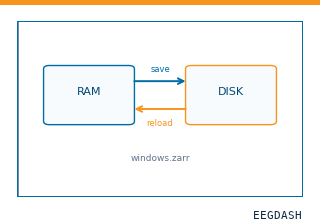 Save and reload prepared dataCache a windowed dataset to disk and reattach it without recompute.
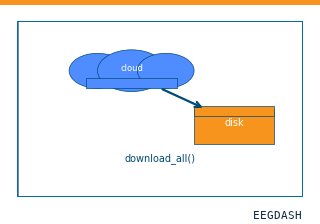 Download a dataset locallyPrefetch BIDS files to a local cache and validate the layout.
Swap any load_dataset(...) call for ds007816 to reproduce the tutorial on this dataset.
Citation
Wiete Fehner, Morgan Fogarty, Jerry Tang, Dana Wilhelm, Aahana Bajracharya, … (2026). Visual Semantic Encoding and Identification of Naturalistic Movies via High-Density Diffuse Optical Tomography. 10.18112/openneuro.ds007816.v1.1.0
Provenance
¹Contributed to openneuro in BIDS format.
²Curated & ingested by the EEGDash catalog; see CITATION.cff for canonical reference.
³Persistent identifier: 10.18112/openneuro.ds007816.v1.1.0.
See Also#
eegdash.dataset.EEGDashDataseteegdash.dataset